1. Procedure Overview
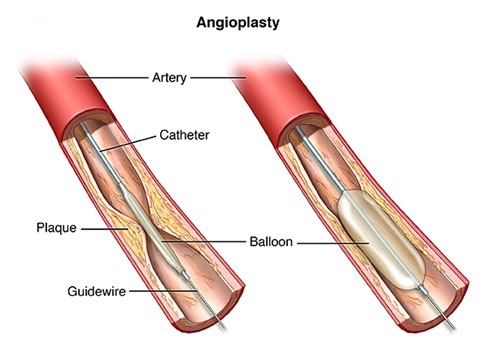
Angioplasty, also known as percutaneous coronary intervention (PCI), is a minimally invasive procedure that opens narrowed or blocked coronary arteries to restore blood flow to the heart muscle. During angioplasty, a thin flexible tube (catheter) with a balloon at its tip is threaded through a blood vessel to the blocked artery. The balloon is inflated to compress plaque against the artery wall, widening the vessel and improving circulation. In most cases, a small wire mesh tube called a stent is permanently placed to help keep the artery open.
The procedure treats coronary artery disease (CAD), the most common type of heart disease and leading cause of heart attacks. By restoring adequate blood flow to the heart, angioplasty relieves symptoms like chest pain (angina) and can be life-saving during a heart attack. Unlike open-heart surgery, angioplasty is performed through a small puncture, typically in the groin or wrist, without requiring large incisions or a heart-lung machine.
Angioplasty has revolutionized cardiac care since its introduction in the 1970s, evolving from simple balloon angioplasty (PTCA) to sophisticated stent technology with drug-eluting capabilities that significantly reduce the risk of renarrowing. Today, it’s one of the most commonly performed cardiac procedures worldwide, with millions performed annually.
2. Key Facts at a Glance
| Aspect | Details |
|---|---|
| Also known as | Percutaneous Coronary Intervention (PCI), PTCA, coronary angioplasty, stent placement |
| Procedure type | Minimally invasive, catheter-based cardiac intervention |
| Typical duration | 30 minutes to 2 hours (varies by complexity and number of stents) |
| Anaesthesia | Local anaesthesia with sedation (rarely general anaesthesia) |
| Hospital stay | Usually 1-2 days (same-day discharge for straightforward cases) |
| Initial recovery | 1 week for basic recovery, return to sedentary work |
| Full recovery | 2-4 weeks for complete return to normal activities |
| Longevity | Stents typically remain patent for many years; drug-eluting stents have lower restenosis rates |
| Stent types | Bare-metal stents (BMS), drug-eluting stents (DES), bioresorbable scaffolds |
| Access sites | Femoral artery (groin) or radial artery (wrist) |
3. Anatomy and How the Heart Condition Develops
The heart is a muscular pump approximately the size of a fist, located in the center of the chest, slightly left of the midline. It requires a continuous supply of oxygen-rich blood, delivered by three major coronary arteries: the left anterior descending (LAD) artery, the left circumflex (LCx) artery, and the right coronary artery (RCA). These arteries branch from the aorta and envelop the heart like a crown (hence “coronary”).
Coronary artery disease (CAD) develops when fatty deposits called plaque accumulate in the arterial walls over decades. This process, called atherosclerosis, begins with damage to the inner lining of the artery (endothelium) from factors like high blood pressure, smoking, high cholesterol, or diabetes. Cholesterol and other cellular debris accumulate at the damaged site, forming plaque that gradually narrows the artery (stenosis). When plaque buildup becomes significant (typically 70% or more narrowing), it restricts blood flow, especially during physical activity when the heart demands more oxygen.
Reduced blood flow causes ischemia (oxygen deprivation), leading to chest pain (angina). If a plaque ruptures and a blood clot completely blocks the artery, a heart attack (myocardial infarction) occurs, causing permanent damage to heart muscle. The extent and severity of CAD determine whether angioplasty alone can address the problem or if more extensive bypass surgery is required.
4. Conditions Treated
Angioplasty is primarily performed to treat:
- Significant coronary artery disease (CAD) with one or two vessel blockages suitable for stenting
- Acute myocardial infarction (heart attack) — primary PCI is the gold standard treatment for STEMI (ST-elevation myocardial infarction)
- Unstable angina — chest pain at rest or worsening pattern, indicating high risk of heart attack
- Stable angina not controlled by optimal medical therapy
- Restenosis — renarrowing of a previously stented artery
- Acute coronary syndromes including NSTEMI (non-STEMI) and unstable angina
- Native vessel disease — blockages in original coronary arteries
- Bypass graft disease — blockages in previous CABG grafts (vein or arterial)
- Protected left main disease — in select cases, particularly with high surgical risk
- Chronic total occlusions (CTO) — complete blockages present for months, opened with specialized techniques (experienced operators)
Angioplasty may be combined with other procedures like atherectomy (plaque removal) or intravascular imaging (IVUS or OCT) for complex cases.
5. Symptoms and Warning Signs
The symptoms that lead to angioplasty referral typically include:
- Angina (chest pain or discomfort) — pressure, squeezing, burning, heaviness, or tightness in the chest, often triggered by exertion, emotion, cold, or meals; relieved by rest or nitroglycerin
- Shortness of breath (dyspnea) — especially during physical activity or when lying flat, indicating heart muscle not receiving adequate oxygen
- Fatigue and reduced exercise tolerance — inability to perform normal activities without exhaustion
- Heart attack symptoms — crushing chest pain lasting more than 15 minutes, pain radiating to left arm, jaw, back, or abdomen; cold sweats, nausea, vomiting, lightheadedness, profound weakness
- Heart failure symptoms — swelling in legs/ankles (edema), weight gain from fluid retention, abdominal bloating, difficulty breathing when lying down
- Arrhythmias — irregular heartbeats, palpitations, rapid heart rate
- “Silent ischemia” — particularly common in diabetics, where significant CAD exists without typical chest pain symptoms
The pattern, frequency, and severity of symptoms help guide the urgency of angioplasty. Stable symptoms may allow elective intervention, while sudden worsening or rest symptoms require urgent care.
6. When Is This Procedure Recommended?
Cardiologists recommend angioplasty based on established guidelines from the American College of Cardiology/American Heart Association (ACC/AHA) and European Society of Cardiology (ESC):
Acute Indications:
- Ongoing heart attack (STEMI) — primary PCI within 90-120 minutes of first medical contact is the preferred treatment
- High-risk unstable angina/NSTEMI — urgent intervention within 24-48 hours, often sooner
- Chest pain with ECG changes indicating active ischemia
Elective Indications:
- Significant stenosis (>70%) with typical angina symptoms not controlled by medical therapy
- Moderate stenosis (50-70%) with objective evidence of ischemia on stress testing
- Previous stent restenosis causing recurrent symptoms
- Bypass graft stenosis in suitable candidates
- Left main disease in selected patients with high surgical risk or suitable anatomy
Special Situations:
- Cardiogenic shock — severe heart failure during heart attack
- Anatomical considerations favoring PCI over CABG (limited disease, suitable for stenting)
- Patient preference after thorough discussion of alternatives
The decision is typically made by a heart team (interventional cardiologist and cardiac surgeon) reviewing angiography, symptoms, heart function, and patient factors to determine optimal treatment strategy.
7. Who Is a Suitable Candidate?
Good candidates for angioplasty generally include:
- Patients with significant coronary artery disease amenable to stenting (one or two vessel disease, suitable anatomy)
- Those experiencing active heart attack — PCI is the treatment of choice
- Patients with adequate heart function (ejection fraction typically >30-35%)
- Individuals whose overall health permits the procedure — reasonable kidney function (for contrast dye), not in active heart failure
- Patients with suitable vessel anatomy — vessels large enough to accommodate stents, not heavily calcified or diffuse
- Those able to take dual antiplatelet therapy (aspirin + clopidogrel/ticagrelor/prasugrel) for required duration (typically 6-12 months)
- Patients motivated to adhere to lifestyle modifications and medical therapy
- Those with complex anatomy favorable for PCI over CABG (distal lesions, small vessel disease not suitable for grafting)
Angioplasty is particularly suitable for heart attack patients, where rapid restoration of blood flow is critical. It’s also preferred for patients at higher surgical risk due to age, lung disease, or previous surgeries.
8. Who May Not Be Suitable?
Angioplasty may not be recommended or may carry higher risk in certain situations:
- Diffuse three-vessel or left main disease — CABG generally offers better survival and durability
- Heavily calcified arteries — difficult to treat with standard balloons/stents, may require specialized techniques
- Small vessel disease (<2mm diameter) — limited stent options, higher restenosis rates
- Chronic total occlusions with unfavorable characteristics — success rates vary, expertise dependent
- Severe heart failure with reduced ejection fraction (<30-35%) — CABG may offer better outcomes with multivessel disease
- Inability to tolerate dual antiplatelet therapy — allergy, high bleeding risk, need for anticoagulation
- Severe kidney disease — contrast dye may worsen renal function (though techniques exist to minimize risk)
- Complex anatomy not suitable for PCI — bifurcation lesions, extensive disease
- Life expectancy <1-2 years from non-cardiac conditions
- Patient preference for surgical approach after discussion of options
In some borderline cases, the heart team recommends CABG for better long-term outcomes, particularly in diabetic patients with multivessel disease where bypass surgery has demonstrated superior durability.
9. Types and Techniques of the Procedure
Angioplasty encompasses several different techniques and approaches:
By Access Site:
- Femoral artery approach — traditional access through large artery in groin; larger catheters, historically more common
- Radial artery approach — access through wrist artery; increasingly preferred due to lower bleeding complications, patient comfort, earlier ambulation
By Balloon Technique:
- Balloon angioplasty alone (PTCA) — balloon inflation without stent placement (rare in modern practice)
- Balloon angioplasty with stenting — balloon followed by stent deployment (standard practice)
- Cutting balloon angioplasty — balloon with microblades to score plaque (for resistant lesions)
- Scoring balloon angioplasty — balloon with scoring elements to modify plaque
By Stent Type:
- Bare-metal stents (BMS) — older technology, metal scaffold without drug coating; higher restenosis rates
- Drug-eluting stents (DES) — metal scaffold coated with medication to prevent scar tissue; current standard of care
- Bioresorbable scaffolds — temporary polymer scaffolds that dissolve over time (emerging technology)
By Adjunctive Techniques:
- Rotational atherectomy — diamond-tipped burr to pulverize calcified plaque
- Directional atherectomy — cutting device to remove plaque
- Intravascular ultrasound (IVUS) — imaging inside artery to guide stent placement
- Optical coherence tomography (OCT) — high-resolution imaging for precise stent optimization
- Thrombectomy — removal of blood clot during heart attack treatment
By Procedure Timing:
- Elective PCI — planned procedure for stable disease
- Urgent PCI — within 24-48 hours for high-risk unstable angina/NSTEMI
- Primary PCI — emergency treatment for heart attack (STEMI)
10. Traditional, Minimally Invasive and Advanced Approaches
Balloon Angioplasty (PTCA) - Historical Context:
The original angioplasty technique involved only balloon inflation to compress plaque against the artery wall. While revolutionary for its time, PTCA alone had significant limitations — high rates of acute closure (3-5%) and restenosis (30-40% within 6 months) due to elastic recoil and negative remodeling of the artery.
Advantages: Simple, no permanent implant, lower cost historically. Disadvantages: High restenosis rates, acute vessel closure risk, limited applicability today.
Stent Implantation - Modern Standard:
Stents (metal scaffolds) revolutionized PCI by providing structural support to prevent vessel recoil and negative remodeling. Bare-metal stents reduced restenosis compared to PTCA alone, but still significant (20-30%). Drug-eluting stents, coated with medications (sirolimus, paclitaxel, everolimus, zotarolimus) that inhibit cell proliferation, further reduced restenosis to <10% in many studies.
Advantages: Excellent acute results, low restenosis with DES, predictable outcomes, treats acute closure. Disadvantages: Permanent implant, requires dual antiplatelet therapy, risk of late stent thrombosis (rare).
Specialized Techniques for Complex Lesions:
Rotational Atherectomy: Uses a diamond-coated burr rotating at high speed (140,000-180,000 RPM) to pulverize calcified plaque into microscopic particles. Essential for heavily calcified lesions that cannot be adequately expanded with balloons alone.
Advantages: Enables treatment of otherwise untreatable calcified lesions. Disadvantages: Technical complexity, risk of slow blood flow (no-reflow), embolization.
Chronic Total Occlusion (CTO) PCI: Specialized techniques to open arteries that have been 100% blocked for >3 months. Requires advanced expertise, specialized equipment (stiff wires, microcatheters), and often longer procedure times. Success rates range from 60-90% depending on operator expertise.
Advantages: Avoids CABG in selected patients, improves symptoms and heart function. Disadvantages: Technically demanding, longer procedures, higher radiation/contrast exposure.
Intravascular Imaging (IVUS/OCT):
IVUS uses ultrasound to create cross-sectional images of the artery from inside, while OCT uses light for higher resolution images. Both guide stent sizing, expansion, and placement, optimizing outcomes particularly for complex lesions.
Advantages: Optimizes stent placement, reduces complications, improves long-term outcomes. Disadvantages: Additional cost, expertise required for interpretation.
Bioresorbable Scaffolds:
Temporary polymer scaffolds that provide support for months then dissolve, leaving no permanent implant. Theoretically advantageous for vessel function, but early generation devices had issues with thrombosis. Newer generations under investigation.
The choice of technique depends on lesion characteristics, patient anatomy, operator expertise, and available technology.
11. Procedure vs Alternative Treatments
Angioplasty Compared to Medical Therapy (Medication Alone):
Medical therapy for coronary artery disease includes antiplatelets (aspirin), statins, beta-blockers, nitrates, ACE inhibitors, and lifestyle modification. While essential for all CAD patients, medical therapy alone does not remove existing plaque or widen narrowed arteries.
Angioplasty advantages: Rapid symptom relief, treats acute blockages during heart attack, improves quality of life, proven mortality benefit in heart attack and high-risk anatomies. Angioplasty disadvantages: Invasive, risks of procedure, requires antiplatelet therapy, does not prevent disease progression in other arteries.
For stable CAD with minimal symptoms, medical therapy alone may be appropriate initially. For symptomatic patients or high-risk anatomy, angioplasty provides superior symptom relief and quality of life.
Angioplasty Compared to Coronary Artery Bypass Grafting (CABG):
CABG creates permanent bypasses around blockages using the patient’s own blood vessels. It’s major surgery requiring sternotomy and heart-lung machine.
Angioplasty advantages: Minimally invasive, faster recovery, no major incision, shorter hospital stay, lower initial risk, lower cost. Angioplasty disadvantages: Higher restenosis/reintervention rates, less durable for complex multivessel disease, especially in diabetics, does not address all disease equally.
CABG advantages: More complete revascularization, better survival for left main and three-vessel disease (especially diabetics), lower reintervention rates, better long-term symptom relief. CABG disadvantages: Major surgery, longer recovery, higher initial risk, longer hospital stay, higher cost.
Decision Framework:
For most patients with one or two vessel disease, angioplasty offers equivalent outcomes to CABG with faster recovery and lower initial risk. For left main disease, three-vessel disease (especially with diabetes or reduced heart function), and complex anatomy, CABG generally provides better survival and durability. The heart team discusses options thoroughly with patients.
Hybrid Approach:
In select cases, minimally invasive CABG for the most critical artery (usually LAD) combined with PCI for other blockages offers advantages of both approaches.
12. Diagnosis and Pre-Procedure Evaluation
The journey to angioplasty begins with comprehensive cardiac evaluation:
Initial Assessment:
- Detailed medical history focusing on cardiac symptoms, risk factors, previous treatments, comorbid conditions
- Physical examination including heart sounds, blood pressure, peripheral pulses, signs of heart failure
- Review of all current medications, especially antiplatelets and anticoagulants
- Assessment of functional capacity and quality of life impact
- Risk factor assessment: smoking, diabetes, hypertension, cholesterol, family history
Cardiac Testing:
- Electrocardiogram (ECG/EKG) — may show signs of previous heart attack, ischemia, or arrhythmia
- Echocardiogram — ultrasound showing heart structure, valve function, and ejection fraction (pumping efficiency)
- Coronary angiography (cardiac catheterization) — the definitive test where dye is injected into coronary arteries, revealing exact location and severity of blockages; performed immediately before angioplasty during the same procedure
- Stress tests — exercise or pharmacologic stress with ECG or imaging to demonstrate ischemia with exertion; helps determine if blockages are significant enough to cause ischemia
Multimodality Imaging (when needed):
- Cardiac CT — non-invasive visualization of coronary anatomy and calcium scoring; useful for screening and planning
- Cardiac MRI — detailed assessment of heart function, scar tissue, and viability
The interventional cardiologist reviews all data to determine if angioplasty is appropriate, technical approach, and potential challenges. For acute heart attacks, this evaluation is compressed into minutes rather than days.
13. Tests Required Before the Procedure
Once the decision for angioplasty is made (elective cases), additional tests assess procedural fitness:
Blood Tests:
- Complete blood count (CBC) — anemia, infection risk, platelet count
- Comprehensive metabolic panel — kidney function (critical for contrast dye clearance), electrolytes, liver function
- Coagulation studies (PT/INR, PTT) — baseline bleeding/clotting status
- Cardiac enzymes — troponin, CK-MB to assess recent heart muscle damage
- HbA1c — diabetes control assessment
- Lipid profile — cholesterol levels
Imaging:
- Chest X-ray — heart size, lung condition, basic anatomy
- Coronary angiogram — typically performed immediately before the planned angioplasty, defining the exact anatomy
- Peripheral vascular assessment — if femoral access planned, assessment of peripheral arteries
Additional Assessments:
- Pulmonary function tests — lung capacity, especially in patients with known lung disease
- Carotid ultrasound — assess stroke risk from carotid artery disease (if stroke symptoms or planned CABG as backup)
- Anesthesia evaluation — medical optimization, especially for high-risk patients
Preoperative Screening:
- Blood type and crossmatch for potential transfusion (rarely needed for PCI)
- Infection screening (MRSA, etc.) if hospital admission expected
- Pregnancy test in women of childbearing age
For Heart Attack Patients: Many of these tests are omitted or abbreviated due to time urgency. The coronary angiogram itself provides the critical information. Basic labs (CBC, chemistries, cardiac enzymes) are drawn emergently.
Results are reviewed to optimize patient condition before the procedure, sometimes requiring medication adjustments, hydration for kidney protection, or additional treatments.
14. How to Prepare for the Procedure
1-2 Days Before Elective Procedure:
- Medication adjustments — specific instructions about which medications to hold or continue (aspirin usually continued, blood thinners like warfarin typically stopped days prior, hold metformin for kidney protection)
- Hydration — drink plenty of water to protect kidneys from contrast dye
- Arrange transportation — someone to drive you home (you cannot drive for 24 hours after sedation)
- Plan for time off work — typically 2-5 days depending on job requirements
Day Before Procedure:
- Follow specific medication instructions — take some medications as directed, hold others
- Light evening meal — specific instructions vary, but generally nothing heavy after midnight
- Good sleep — manage anxiety with relaxation techniques; discuss sleeping pill if needed
- Shower — antibacterial soap if instructed
Day of Procedure:
- Take approved medications with small sip of water as directed (typically aspirin, blood pressure medications)
- No food or drink after midnight (or as specifically instructed) — general anesthesia not used but sedation and safety require empty stomach
- Arrive at hospital at scheduled time, typically early morning
- Bring medications list with dosages
- Bring insurance information and identification
- Remove jewelry, glasses, contacts, nail polish, makeup
- Empty bladder — procedure may take several hours, you may have urinary catheter if complex case
- Change into hospital gown
- Meet the team — interventional cardiologist, nurses, technicians
For Heart Attack Patients: Preparation is compressed and modified. The emergency nature may mean fasting is not possible (procedural risk weighed against heart attack risk). Medication decisions made rapidly. Most preparations occur in parallel as the team mobilizes for emergency PCI.
15. Procedure: Step-by-Step
Preparation (30-60 minutes):
- Patient moved to catheterization laboratory (cath lab) — specialized room with imaging equipment
- Monitoring equipment attached — ECG, blood pressure cuff, oxygen sensor
- Intravenous (IV) line placed for medications and fluids
- Sedation medication administered through IV — patient becomes drowsy but can still follow instructions; general anesthesia rarely used
- Site preparation — groin or wrist area shaved, cleaned with antiseptic solution, draped sterilely
Access and Catheter Advancement (15-30 minutes): 6. Local anaesthetic injected at access site to numb area 7. Needle insertion into femoral artery (groin) or radial artery (wrist) 8. Guide wire threaded through needle into artery 9. Sheath (hollow tube) placed over wire into artery — remains as access port 10. Guiding catheter advanced over wire through sheath, up aorta, to coronary artery opening 11. Contrast dye injection — visualizes coronary arteries on fluoroscopy (real-time X-ray)
Angiography and Assessment (15-30 minutes): 12. Multiple angiogram images taken from different angles to view blockages 13. Interventional cardiologist reviews anatomy — determines approach, equipment needed 14. Decision point — proceed to angioplasty or consider alternative treatment
Angioplasty and Stenting (30-90 minutes): 15. Guide wire carefully advanced through guiding catheter, across the blockage 16. Balloon catheter threaded over wire to blockage site 17. Balloon inflation — compresses plaque against artery wall, widens vessel (may be done multiple times) 18. Balloon deflation and removal — vessel now wider, flow improved 19. Stent deployment — if planned: stent (crimped on balloon) positioned across blockage, balloon inflated to expand stent against artery wall 20. Balloon removal — stent remains in place as permanent scaffold 21. Additional imaging — contrast injection to verify stent position and flow 22. Final angiograms — document result from multiple angles 23. Optional adjunctive imaging — IVUS or OCT if needed to optimize stent expansion
Procedure Completion (15-30 minutes): 24. All catheters and wires removed 25. Sheath removal — typically with closure device for femoral access (seals hole), or compression for radial access 26. Hemostasis — bleeding controlled with pressure, closure device, or specialized clamp 27. Dressing applied — sterile bandage at access site 28. Transfer to recovery — patient moved to monitoring area
Total Procedure Time: 1-3 hours depending on complexity, number of stents, and whether additional imaging or adjunctive techniques used. For heart attack patients, goal is door-to-balloon time <90 minutes.
16. Anaesthesia and Procedure Duration
Anaesthesia Type:
Angioplasty is typically performed under conscious sedation (moderate sedation) with local anaesthesia, not general anaesthesia. The patient remains awake but drowsy and comfortable throughout the procedure.
Sedation Components:
- Local anaesthetic — lidocaine injected at access site (groin or wrist) to numb area for needle puncture
- IV sedation — medications such as midazolam (Versed) for relaxation, fentanyl for pain relief, occasionally diphenhydramine for amnesia
- Level of sedation — moderate (patient responds to commands, may drift in and out of sleep)
- General anaesthesia — rarely used, only for very complex, lengthy procedures, or patients unable to lie still/cooperate (intubated for mechanical ventilation)
Monitoring:
- Continuous ECG, blood pressure (automated cuff), oxygen saturation
- Telemetry monitoring throughout procedure and recovery
- Oxygen via nasal cannula if needed
Duration:
- Simple single-vessel angioplasty: 30-60 minutes
- Complex multivessel angioplasty: 1-2 hours
- Heart attack PCI: 60-90 minutes (goal: <90 minutes from hospital arrival)
- CTO or complex cases: 2-3 hours or longer
Factors extending duration:
- Number of vessels treated
- Complexity of anatomy (calcification, tortuosity, bifurcation lesions)
- Use of adjunctive techniques (atherectomy, IVUS/OCT)
- Chronic total occlusion
- Need for multiple stents or specialized equipment
- Hemodynamic instability requiring stabilization
Recovery from Sedation:
- Most patients fully awake within 30-60 minutes after procedure ends
- Effects of sedation wear off quickly (midazolam: 1-3 hours, fentanyl: 30-60 minutes)
- Driving prohibited for 24 hours due to sedation effects
- Discharge when stable, ambulating, voiding, and comfortable
17. Technology, Devices and Equipment Used
Imaging Systems:
- Fluoroscopy (C-arm) — real-time X-ray imaging allowing visualization of catheters, wires, and contrast dye in coronary arteries
- Digital subtraction angiography (DSA) — computer-enhanced imaging removing bone/background for clearer vessel visualization
- Rotational angiography — 3D imaging by rotating C-arm around patient
Catheters and Wires:
- Guiding catheter — large tube through which all other equipment passes; shaped to engage specific coronary arteries
- Guide wire — extremely flexible, steerable wire (0.014 inch diameter) navigated across blockages; various tip shapes and stiffness for different situations
- Balloon catheter — catheter with inflatable balloon at tip; various sizes (1.5-4.0mm diameter, 8-30mm length)
- Microcatheter — tiny catheter for accessing very distal vessels or exchanging wires
Stents:
- Bare-metal stents (BMS) — stainless steel or cobalt-chrome mesh tubes; rarely used today except for specific indications
- Drug-eluting stents (DES) — metal scaffolds coated with polymer and medication (everolimus, zotarolimus, sirolimus, paclitaxel) to inhibit cell proliferation
- Stent platforms — various designs, strut thickness, flexibility for different lesions
- Stent sizes — diameters 2.25-4.5mm, lengths 8-48mm
Specialized Equipment:
- Rotational atherectomy burr — diamond-coated tip rotating at high speed for calcified plaque
- Cutting/scoring balloon — balloon with microblades or scoring elements for resistant lesions
- Thrombectomy catheters — aspiration devices to remove blood clot during heart attack treatment
- Intravascular ultrasound (IVUS) — miniaturized ultrasound probe on catheter for intracoronary imaging
- Optical coherence tomography (OCT) — high-resolution light-based imaging for detailed lumen visualization
Access and Closure:
- Introducer sheath — hollow tube placed in artery for catheter access
- Vascular closure devices — collagen plugs, sutures, or clips for femoral artery closure (Angio-Seal, Perclose)
- Radial compression devices — specialized bands for wrist compression after sheath removal
Support Equipment:
- Injection systems — automated contrast injectors for angiography
- Physiological monitoring — ECG, blood pressure, oxygen saturation
- Resuscitation equipment — defibrillator, emergency medications always available
- Radiation protection — lead shields, aprons for staff
Advanced Technology:
- Robotic-assisted PCI — robotic systems for precise catheter manipulation (CorPath)
- Hemodynamic support devices — intra-aortic balloon pump or impella for very high-risk cases with poor heart function
The cath lab is a technologically sophisticated environment, with equipment costing millions of dollars, enabling precise, minimally invasive treatment of coronary disease.
18. Benefits of the Procedure
Angioplasty provides significant benefits for appropriately selected patients:
Symptom Relief:
- Dramatic reduction or elimination of angina — 80-90% of patients experience significant improvement in chest pain
- Improved exercise tolerance — ability to walk farther, climb stairs, resume activities without symptoms
- Decreased shortness of breath — less dyspnea with exertion
- Reduced need for anti-anginal medications — particularly nitrates, after successful procedure
Acute Benefits (Heart Attack):
- Lifesaving — primary PCI is the most effective treatment for heart attack, reducing mortality by 50% compared to clot-busting drugs
- Heart muscle preservation — rapid restoration of blood flow limits damage, preserving heart function
- Prevention of complications — reduces risk of heart failure, arrhythmias, valve problems from heart attack
- Immediate symptom resolution — relieves crushing chest pain of myocardial infarction
Quality of Life Improvement:
- Return to normal activities — work, hobbies, exercise
- Improved sleep and energy levels — reduced nighttime symptoms
- Reduced anxiety about cardiac symptoms — peace of mind knowing blockage addressed
- Enhanced physical and mental well-being — less disability, more independence
Survival Benefit:
- Improved longevity in high-risk anatomies (left main disease, extensive CAD) compared to medical therapy alone
- Reduced risk of future heart attack by treating vulnerable plaque
- Protection against sudden cardiac death in some high-risk patients
Heart Function Preservation:
- Prevention of heart failure progression by restoring adequate blood supply
- Potential improvement in ejection fraction if stunned myocardium recovers after reperfusion
- Reduced hospitalizations for cardiac issues
Minimally Invasive Advantages:
- No major incision — only small puncture site
- Faster recovery compared to surgery
- Shorter hospital stay — often discharged same day or next day
- Lower initial risk than open-heart surgery for most patients
- Repeatable — can be performed again if needed
Psychological Benefits:
- Peace of mind knowing significant blockages addressed
- Motivation for healthy lifestyle changes
- Confidence in improved cardiac health
Benefits are most pronounced when angioplasty is combined with aggressive risk factor modification and medication adherence.
19. Success Rate and Expected Outcomes
Angioplasty has excellent outcomes in experienced centers, with decades of proven results:
Technical Success:
- Procedural success rate: 95-98% for modern PCI with experienced operators
- Ability to open blockage: Very high for most lesions; somewhat lower for chronic total occlusions (60-90% depending on expertise)
- Stent deployment success: >98% in modern practice
Symptom Relief:
- 80-90% of patients experience significant improvement or elimination of angina
- Relief typically immediate — patients notice difference right away
- Sustained relief — most remain symptom-free for years with DES
Survival Benefit (Heart Attack):
- Mortality reduction: 50% lower mortality compared to fibrinolytic therapy for STEMI
- Best outcomes when performed within 90-120 minutes of first medical contact
- Preservation of heart function — smaller infarct size, better ejection fraction
Elective PCI Survival:
- Similar survival to CABG for most one- and two-vessel disease
- CABG superior for left main and three-vessel disease, especially diabetics
- Better survival than medical therapy for high-risk anatomies
Stent Durability (Patency):
- Drug-eluting stents: 90-95% patent at 1 year, 85-90% at 5 years
- Bare-metal stents: 80-85% patent at 1 year, 70-75% at 5 years
- Restenosis (renarrowing): <10% with DES, 20-30% with BMS
Complication Rates:
- Overall major complications: 2-5% in elective cases
- Heart attack during procedure: <1% in elective, higher (3-5%) in high-risk acute cases
- Stroke risk: 0.1-0.5% (very low)
- Death risk (elective): 0.5-1.5% (varies by patient risk)
- Bleeding requiring transfusion: 1-3% (lower with radial access)
Outcomes Vary By:
- Operator and hospital experience — high-volume centers have better outcomes
- Patient factors — age, diabetes, kidney disease, heart function, emergency vs. elective
- Lesion complexity — simple vs. complex anatomy, calcification, chronic total occlusion
- Stent selection — DES superior to BMS for most lesions
- Adherence to dual antiplatelet therapy — critical for preventing stent thrombosis
- Risk factor modification — cholesterol, blood pressure, diabetes, smoking affect long-term outcomes
Quality of Life:
- Most patients report excellent quality of life improvement
- Return to normal activities within 1-2 weeks for most
- Exercise capacity typically significantly improved
- Mental health generally improves with symptom relief
20. Risks and Possible Complications
As with any medical procedure, angioplasty carries risks. However, in experienced centers, most complications are manageable and overall risk is low:
Common Risks (1-5% occurrence):
- Bleeding or bruising at access site (groin or wrist) — usually minor, resolves spontaneously
- Vascular complications — pseudoaneurysm, arteriovenous fistula, hematoma (1-3%, more common with femoral access)
- Contrast-induced kidney injury — temporary kidney dysfunction from dye (higher risk in pre-existing kidney disease, diabetes)
- Allergic reaction to contrast dye — mild rash to severe anaphylaxis (rare)
- Arrhythmias — irregular heart rhythms during procedure (usually transient)
Serious Risks (0.5-2% occurrence):
- Heart attack during procedure — <1% in elective cases, can usually be treated with additional stenting
- Stroke or TIA — 0.1-0.5% risk (very low, but devastating)
- Coronary artery dissection — tear in artery wall (treated with stenting)
- Abrupt vessel closure — usually treated with additional stenting or bailout CABG (rare)
- Emergency CABG — <1% in elective cases, higher in complex/acute cases
- Stent thrombosis — sudden clot formation in stent (0.5-2% with DES, higher if antiplatelets stopped prematurely)
Rare but Severe Risks (<0.5%):
- Death — 0.5-1.5% in elective cases, higher (3-8%) in high-risk/emergent cases
- Perforation — puncture of coronary artery or heart chamber (treated with prolonged balloon inflation, stent grafting, or emergency surgery)
- No-reflow phenomenon — inability to restore flow despite open artery (microvascular obstruction)
- Radiation injury — skin burns from excessive fluoroscopy (very rare with modern equipment)
- Equipment failure — catheters, wires, or stents rarely break or become stuck (usually retrievable)
Access-Specific Complications:
- Femoral access: Higher bleeding risk, pseudoaneurysm, retroperitoneal bleeding
- Radial access: Lower bleeding risk, but artery spasm or occlusion possible (usually asymptomatic)
Contrast-Related Issues:
- Kidney injury — preventable with hydration, minimizing contrast volume
- Allergic reactions — premedication with steroids and antihistamines for known allergy
Late Complications:
- Restenosis — renarrowing within stent (<10% with DES)
- Stent thrombosis — late clot formation (0.2-0.5% per year with modern DES)
- Disease progression — new blockages in other arteries (preventable with risk factor modification)
Risk Reduction:
- Preprocedure hydration to protect kidneys
- Experienced operator and high-volume center
- Radial access to reduce bleeding complications
- Intravascular imaging (IVUS/OCT) to optimize stent placement
- Strict adherence to dual antiplatelet therapy
- Aggressive risk factor modification after procedure
- Prompt recognition and treatment of complications
Risk-Benefit Balance: For most patients with significant coronary disease, the benefits of angioplasty (symptom relief, heart attack prevention, quality of life improvement, potential survival benefit) dramatically outweigh the risks. The heart team carefully individualizes this assessment for each patient.
21. Hospital Stay and Immediate Aftercare
Immediate Postoperative Period (0-2 hours):
Patient transferred from cath lab to recovery area or cardiac care unit (CCU) for monitoring:
- Bed rest — lying flat for several hours (1-6 hours depending on access site and closure method)
- Monitoring — continuous ECG, blood pressure, oxygen saturation, access site checks
- Hydration — IV fluids to help clear contrast dye from kidneys
- Medications — antiplatelets if not given preprocedure, blood pressure medications, others as needed
- Pain management — over-the-counter pain relievers for access site discomfort, rarely prescription needed
- Diet — usually resumed soon after procedure (once fully awake from sedation)
- Ambulation — walking permitted after specified bed rest period; earlier with radial access (2-4 hours) vs. femoral (4-8 hours)
Progression (2-6 hours):
- Access site monitoring — checks for bleeding, hematoma, changing dressing as needed
- Vital signs — frequent monitoring, gradually spacing out as stable
- Removal of IV line — often before discharge (if no ongoing medications requiring IV)
- Discharge teaching — wound care, medications, activity restrictions, warning signs
- Prescriptions — antiplatelet therapy mandatory, other cardiac medications
Discharge Planning (Same day or next day):
Same-Day Discharge (Increasingly Common):
- Criteria: stable, ambulating, reliable access site, adequate social support, no complications
- Usually 6-8 hours after procedure (radial access) or 8-12 hours (femoral with closure device)
- Responsible adult must drive patient home
- Discharge with detailed instructions
Overnight Observation (Indicated for):
- Complex procedures or complications during procedure
- Hemodynamic instability
- Significant comorbidities
- Inadequate social support for same-day discharge
- Need for ongoing monitoring or medications (IV nitroglycerin, etc.)
Before Discharge:
- Medication review — ensure understanding of dual antiplatelet therapy and other medications
- Wound care instructions — how to care for access site
- Activity restrictions — driving limits, lifting restrictions
- Warning signs — what symptoms require immediate attention
- Follow-up appointments — scheduled with cardiologist
- Rehabilitation information — cardiac rehabilitation referral if indicated
- Lifestyle counseling — smoking cessation, diet, exercise
Typical Hospital Stay: 0-1 days for most elective PCI; 2-3 days for heart attack patients or complications; 4-7 days rare, only for significant complications.
22. Recovery Timeline
First 24 Hours at Home:
- Rest — limit activity, rest frequently
- Access site care — keep clean and dry, monitor for bleeding
- Hydration — drink plenty of fluids to clear remaining contrast dye
- Medications — take prescribed medications exactly as directed (especially dual antiplatelet therapy)
- Diet — resume normal diet unless instructed otherwise
- Avoid driving — for 24-48 hours due to sedation effects and access site healing
- No heavy lifting — avoid >5-10 lbs for several days
Week 1:
- Gradual activity increase — walking for exercise as tolerated, start with 5-10 minutes, gradually increase
- Access site healing — some bruising normal, monitor for problems
- Fatigue — common, improves over several days
- Return to sedentary work — often possible within 3-5 days if physically uncomplicated
- Driving — usually permitted after 24-48 hours (local laws vary, physician discretion)
- Sexual activity — can usually resume when comfortable (typically 3-5 days)
Weeks 2-4:
- Increasing exercise — walking 20-30 minutes daily as tolerated
- Return to normal activities — most activities permitted when comfortable
- Driving restrictions lifted — for most patients
- Light exercise — stationary bike, light activities permitted
- No strenuous exercise — heavy lifting, vigorous exercise restricted for 2-4 weeks
- Return to physical work — as tolerated, typically 2-4 weeks depending on job requirements
4 Weeks Post-Procedure:
- Full recovery for most patients
- All restrictions lifted — return to normal activities, exercise, work
- Cardiac stress test — often performed at 4-6 weeks to document result and functional capacity
- Follow-up with cardiologist — comprehensive evaluation
3-6 Months:
- Stent endothelialization — stent becomes lined with natural tissue, reducing thrombosis risk
- Dual antiplatelet therapy duration — typically 6-12 months depending on stent type and clinical situation
- Long-term maintenance phase — focus on risk factor modification, medication adherence, healthy lifestyle
Factors Affecting Recovery:
- Access site (radial vs. femoral) — radial allows faster mobilization
- Procedural complexity — complicated cases may require longer recovery
- Complications — any issues prolong recovery
- Pre-procedure functional status — deconditioned patients recover slower
- Age — older patients may recover more slowly
- Overall health — comorbidities affect recovery pace
Cardiac Rehabilitation:
- Often prescribed, especially for heart attack patients or those with reduced heart function
- Structured exercise program, education, and support
- Typically begins 2-6 weeks after procedure
- Significant benefits for recovery, risk factor modification, and outcomes
23. Pain Management and Wound Care
Pain Management:
Immediately Post-Procedure:
- Access site discomfort — mild soreness at puncture site (groin or wrist)
- Over-the-counter medications — acetaminophen (Tylenol) usually sufficient
- Prescription pain medications — rarely needed, but may be prescribed for significant discomfort
First Few Days:
- Localized soreness — normal, improves daily
- Acetaminophen — 500-1000 mg every 6 hours as needed (not exceeding 3000 mg daily)
- Ice packs — may be applied to access site for comfort (avoid direct skin contact, 15-20 minutes at a time)
- Avoid NSAIDs — ibuprofen, naproxen generally avoided due to bleeding risk and antiplatelet therapy
Beyond First Week:
- Most discomfort resolves within 3-7 days
- Chronic pain after angioplasty is uncommon
- Some patients report sensitivity at access site for weeks to months (normal)
Wound Care:
Femoral Access (Groin):
- Keep clean and dry for 24-48 hours (until puncture seals)
- Sterile dressing applied in cath lab; leave in place for specified time (usually 24 hours)
- No submersion — no baths, pools, hot tubs until fully healed (typically 5-7 days)
- Showering permitted — usually after 24 hours, let water run over site gently, pat dry
- Monitor for problems: bleeding, expanding bruise, new lump, drainage, redness, fever
Radial Access (Wrist):
- Compression band placed at access site; left in place for specified time (2-6 hours, sometimes overnight)
- Keep clean and dry while band in place
- Remove band as instructed (some patients taught to self-remove at home)
- No blood pressure or IV draws in that arm for several days
- Gentle hand exercises — open/close hand to prevent stiffness
Red Flags Requiring Immediate Medical Attention:
- Active bleeding from access site
- Rapidly expanding bruise or lump at access site
- Drainage from wound (pus, clear fluid)
- Redness, warmth, or swelling around access site
- Fever > 101°F (38.3°C) or chills
- Severe pain at access site not relieved by acetaminophen
- Numbness, weakness, or color change in arm or leg beyond access site
- Hard, painful lump at access site (possible pseudoaneurysm)
Long-Term Care:
- Scar formation — small scar at access site normal, typically fades over months
- Lumpy tissue at access site — may persist for months (normal healing)
- Sensitivity — some tenderness may persist for months (normal)
- No special care needed after complete healing beyond normal hygiene
When to Call:
- Minor questions can often wait until office hours
- Concerning symptoms should prompt immediate call to cardiologist or emergency department
- Better to over-report symptoms than delay treatment of complications
24. Medications After the Procedure
Medication adherence after angioplasty is critical for preventing complications and ensuring long-term success:
Dual Antiplatelet Therapy (DAPT) — MANDATORY:
Aspirin:
- Lifelong therapy — 81mg or 325mg daily (started before or during procedure)
- Never stop without consulting cardiologist (risk of stent thrombosis)
- Enteric-coated preferred to reduce stomach irritation
- Bleeding risk — bruising, minor bleeding common; report significant bleeding
Second Antiplatelet (P2Y12 Inhibitor):
- Clopidogrel (Plavix) — 75mg daily for 6-12 months
- Prasugrel (Effient) — 10mg daily for 12 months (more potent, not for patients >75, <60kg, or stroke history)
- Ticagrelor (Brilinta) — 90mg twice daily for 12 months (more potent, requires twice-daily dosing)
- CRITICAL — stopping prematurely dramatically increases risk of stent thrombosis (sudden death, heart attack)
- Duration varies — minimum 6 months for DES, often 12 months; individualized by patient and situation
- Bleeding risk — higher than aspirin alone, but benefits outweigh risks for most patients
Cholesterol Management:
- Statin (atorvastatin, rosuvastatin) — aggressively lower LDL cholesterol (<70-80 mg/dL) to prevent CAD progression
- High-intensity statin typically prescribed (atorvastatin 40-80mg, rosuvastatin 20-40mg)
- Lifelong therapy essential, even if cholesterol “normal”
- Side effects — muscle aches (report to doctor), liver enzyme elevation (monitored with blood tests)
Blood Pressure Control:
- Multiple medications often needed to achieve target (<130/80 mmHg)
- Beta-blockers (metoprolol, carvedilol) — reduce heart workload, protect against arrhythmias
- ACE inhibitors (lisinopril, ramipril) or ARBs — lower blood pressure, protect heart muscle, especially important after heart attack or with reduced heart function
- Other agents — calcium channel blockers, diuretics as needed
Heart Failure Medications (if indicated):
- Beta-blockers, ACE inhibitors/ARBs — as above
- Aldosterone antagonists (spironolactone) in select cases with reduced ejection fraction
Other Medications:
- Nitrates (as needed) — for any residual angina (sublingual nitroglycerin for acute symptoms)
- Antiarrhythmics if atrial fibrillation or other rhythm problems
- Proton pump inhibitors (omeprazole) — for gastric protection if on aspirin/blood thinners
- Diabetes medications — continued as needed, sometimes adjusted
Medication Schedule:
- Organize pillbox helpful for multiple medications
- Timing important — some medications twice daily, others once daily
- Take exactly as prescribed — never stop without consulting cardiologist
- Medication list — carry updated list at all times
Potential Side Effects:
- Discuss with doctor: muscle pain (statins), dizziness (BP meds), bleeding (blood thinners)
- Report: severe side effects, allergic reactions, new symptoms
- Do NOT stop medications without medical advice — especially antiplatelets
Important Reminders:
- NEVER stop dual antiplatelet therapy early — stent thrombosis risk dramatically elevated
- Inform all healthcare providers about recent stent, especially before any procedures or surgeries
- Wear medical alert bracelet noting stent and antiplatelet therapy
- Plan ahead for procedures requiring stopping antiplatelets (colonoscopy, surgery) — cardiologist coordinates timing and bridging therapy
Cost Considerations:
- Generic options available for most medications (clopidogrel, statins, many BP meds)
- Brand-name agents (ticagrelor, prasugrel, some statins) more expensive but may be preferred in some situations
- Discuss cost concerns with physician — alternatives often available
25. Diet, Exercise and Lifestyle Guidelines
Dietary Recommendations:
Heart-Healthy Diet (Mediterranean-style):
- Emphasis on: vegetables, fruits, whole grains, legumes, nuts, olive oil
- Fish 2-3 times weekly (omega-3 fatty acids: salmon, mackerel, sardines)
- Lean protein — chicken, turkey, plant proteins (tofu, legumes)
- Low-fat dairy — skim milk, yogurt, limited cheese
- Healthy fats — olive oil, avocado, nuts in moderation
Foods to Limit:
- Saturated fats — red meat, butter, full-fat dairy, coconut/palm oil
- Trans fats — partially hydrogenated oils (many processed foods)
- Sodium — <2,000 mg daily (limit processed foods, restaurant meals, added salt)
- Added sugars — sodas, candies, desserts
- Processed meats — bacon, sausage, hot dogs
- Refined carbohydrates — white bread, sugary cereals, pastries
Special Considerations:
- Fluid restriction if heart failure (monitor weight daily, limit if swelling)
- Weight management — achieve and maintain healthy BMI (18.5-24.9)
- Diabetic diet if applicable — consistent carbohydrates, limit sweets
- Alcohol — limit to moderate intake (≤1 drink/day for women, ≤2 for men); may need to avoid with certain medications
Exercise Guidelines:
Early Phase (0-2 weeks):
- Walking program — start 5-10 minutes, gradually increase to 20-30 minutes daily
- Listen to body — fatigue expected, but stop for chest pain, excessive shortness of breath, dizziness
- Light activities — normal daily activities as tolerated
- Avoid heavy lifting (>5-10 lbs for first week)
Intermediate Phase (2-4 weeks):
- Increase walking to 30 minutes daily as tolerated
- Light stationary bike permitted if comfortable
- No strenuous exercise — wait for physician clearance
- Gradual return to normal activities
Long-term (4+ weeks):
- Aerobic exercise — walking, jogging, cycling, swimming (30-60 minutes, 5 days/week)
- Resistance training — light weights, 2-3 days/week (after cleared)
- Flexibility/balance — stretching, yoga modify as needed
- Cardiac rehabilitation — structured program highly recommended, especially after heart attack
Exercise Guidelines:
- Start gradually, progress slowly
- Warm up before, cool down after
- Stop for: chest pain, excessive shortness of breath, dizziness, nausea
- Stay hydrated
- Exercise with companion if high risk
- Carry nitroglycerin if prescribed
Lifestyle Modifications:
Smoking Cessation:
- Complete cessation — most critical lifestyle change
- Resources: counseling, nicotine replacement, medications (varenicline, bupropion)
- Benefits immediate — reduced heart attack risk, improved stent outcomes, overall health
- Quitting support essential — very difficult without help
Alcohol:
- Moderate intake — ≤1 drink/day for women, ≤2 for men
- May need to avoid with certain medications (some blood thinners)
- Discuss with physician — individual recommendations vary
Stress Management:
- Relaxation techniques — meditation, deep breathing, progressive muscle relaxation
- Adequate sleep — 7-9 hours nightly
- Counseling/therapy if depression or anxiety (common after cardiac events)
- Biofeedback, mindfulness — stress reduction techniques
Sexual Activity:
- Usually resume 3-5 days post-procedure when comfortable
- Discuss with doctor if concerns
- Stop for chest pain, shortness of breath
- Erectile dysfunction medications generally safe once stable (discuss with cardiologist, especially if on nitrates — CONTRAINDICATED combination)
Travel:
- Short trips permitted after recovery (1-2 weeks)
- Long flights — stay hydrated, move around regularly, carry medications
- Carry medication list and physician contact information
- Plan ahead — ensure adequate medication supply
Vaccinations:
- Annual influenza vaccine
- Pneumococcal vaccine as recommended
- COVID-19 vaccination and boosters as recommended
- Other vaccinations per age and risk guidelines
Weight Management:
- Achieve healthy weight — BMI 18.5-24.9
- ** waist circumference** — <40 inches for men, <35 inches for women
- Slow, steady loss if overweight — 1-2 pounds per week
- Portion control — smaller portions, smaller plates
- Regular physical activity — essential for maintenance
26. Cardiac Rehabilitation
Cardiac rehabilitation is a medically supervised program designed to help patients recover after angioplasty and adopt heart-healthy lifestyles. Participation is strongly recommended and associated with significantly better outcomes.
Program Structure:
- Typically 12 weeks (36 sessions)
- 3 sessions per week
- Combination of supervised exercise training, education, and counseling
- Covered by most insurance plans (including Medicare) for qualifying patients
- Outpatient programs — hospital-based or freestanding facilities
Who Qualifies:
- Heart attack patients — almost always qualify
- Angioplasty patients — usually qualify, especially with heart attack or reduced heart function
- Heart failure patients — with reduced ejection fraction
- High-risk patients — multiple risk factors, complex history
- Check with insurance — coverage varies by diagnosis
Exercise Component:
- Initial assessment — fitness testing, ECG-monitored exercise if indicated
- Individualized exercise prescription — aerobic and light resistance training
- Supervised sessions — telemetry monitoring for high-risk patients, blood pressure checks
- Progressive intensity — gradually increasing duration and intensity over 12 weeks
- Home exercise program — instructions for days between sessions
- ** variety of equipment** — treadmills, stationary bikes, ellipticals, light weights
Educational Topics:
- Heart anatomy and disease process
- Explanation of angioplasty procedure and what to expect
- Medication purpose and side effects
- Nutrition counseling — heart-healthy diet, reading food labels
- Stress management techniques
- Smoking cessation support — counseling and medications
- Return to work guidance
- Sexual activity considerations
- Risk factor modification — blood pressure, cholesterol, diabetes, weight
Psychosocial Support:
- Group setting — meet others with similar experiences
- Emotional support — coping with anxiety, depression after cardiac event
- Motivation and accountability — regular attendance promotes adherence
- Peer learning — learn from others’ experiences and tips
Benefits of Participation:
- Improved exercise capacity and functional status
- Reduced symptoms — less shortness of breath, better endurance
- Better medication adherence
- Weight management and improved diet
- Blood pressure and cholesterol improvement
- Psychosocial benefits — reduced depression and anxiety
- Lower mortality — 30-40% reduction in death
- Fewer hospitalizations — reduced readmission for cardiac issues
- Faster return to work and normal activities
Phases of Cardiac Rehabilitation:
Phase I (Inpatient):
- Begins in hospital — for heart attack patients
- Range-of-motion exercises, walking
- Education on recovery and home care
- Discharge planning — transition to outpatient program
Phase II (Outpatient):
- Supervised program as described above
- Starts 1-6 weeks after discharge (after angioplasty or hospitalization)
- Telemetry monitoring for safety in high-risk patients
- Progressive exercise under professional supervision
Phase III (Maintenance):
- Transition to independent exercise after completing Phase II
- Less frequent supervision — may continue at same facility with less monitoring
- Community-based or gym-based continuation options
- Long-term maintenance of exercise habits
Finding a Program:
- Hospital referral — cardiac rehabilitation team or case manager provides referral
- Programs widely available — most hospitals and many cardiac centers have programs
- Insurance verification — program staff verifies coverage
- Transportation assistance — often available if needed
Program Success Tips:
- Attend all sessions — consistency is key to benefits
- Set goals — work with staff on personal goals
- Ask questions — staff are excellent resources
- Make friends — social support improves adherence
- Continue after program — develop habits for lifelong activity
Barriers to Participation:
- Time commitment — 3 sessions weekly for 12 weeks
- Transportation — can be difficult for some
- Cost — insurance typically covers, but copays may apply
- Motivation — depression, fatigue, or denial may reduce participation
- Work schedule — may conflict with program hours
Overcoming Barriers:
- Prioritize health — this is life-saving treatment, not optional
- Problem-solve — staff can help with transportation, scheduling issues
- Enlist support — family encouragement improves attendance
- Focus on benefits — life-saving, quality of life improvement
- Make it routine — incorporate into weekly schedule
Cardiac rehabilitation is one of the most underutilized but effective treatments after cardiac events. Participation dramatically improves outcomes and quality of life.
27. Follow-Up Tests and Long-Term Monitoring
Immediate Post-Procedure Follow-Up:
2-4 Weeks:
- Post-procedure visit with interventional cardiologist or referring cardiologist
- Access site check — ensure proper healing
- Medication review — confirm antiplatelet regimen, other medications
- Symptom assessment — evaluate for recurrent chest pain, breathing problems, other concerns
- Blood pressure check
- Basic blood work — kidney function, electrolytes, cholesterol, glucose
6-8 Weeks:
- Cardiology visit — comprehensive evaluation
- ECG — monitor heart rhythm and function
- Stress test — exercise or pharmacologic to assess result and exercise capacity (document procedural success)
- Echocardiogram — assess heart function and valves (especially if heart attack or reduced function)
- Review symptoms — angina, shortness of breath, palpitations
- Medication adjustment — optimize regimen based on symptoms and tests
- Risk factor assessment — blood pressure, cholesterol, diabetes control, weight, smoking status
3-6 Months:
- Office visit — comprehensive assessment
- Blood work — lipid panel, glucose, kidney/liver function, CBC
- Symptom review — any recurrence or new symptoms
- Medication adherence — confirm compliance with dual antiplatelet therapy
- Cardiac rehabilitation completion if enrolled
- Work and activity status — return to normal activities
Ongoing Annual Monitoring:
- Annual cardiology visit — comprehensive examination
- ECG — monitor heart rhythm and function
- Echocardiogram — assess heart function, valves, and potential problems
- Stress testing — every 1-2 years or if symptoms recur
- Blood work — lipid panel, glucose, kidney/liver function
- Risk factor assessment — blood pressure, weight, smoking, activity level
- Medication review — adjust as needed
Additional Testing as Indicated:
- Coronary CT angiography — non-invasive assessment of stents and native arteries (avoid if heavy stent calcification)
- Cardiac catheterization — if new symptoms or concerning stress test results
- Holter/event monitor — if palpitations or arrhythmia symptoms
- Advanced lipid testing — if statin intolerance or recurrent events despite optimal therapy
- Calcium scoring — assess overall plaque burden
Patient Responsibilities:
- Keep all scheduled appointments — critical for monitoring and early problem detection
- Report new symptoms promptly — chest pain, shortness of breath, palpitations, swelling
- Maintain medication diary — track adherence and side effects
- Monitor blood pressure at home — if hypertensive (keep log)
- Track weight daily — if heart failure history (report >2-3 lb gain in a day or 5 lb in a week)
- Keep records of all tests and procedures
- Bring medication list to all appointments
- Inform all healthcare providers about stent and antiplatelet therapy
Communication:
- Ensure all healthcare providers aware of stent and recent angioplasty
- Wear medical alert bracelet noting stent and antiplatelet therapy
- Carry list of medications and allergies at all times
- Update primary care physician on cardiology follow-up and recommendations
- Coordinate care — ensure all providers communicate
Red Flags Prompting Earlier Evaluation:
- Recurrent chest pain — similar to pre-procedure symptoms or different pattern
- New shortness of breath — at rest or with exertion
- Palpitations or irregular heartbeat
- Swelling in legs or abdomen — possible heart failure
- Fainting or dizziness
- Unexplained weight gain — fluid retention
Regular monitoring ensures problems are detected early when most treatable. It also reinforces medication adherence and lifestyle modifications critical for long-term success.
28. Warning Signs After the Procedure
Patients should be educated to recognize and promptly report concerning symptoms after angioplasty:
Red Flags — Seek Immediate Medical Attention:
Chest Symptoms:
- New or worsening chest pain, pressure, or discomfort — similar to pre-procedure symptoms
- Pain not relieved by rest or prescribed medications (nitroglycerin if prescribed)
- Crushing, heavy sensation in chest
- Chest pain with shortness of breath, sweating, nausea
Heart Attack Symptoms:
- Chest pain radiating to arm, neck, jaw, or back
- Cold sweats, nausea, vomiting
- Severe shortness of breath
- Lightheadedness or loss of consciousness
- Feeling of impending doom
Stent Thrombosis Symptoms (Medical Emergency):
- Sudden, severe chest pain — often at rest
- Cardiac arrest — collapse, unconsciousness
- Requires immediate emergency care — stent thrombosis carries high mortality (30-50%)
- More common in first weeks-months but can occur later, especially if antiplatelets stopped
Infection Signs:
- Fever > 101°F (38.3°C) or chills
- Redness, warmth, swelling around access site
- Pus or foul-smelling drainage from wounds
- Opening or separation of wound edges
Breathing Problems:
- Sudden severe shortness of breath at rest
- Difficulty breathing not improving with rest
- Coughing up blood or pink frothy sputum
- Wheezing or chest tightness
Neurological Symptoms (Stroke Warning):
- Sudden weakness or numbness in face, arm, or leg (especially one-sided)
- Difficulty speaking or understanding speech
- Vision changes (double vision, loss of vision)
- Severe headache, dizziness, loss of balance/coordination
Heart Rhythm Issues:
- Rapid, irregular heartbeat or palpitations
- Feeling of racing heart, skipped beats, or extra beats
- Slow heart rate (<50) or very fast (>120 at rest)
- Dizziness or fainting with rhythm changes
Other Concerning Symptoms:
- Sudden severe leg swelling or pain (possible DVT)
- Fainting or loss of consciousness
- Severe headache unlike usual
- Mental status changes (confusion, extreme fatigue)
When to Call Doctor (Not Emergency, but Prompt):
- Mild discomfort at access site increasing over days
- Persistent low-grade temperature (99-100°F)
- Questions about medications — especially side effects, interactions
- Insomnia, depression, anxiety affecting recovery
- Medication side effects — muscle pain, dizziness, stomach upset
- Recurring mild symptoms — mild chest pain with exertion, fatigue
- Planning procedures — surgery, dental work requiring stopping antiplatelets
Emergency Preparedness:
- Keep phone numbers accessible — cardiologist, primary care, emergency
- Know when to call 911 vs. doctor’s office — chest pain, breathing problems, neurological symptoms = 911
- Have list of all medications and medical history available
- Carry nitroglycerin if prescribed (use as directed for chest pain)
- Inform family members about warning signs
- Don’t delay seeking care — “better safe than sorry”
When in Doubt:
- Call 911 for severe symptoms — chest pain, shortness of breath, neurological symptoms
- Call cardiologist for concerning but not severe symptoms — mild chest pain, palpitations
- Go to emergency room if cannot reach doctor and symptoms concerning
- Never ignore concerning symptoms — early treatment yields better outcomes
Travel Considerations:
- Carry medications in carry-on luggage when flying
- Keep list of doctors at destination
- Know location of hospitals when traveling
- Purchase travel insurance that covers pre-existing conditions
- Carry medical alert information at all times
Prompt recognition and response to warning signs is critical for preventing complications and ensuring good long-term outcomes after angioplasty.
29. Long-Term Results and Procedure Durability
Angioplasty with modern drug-eluting stents provides excellent long-term results for most patients, though stents can narrow over time:
Stent Durability (Patency):
- Drug-eluting stents (DES): 90-95% patent at 1 year, 85-90% at 5 years, 80-85% at 10 years
- Bare-metal stents (BMS): 80-85% patent at 1 year, 70-75% at 5 years, 60-65% at 10 years
- Restenosis (renarrowing): <10% with DES, most occurs within first year
- Very late restenosis: possible but uncommon with DES (<1% per year after first year)
Why Stents Fail:
- Neointimal hyperplasia — scar tissue formation within stent (dramatically reduced by drug-eluting technology)
- Stent thrombosis — sudden clot formation (0.2-0.5% per year with modern DES)
- Incomplete expansion — stent not fully opened during implantation (detected by IVUS/OCT, corrected with additional balloating)
- Geographic miss — stent doesn’t fully cover diseased segment (reduces effectiveness)
- Disease progression — new plaque formation in stented artery (upstream, downstream, or within stent)
- Stent fracture — rare complication of stent breakage (usually in specific anatomies)
Symptom Recurrence:
- 5-10% per year may develop recurrent symptoms (less with modern DES, aggressive risk factor modification)
- Most common cause: disease progression in non-stented arteries rather than stent failure
- May require repeat angioplasty of narrowed segment or new blockages
- CABG occasionally needed if disease progresses to involve multiple vessels unsuitable for further PCI
Survival:
- Similar to age-matched population for most patients with one- or two-vessel disease treated with PCI
- Better survival than medical therapy for high-risk anatomies
- Slightly worse survival than CABG for left main disease, three-vessel disease, especially diabetics
- Heart attack survivors treated with primary PCI have excellent long-term survival if heart function preserved
Quality of Life:
- Most patients report excellent quality of life comparable to or better than pre-procedure
- Symptom relief sustained for years in most patients
- Return to normal activities including work, exercise, hobbies
- Psychological well-being generally good after initial recovery and adaptation
Factors Affecting Long-Term Success:
- Aggressive risk factor modification — smoking cessation, cholesterol control, blood pressure management, diabetes control, weight management
- Medication adherence — statins, antiplatelets, blood pressure medications
- Stent selection — drug-eluting superior to bare-metal for most lesions
- Procedural technique — optimal stent expansion and placement (verified by intravascular imaging)
- Patient factors — age, diabetes (worse long-term outcomes), kidney disease, genetic factors
- Lesion characteristics — small vessels, long lesions, bifurcations, calcification have higher restenosis rates
What Happens if Stents Fail:
- Restenosis — typically treated with repeat angioplasty (balloon and often additional drug-eluting stent)
- Stent thrombosis — medical emergency requiring emergency PCI, higher mortality
- Disease progression — may require additional stents or CABG if extensive
- Medical therapy — intensification of medications for patients not candidates for further intervention
The “Honeymoon Period”:
- 6 months to 2 years symptom-free is common with modern DES
- Particularly excellent results when combined with aggressive risk factor modification
- Most stents function for many years — not a temporary fix but long-term treatment
Comparison to CABG Long-Term Results:
- PCI — higher reintervention rate (10-20% need repeat procedure within 5 years)
- CABG — lower reintervention rate (5-10% need repeat procedure), better survival for complex disease
- For simple disease — PCI outcomes similar to CABG with faster recovery, lower initial risk
- For complex disease — CABG superior durability and survival
Long-Term Medication Importance:
- Lifelong statin therapy essential to prevent disease progression
- Aspirin indefinitely (unless contraindicated) to prevent stent thrombosis
- Dual antiplatelet therapy for 6-12 months critical for DES safety
- Blood pressure and diabetes control prevent future problems
Modern angioplasty with drug-eluting stents offers excellent long-term results for most patients, particularly when combined with comprehensive risk factor modification and medication adherence.
30. Repeat Procedure and Reintervention
Some patients may require additional procedures after initial angioplasty:
Need for Reintervention:
- Restenosis — renarrowing within stent or at stent edges (5-10% with DES, most within first year)
- Stent thrombosis — sudden clot formation (0.2-0.5% per year, medical emergency)
- Disease progression — new blockages in other coronary arteries
- Incomplete initial revascularization — some blockages not addressed during initial procedure
- New symptoms — chest pain, shortness of breath developing over time
Options for Reintervention:
Repeat PCI (Most Common):
- Restenosis treatment: balloon angioplasty often with additional drug-eluting stent placement
- New blockage treatment: standard PCI approach with balloon and stent
- Complex techniques: rotational atherectomy for calcified lesions, CTO techniques for chronic occlusions
- High success rate: 90-95% for restenosis, 85-95% for new lesions
- Lower risk than initial PCI in many ways (anatomy known, access often easier)
- Usually faster than initial procedure (often simpler anatomy)
CABG After Previous PCI:
- Indicated when — disease progresses to involve multiple vessels unsuitable for further PCI
- Higher risk than primary CABG — but still reasonable outcomes in experienced centers
- Common scenario — PCI initially appropriate, but disease progresses over years
- Excellent symptom relief for appropriate candidates
- Lower long-term reintervention rate compared to repeat PCI
Hybrid Revascularization:
- Combination approach — CABG for critical vessels (usually LAD) plus PCI for other blockages
- Staged or combined procedures — may be done in same setting or separate procedures
- Emerging strategy — for select patients with complex multivessel disease
- Optimizes outcomes — uses strengths of both approaches
Minimally Invasive Options:
- Enhanced external counterpulsation (EECP) — for patients not candidates for repeat intervention (symptom relief only)
- Transmyocardial laser revascularization — for patients not candidates for repeat PCI or CABG (rare)
Timing of Reintervention:
- Early (<1 year): usually restenosis or stent thrombosis
- Intermediate (1-5 years): disease progression in native vessels or late restenosis
- Late (>5 years): disease progression, new lesions, very late restenosis
Factors Influencing Decision:
- Patient age and overall health — younger, healthier patients better candidates for repeat procedures
- Number and location of blockages — multivessel disease may favor CABG
- Previous stent type and location — DES failure vs. BMS failure, complex vs. simple lesions
- Symptoms and functional status — severity of symptoms, impact on quality of life
- Patient preference — after thorough discussion of options
- Heart function — reduced ejection fraction may favor CABG if multivessel disease
Outcomes After Reintervention:
- Generally good symptom relief — 80-90% success rate for repeat PCI
- Repeat PCI of restenosis: excellent results, low complication rates
- PCI of new lesions: similar outcomes to initial PCI
- CABG after failed PCI: higher risk than primary CABG but still good outcomes in experienced centers
- Symptom relief sustained for most patients with appropriate reintervention
Preventing Reintervention:
- Aggressive risk factor modification after PCI — smoking cessation, cholesterol control, blood pressure, diabetes
- Lifelong statin therapy to prevent disease progression
- Aspirin therapy indefinitely to prevent stent thrombosis
- Complete dual antiplatelet therapy course — 6-12 months as prescribed
- Optimal control of risk factors — blood pressure, diabetes, weight, exercise
- Cardiac rehabilitation participation — improves outcomes and reduces recurrence
When Reintervention Not Recommended:
- Diffuse, small-vessel disease not amenable to PCI or CABG
- Severe comorbidities making intervention too high-risk
- Limited life expectancy from other conditions
- Patient preference for medical therapy after discussion
Shared Decision-Making:
- Thorough discussion of options, risks, benefits
- Second opinion welcome for complex cases
- Heart team approach — interventional cardiologist and cardiac surgeon
- Patient values incorporated into treatment plan
Repeat intervention after angioplasty is common, with excellent outcomes when performed for appropriate indications. The choice of repeat PCI vs. CABG depends on individual anatomy, symptoms, and patient factors.
31. Cost of the Procedure
Angioplasty costs vary significantly by country, hospital, stent type, and case complexity. Medical tourism offers substantial cost savings for international patients:
| Country/Region | Approximate Cost Range (USD) |
|---|---|
| United States | $15,000 - $50,000+ |
| United Kingdom | £5,000 - £15,000 ($6,500 - $19,500) |
| India | $2,500 - $8,000 |
| Turkey | $3,500 - $10,000 |
| Thailand | $4,000 - $12,000 |
| Singapore | $6,000 - $15,000 |
| South Korea | $5,000 - $12,000 |
| Malaysia | $3,500 - $9,000 |
| Mexico | $4,500 - $12,000 |
| Germany | €8,000 - €15,000 ($8,800 - $16,500) |
Note: These are approximate ranges for elective PCI with 1-2 drug-eluting stents. Costs vary by hospital, cardiologist, number of stents, stent type, and patient complexity. Heart attack PCI, complex cases, and complications cost considerably more.
Cost Components:
Professional Fees:
- Interventional cardiologist fees — for procedure and post-procedure care
- Anesthesiologist fees (if general anesthesia used)
- Assistant fees — if additional operators required
Hospital and Facility Fees:
- Catheterization laboratory fees — use of specialized equipment and facility
- Room charges — monitoring room, overnight stay if needed
- Nursing care — pre- and post-procedure
- Medications during procedure — sedation, contrast dye, antiplatelets, emergency medications if needed
Equipment and Supplies:
- Stents — drug-eluting stents cost significantly more than bare-metal ($1,500-$3,000+ each)
- Balloons and catheters — various types used during procedure
- Closure devices — for femoral artery closure ($500-$1,500)
- Imaging equipment usage — fluoroscopy, IVUS/OCT if used
Additional Costs:
- Preoperative testing — ECG, echocardiogram, labs
- Cardiac rehabilitation — if prescribed (often covered by insurance)
- Medications for home — dual antiplatelet therapy, statins, etc.
- Follow-up visits — post-procedure appointments
- Additional procedures — if complications occur
Medical Tourism Additional Costs:
- Flights and accommodation — for patient and family members
- Visa and documentation
- Local transportation
- Language interpretation services
- Complications treatment — if postoperative care needed
- Return travel for follow-up — sometimes recommended
Insurance Considerations:
- Many insurance plans cover PCI when medically indicated
- Preauthorization typically required — especially for expensive drug-eluting stents
- Medical tourism costs often not covered by domestic insurance
- Some international insurance plans cover care in multiple countries
- Coverage varies by country, plan, and indication
Value Considerations:
- Higher cost doesn’t always mean better outcomes — experienced centers often have excellent results at moderate costs
- High-volume centers often have better outcomes despite moderate costs
- JCI-accredited hospitals demonstrate quality standards
- Consider total value — not just price, but expertise, outcomes, and comprehensive care
Payment Options:
- Insurance coverage — most plans cover for medically indicated cases
- Self-pay patients — many hospitals offer discounts for prompt payment
- Payment plans — often available for uninsured patients
- Medical tourism facilitators — sometimes offer package pricing including travel and accommodation
- Health savings accounts — may be used in some countries
Stent Cost Factors:
- Drug-eluting vs. bare-metal — DES cost 2-3x more but have better outcomes
- Number of stents — each additional stent adds cost
- Stent brand — vary in price and characteristics
- Complex lesions — may require specialized, more expensive equipment
Angioplasty represents excellent value compared to CABG (typically 5-10x less expensive) while providing similar outcomes for many patients, especially those with one- or two-vessel disease.
32. Factors Affecting Procedure Cost
Multiple variables influence angioplasty pricing:
Patient Factors:
- Case complexity — number of stents needed, lesion difficulty, calcification, chronic total occlusion
- Comorbidities — diabetes, kidney disease, lung disease increase costs (more monitoring, potential complications)
- Age — older patients may require more extensive monitoring and longer observation
- Emergency status — heart attack PCI costs more than elective (urgent nature, after-hours staffing)
- Body habitus — obesity may complicate procedure and increase costs
Procedure Factors:
- Number of stents — each additional stent adds significant cost ($1,500-$3,000+ each)
- Stent type — drug-eluting stents cost significantly more than bare-metal
- Lesion complexity — calcification, bifurcation lesions, chronic total occlusion require specialized equipment
- Adjunctive techniques — atherectomy, IVUS/OCT, thrombectomy add cost
- Procedural complications — any complication increases costs (additional medications, extended stay, additional procedures)
- Procedure duration — longer fluoroscopy time increases equipment costs
Hospital Factors:
- Geographic location — costs vary by region and country
- Hospital type — academic centers, private hospitals vary in pricing
- Facility costs — overhead, equipment amortization
- Staffing costs — nurse-to-patient ratios, specialized cardiac team
- Technology availability — advanced imaging, hybrid suites increase cost
- Volume — high-volume centers may have better pricing efficiency
Physician Factors:
- Interventionalist experience — highly experienced operators may charge more
- Complexity of case — difficult lesions require more expertise and time
- Academic vs. private practice — different compensation structures
- Geographic location — regional variation in professional fees
Access Site Considerations:
- Radial vs. femoral — radial may have lower complication costs (less bleeding, faster discharge)
- Closure devices — femoral closure devices add cost but may reduce complications
Additional Cost Components:
- Preoperative testing — extensive workup may be needed (stress tests, echocardiograms, labs)
- Medications — expensive drugs (some antiplatelets, emergency medications) add cost
- Diagnostic imaging — additional CT, MRI studies if needed
- Extended stay — each additional hospital day costs $500-$2,000+
- Rehabilitation — cardiac rehabilitation program costs
- Follow-up care — ongoing appointments and testing
- Treatment of complications — any issue requiring additional intervention significantly increases cost
Medical Tourism Specifics:
- Travel expenses — flights, accommodation, meals for patient and family
- Visa and documentation — processing fees
- Language interpretation services
- Local transportation
- Complications treatment — postoperative care if needed
- Return travel for follow-up — sometimes recommended
- Medical tourism facilitator fees — if using service
Insurance-Related Factors:
- Plan coverage — deductible, co-insurance, co-pay affect patient cost
- In-network vs. out-of-network — significant price difference
- Preauthorization requirements — failure to obtain may increase costs
- Medical necessity — some stents or techniques may not be covered without specific indications
Cost-Saving Strategies:
- Select high-volume centers — better outcomes, efficient care, often reasonable costs
- Medical tourism — 50-90% savings in many countries for equivalent quality
- Obtain detailed cost estimates beforehand — understand what’s included
- Understand inclusions — what’s included vs. additional charges
- Consider total value — excellent cardiologist and hospital worth reasonable premium
- Ask about generic stents — may be lower cost while maintaining quality
- Compare bundled packages — some centers offer all-inclusive pricing
Factors Not Correlated with Cost/Quality:
- Highest cost doesn’t mean best outcomes — many moderate-cost centers have excellent results
- Regional variation — significant price differences for equivalent quality
- Hospital prestige — academic centers not necessarily better outcomes than high-volume community centers
Economic Considerations:
- Cost-effectiveness — PCI highly cost-effective compared to medical therapy for symptomatic CAD
- Return on investment — improved productivity, quality of life, reduced future healthcare costs
- Societal perspective — cost per quality-adjusted life year (QALY) favorable for PCI
Researching Costs:
- Request detailed quotes before procedure
- Understand inclusions — what’s covered vs. additional charges
- Compare multiple centers — if considering medical tourism
- Consider value — outcomes and expertise, not just price
- Check insurance coverage — understand patient responsibility
Understanding cost factors helps patients make informed decisions and potentially reduce expenses while maintaining quality of care.
33. Choosing the Best Hospital and Specialist
Selecting the right hospital and interventional cardiologist is critical for optimal angioplasty outcomes:
Hospital Selection Criteria:
Volume and Experience:
- High-volume centers — hospitals performing >400 PCIs annually have better outcomes
- Established program — long-standing interventional cardiology department with proven track record
- 24/7 PCI capability — for heart attack treatment (primary PCI capability)
- Multidisciplinary team — interventional cardiologists, cardiac surgeons, intensivists, rehabilitation specialists
Outcomes and Quality:
- Publicly reported outcomes — mortality, complication rates, success rates
- Benchmark performance — compare to national averages
- Accreditation — JCI accreditation (international) or national equivalent
- Heart attack care recognition — Chest Pain Center accreditation, mission lifeline recognition
Facilities and Technology:
- Modern cath labs — up-to-date equipment and imaging
- Advanced technology — IVUS/OCT, atherectomy, hemodynamic support
- Hybrid suites — combined cath lab/OR for combined procedures if needed
- Emergency capabilities — 24/7 cardiac surgery backup (important for complex PCI)
- ICU and cardiac care units — specialized monitoring and care
- Cardiac rehabilitation program — on-site or referral program
Medical Tourism Considerations:
- International patient services — dedicated coordinators, interpreters
- Accommodation options — on-site or nearby housing for families
- Visa assistance — help with travel documentation
- Follow-up coordination — communication with home physicians
- Complications management — plan for postoperative issues
- Language services — fluent in patient’s language or interpreter availability
Interventional Cardiologist Selection Criteria:
Training and Credentials:
- Board certification/qualification in cardiology and interventional cardiology
- Fellowship training in interventional cardiology (additional year beyond cardiology)
- Advanced interventional cardiology fellowship — for complex PCI, CTO, structural heart disease
- Academic appointments — involvement in teaching and research
Experience:
- Years in practice — experienced operators with 10+ years in practice
- Procedure volume — operators performing >100-200 PCIs annually
- Complex case experience — chronic total occlusions, calcified lesions, bifurcations, restenosis
- Heart attack PCI experience — especially important if presenting with heart attack
Outcomes and Reputation:
- Personal outcomes data — low mortality and complication rates
- Peer recognition — respected by other cardiologists and cardiac surgeons
- Patient reviews — satisfaction scores
- Research contributions — publications, conference presentations
Communication Style:
- Willingness to answer questions — approachable, thorough explanations
- Shared decision-making — involves patient and family in treatment decisions
- Second opinion openness — comfortable with patients seeking other opinions
- Clear communication — explains complex concepts in understandable terms
Practical Considerations:
- Hospital affiliation — operates at reputable center with backup cardiac surgery
- Availability — reasonable wait time for elective procedures
- Insurance participation — accepts patient’s insurance (if applicable)
- Language — fluent in patient’s language or interpreter available
- Emergency availability — if complications arise
Red Flags to Avoid:
- Low-volume operators or hospitals — worse outcomes
- Limited experience with specific anatomy/comorbidities — higher risk
- Poor communication — unwilling to discuss outcomes, explain procedures
- Marketing-focused rather than outcome-focused — emphasis on marketing rather than results
- No cardiac surgery backup — especially important for complex PCI
- Limited ICU or postoperative care capabilities
How to Evaluate:
- Request outcome data — mortality, complication rates, success rates
- Ask about specific experience — with cases like yours
- Research online reviews — patient and peer perspectives
- Consult with primary cardiologist — for recommendations
- Consider in-person consultation — before committing to procedure
- Check credentials — board certification, training, hospital affiliations
- Verify hospital accreditation — JCI, national certifications
Questions to Ask:
- How many PCI procedures do you perform annually?
- What are your personal outcomes for PCI?
- How many cases like mine have you treated?
- What approach do you recommend for my case and why?
- What are the risks specific to my situation?
- What hospital facilities and backup do you have?
- How do you handle complications?
- What are the costs and what do they include?
Importance of Experience:
- Operator experience inversely correlated with complications — more experience = better outcomes
- High-volume hospitals have better outcomes even after adjusting for case complexity
- Complex cases especially benefit from experienced operators
- Heart attack PCI — outcomes better with experienced teams and high-volume centers
Value vs. Cost:
- Highest cost doesn’t mean best outcomes
- High-volume centers often have better outcomes at moderate cost
- Consider total value — expertise, facilities, outcomes, not just price
- Medical tourism — can access excellent operators and centers at lower cost
Hospital-Angiographer Relationship:
- Operator skill most critical factor — more important than hospital prestige
- Best operators typically work at high-volume centers with excellent facilities
- Team experience matters — nurses, technicians, anesthesia all contribute
Choosing an experienced interventional cardiologist at a high-volume center with good outcomes data is the most important decision for optimal angioplasty results.
34. Questions to Ask Your Heart Specialist
Patients should ask these questions before undergoing angioplasty:
About the Procedure:
- Why is angioplasty being recommended for me specifically? What are the alternatives?
- How many blockages do I have, and exactly where are they located?
- How many stents will I need, and what type (drug-eluting vs. bare-metal)?
- What approach will you use — radial (wrist) or femoral (groin) access? Why?
- How long will the procedure take?
- What are the success rates for this procedure in your practice?
About Risks and Outcomes: 7. What are the specific risks for me based on my health profile and anatomy? 8. What is your personal complication rate for angioplasty? 9. How likely am I to need a repeat procedure in the future? 10. What should I expect for quality of life after the procedure? 11. Will this improve my survival, or just relieve symptoms? 12. What happens if the stent narrows again or I have problems later?
About the Angiographer and Hospital: 13. How many angioplasty procedures have you performed? How many like mine? 14. How many of these procedures does this hospital perform annually? 15. What is the hospital’s mortality and complication rate for PCI? 16. Who will be on my care team? 17. Does this hospital have cardiac surgery backup if needed during my procedure? 18. What technology and equipment will be used?
About Recovery: 19. How long will I be in the hospital? 20. What will my recovery be like at home? 21. When can I return to work? To driving? To normal activities? 22. Will I need cardiac rehabilitation? 23. How long will I need to take dual antiplatelet therapy (two blood thinners)? 24. What limitations will I have long-term?
About Medications and Lifestyle: 25. What medications will I need to take long-term? 26. What are the side effects of these medications? 27. What lifestyle changes will be required? 28. Can I still travel? Exercise? Have sex? 29. What dietary restrictions will I have? 30. How often will I need follow-up appointments and testing?
About Medical Tourism (if applicable): 31. What accreditations does the hospital hold? 32. How will my follow-up care be coordinated after I return home? 33. What happens if I have complications after returning home? 34. What language services are available? 35. What are the total costs, and what do they include? 36. How many international patients have you treated?
Practical Questions: 37. How long is the waiting list for this procedure? 38. What do I need to do to prepare? 39. What should I bring to the hospital? 40. Who can I contact with questions after hours? 41. What symptoms should prompt me to call you or go to the emergency room?
About Stents Specifically: 42. What type of stent will you use and why? 43. How long will this stent last? 44. What are the chances of the stent narrowing again? 45. What happens if I stop the blood thinners early? 46. Will the stent set off metal detectors? Can I have an MRI?
About the Procedure Details: 47. Will I be awake during the procedure? 48. Will it hurt? 49. What does the equipment look like? 50. Can my family be with me before and after the procedure?
Take notes during appointments, bring a family member or friend for support and note-taking, and don’t hesitate to ask for clarification. A good cardiologist welcomes informed questions and takes time to ensure patients understand fully. Write down answers and review them later at home. If anything is unclear, ask again — this is your heart and your life.
35. Frequently Asked Questions
Q: How long does an angioplasty procedure take? A: The actual procedure typically takes 30 minutes to 2 hours, depending on the number of blockages, complexity, and whether additional techniques are needed. Simple single-vessel angioplasty may take 30-60 minutes, while complex cases with multiple stents may take 2 hours or more. Additional time is needed for preparation (30-60 minutes) and recovery (2-6 hours of observation). Family can expect the entire process from admission to discharge to take 6-12 hours for same-day discharge cases, or 24-48 hours if overnight observation is needed.
Q: Will I be awake during the procedure? A: Most angioplasty procedures are performed under conscious sedation, meaning you’ll be drowsy but awake and able to follow instructions. You’ll receive local anaesthetic at the access site (groin or wrist) to numb the area, and IV medications for relaxation and comfort. General anaesthesia (being completely unconscious) is rarely used, except for very complex or lengthy procedures, or patients who cannot lie still or cooperate. The sedation keeps you comfortable, and you typically have little or no memory of the procedure.
Q: How painful is the recovery? A: Most patients describe the discomfort as manageable. The access site (groin or wrist) is sore for a few days, similar to a bad bruise. Over-the-counter pain medications (acetaminophen) are usually sufficient. Some patients have minor chest discomfort immediately after the procedure from balloon inflation, but this typically resolves quickly. Compared to surgery, angioplasty recovery is much less painful. Most patients are back to normal activities within a week.
Q: When can I drive after angioplasty? A: Typically 2-5 days after the procedure, once you’re off prescription pain medications and the access site has healed adequately. This timeline may vary based on your physician’s preference and whether complications occurred. You must avoid driving while on sedating pain medications due to slowed reaction times. If you had a heart attack, driving restrictions may be longer (usually 1-2 weeks) and require physician clearance.
Q: Will I need to take blood thinners forever? A: Most angioplasty patients take aspirin (81mg or 325mg) lifelong to help prevent stent thrombosis and heart attack. Additionally, you’ll take a second antiplatelet medication (clopidogrel, prasugrel, or ticagrelor) for 6-12 months after stent placement, depending on stent type and your clinical situation. It’s critical not to stop the dual antiplatelet therapy early, as this dramatically increases the risk of stent thrombosis (sudden clot formation in the stent), which can be fatal. After 6-12 months, most patients continue aspirin alone indefinitely.
Q: What’s the difference between a bare-metal stent and a drug-eluting stent? A: Both are metal scaffolds that hold the artery open, but drug-eluting stents are coated with medication that slowly releases to prevent scar tissue growth inside the stent. Drug-eluting stents have a much lower rate of restenosis (renarrowing) — less than 10% compared to 20-30% for bare-metal stents. However, drug-eluting stents require longer dual antiplatelet therapy (minimum 6-12 months) compared to bare-metal stents (1-6 months). For most patients, drug-eluting stents are preferred due to lower restenosis rates, but bare-metal stents may be chosen for patients who can’t tolerate long-term dual antiplatelet therapy or who need surgery soon after stent placement.
Q: Can a stent move or migrate after it’s placed? A: No. Once a stent is expanded and embedded into the artery wall, it becomes a permanent part of the artery. The stent cannot move or migrate. Within weeks, the artery’s natural lining (endothelium) grows over the stent, incorporating it into the vessel wall. The stent becomes a permanent scaffold. The only way to remove a stent is surgically, which is almost never done. Issues with stents are due to renarrowing (restenosis) or clot formation (thrombosis), not movement.
Q: Will I be able to exercise normally after recovery? A: Yes! After full recovery (2-4 weeks), most patients can return to normal exercise and activities, including vigorous exercise like jogging, cycling, and swimming. In fact, regular aerobic exercise is encouraged and beneficial for long-term heart health. Cardiac rehabilitation will help you safely progress to higher activity levels if you participate. After healing, exercise helps prevent disease progression and improves overall cardiovascular health. Your cardiologist may perform a stress test at 4-6 weeks to document your result and provide exercise guidance.
Q: What happens if I delay or refuse the procedure? A: For significant blockages causing symptoms, delaying or refusing angioplasty means persistent angina, reduced quality of life, and risk of progression to heart attack. For heart attack patients, delaying angioplasty (primary PCI) dramatically increases mortality — every 30 minutes of delay increases mortality. For stable CAD, medical therapy may be reasonable initially, but symptoms often progress. The decision is yours, but discuss your specific risks and alternatives thoroughly with your cardiologist. In some cases, optimized medical therapy may be appropriate, but for significant symptomatic disease or heart attack, angioplasty is life-saving and quality-of-life improving.
Q: Can angioplasty be done on the same artery more than once? A: Yes. Restenosis (renarrowing) within a stent occurs in 5-10% of patients with drug-eluting stents, most commonly within the first year. Repeat angioplasty with balloon and often an additional stent is successful in 90-95% of cases. Disease progression in other parts of the same artery is also common and can be treated with additional stents. Some patients undergo multiple angioplasty procedures over many years as coronary disease progresses. However, repeated angioplasty may eventually lead to recommendation for CABG if disease becomes too diffuse or extensive for further stenting.
Q: What are the restrictions after having a stent placed? A: For the first week: no heavy lifting (>10 lbs), no driving (until cleared by physician, usually 2-5 days), protect access site from water, limit strenuous activity. Long-term: continue antiplatelet therapy as prescribed (lifelong aspirin, plus second agent for 6-12 months), avoid NSAIDs (ibuprofen, naproxen) if possible due to bleeding risk, inform all healthcare providers about your stent (especially before surgeries or procedures), maintain healthy lifestyle, take prescribed medications. After complete healing (2-4 weeks), most patients have no permanent restrictions and can return to all normal activities including vigorous exercise.
36. Patient Stories and Treatment Experiences
Note: The following stories are representative of typical angioplasty patient experiences, with names and details modified for privacy.
Maria, 52, Mexico
“I had been having chest pain when walking uphill or carrying groceries. My doctor said I had a 90% blockage in my left anterior descending artery — what they call the ‘widowmaker.’ I was terrified. We looked at hospitals in the US, but the costs were overwhelming. We found a JCI-accredited hospital in India with excellent outcomes. The procedure was only 45 minutes — they placed two drug-eluting stents. I stayed one night in the hospital and was back at my hotel the next day. Now, two years later, I’m walking 5km daily, have no chest pain, and feel better than I have in years. My doctor said I avoided a massive heart attack by getting treated. I’m so grateful.”
Robert, 61, United Kingdom
“I thought I was having indigestion — pain in my chest, felt sick to my stomach. My wife drove me to A&E. Turns out I was having a heart attack. The team rushed me to the cath lab. I was awake for the whole thing — watched the screen while they worked. They put a stent in my right coronary artery. The pain vanished immediately. It was miraculous. I spent three days in the hospital and went home on aspirin and clopidogrel. I completed cardiac rehabilitation, which was brilliant. Now, a year later, I’m back playing golf (walking the course!), I’ve lost weight, and I take my medications religiously. The stent saved my life.”
Ahmed, 48, United Arab Emirates
“I had no idea I had heart problems. I was at work when I felt crushing chest pain. Colleagues rushed me to the hospital. I was having a massive heart attack — my left main artery was 95% blocked. The cardiologist said I was lucky to be alive. They did emergency angioplasty and placed two stents. I was in the ICU for two days, then a regular room for three more. The recovery was harder than I expected — I was very tired for weeks. But now, six months later, I’m back to work full-time, I’ve stopped smoking, I’ve lost 15kg, and my cholesterol is perfect. My stress test at three months was excellent. I was given a second chance, and I’m not wasting it.”
Priya, 56, India
“I had been having chest discomfort for months, but I ignored it. I thought it was just stress. Finally, my daughter insisted I see a doctor. An angiogram showed three significant blockages. The cardiac surgeon said I needed bypass surgery, but the interventional cardiologist said he could treat all three with angioplasty and stents. I chose the less invasive option. The procedure took two hours — three stents placed. I went home the next day. The wrist access site was sore for a few days, but much easier than I expected. I’m now three years post-procedure, strictly following my diet and exercise plan. My recent angiogram showed all stents working perfectly. I wish I had taken my symptoms sooner, but I’m grateful modern medicine could fix me without major surgery.”
James, 69, Canada
“At 67, I thought my fatigue and shortness of breath were just getting older. My doctor did a stress test that showed abnormalities. An angiogram revealed a 90% blockage in my circumflex artery. I had angioplasty with one drug-eluting stent. The procedure itself was easy — I watched the monitor and talked to the doctor. But the recovery took longer than I expected — I was very tired for weeks. At my follow-up stress test, my heart function was back to normal. Now, two years later, I’m gardening again, keeping up with my grandkids, and have zero symptoms. I take my statin, aspirin, and blood pressure medications faithfully. The stent gave me my energy back.”
Sophie, 44, France
“I was only 42 when I had my heart attack. I didn’t have typical symptoms — just fatigue and some back pain. The ER doctor recognized it as a heart attack in a young woman. The angiogram showed a tear in my coronary artery (spontaneous coronary artery dissection) — rare, especially in someone without risk factors. They placed two stents to seal the tear. I spent a week in the hospital because my blood pressure was unstable. The recovery was emotionally difficult — I was scared it would happen again. But cardiac rehabilitation helped enormously, both physically and mentally. Now, three years later, I’m back to running (completed a 10k!), I’m medication-free (just aspirin), and my heart function is normal. My case was unusual, but angioplasty saved me from major heart damage.”
37. Related Cardiac Procedures
Patients considering or undergoing angioplasty may benefit from understanding related cardiac procedures:
-
Coronary Artery Bypass Grafting (CABG) — Open-heart surgery creating bypasses around blockages using blood vessels harvested from the patient. More invasive but more durable for complex multivessel disease, especially in diabetics. Alternative to angioplasty for left main and three-vessel disease.
-
Endovascular Stenting — Broader category including stenting of arteries beyond the coronaries, such as carotid arteries (stroke prevention), renal arteries, and peripheral arteries (leg circulation). Similar technology to coronary stenting applied to other vascular territories.
-
Minimally Invasive Cardiac LIS — Less invasive cardiac surgery options for select patients, including smaller incisions and robotic-assisted techniques. May be combined with angioplasty in hybrid approaches for complex coronary disease.
-
Aortic Valve Procedures — Patients with coronary artery disease often have coexisting valve problems. TAVR (transcatheter aortic valve replacement) is a minimally invasive option for valve disease, sometimes combined with coronary stenting in the same procedure.
-
Hybrid Cardiac Procedures — Combined approaches using both surgical and catheter-based techniques, optimizing outcomes for complex cases. Example: minimally invasive CABG for the critical LAD artery combined with PCI for other blockages.
Related Disease Information:
- Coronary Artery Disease — Understanding the underlying disease process that leads to the need for angioplasty
- Heart Attack — Emergency information about myocardial infarction, the most urgent indication for angioplasty
- Heart Failure — For patients whose heart muscle has been weakened by coronary disease or heart attack
The optimal treatment strategy is determined by the heart team based on individual anatomy, symptoms, and overall health. Many patients benefit from a combination of approaches over their lifetime, and angioplasty is often one component of comprehensive cardiac care.
38. Latest Research and Medical Advances
Angioplasty techniques and technology continue to evolve rapidly with ongoing research and innovation:
Stent Technology Advances:
- Next-generation drug-eluting stents — thinner struts, more biocompatible polymers, safer drug elution profiles
- Polymer-free drug-coated stents — eliminating polymer concerns while maintaining restenosis prevention
- Bioresorbable scaffolds — temporary polymer scaffolds that dissolve after 2-3 years, leaving no permanent implant; early generation had issues, newer generations under investigation
- Bioengineered stents — stents coated with antibodies to capture endothelial progenitor cells, promoting faster healing
- Tailored stent selection — personalized stent choice based on lesion characteristics and patient factors
Imaging and Assessment Advances:
- High-definition intravascular imaging — improved OCT and IVUS resolution for precise stent optimization
- Computational fluid dynamics — modeling blood flow through stented segments to predict restenosis risk
- Artificial intelligence interpretation — AI algorithms analyzing angiograms, IVUS, and OCT for optimal stent placement
- Non-invasive coronary imaging — CT and MRI advances reducing need for invasive angiography in some cases
Adjunctive Technique Improvements:
- Enhanced atherectomy — more efficient and safer plaque removal devices
- Intravascular lithotripsy — shockwave balloons to crack calcified plaque (modified from kidney stone technology)
- Specialized balloons — scoring, cutting, and drug-coated balloons for resistant lesions
- Thrombectomy advances — improved clot removal for heart attack treatment
Procedural Technique Advances:
- Radial artery default access — wrist-first approach reducing bleeding complications
- Complex PCI expertise — specialized training for chronic total occlusions, bifurcation lesions, left main disease
- Robotic-assisted PCI — enhanced precision and reduced radiation exposure for operators
- Same-day discharge protocols — safe outpatient angioplasty for selected patients
Pharmacologic Advances:
- Newer antiplatelet agents — more potent medications with better safety profiles
- Shorter DAPT duration — research defining minimum dual antiplatelet therapy duration
- Bleeding avoidance strategies — techniques to reduce bleeding complications while preventing stent thrombosis
- Pharmacogenomics — genetic testing to guide antiplatelet medication selection
Research Directions:
- Stent coatings — antimicrobial, anti-inflammatory, and pro-healing coatings
- Nanotechnology — drug-eluting nanoparticles, nanocoatings
- Gene therapy — preventing restenosis and stent thrombosis
- Stem cell therapy — potential to improve heart function in conjunction with PCI
- Personalized medicine — tailoring treatment based on genetic and molecular profiling
Medical Tourism Developments:
- Increasing international accreditation — JCI, ISO certification spreading globally
- Standardized outcomes reporting — international databases for quality comparison
- Improved international patient services — dedicated coordinators, interpreters
- Better follow-up coordination — telemedicine, international record sharing
Guideline Updates:
- 2021 ACC/AHA Guidelines for coronary artery revascularization
- 2023 ESC Guidelines for myocardial revascularization and acute coronary syndromes
- Ongoing trials comparing stent types, duration of antiplatelet therapy, and PCI vs. CABG
- Studies on optimal medical therapy after PCI
Artificial Intelligence Applications:
- Risk prediction — identifying patients at high risk of complications or restenosis
- Procedural planning — AI assistance in stent sizing and positioning
- Image interpretation — automated analysis of angiograms and intravascular imaging
- Outcome prediction — forecasting long-term outcomes based on procedure characteristics
Environmental and Radiation Safety:
- Low-radiation imaging systems — reduced radiation exposure for patients and staff
- Contrast reduction strategies — techniques to minimize dye volume for kidney protection
- Sustainable practices — reducing environmental impact of cath lab operations
Patients should discuss emerging techniques with their interventional cardiologists, while recognizing that proven approaches remain the standard of care. Participation in clinical trials may be an option for some patients at academic centers.
39. Medical Review, Guidelines and References
This content aligns with current cardiology and interventional cardiology guidelines and is based on reputable medical sources:
Professional Society Guidelines:
- American College of Cardiology/American Heart Association (ACC/AHA) — 2021 Guideline for Coronary Artery Revascularization, 2013 Guideline for PCI
- European Society of Cardiology (ESC) — 2023 ESC Guidelines for the diagnosis and treatment of acute coronary syndromes, 2023 ESC Guidelines for myocardial revascularization
- Society for Cardiovascular Angiography and Interventions (SCAI) — Expert consensus documents on PCI
- American College of Cardiology (ACC) — Appropriate Use Criteria for Coronary Revascularization
Authoritative Sources:
- National Institute for Health and Care Excellence (NICE) — Guidelines on recent-onset chest pain and myocardial revascularization
- UpToDate — Comprehensive medical information on percutaneous coronary intervention
- Cleveland Clinic, Mayo Clinic, Johns Hopkins — Clinical practice guidelines and patient education materials
- American Heart Association — Patient education on angioplasty and stents
Standard Textbooks and References:
- Braunwald’s Heart Disease — Comprehensive cardiology textbook
- Grossman’s Cardiac Catheterization, Angiography, and Intervention — Standard interventional cardiology text
- Topol’s Interventional Cardiology — Comprehensive PCI reference
- Hurst’s The Heart — General cardiology textbook
Patient Resources:
- American Heart Association (heart.org)
- British Heart Foundation (bhf.org.uk)
- National Heart, Lung, and Blood Institute (nhlbi.nih.gov)
- Cardiovascular Research Foundation (crf.org)
- SCAI (scai.org) — Patient education resources
Key Clinical Trial References:
- BARI Trial — CABG vs. PCI outcomes
- SYNTAX Trial — Complex CAD treatment approaches
- FREEDOM Trial — Outcomes in diabetic patients
- EXCEL and NOBLE Trials — Left main disease treatment
- DESTINY Trial — Bypass vs. stenting for left main disease
- CREDO, CURE, PLATO, TRITON Trials — Dual antiplatelet therapy duration and medication selection
- BASKET-LATE, PROTECT Trials — Stent thrombosis and late outcomes
Major Stent Trials:
- ENDEAVOR, SPIRIT, PLATINUM Trials — Drug-eluting stent vs. bare-metal stent
- LEADERS, RESOLUTE Trials — Different drug-eluting stent platforms
- ABSORB Trials — Bioresorbable scaffold outcomes
- ISAR-STEELE, SORT-OUT Trials — Stent selection and outcomes
Outcomes Data:
- National Cardiovascular Data Registry (NCDR) — CathPCI Registry
- British Cardiovascular Intervention Society (BCIS) — UK PCI outcomes database
- EuroHeart Survey — European PCI outcomes
- STS/ACC TVT Registry — Transcatheter valve and PCI outcomes
Safety and Quality:
- SCAI Expert Consensus — Defining PCI complications, quality metrics
- ACC Accreditation Services — Cath lab accreditation standards
- Mission: Lifeline — AHA initiative for heart attack care systems
Medical knowledge and guidelines evolve. This information is current as of 2024. Patients should discuss the latest evidence and approaches with their interventional cardiologist. Decisions about individual care should be made with qualified healthcare providers considering all patient-specific factors.
40. Book a Consultation / Get a Second Opinion
Taking the step toward angioplasty is significant, and ensuring you have the best information and care team is essential. Whether you’re exploring options, preparing for a procedure, or seeking confirmation of a recommended treatment plan, consultations with experienced cardiac specialists provide clarity and confidence.
When to Seek a Consultation:
- You’ve been diagnosed with coronary artery disease and are exploring treatment options
- Angioplasty/stenting has been recommended and you want to confirm it’s the right choice
- You’re considering medical tourism and want to evaluate international hospitals and interventional cardiologists
- You’ve had previous angioplasty and are experiencing recurrent symptoms
- You have questions about your specific case — anatomy, stent type, medication duration
- You’re seeking a second opinion before proceeding with recommended treatment
- You want to explore alternatives to recommended procedures
What to Expect During a Consultation:
A comprehensive cardiology or interventional cardiology consultation typically includes:
- Detailed medical history review — symptoms, risk factors, previous treatments, comorbid conditions
- Physical examination — focused cardiovascular assessment
- Review of cardiac test results — angiograms, stress tests, echocardiograms, lab work
- Discussion of treatment options — tailored to your specific anatomy and clinical situation
- Clear explanation of benefits, risks, and alternatives — including medical therapy, PCI, and CABG
- Opportunity to ask all your questions — no question too basic or complex
- Discussion of logistics, costs, and planning — especially for medical tourists
- Shared decision-making — involving you and your family in treatment planning
Getting a Second Opinion:
Second opinions are encouraged and often recommended for interventional cardiology procedures. They can:
- Confirm the initial recommendation — provide reassurance that recommended treatment is appropriate
- Present alternative treatment options — different approaches to your specific situation
- Provide different perspectives — especially valuable for complex or borderline cases
- Increase confidence in the treatment plan and chosen specialist
- Connect you with interventional cardiologists experienced in your specific situation
- Clarify technical details — stent types, procedural approaches, medication duration
How to Arrange a Consultation:
For patients considering treatment in India, Turkey, Thailand, or other medical tourism destinations:
Book Your Free Consultation Today
Our international patient coordinators will:
- Connect you with experienced interventional cardiologists and cardiac specialists
- Facilitate review of your medical records and test results
- Arrange telemedicine or in-person consultations — your preference
- Provide detailed cost estimates and treatment plans
- Assist with travel logistics, accommodation, and appointments
- Coordinate your care from initial consultation through recovery and follow-up
- Arrange language interpretation services if needed
- Coordinate with your home physicians for seamless follow-up
For general inquiries and local options:
Contact Us to discuss your needs and learn about hospitals and cardiac specialists in your region or our international partner network.
Preparing for Your Consultation:
To make the most of your consultation:
- Gather all previous cardiac test results — angiograms (images and reports), stress tests, echocardiograms, ECGs, lab work
- Bring a list of all current medications with dosages
- Prepare a timeline of your symptoms and treatments — when did they start, what has helped
- Write down your questions in advance — bring the list to your appointment
- Consider bringing a family member or friend for support and note-taking
- Be prepared to discuss your lifestyle — occupation, activities, what matters most to you
- Have your insurance information available — if applicable
Questions to Consider Asking:
- Why is angioplasty recommended for me specifically?
- What are the alternatives and their pros/cons?
- What type of stent do you recommend and why?
- How many of these procedures have you performed?
- What are your personal outcomes and complication rates?
- What hospital will the procedure be performed at?
- What are the total costs and what do they include?
- How long will I need to be off work?
- What medications will I need and for how long?
- What happens if complications occur?
Don’t delay in seeking expert cardiac care. Coronary artery disease progresses, and early intervention leads to better outcomes. Whether you’re just beginning to explore options or ready to schedule a procedure, expert guidance is essential for optimal results.
Connect with top interventional cardiologists worldwide. Your heart health deserves the best care available, wherever you choose to receive it.
Emergency Situations:
If you are experiencing chest pain, shortness of breath, or other heart attack symptoms, call emergency services (911 in US, 999 in UK, 112 in Europe) immediately. Do not wait for an appointment. Heart attack is a medical emergency requiring immediate intervention to save heart muscle and potentially your life. Primary angioplasty is the gold standard treatment for heart attack and is most effective when performed as quickly as possible.