Introduction
Preparing for heart surgery is a significant undertaking that requires careful planning, medical precision, and patient cooperation. Pre-operative cardiac surgery guidelines are not merely administrative tasks; they are essential safety protocols designed to ensure that a patient is in the best possible condition before stepping into the operating room. Through thorough evaluation, doctors can anticipate potential challenges, manage existing health conditions, and create a personalized plan that maximizes surgical success.At BestHeartSurgery, we are committed to providing educational resources that demystify cardiac procedures. In this guide, we will walk you through the essential components of pre-operative preparation, the importance of cardiac optimization, and what you can expect during the assessment phase at high-quality hospitals.
Understanding Pre-Operative Cardiac Evaluation
Pre-operative cardiac evaluation is the systematic process of assessing a patient’s health before a surgical procedure to identify and mitigate risks. Rather than looking for “clearance,” which implies a simple yes or no, the modern standard focuses on optimization. Optimization means refining a patient’s medical status—such as blood pressure control, blood sugar regulation, and cardiac function—to achieve the safest possible surgical environment.
By identifying hidden cardiac issues or fine-tuning existing heart conditions before surgery, hospitals ensure that the patient’s body is prepared to handle the physiological stress of a major operation.
PRE-OP CARDIAC OVERVIEW TABLE
| Aspect | Description |
| Purpose | To ensure patient safety and improve surgical outcomes |
| Key Goal | Optimization of medical status and risk management |
| Main Specialists | Cardiologist, Surgeon, Anesthesiologist, Nursing staff |
| Common Focus Areas | Cardiac function, blood pressure, blood glucose, lung health |
| Outcome Objective | Successful procedure and smoother recovery |
Why Pre-Op Assessment Is Important
A structured assessment provides a foundation for surgical safety. It allows the care team to tailor the procedure and the anesthesia plan to the individual patient’s anatomy and physiology.
- Reducing Surgical Risk: Proactive management reduces the likelihood of perioperative complications.
- Identifying Hidden Conditions: Tests can uncover underlying issues that might otherwise remain dormant.
- Optimizing Existing Disease: Ensuring chronic conditions are as stable as possible before major stress.
- Planning Safe Anesthesia: Anesthesiologists need full insight into heart function to choose the safest medications.
- Improving Recovery Outcomes: Patients who are “optimized” generally recover faster and face fewer complications in the ICU.
CARDIAC RISK FACTORS TABLE
| Risk Factor | Why It Matters | Impact Level |
| Heart Failure | Limits cardiac reserve | High |
| Coronary Artery Disease | Potential for ischemia | High |
| Diabetes | Affects healing and infection risk | Moderate to High |
| Kidney Disease | Influences medication clearance | Moderate |
| Hypertension | Strains the heart | Moderate |
| Previous Stroke | Impacts neurological monitoring | Moderate |
Common Pre-Operative Tests Before Heart Surgery
Testing serves as the “map” for the surgical team, providing data-driven insights into how the heart handles stress.
PRE-OP TESTS TABLE
| Test | Purpose | What It Helps Detect |
| ECG | Electrical assessment | Arrhythmias and previous heart damage |
| Echocardiogram | Ultrasound imaging | Valve health and pumping strength |
| Blood Tests | Metabolic assessment | Electrolytes, sugar, and kidney function |
| Chest X-ray | Lung/Heart size check | Signs of fluid or enlargement |
| Stress Test | Exercise tolerance | How the heart handles exertion |
Understanding Surgical Risk Levels
Not all surgeries carry the same burden on the heart. Surgeons classify procedures to determine the level of pre-op investigation required. This classification helps in determining the intensity of monitoring during and after the operation.
SURGICAL RISK CLASSIFICATION TABLE
| Risk Level | Example Procedures | Pre-Op Action |
| Low Risk | Minor skin or superficial surgery | Basic history and physical |
| Moderate Risk | Orthopedic or vascular procedures | Focused cardiac exam |
| High Risk | Major thoracic or cardiac surgery | Multidisciplinary optimization |
How Hospitals Prepare Patients Before Heart Surgery
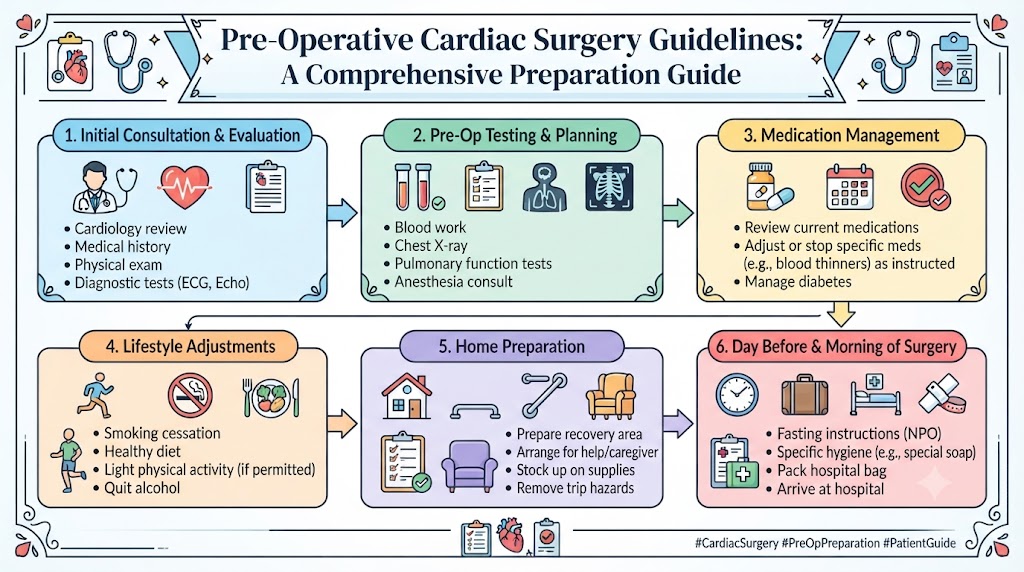
Preparation is a deliberate sequence of events designed to build a patient’s “physiological reserve.”
PRE-OP PROCESS TABLE
| Step | Description | Purpose |
| Consultation | Detailed history review | Understanding patient context |
| Testing | Cardiac and blood diagnostics | Identifying risk variables |
| Medication Review | Adjusting blood thinners/BP meds | Preventing bleeding or complications |
| Anesthesia Check | Specialized airway and heart review | Safe administration of sedation |
| Final Plan | Reviewing the surgical strategy | Ensuring team readiness |
Role of Specialized Cardiac Hospitals
Specialized centers excel because they move beyond generic guidelines, offering deep expertise in the high-stakes management of cardiac patients.
BENEFITS OF SPECIALIZED HOSPITALS TABLE
| Benefit | Why It Matters |
| Expert Teams | Years of focus on heart-specific challenges |
| Advanced ICUs | State-of-the-art life support systems |
| Better Monitoring | Continuous, real-time data tracking |
| Faster Response | Immediate capability to manage complications |
| Personalized Care | Protocols adjusted for unique patient anatomy |
Pre-Operative Patient Instructions
Patients are often given clear, written instructions to minimize variables on the day of surgery. This includes fasting guidelines to ensure the stomach is empty, specific instructions on which morning medications to take with a small sip of water, and preparation for a comfortable hospital stay.
Common Mistakes Patients Make
- Ignoring Medication Changes: Forgetting to stop blood thinners as instructed can lead to excessive bleeding.
- Withholding Symptoms: Failing to report new chest pain or shortness of breath can delay optimization.
- Skipping Tests: Every test is part of a safety net; missing one creates a gap in data.
- Not Managing Anxiety: High stress affects cardiac output; talk to your team if you are struggling.
Real-Life Pre-Op Scenarios
- Heart Failure Optimization: A patient with heart failure is kept in the hospital for three days to stabilize fluid levels and adjust medications before valve repair.
- Diabetic Management: A diabetic patient is switched to an insulin drip pre-op to keep glucose levels within the safe “window” required for surgery.
Future of Pre-Operative Cardiac Care
The future focuses on data-driven, predictive surgery preparation. By using AI to analyze historical outcomes, hospitals are beginning to predict exactly which patients will need specific types of support long before they reach the operating theater.
FUTURE OF PRE-OP CARDIAC CARE TABLE
| Innovation | Benefit |
| AI Risk Scoring | More accurate prediction of complications |
| Wearable Monitoring | Better insight into daily heart trends |
| Digital Pre-Op Systems | Prevents missed steps in preparation |
| Remote Consultation | Reduces patient travel before surgery |
| Predictive Analytics | Proactive rather than reactive care |
FAQs
- What is pre-op cardiac evaluation? A checkup to ensure you are safe for surgery.
- Why is it important? It minimizes risk and improves recovery.
- What tests are required? ECG, Echo, blood work, and X-rays are common.
- Is “clearance” the same as optimization? No, optimization is about refining your health.
- How long does assessment take? It varies from a single visit to several days.
- Can surgery be delayed? Yes, if the team determines you need more optimization.
- Which medications are stopped? Usually blood thinners; follow specific doctor orders.
- Is fasting required? Yes, to prevent aspiration during anesthesia.
- What happens during anesthesia check? The anesthesiologist reviews your risks.
- How do hospitals reduce risk? Through specialized ICUs and expert teams.
- Do I need to stop smoking? Yes, it improves lung and heart health significantly.
- Can I bring a family member? Yes, family support is highly encouraged.
- Is high blood pressure an issue? It must be controlled before surgery.
- What if I have an infection? Surgery is often postponed to treat it.
- How do I best prepare? Follow your hospital’s written checklist.
Final Thoughts
Pre-operative preparation is a collaborative journey between you and your healthcare team. By following these cardiac surgery guidelines and choosing a hospital that prioritizes optimization and multidisciplinary care, you are taking the most important step toward a successful procedure and a healthy recovery.For more information, resources, and help comparing hospitals, visit BestHeartSurgery. Your health is your priority, and being informed is your greatest asset in your surgical journey.