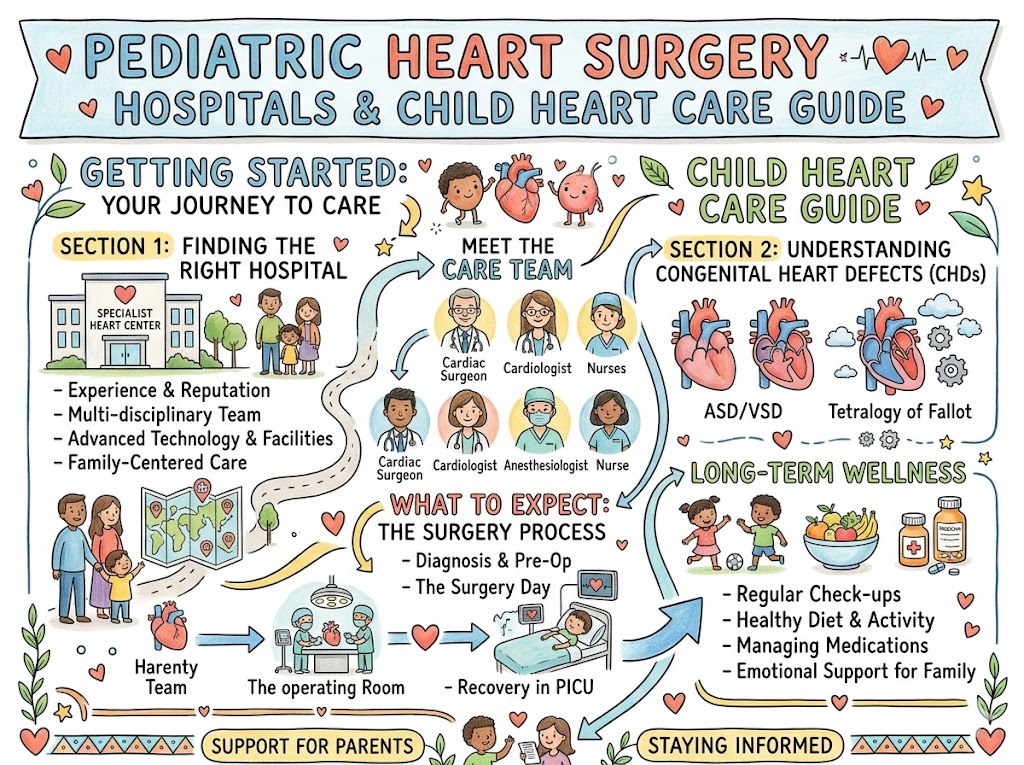
Introduction
Receiving a diagnosis that your child has a heart condition can be one of the most overwhelming experiences for any parent. In those first moments of uncertainty, the world seems to stand still. However, it is essential to remember that you are not alone on this journey. Modern medical science has made incredible strides in treating heart conditions in newborns, infants, and children, offering a path to a healthy and active future.When a child is diagnosed with a heart defect, the need for specialized care becomes immediate. Unlike adult cardiology, pediatric heart care requires a unique set of skills, smaller surgical instruments, and a deep understanding of how a growing child’s body responds to intervention. This is why choosing the right Pediatric Heart Surgery Hospitals is the most significant decision you will make for your child’s health.At BestHeartSurgery, we understand that this journey is as much about emotional resilience as it is about medical expertise. Whether you are navigating a recent fetal diagnosis or looking for urgent evaluation for a child struggling with breathing difficulties, the goal is always the same: to provide the highest standard of care in a supportive environment. In this guide, we will walk you through the world of pediatric heart surgery, from understanding the conditions to preparing for recovery, ensuring you have the knowledge to advocate for your child’s well-being every step of the way.
What Is Pediatric Heart Surgery?
Pediatric heart surgery is a specialized surgical branch dedicated to correcting structural heart defects in children, ranging from tiny newborns to teenagers. These defects are often present at birth, known as congenital heart defects, though some conditions may develop later in childhood.
Unlike adult heart surgery, which often deals with age-related wear and tear like blocked arteries, pediatric surgery focuses on “fixing the plumbing.” It involves realigning vessels, repairing holes in the heart, or reconstructing valves to ensure that oxygen-rich blood flows correctly to the rest of the body. Because children are still growing, pediatric surgeons must consider the long-term impact of every procedure, making this a highly specialized and delicate field of medicine.
Common Heart Conditions in Children
The human heart is a complex machine, and sometimes, it needs a little help to work perfectly. Some of the most common conditions include:
- Hole in the Heart (ASD/VSD): These are openings in the walls between heart chambers. Small ones may close on their own, but larger ones often require repair to prevent heart strain.
- Valve Defects: The valves may be too narrow (stenosis) or leaky (regurgitation), disrupting the flow of blood.
- Tetralogy of Fallot: A complex condition involving four different defects that cause oxygen-poor blood to circulate through the body.
- Transposition of Great Arteries: A condition where the heart’s main arteries are swapped, requiring urgent attention shortly after birth.
- Patent Ductus Arteriosus (PDA): A temporary blood vessel in the fetus that fails to close after birth, which is common in premature infants.
Warning Signs Parents Should Never Ignore
Your child is your priority, and you are the best observer of their health. Early detection is often the key to a smoother recovery. Seek medical advice if you notice:
- Fast Breathing: If your baby seems to breathe rapidly even while sleeping or resting.
- Poor Feeding: A baby who gets tired easily while breastfeeding or bottle-feeding, or who doesn’t seem to gain weight.
- Cyanosis (Blue Color): A bluish tint around the lips, tongue, or fingernails, especially during crying or feeding.
- Excessive Fatigue: Older children who get breathless very quickly during play compared to their peers.
- Frequent Infections: Recurrent chest infections or pneumonia can sometimes be linked to underlying heart issues.
- Unexplained Fainting: In older children, fainting during physical activity should always be evaluated by a cardiologist.
Why Pediatric Heart Surgery Hospitals Matter
A specialized hospital is not just a building; it is a dedicated ecosystem of care. Pediatric cardiac surgery requires:
- Expert Surgeons: Surgeons who specialize exclusively in the tiny, intricate hearts of children.
- Neonatal Cardiac Care: Specialized protocols for babies who are only days or even hours old.
- Advanced ICU (PCICU): A Pediatric Cardiac Intensive Care Unit is the heart of the recovery process, where experts monitor every beat and breath 24/7.
- Multidisciplinary Teams: Your child’s care involves a team—cardiologists, surgeons, anesthetists, nutritionists, and therapists—who work together.
- Emergency Readiness: Pediatric heart conditions can be unpredictable, requiring a hospital that is ready for surgery at a moment’s notice.
How Pediatric Heart Surgery Works
The path to surgery is a collaborative effort between your family and the medical team:
- Diagnosis: Usually confirmed through an echocardiogram (an ultrasound of the heart).
- Evaluation: Specialists assess the severity of the defect and the child’s overall physical health.
- Surgical Planning: Surgeons map out the procedure, often using 3D models of the child’s heart.
- The Procedure: The heart may be stopped and a heart-lung machine takes over the work of circulating blood during the repair.
- Recovery: The child is moved to the PCICU for stabilization, where specialized nurses and doctors monitor recovery hour by hour.
- Follow-up: Long-term monitoring ensures the repair grows well with the child.
Types of Pediatric Heart Surgeries
Modern surgery offers several approaches depending on the child’s age and condition:
- Open-Heart Surgery: The traditional method where the surgeon opens the chest to access the heart directly.
- Minimally Invasive: Smaller incisions are used to reduce recovery time and scarring.
- Catheter-based Interventions: Sometimes, doctors can fix heart defects using a thin tube inserted through a vein, avoiding open surgery entirely.
- Corrective vs. Palliative: Some conditions are fixed in one surgery (corrective), while others require a series of procedures over several years (palliative/staged) to guide the heart to work better.
Role of NICU and Pediatric Cardiac ICU
The “ICU” is the place where healing begins. In a Pediatric Cardiac ICU, your child is surrounded by the best technology:
- Continuous Monitoring: Every vital sign is tracked on screens in real-time.
- Ventilator Support: Helping the child breathe comfortably while they recover from anesthesia.
- Infection Control: Strict hygiene protocols to protect the child while their immune system is working hard.
- Nutritional Support: Specialized feeding to ensure the body has the energy it needs to mend.
Risks and Realistic Expectations
It is normal to feel nervous. Every surgery carries risk, but pediatric surgeons perform thousands of these procedures with a high success rate. It is important to have an open conversation with your surgeon about:
- The complexity of your child’s specific condition.
- The expected length of the hospital stay.
- The fact that recovery is a marathon, not a sprint.
- The reality that some children may require additional interventions as they grow, as heart repairs are not always permanent solutions for life.
Recovery After Pediatric Heart Surgery
The transition from the hospital to home is a milestone. Recovery involves:
- Patience: Your child will be tired for several weeks.
- Nutrition: Following the dietitian’s plan for high-calorie, nutritious meals.
- Medication: Strictly adhering to the schedule of antibiotics or heart-strengthening drugs.
- Activity Restrictions: Avoiding contact sports or heavy lifting for the period advised by the surgeon.
- Emotional Care: Providing extra cuddles and patience, as children often feel confused or scared post-surgery.
Role of Parents During Treatment
You are the most important part of the care team. Your role is:
- Your Child’s Advocate: Ask questions, take notes, and ensure you understand every instruction.
- Emotional Anchor: Your calm presence provides the comfort your child needs to heal.
- Following the Plan: Being meticulous about medication and follow-up appointments.
- Communication: Keep the medical team informed of any small changes you notice in your child’s appetite or behavior.
How to Choose the Best Pediatric Heart Surgery Hospital
When evaluating hospitals, look for:
- Proven Success: A hospital with a robust volume of pediatric heart surgeries.
- NICU/PCICU Facilities: Modern, well-equipped intensive care units.
- Multidisciplinary Approach: A team that includes social workers and child psychologists to support the whole family.
- Atmosphere: A child-friendly environment that makes the hospital less intimidating.
- Reputation: Programs like BestHeartSurgery are often noted for their comprehensive patient support systems.
Real-Life Family Scenarios
- The Newborn Case: A baby is born with a heart defect and stabilized in the NICU. Through early surgical intervention, the baby is feeding well within weeks and growing normally.
- The School-Age Case: A child who was always “too tired to run” is diagnosed with an ASD. After a successful, low-risk surgery, the child returns to school and participates in sports for the first time.
- The Complex Case: A child with multiple heart defects undergoes a staged procedure. Despite the long road, the family remains connected with the surgical team for years, celebrating each milestone of the child’s development.
Prevention and Early Detection
While many congenital heart defects cannot be prevented, early detection is possible:
- Prenatal Screening: Fetal echocardiograms can identify heart defects before birth.
- Newborn Screenings: Pulse oximetry tests are standard and can flag potential heart issues in newborns.
- Regular Pediatric Visits: Never skip a routine checkup; your pediatrician listens for heart murmurs that can be early indicators of a condition.
Future of Pediatric Cardiac Surgery
The future is incredibly bright. We are seeing:
- Minimally Invasive Techniques: Smaller scars and faster healing.
- AI Diagnostics: Computers helping surgeons plan operations with pinpoint accuracy.
- Regenerative Medicine: Ongoing research into ways to help the heart heal itself.
- Tele-medicine: Connecting families in rural areas with the best pediatric cardiologists for consultation and follow-up.
FAQs
1. What is pediatric heart surgery? It is a surgical procedure to fix heart defects in children. It covers everything from minor repairs in newborns to complex reconstructions in older children, ensuring the heart pumps blood correctly.
2. Is heart surgery safe for babies? Yes. While it is a major procedure, specialized pediatric surgeons are experts in performing delicate surgeries on even the smallest infants, with very high success rates.
3. How long does recovery take? Hospital stays can range from a few days to a few weeks, depending on the surgery. Full recovery at home may take several months as the child regains their strength and energy.
4. What causes heart defects in children? Most heart defects are caused by a combination of genetic and environmental factors during early pregnancy. Often, there is nothing a parent could have done to prevent it.
5. Can children live normal lives after surgery? Absolutely. Most children who undergo heart surgery grow up to live full, active lives, participate in sports, and reach all their developmental milestones.
6. Will my child need more surgeries later? It depends on the condition. Some repairs last a lifetime, while others may need adjustments as the child grows larger.
7. Is there a long wait for surgery? Urgent cases are prioritized immediately. Your medical team will communicate the timing clearly based on your child’s clinical needs.
8. Can I stay with my child in the ICU? Most pediatric hospitals encourage parents to stay close and participate in their child’s care, as it helps the child feel comforted.
9. Are there long-term side effects of heart surgery? Most children recover fully without lasting side effects, provided they maintain regular follow-up visits with their cardiologist.
10. Do I need to restrict my child’s activity forever? Usually, no. After the healing period, most children are encouraged to be as active as their peers.
11. What is the success rate? Success rates for pediatric heart surgeries are generally very high in specialized centers, but your surgeon will give you specific stats based on your child’s diagnosis.
12. How do I handle the financial burden? Many hospitals have social work departments to help families navigate insurance, government schemes, and financial aid options.
13. Does the child feel pain? In the hospital, doctors use advanced pain management to ensure your child is comfortable throughout the process.
14. What if my child is a premature baby? Neonatal heart surgery is a specialty. Hospitals equipped for this have specific care plans for the unique needs of premature infants.
15. Where can I find emotional support? Many hospitals offer parent support groups where you can connect with other families who have walked this path.
Final Conclusion
Choosing to undergo heart surgery for your child is perhaps the greatest act of love and courage you will perform. It is natural to feel a whirlwind of emotions—fear, hope, and uncertainty—but please know that you are part of a community that understands your journey. Your child’s heart is strong, and with the guidance of specialized medical teams, the path toward a healthy life is well within reach.The advancements in pediatric cardiac surgery mean that today, more children than ever are overcoming congenital heart conditions and going on to live vibrant, full lives. By choosing a dedicated pediatric heart surgery hospital, you are ensuring that your child receives not just the most advanced medical care, but also the compassionate support that families like yours need during this time.