Introduction
A cardiac emergency is a moment when time becomes the most precious commodity. When a heart attack, an aortic rupture, or a severe valve complication occurs, the speed and expertise of medical intervention determine the outcome. The difference between a life-threatening crisis and a successful recovery often lies in how quickly a patient reaches a facility equipped for emergency heart surgery.As cardiovascular health becomes a primary concern for people of all ages, understanding where to turn during an emergency is a necessary piece of knowledge for every family. The role of specialized surgeons, 24/7 intensive care teams, and cutting-edge surgical infrastructure cannot be overstated when it comes to saving heart function during critical events.For those seeking to understand the landscape of urgent cardiac treatment, BestHeartSurgery provides essential resources on identifying facilities that maintain the highest standards of emergency response. Preparedness and knowledge are the first steps in protecting your heart health and ensuring that you have access to the best care when you need it most.
What Is Emergency Heart Surgery?
Emergency heart surgery is a life-saving intervention performed when a patient’s cardiovascular system is under immediate threat of failure. Unlike planned (elective) procedures, which are scheduled in advance to treat chronic conditions, emergency surgery is performed with little notice to stabilize a patient who is in critical condition.
These procedures are vital when the heart is unable to pump blood effectively, when there is a risk of rupture, or when an acute blockage threatens to cause permanent heart muscle damage. The ultimate goal is to stabilize the patient, restore blood flow, and repair structural damage to ensure that the heart can continue its vital function.
Common Conditions Requiring Emergency Heart Surgery
When the heart faces a sudden crisis, specialized surgical teams must act fast to address specific conditions:
- Severe Heart Attack Complications: When a heart attack causes a rupture in the heart muscle or severely damages critical structures.
- Coronary Artery Blockage: Sudden, total blockage of main arteries that cannot be resolved through less invasive methods.
- Aortic Aneurysm Rupture: A tear or burst in the aorta, the body’s largest artery, requiring urgent surgical repair to prevent fatal bleeding.
- Heart Valve Failure: A sudden tear or infection of a heart valve that leaves the heart unable to regulate blood flow.
- Cardiac Trauma: Physical injury to the chest that causes damage to the heart muscle or blood vessels.
- Congenital Heart Emergencies: Sudden issues arising in patients born with structural heart abnormalities that require immediate stabilization.
Warning Signs of a Cardiac Emergency
Recognizing the symptoms of a cardiac crisis can save lives. Never dismiss the following warning signs:
- Severe Chest Pain: Often described as a crushing pressure, tightness, or squeezing sensation in the center of the chest.
- Shortness of Breath: Feeling unable to catch your breath, even while at rest.
- Sudden Sweating: Breaking out in a cold, clammy sweat without physical exertion.
- Dizziness and Fainting: Feeling lightheaded or losing consciousness unexpectedly.
- Rapid or Irregular Heartbeat: A sensation that the heart is racing or fluttering uncontrollably.
- Pain Radiating to the Arm or Jaw: Discomfort that travels from the chest to the neck, jaw, shoulders, or arms.
- Sudden Weakness: An overwhelming feeling of fatigue or physical collapse.
Why Specialized Emergency Cardiac Hospitals Matter
Not every medical facility is equipped to perform complex heart surgery at a moment’s notice. Specialized hospitals offer unique advantages:
- 24/7 Cardiac Emergency Teams: Surgeons, anesthesiologists, and perfusionists are ready at all hours to initiate surgical protocols.
- Advanced Cardiac ICUs: Specialized units with constant monitoring, focused specifically on the unique needs of cardiac surgical patients.
- Emergency Surgery Readiness: Dedicated operating rooms kept in a constant state of readiness for urgent procedures.
- Cardiac Imaging Technologies: Rapid-scan equipment that provides surgeons with an immediate map of the heart’s condition.
- Critical Care Monitoring: Sophisticated systems that track every heartbeat and blood pressure change in real-time.
- Rapid Stabilization: Protocols designed to get the patient from the emergency room to the operating table as quickly as possible.
How Emergency Heart Surgery Is Performed
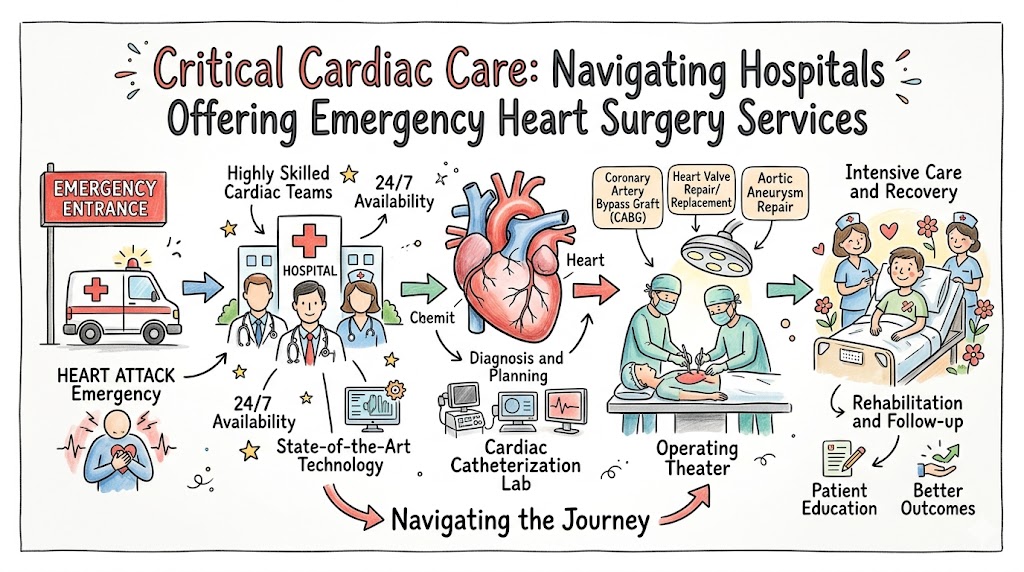
The path from a cardiac emergency to surgery is a refined, high-speed process:
- Emergency Diagnosis: Rapid assessment using ECGs, blood tests, and cardiac imaging to pinpoint the issue.
- Patient Stabilization: Using medications and life support tools to keep the heart functioning while surgical plans are finalized.
- Cardiac Imaging and Testing: Utilizing echocardiograms or angiograms to identify the exact site of damage.
- Surgical Preparation: Rapid preparation of the patient and the operating team to minimize time lost.
- Emergency Surgical Procedure: The surgeon repairs the artery, valve, or ruptured vessel, often using bypass techniques or specialized patches.
- ICU Recovery Monitoring: The patient is moved to the cardiac ICU, where intensive monitoring manages blood pressure and healing.
- Rehabilitation Planning: Physical therapists and heart specialists begin assessing the patient for future movement and recovery.
Modern Technology in Emergency Cardiac Hospitals
Innovation has transformed the survival rates for emergency heart patients:
- AI-Assisted Cardiac Imaging: Allows for split-second interpretation of medical scans to guide surgical decisions.
- Hybrid Cardiac Operating Rooms: Spaces that combine surgical equipment with imaging technology, allowing surgeons to see the heart while they operate.
- Advanced Heart-Lung Machines: Devices that take over the work of the heart and lungs during surgery, keeping the body oxygenated.
- Robotic Cardiac Assistance: Tools that provide surgeons with unmatched stability and vision during delicate repairs.
- Emergency Telecardiology: Systems that allow emergency doctors to consult with top-tier surgeons even before the patient arrives.
Benefits of Choosing Advanced Emergency Heart Surgery Hospitals
Choosing a facility with dedicated emergency cardiac infrastructure ensures:
- Faster Treatment Response: Minimizing the “door-to-needle” or “door-to-balloon/surgery” time.
- Superior Emergency Monitoring: Constant watch over the patient’s critical parameters.
- Experienced Surgical Teams: Access to specialists who are practiced in making high-stakes decisions under pressure.
- Advanced ICU Support: Nursing staff specifically trained in post-cardiac surgical recovery.
- Reduced Complications: Using modern tools and protocols that minimize surgical risk.
Recovery After Emergency Heart Surgery
The road to recovery is a process of gradual healing and rebuilding:
- ICU Recovery Phase: The initial stage focuses on weaning the patient off ventilators and stabilizing vitals.
- Pain and Medication Management: Carefully managed pain relief is essential to allow the chest to heal properly.
- Cardiac Rehabilitation: A structured program of exercise and education designed to strengthen the heart safely.
- Physical Recovery Timeline: Most patients start with gentle walking and slowly increase activity over weeks.
- Emotional Support: Recognizing that a heart emergency is traumatic; counseling is often part of the recovery plan.
- Lifestyle Modifications: Adopting new habits is non-negotiable to prevent future cardiac events.
Risks and Realistic Expectations
- High-Stakes Procedure: Every emergency heart surgery carries significant risks due to the critical nature of the condition.
- Varying Recovery Speed: Each patient heals at a unique pace; patience is a critical part of the process.
- Long-Term Medication: You may need life-long blood thinners or blood pressure medication to support the heart.
- Lifestyle Requirements: Surgery is a repair; a healthy lifestyle is the maintenance required to keep it working.
- Ongoing Rehabilitation: Cardiac rehab is not optional; it is a vital part of the recovery framework.
Common Mistakes Patients Make
- Ignoring Early Symptoms: Waiting for “the pain to go away” while a heart event is progressing.
- Delaying Emergency Care: Thinking a heart attack will “pass on its own” or waiting for a ride instead of calling for emergency services.
- Poor Medication Adherence: Failing to take prescribed post-op drugs, which can lead to clotting or heart strain.
- Missing Follow-up Visits: Skipping appointments that monitor the success of the repair.
- Smoking After Surgery: Continuing to smoke damages the vessels and risks the success of the surgical repair.
- Avoiding Rehabilitation: Skipping exercise classes meant to strengthen the heart muscle.
Best Practices for Long-Term Heart Health
- Heart-Healthy Diet: Focus on low sodium, low saturated fats, and high fiber.
- Regular Exercise: Consult your doctor for an exercise regimen that matches your current heart strength.
- Blood Pressure Management: Consistent monitoring and adherence to prescribed medications.
- Diabetes Control: Keeping blood sugar levels stable to protect blood vessel integrity.
- Stress Reduction: Utilizing mindfulness or therapy to reduce the strain on your cardiovascular system.
- Routine Checkups: Consistent screening allows for the early detection of any new issues.
Real-World Emergency Cardiac Healthcare Use Cases
- Emergency Bypass: A patient experiencing a sudden, major artery blockage receives an emergency graft to restore blood flow.
- Aortic Repair: An individual with an undiagnosed aneurysm receives life-saving surgery after a sudden rupture.
- Elderly Valve Surgery: A senior with sudden valve failure is stabilized and receives an emergency replacement to restore quality of life.
- Complex Multivessel Care: Patients with blockages across several arteries receive coordinated care in an emergency setting.
Future of Emergency Heart Surgery and Cardiac Care
The future is becoming increasingly data-driven and precise:
- AI-Driven Diagnostics: Computers predicting a heart event minutes or hours before it occurs.
- Robotic Emergency Assistance: Surgeons using remote-controlled instruments for even higher precision.
- Smart Wearables: Devices that alert hospital teams the moment your heart rhythm changes.
- Personalized Treatment: Genetic mapping used to determine the exact medication and surgical approach for you.
FAQs
- What is emergency heart surgery? It is a non-elective surgical intervention needed to save a life during a cardiac crisis.
- How fast should heart attack patients reach hospitals? Ideally, within the first hour to minimize heart muscle damage.
- Is emergency bypass surgery dangerous? It is a high-risk procedure, but it is necessary for survival in certain situations.
- Can patients fully recover after emergency cardiac surgery? Many patients return to a high quality of life with proper rehabilitation and lifestyle changes.
- What symptoms should never be ignored? Chest pain, sudden shortness of breath, and fainting.
- How long is ICU recovery after heart surgery? It typically ranges from a few days to over a week, depending on the complexity of the case.
- Can I choose my hospital? In an emergency, go to the nearest hospital capable of cardiac care, but know your options in advance.
- Do I need a follow-up with a cardiologist? Yes, lifelong cardiac follow-up is essential.
- How do I know if a hospital has emergency cardiac services? Research your local hospitals and see if they have 24/7 cardiac ICU and surgical capabilities.
- Is physical therapy part of the process? Yes, cardiac rehabilitation is the gold standard for recovery.
- Will I have restrictions? Yes, your doctor will advise you on lifting, driving, and physical activity.
- Can I fly after recovery? Only once your doctor clears you, typically months later.
- Is nutrition important? It is arguably the most important factor in long-term heart health.
- What if I have diabetes? You will need very close coordination between your heart surgeon and endocrinologist.
- What is the most important thing to remember? Act fast; time is muscle when it comes to the heart.
Final Thoughts
The experience of a cardiac emergency is life-altering, but it is also a reminder of the incredible resilience of the human heart and the brilliance of modern medicine. When you choose a hospital equipped with advanced emergency heart surgery services, you are ensuring that you have the best possible team at your side during your most vulnerable moments. However, remember that the care continues long after the surgery. By committing to a heart-healthy lifestyle and regular follow-ups, you honor the effort that went into saving your heart.