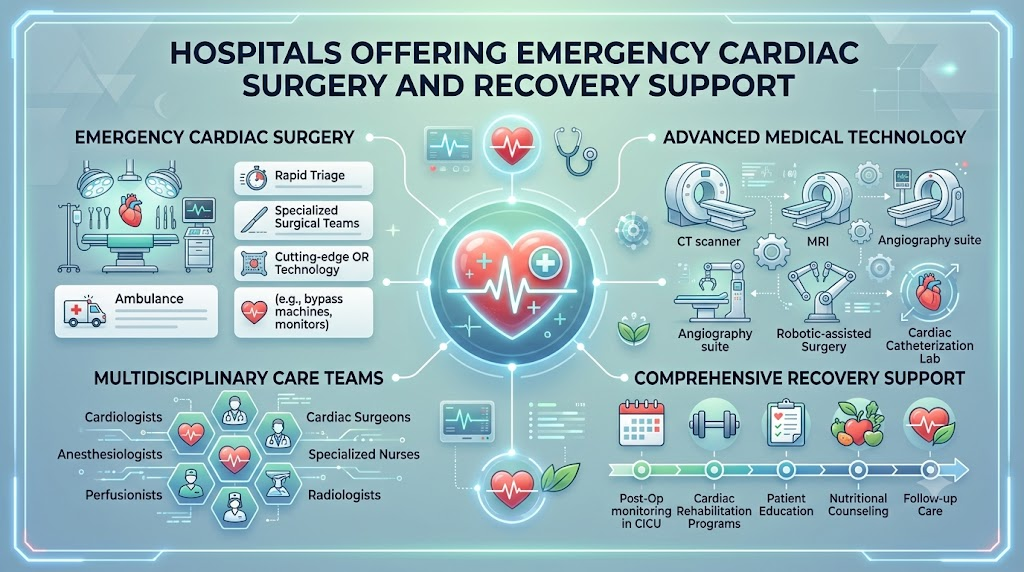
Emergency heart surgery may be needed when a serious heart problem puts a person’s life at risk. Fast treatment, skilled medical teams, and close care after surgery can all play important roles.
Hospitals offering emergency cardiac surgery and recovery provide urgent assessment and treatment for selected heart conditions. Their teams may include heart surgeons, heart doctors, anesthesia staff, and critical care nurses. Many patients also need care in a cardiac intensive care unit (ICU).
Recovery does not end when surgery is over. Patients may need close monitoring, help with daily tasks, and follow-up care. Family support can also help patients feel informed and cared for.
Families can learn about heart care services through bestheartsurgery and prepare questions for hospital teams. However, a suspected heart emergency needs immediate medical help. Do not delay emergency care to compare hospitals online.
What Is Emergency Cardiac Surgery?
Emergency cardiac surgery is an operation used to treat a serious heart problem that needs urgent care. The aim is to address the problem as quickly and safely as the patient’s condition allows.
Doctors may consider emergency surgery for certain conditions, such as:
- Severe damage to the heart after a heart attack.
- Serious problems with a heart valve.
- A tear in a major blood vessel near the heart.
- Major chest injuries that damage the heart.
- Severe complications after a heart procedure.
- Other life-threatening heart conditions that need an operation.
Not every heart attack needs surgery. Some patients need medicines or a procedure that uses a thin tube called a catheter.
The treating team decides which approach fits the patient’s condition. The team may need to act before every test is complete.
When Might a Patient Need Emergency Heart Surgery?
Some heart problems can worsen quickly and need urgent assessment. Doctors decide whether surgery is necessary after reviewing the patient’s condition.
Possible reasons include severe heart damage, a failing heart valve, or a serious tear in a major blood vessel. Some chest injuries may also require urgent surgery.
Doctors may use several tests when time allows. These can include an electrocardiogram (ECG), blood tests, and heart scans. An ECG records the heart’s electrical activity.
Symptoms alone cannot show whether a person needs surgery. Only a medical team can assess the cause and choose the right treatment.
Suspected heart attacks and other life-threatening symptoms need immediate emergency care. Call your local emergency number rather than waiting for an online consultation or hospital comparison.
What Should Families Do During a Cardiac Emergency?
A cardiac emergency can be frightening. Knowing what to do can help families act without delay.
Warning signs may include:
- Chest pain, pressure, or tightness.
- Severe shortness of breath.
- Fainting or sudden collapse.
- Cold sweats with other heart symptoms.
- Sudden weakness or severe discomfort.
Call your local emergency number if you suspect a life-threatening heart problem. Follow the dispatcher’s instructions.
Do not give home remedies or try to treat a suspected heart attack yourself. Do not drive an unstable patient yourself when emergency services are available.
If someone collapses and does not respond or breathe normally, call emergency services. Start CPR if you can. CPR means pressing firmly and quickly on the chest to help blood flow. Use an automated external defibrillator (AED) if one is available. Follow its voice instructions.
How Do Hospitals Assess Patients Before Emergency Surgery?
Emergency teams work quickly to understand the problem and support the patient. They may begin lifesaving care before completing every test.
The team may:
- Check breathing, pulse, blood pressure, and alertness.
- Ask about symptoms, medical history, allergies, and medicines.
- Perform an ECG and other heart tests.
- Use blood tests or scans when appropriate.
- Consult heart surgeons, heart doctors, and critical care staff.
- Explain the treatment plan and seek consent when possible.
The team also checks whether the patient can safely undergo surgery. Doctors balance the need for fast treatment with the risks of the patient’s condition.
The exact process varies with the emergency. Some patients need surgery at once. Others may need a different urgent treatment.
What Happens During Emergency Cardiac Surgery?
The surgical team treats the heart problem using the operation best suited to the patient’s needs. The patient receives anesthesia to prevent pain and support safe care during surgery.
The team monitors the patient’s vital signs throughout the operation. Some procedures use a heart-lung bypass machine. This machine helps move blood and supply oxygen while the surgeon works on the heart. Other operations may not need it.
The length and complexity of surgery depend on the problem and the patient’s condition. Some cases involve more than one procedure.
After surgery, the team moves the patient to an area for close monitoring. Many patients go to a cardiac ICU, where staff watch for changes and manage early recovery.
No operation has a guaranteed outcome. The surgical team can explain the main risks and the care the patient may need.
Why Is a Cardiac ICU Important After Surgery?
A cardiac ICU provides close care for patients with serious heart problems or major heart surgery. Specially trained staff monitor the patient and respond to changes.
The team may provide:
- Continuous checks of heart rhythm and blood pressure.
- Breathing support when needed.
- Care for tubes, drains, and intravenous lines.
- Pain relief under medical supervision.
- Checks for bleeding and infection.
- Tests to monitor kidney function and other organs.
- Updates for the patient’s family.
Some patients wake slowly after anesthesia. Others may need a breathing machine or medicines that affect alertness. These early signs alone do not show how well someone will recover.
The care team adjusts support as the patient improves. The length of the ICU stay depends on the operation, the patient’s health, and any complications.
Families can ask the team what each tube or monitor does. Staff can explain which changes are expected and which need attention.
What Should Families Expect During Early Recovery?
Early recovery begins when the patient is stable enough for the next steps. Staff watch breathing, heart function, pain, and other signs closely.
The team may reduce breathing support when it is safe. Nurses also help manage pain and check the surgical wound.
When the patient is ready, staff may help them sit up, stand, or walk. Safe movement can support recovery, but patients must follow their care team’s advice.
Patients may feel tired or have less appetite. Sleep changes and emotional ups and downs can also occur. These experiences vary from person to person.
Some patients improve quickly, while others need more support. There is no single recovery timeline that suits everyone.
How Can Families Support a Patient After Emergency Heart Surgery?
Families can support recovery by staying calm, sharing useful information, and working with the care team. Small acts of help can make hospital care easier.
Helpful steps include:
- Ask the care team for clear updates.
- Share the patient’s medical history and medicine details.
- Tell staff about known allergies.
- Write down questions and instructions.
- Follow visiting rules and infection-control guidance.
- Help plan transport and home support.
- Offer calm words and patient encouragement.
- Report sudden changes or new concerns to staff.
Ask the team how you can safely help with daily care. Some patients may need help eating, moving, or keeping track of instructions.
Do not adjust medical equipment or give unapproved medicines. Never change the treatment plan without the team’s guidance.
Family members should also take breaks when possible. Caring for someone after major surgery can be tiring, and support from others may help.
Warning Signs During Hospital Recovery
Hospital staff monitor patients for problems, but families should report concerns promptly. Do not wait for the next routine check if something seems wrong.
Tell the bedside nurse or clinical team at once if the patient has:
- New or worsening chest pain.
- Sudden or severe trouble breathing.
- Fainting or a major change in alertness.
- Heavy or ongoing bleeding.
- Increasing redness, swelling, or drainage around the wound.
- Fever or other signs of infection.
- Any sudden change that causes concern.
After discharge, severe chest pain, major breathing trouble, collapse, or other life-threatening symptoms require emergency help. Contact local emergency services.
For less severe concerns, follow the discharge plan and contact the care team as advised. Do not change medicines or wound care without medical guidance.
Preparing for Discharge After Emergency Heart Surgery
The care team decides when a patient is ready to leave the hospital. This depends on the patient’s health, healing, support needs, and follow-up plan.
Before leaving, patients and families should understand the care plan. Ask the team to explain any unclear instructions.
Questions Families Should Ask Before Hospital Discharge
| Topic | Question to ask | Why it matters |
|---|---|---|
| Medicines | How should prescribed medicines be taken? | Helps prevent mistakes |
| Wound care | How should we care for the wound? | Supports healing and helps spot problems |
| Activity | Which activities are safe? | Helps avoid unsafe strain |
| Warning signs | Which symptoms need urgent help? | Helps families act quickly |
| Follow-up | When is the next appointment? | Supports ongoing checks |
| Rehabilitation | Is cardiac rehabilitation suitable? | Helps plan safe recovery |
Also ask whom to contact if a problem occurs at home. Find out whether the patient needs help with daily tasks or transport.
Follow the care team’s instructions for medicines and wound care. Do not stop or change prescribed medicines without medical advice.
Cardiac Rehabilitation and Long-Term Recovery
Cardiac rehabilitation may help suitable patients regain strength and confidence after heart surgery or a serious heart event. It is a supervised program designed to support recovery.
A program may include safe exercise, heart health education, support with daily habits, and help managing stress. The team chooses activities based on the patient’s health and progress.
Not every patient follows the same plan. The treating team decides when rehabilitation can begin and which activities are safe.
Follow-up visits also matter. They help clinicians check healing, review medicines, and address new concerns.
Patients should ask about rehabilitation before discharge when possible. They should also ask how to get support if travel or daily activities become difficult.
Emergency Cardiac Care and Recovery Stages
Each patient follows a different path through treatment and recovery. These are the main stages a patient may experience.
| Stage of care | What may happen | Main purpose |
|---|---|---|
| Emergency assessment | Checks, scans, and urgent treatment | Find the problem and support vital functions |
| Surgery | An operation under anesthesia | Treat the serious heart problem |
| Cardiac ICU care | Close monitoring and breathing support if needed | Watch for complications and support recovery |
| Hospital recovery | Safe movement, wound care, and regular checks | Help the patient regain strength |
| Discharge planning | Instructions, medicine review, and follow-up plans | Prepare for care at home |
| Rehabilitation | Guided exercise and heart health support | Build strength and support long-term health |
Not every patient needs the same care at each stage. The treating team decides what is suitable based on the operation and the patient’s condition.
How to Choose a Hospital for Emergency Cardiac Surgery and Recovery
When time allows, families may compare hospitals based on their services and care plans. However, never delay emergency treatment to compare hospitals online.
Consider these points when reviewing a hospital:
- Emergency cardiac care: Ask whether emergency heart surgery is available.
- Cardiac ICU: Check whether the hospital offers close care after major heart surgery.
- Specialist team: Ask about access to cardiac surgeons, cardiologists, and critical care staff.
- Operating room support: Confirm that the hospital can provide the required emergency surgical care.
- Essential services: Ask about blood bank support, monitoring equipment, and other needed services.
- Safety practices: Look for clear infection-control procedures and patient safety measures.
- Family communication: Ask how staff provide updates and answer questions.
- Discharge planning: Check whether the team explains medicines, wound care, and warning signs.
- Rehabilitation and follow-up: Ask about ongoing care after the patient leaves the hospital.
Services differ between hospitals. Confirm what each hospital can provide instead of assuming that every center offers every procedure.
The treating team should explain the available choices when the situation allows. In a life-threatening emergency, getting immediate medical help is the priority.
How BestHeartSurgery Can Help Readers
Finding information about heart surgery can feel difficult during a stressful time. A heart surgery information platform can help readers learn about cardiac care services and prepare questions for hospital teams.
BestHeartSurgery can serve as a starting point for exploring heart care information. Families can use what they learn to discuss hospital services and recovery needs with qualified professionals.
Confirm the hospital’s available services and specialist access directly. A website listing alone does not guarantee that a hospital can provide a specific procedure or treatment outcome.
Frequently Asked Questions
1. What is emergency cardiac surgery?
Emergency cardiac surgery is an operation used to treat a serious heart problem that needs urgent care. The medical team chooses the procedure based on the patient’s condition.
2. Which heart problems may need emergency surgery?
Some severe heart attacks, serious valve problems, major blood vessel tears, and serious chest injuries may need emergency surgery. Other patients may need different urgent treatments.
3. What happens after emergency heart surgery?
Patients often receive close monitoring in a cardiac ICU. The team manages pain, checks heart function, watches for complications, and supports early recovery.
4. Why might a patient need a cardiac ICU?
A cardiac ICU provides close monitoring after major heart surgery. Staff can quickly respond to changes in heart rhythm, breathing, blood pressure, and other vital signs.
5. How can families support someone after heart surgery?
Families can share medical details, ask questions, follow hospital rules, and offer calm support. They should report concerns and follow the care team’s instructions.
6. How long does recovery after emergency heart surgery take?
Recovery varies with the operation, the patient’s health, and any complications. Some people need more hospital care and rehabilitation than others.
7. What warning signs should families watch for after surgery?
Report worsening chest pain, breathing problems, heavy bleeding, fever, wound changes, or reduced alertness. Severe symptoms after discharge may require emergency help.
8. What should patients know before leaving the hospital?
Patients should understand their medicine instructions, wound care, activity limits, warning signs, and follow-up plan. They should know whom to contact with concerns.
9. Can cardiac rehabilitation help after emergency heart surgery?
Yes, cardiac rehabilitation may help suitable patients rebuild strength and learn ways to support heart health. The care team decides when it is safe to begin.
10. How can I choose a hospital for emergency cardiac surgery?
Consider emergency services, specialist teams, cardiac ICU care, safety practices, family communication, and follow-up support. Never delay emergency care to compare hospitals.
Conclusion
Emergency cardiac surgery may require rapid decisions, skilled surgical care, and close monitoring. A cardiac ICU helps the team watch for complications and support early recovery.
Families can play an important role by sharing medical details, asking questions, and following care instructions. Discharge planning and cardiac rehabilitation may also support recovery after hospital care.
Choose a hospital with suitable emergency services and a clear recovery plan when time allows. Work closely with the cardiac team and seek urgent help if warning signs appear.