INTRODUCTION
Heart surgery often requires careful planning and regular medical support. Patients may need to speak with cardiac surgeons before an operation. They also need guidance during recovery.
However, travelling to a specialist hospital can be difficult. This is especially true for people who live far away. Telehealth offers another way to communicate with healthcare teams.
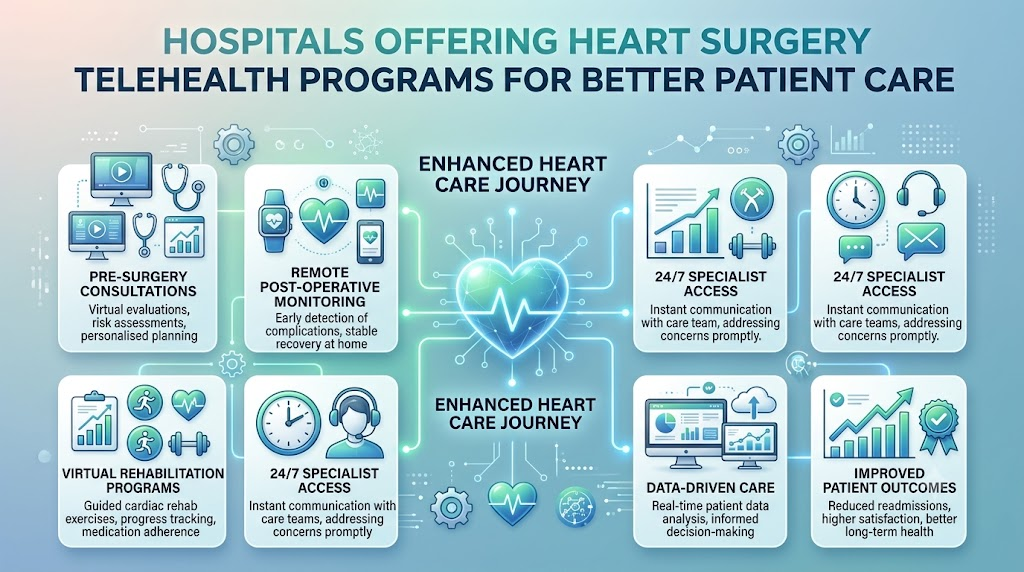
Through video calls and secure digital platforms, patients can discuss selected health concerns. They may also receive follow-up advice after leaving the hospital. Some hospitals offer remote monitoring and virtual cardiac rehabilitation.
Telehealth does not replace surgery, physical examinations, or emergency treatment. Instead, it supports selected parts of cardiac care. Bestheartsurgery helps readers understand hospital services and explore important questions about heart surgery care.
What Are Heart Surgery Telehealth Programs?
Heart surgery telehealth programs use digital tools to connect patients with healthcare professionals. These services may include video calls, phone consultations, and secure online platforms.
Patients can use virtual appointments to discuss treatment plans. They may also ask questions about recovery and medicines.
Telehealth and remote patient monitoring are related but different.
Telehealth allows patients to communicate with doctors from another location. It can support consultations, medical discussions, and follow-up appointments.
Remote patient monitoring allows selected health measurements to reach the care team. These may include blood pressure, heart rate, or body weight.
Hospitals may offer virtual services before and after surgery. However, available services differ between facilities. The patient’s health condition also affects which services are suitable.
Why Do Hospitals Offer Telehealth for Heart Surgery Patients?
Heart surgery patients often need support at different stages. Telehealth can make selected appointments easier to access.
Hospitals may offer these programs for several reasons.
- Easier specialist access: Patients can speak with cardiac specialists without travelling for every consultation.
- Less travel: Virtual appointments may reduce travel for suitable follow-ups.
- Support for distant patients: People living far from cardiac hospitals can maintain contact with their care teams.
- Caregiver involvement: Family members may join appointments with the patient’s permission.
- Recovery support: Doctors can discuss progress after hospital discharge.
- Better coordination: Surgeons, cardiologists, and local doctors can share relevant information.
- Support with mobility: Virtual appointments may help patients who find travel difficult.
Telehealth is one part of a wider treatment plan. Patients may still need hospital visits, tests, and physical examinations.
Virtual Consultations Before Heart Surgery
A virtual consultation can help patients understand their planned treatment. It also gives them time to discuss concerns with a specialist.
During an online appointment, a cardiac surgeon may:
- Discuss symptoms and previous diagnoses.
- Review the patient’s medical history.
- Explain the proposed operation.
- Discuss possible benefits and risks.
- Answer questions from patients and caregivers.
- Explain available treatment alternatives.
- Discuss hospital admission and preparation.
- Explain general recovery needs.
Patients should prepare their medical records before the appointment. This helps the doctor understand their health history.
However, an online consultation cannot provide every type of examination. The patient may still need an in-person assessment. Diagnostic tests may also be required before surgery.
Online Second Opinions and Medical Report Reviews
Some patients want another specialist’s opinion before major heart surgery. Telehealth can help them discuss their case with another cardiac specialist.
The patient may share relevant medical reports through a secure hospital platform.
These records may include:
- Electrocardiogram (ECG) reports.
- Echocardiogram findings.
- Angiography reports.
- Relevant CT scan reports.
- Relevant MRI reports.
- Previous surgery and treatment records.
- Current medicine details.
The specialist may review the available information and explain the proposed surgical approach. They can also discuss possible alternatives and answer questions.
Patients should provide complete and clear records. Poor-quality images or missing reports can limit the review.
A second opinion does not guarantee a different treatment plan. The specialist may agree with the original recommendation. Some patients may also need further tests or an in-person examination.
Telehealth Follow-Up After Heart Surgery
Recovery continues after a patient leaves the hospital. Regular communication helps patients understand their progress and follow discharge instructions.
Some hospitals offer virtual follow-up appointments after heart surgery. These appointments may help doctors discuss:
General Recovery: Patients can explain how they feel and discuss changes in their daily routine.
Pain and Discomfort: Doctors can review reported pain and discuss whether further assessment is needed.
Surgical Wound Concerns: Patients may be asked about redness, swelling, or discharge. A doctor may request photographs through an approved platform.
Breathing and Activity: Patients can discuss breathing concerns and activity levels during recovery.
Medicines: The care team can review prescribed medicines and reported side effects.
Discharge Instructions: Patients can ask questions about wound care, rest, and daily activities.
Further Care: Doctors can plan additional appointments, tests, or an in-person examination.
Not every post-operative visit can happen online. Some concerns require a direct examination or hospital assessment.
Remote Patient Monitoring After Heart Surgery
Remote patient monitoring uses digital devices to collect selected health information at home. The information may be shared with a healthcare team.
Depending on the hospital program, patients may be asked to record:
- Blood pressure.
- Heart rate.
- Body weight.
- Temperature.
- Oxygen saturation, when advised.
- Symptoms and activity records.
- Surgical wound photographs, when requested.
Some programs use connected devices or mobile applications. Other programs may ask patients to enter readings manually.
The care team can review the information according to its monitoring process. This may help identify changes that need further discussion.
Patients should only collect measurements requested by their healthcare team. They should use the devices and methods recommended by the hospital.
Home readings do not replace a professional assessment. They may also fail to detect certain complications. Patients should contact their care team when new concerns develop.
Virtual Cardiac Rehabilitation Programs
Cardiac rehabilitation supports recovery and long-term heart health. It may include supervised activity, education, and lifestyle guidance.
Some hospitals offer selected rehabilitation services through telehealth.
Virtual programs may provide:
- Education about heart health.
- Guidance on safe physical activity.
- Advice about balanced nutrition.
- Support with prescribed medicine routines.
- Regular progress discussions.
- Emotional support during recovery.
- Communication with rehabilitation professionals.
The program should match the patient’s condition and recovery stage.
Patients should not start exercising or increase activity without medical approval. Their rehabilitation team must decide which activities are safe.
Some patients may need in-person supervision. Others may use a combination of virtual and hospital-based sessions.
How Family Members Can Join Virtual Cardiac Appointments
Family members often support patients before and after heart surgery. They may help with medicines, appointments, and daily activities.
A virtual consultation can allow caregivers to understand the recovery plan.
With the patient’s permission, family members can:
- Help prepare questions before the appointment.
- Keep medical records organized.
- Support older patients with technology.
- Listen to medicine instructions.
- Record follow-up dates.
- Help communicate with local doctors.
- Support daily recovery routines.
Caregivers should respect the patient’s privacy and decisions. The patient should agree before family members join private medical discussions.
Benefits of Telehealth for Heart Surgery Patients
Telehealth may offer several advantages when used appropriately. It can make communication easier during selected stages of treatment.
Less Travel: Patients may avoid some journeys for suitable consultations.
Specialist Access: People living far from cardiac hospitals may find it easier to speak with specialists.
Convenient Follow-Up: Virtual appointments can support communication after discharge.
Caregiver Participation: Family members can join discussions when the patient agrees.
Recovery Guidance: Patients can ask questions about medicines and daily activities.
Care Coordination: Virtual communication may help connect hospital teams with local doctors.
Home Measurement Review: Selected readings may help doctors discuss changes in a patient’s condition.
These benefits depend on the hospital’s services and the patient’s needs. Telehealth may not be suitable for every appointment or medical concern.
Limitations of Heart Surgery Telehealth Programs
Virtual care has important limitations. Patients should understand what doctors can and cannot assess remotely.
Some limitations include:
- Physical examinations may still be necessary.
- Certain surgical wounds need direct assessment.
- Blood tests cannot be replaced by video calls.
- Imaging tests must still be completed when required.
- Poor internet connections can interrupt appointments.
- Some patients may struggle with digital devices.
- Home monitoring may not detect every complication.
- Emergency treatment cannot be provided through a routine virtual appointment.
Hospitals should explain when patients need an in-person visit. Patients should also know how to contact their care team between appointments.
When Patients Need In-Person or Emergency Care
Some symptoms need prompt medical attention. Patients should not wait for a scheduled video appointment when serious symptoms occur.
Warning signs may include:
- Severe or new chest pain.
- Serious difficulty breathing.
- Fainting or loss of consciousness.
- Sudden weakness or stroke-like symptoms.
- Uncontrolled bleeding.
- Rapidly worsening surgical wound problems.
- Severe or rapidly increasing swelling.
Call emergency services for serious or life-threatening symptoms. Do not rely on a routine telehealth appointment for emergency care.
For other new or worsening concerns, contact the treating team promptly. Follow the hospital’s emergency instructions.
How to Prepare for a Heart Surgery Telehealth Appointment
Good preparation can make a virtual appointment more useful. Patients should collect important information before the call.
Table 1: Preparing for a Heart Surgery Telehealth Appointment
| Preparation Area | What Patients Should Do | Why It Matters |
|---|---|---|
| Technology | Check the device, camera, microphone, and internet connection. | Helps prevent technical interruptions. |
| Medical Records | Keep test reports, discharge papers, and medical history nearby. | Helps the doctor review relevant information. |
| Medicine List | Prepare an updated list of prescribed medicines. | Supports accurate medicine discussions. |
| Symptoms | Write down new symptoms and recovery concerns. | Helps patients explain their condition clearly. |
| Home Measurements | Keep requested readings ready. | Allows discussion of selected health changes. |
| Privacy | Choose a quiet and private place. | Protects personal medical discussions. |
| Caregiver Support | Ask a family member to join if helpful. | Provides extra support and helps remember instructions. |
Patients should also prepare questions about their recovery. They can write down the doctor’s advice after the appointment.
If technical problems occur, contact the hospital for help. Do not use an unapproved platform to share private medical information.
Privacy and Security During Virtual Cardiac Care
Telehealth involves sharing personal health information. Patients should understand how their hospital protects these details.
Follow these basic precautions:
- Use hospital-approved video platforms.
- Avoid public Wi-Fi when possible.
- Keep devices and applications updated.
- Use strong and private passwords.
- Avoid sharing medical records through unapproved channels.
- Check who can access uploaded reports.
- Ask how the hospital stores patient information.
- Do not share appointment links with strangers.
Patients can ask the hospital about its privacy policy. They should also report suspicious messages or unexpected requests for medical details.
How to Choose a Hospital Offering Heart Surgery Telehealth Programs
Choosing a cardiac hospital requires more than checking virtual appointment options. Patients should understand how online services fit into the full treatment plan.
Consider these important points:
Cardiac Specialists: Check whether the hospital provides access to qualified cardiac surgeons and cardiologists.
Pre-Surgery Consultations: Ask whether patients can discuss treatment plans online before surgery.
Post-Operative Follow-Up: Check whether virtual appointments are available after discharge.
Remote Monitoring: Ask whether the hospital provides monitoring support when medically appropriate.
Cardiac Rehabilitation: Find out whether virtual rehabilitation or a combined program is available.
Secure Communication: Check which approved platforms the hospital uses.
Technical Support: Ask whether patients can receive help with online appointments.
Emergency Instructions: Understand how to contact the hospital when symptoms develop.
In-Person Services: Check access to physical examinations, tests, and hospital assessments.
Local Doctor Coordination: Ask whether the hospital can communicate with the patient’s local healthcare team.
Program Costs: Request clear details about consultation fees and any additional charges.
Table 2: Telehealth Services Available for Heart Surgery Patients
| Telehealth Service | How It Works | Possible Patient Benefit |
|---|---|---|
| Pre-Surgery Consultation | Patients discuss treatment plans with a cardiac specialist online. | Helps patients understand the proposed operation. |
| Second Opinions | Another specialist reviews the available medical information remotely. | Provides another professional perspective. |
| Medical Report Review | Doctors examine shared ECG, echo, and imaging reports. | Helps patients discuss test findings. |
| Post-Operative Follow-Up | Patients discuss recovery and concerns through virtual appointments. | Makes selected follow-up discussions easier. |
| Remote Monitoring | Selected home measurements reach the care team. | Supports review of health changes. |
| Virtual Cardiac Rehabilitation | Patients receive selected education and recovery guidance online. | Supports recovery and heart health education. |
Not every hospital offers all these services. Patients should confirm availability, eligibility, and costs directly with the hospital.
BestHeartSurgery.com can help readers understand what to consider when exploring cardiac hospitals. Patients should compare specialist care, follow-up support, and access to in-person treatment before making a decision.
Frequently Asked Questions
1. What are heart surgery telehealth programs?
Heart surgery telehealth programs use video calls, phone consultations, and secure digital platforms. They help patients communicate with cardiac specialists remotely. Services may include pre-surgery discussions, second opinions, and selected follow-up appointments. Some programs also offer remote monitoring or virtual rehabilitation.
2. Can patients consult a cardiac surgeon online before surgery?
Yes, some hospitals offer virtual consultations before heart surgery. Patients can discuss symptoms, medical history, and proposed treatment. The surgeon may explain risks and recovery needs. However, physical examinations and diagnostic tests may still be necessary before an operation.
3. Can telehealth be used after heart surgery?
Yes, selected post-operative appointments may take place online. Doctors can discuss recovery, medicines, and reported concerns. However, some wounds and symptoms require direct examination. Patients should follow their hospital’s instructions about virtual and in-person follow-ups.
4. What information can doctors review during a virtual follow-up?
Doctors may discuss symptoms, medicines, activity levels, and recovery progress. They may also review requested home measurements or photographs shared through an approved platform. The information available depends on the hospital’s system. Virtual reviews cannot replace every physical examination or test.
5. Do hospitals offer remote monitoring after heart surgery?
Some hospitals provide remote monitoring for selected patients. They may ask patients to record blood pressure, heart rate, weight, or other measurements. The care team decides which information is useful. Patients should follow the monitoring instructions provided by their doctors.
6. Can cardiac rehabilitation be provided online?
Some hospitals offer virtual cardiac rehabilitation or a combination of online and in-person sessions. These programs may include education, activity guidance, and lifestyle support. The rehabilitation plan must match the patient’s health and recovery stage. Exercise should begin only with medical approval.
7. Can family members join a virtual cardiac appointment?
Family members can often join when the patient gives permission and the hospital allows it. Caregivers may help prepare questions and understand recovery instructions. They can also support medicine routines and appointment planning. The patient’s privacy and consent should always be respected.
8. Does telehealth replace in-person cardiac follow-up?
No. Telehealth supports selected parts of cardiac care, but it cannot replace necessary physical examinations, imaging, blood tests, or hospital treatment. The doctor decides which appointments can happen online. Patients may need both virtual and in-person care during recovery.
9. What symptoms after heart surgery need urgent medical attention?
Severe chest pain, serious breathing difficulty, fainting, stroke-like symptoms, and uncontrolled bleeding need urgent attention. Rapidly worsening wound problems also require prompt assessment. Patients should contact emergency services for serious symptoms instead of waiting for a virtual appointment.
10. How can patients choose a hospital with heart surgery telehealth services?
Check the hospital’s cardiac specialists, virtual consultation options, follow-up services, and remote monitoring support. Ask about cardiac rehabilitation, secure platforms, emergency instructions, and program costs. Also confirm that in-person examinations and tests are available when needed.
Final Thoughts
Telehealth can make selected heart surgery consultations and follow-up appointments easier to access. It can support communication, recovery discussions, and coordination with healthcare professionals.
However, virtual care cannot replace necessary physical examinations, diagnostic tests, surgery, or emergency treatment. Patients should understand which services their hospital provides and when an in-person visit is needed.
Hospitals Offering Heart Surgery Telehealth Programs may provide useful support at different stages of care. BestHeartSurgery.com helps readers understand hospital services and prepare for their search. Before choosing a hospital, ask how its virtual care options fit into the complete cardiac treatment plan.