Introduction
Coronary artery disease affects the blood supply to the heart. It develops when fatty deposits, called plaque, build up inside the heart’s arteries. These deposits can narrow or block the arteries. As a result, the heart may not receive enough blood and oxygen.
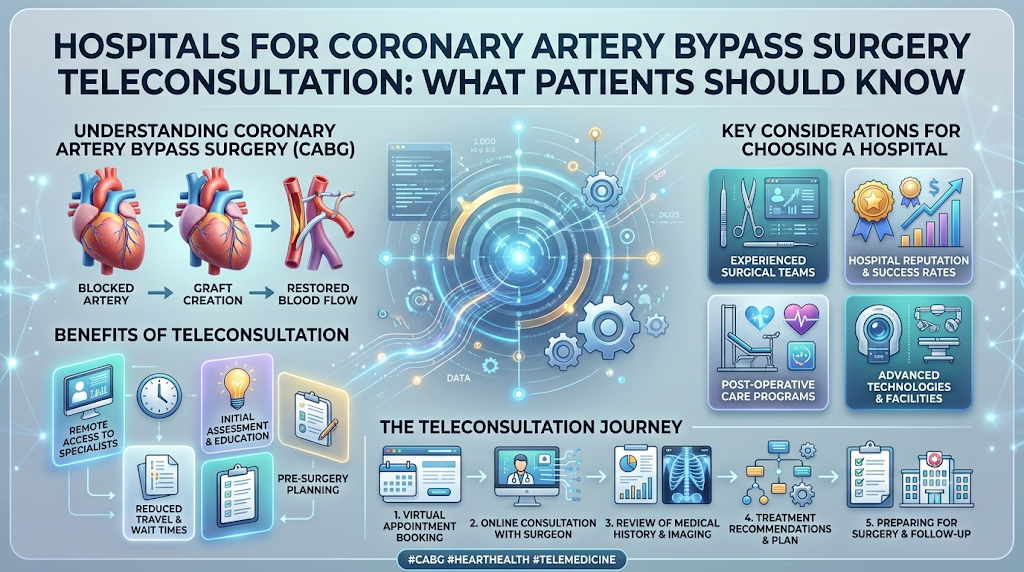
Coronary artery bypass grafting (CABG), also called bypass surgery, can help improve blood flow. The surgeon uses a blood vessel from another part of the body. This vessel creates a new route around a blocked heart artery.
Some patients want to speak with a heart surgeon before visiting a hospital. Hospitals for Coronary Artery Bypass Surgery Teleconsultation can help patients discuss their condition online. They may also share reports and ask about treatment options.
However, an online meeting cannot replace every medical examination or test. A surgeon may still need to examine the patient in person. This article Bestheartsurgery.com explains how CABG teleconsultation works and how to compare heart hospitals.
What Is Coronary Artery Bypass Surgery?
Coronary artery bypass surgery treats certain cases of coronary artery disease. It helps blood flow around narrowed or blocked heart arteries.
The heart needs a steady supply of oxygen-rich blood. Coronary arteries carry this blood to the heart muscle. When plaque builds up, these arteries can become narrow.
This may cause symptoms such as:
- Chest pain or pressure.
- Shortness of breath.
- Tiredness during physical activity.
- Discomfort in the arms, back, neck, or jaw.
Some people may have no clear symptoms. Others may develop serious heart problems.
How Does Bypass Surgery Work?
During CABG, the surgeon uses a healthy blood vessel as a graft. This vessel may come from the chest, arm, or leg.
The surgeon connects the graft to create a route around the blocked section. Blood can then reach the heart muscle through this new path.
The number of grafts depends on the location and number of affected arteries. Some patients need one graft. Others may need several.
Who May Need CABG?
CABG may be considered for people with certain patterns of coronary artery disease. The decision depends on several factors.
These include:
- The number of narrowed or blocked arteries.
- The location and severity of blockages.
- The heart’s pumping function.
- Other health conditions.
- Previous heart treatments.
- The patient’s overall health and treatment goals.
A cardiac specialist reviews the medical records and test results. The specialist then discusses suitable treatment options. CABG is not the right choice for every patient.
What Is Teleconsultation for CABG?
Teleconsultation is a remote meeting between a patient and a healthcare professional. It usually takes place through a secure video or digital platform.
For CABG, patients may use an online cardiac surgeon consultation to discuss their diagnosis. They can also ask questions before visiting a hospital.
Depending on the hospital’s process, patients may be able to:
- Discuss symptoms and medical history.
- Share available test reports.
- Ask about bypass surgery.
- Understand possible treatment choices.
- Request a second opinion.
- Discuss the surgical team and hospital facilities.
- Ask about estimated costs.
- Plan hospital visits and travel.
- Learn about possible next steps.
The exact services differ between hospitals. Some may review reports before the meeting. Others may ask patients to submit documents during booking.
Teleconsultation is useful for an initial discussion. However, the surgeon may not be able to make a final decision online. Physical examinations and further tests may still be needed.
How Teleconsultation Helps Patients Compare Heart Hospitals
Choosing a hospital for heart surgery is an important decision. Patients and families may want to understand their options before travelling.
Teleconsultation can make this process easier. It allows patients to speak with specialists and gather information from home.
Initial Discussion With a Cardiac Surgeon
Patients can explain their symptoms and share their diagnosis. The surgeon may review available reports and discuss possible next steps.
This discussion can help patients understand whether further assessment is needed. It also gives them a chance to ask basic questions about CABG.
Getting a Second Opinion
Some patients want another specialist to review their diagnosis. A CABG second opinion can help them understand different treatment views.
The second surgeon may review angiography images and other records. The surgeon may agree with the earlier plan or suggest further assessment.
Patients should share complete records whenever possible. An incomplete review may lead to limited advice.
Learning About Hospital Facilities
An online meeting may help patients ask about the hospital’s cardiac surgery services.
They can ask about cardiac intensive care, diagnostic tests, and rehabilitation. They can also ask who will coordinate care after surgery.
However, patients should verify these details directly. An online discussion does not prove that every requested service is available.
Planning Travel and Admission
Patients travelling from another city or country may need extra planning. They can ask about appointment dates, admission steps, and required documents.
They may also discuss how follow-up visits will work after discharge. This can help families plan time and travel costs.
What Medical Records Should Patients Prepare?
Medical records help the cardiac surgeon understand the patient’s condition. Clear and recent reports can make an online consultation more useful.
Patients should prepare the following documents when available:
- Coronary angiography reports and images: These show the heart arteries and areas of narrowing.
- ECG reports: An electrocardiogram records the heart’s electrical activity.
- Echocardiogram results: This test uses sound waves to show heart structure and function.
- Stress test results: These may show how the heart responds to physical activity.
- Blood test reports: These can provide information about blood sugar, kidney function, and other health measures.
- Current medication list: Include medicine names and prescribed instructions.
- Previous treatment records: Share details of earlier heart procedures or surgery.
- Medical history: Include conditions such as diabetes and high blood pressure.
- Symptom notes: Record when symptoms occur and what makes them better or worse.
Patients should share clear copies through the hospital’s approved process. They should ask how the hospital protects personal medical information.
Do not delay urgent medical care while collecting reports. Serious symptoms need immediate attention.
What Happens During a CABG Teleconsultation?
A CABG online consultation usually has three main stages. The process may differ between hospitals.
Before the Consultation
Patients book an appointment through the hospital’s approved system. The hospital may request medical records before the meeting.
Prepare a short list of symptoms and questions. Keep the medication list and recent reports nearby.
Check the internet connection, camera, and microphone. Choose a quiet place where the patient can speak comfortably.
During the Consultation
The cardiac specialist may ask about symptoms and medical history. The doctor may review the available reports and images.
The patient can ask about CABG, other treatment options, and possible risks. The specialist may explain what further tests or examinations are needed.
The doctor may not be able to confirm the final treatment plan remotely. This depends on the information available and the patient’s condition.
After the Consultation
The hospital may explain the next steps. These could include further tests, an in-person examination, or another specialist appointment.
Patients should write down the advice they receive. They should also ask who to contact if symptoms change before the next visit.
| Stage | What Happens | What Patients Should Prepare |
|---|---|---|
| Before consultation | Appointment booking and record sharing | Medical reports, medication list, and symptoms |
| During consultation | Discussion with the cardiac specialist | Questions about diagnosis and treatment options |
| After consultation | Review of next steps | Notes, further tests, or an in-person appointment |
| Hospital assessment | Physical review and additional investigations | Original reports and requested documents |
| Treatment planning | Discussion of suitable care options | Questions about surgery, risks, costs, and recovery |
How to Choose a Hospital for Coronary Artery Bypass Surgery
The right hospital should have suitable cardiac surgery services and a clear care process. Patients should check the medical team, facilities, and support available.
Experienced Cardiac Surgeons
Check the surgeon’s qualifications and relevant experience. Ask who will lead the operation and who will manage follow-up care.
Patients can also ask how the surgical team reviews complex cases. Clear answers can help families understand the care structure.
Cardiac Surgery Department
Ask whether the hospital has a dedicated cardiac surgery department. Find out how the surgical team works with other heart specialists.
A coordinated team can help manage different parts of treatment.
Cardiac Intensive Care Unit
CABG patients often need close monitoring after surgery. A cardiac intensive care unit provides care for patients who need close support.
Ask about the unit and the team responsible for postoperative care.
Diagnostic Facilities
Heart surgery planning may require several tests. Ask which tests the hospital can perform and whether previous reports can be reviewed.
The surgeon may request updated tests before confirming a treatment plan.
Anaesthesia and Emergency Support
Ask about the cardiac anaesthesia team and emergency support. Patients can also ask about blood bank access and infection prevention practices.
These details matter when comparing hospitals for major heart surgery.
Cardiac Rehabilitation
Cardiac rehabilitation supports recovery after heart treatment. It may include supervised exercise, health education, and support with lifestyle changes.
Ask whether rehabilitation is available and how patients can join after discharge.
Communication and Cost Details
Patients should understand how the hospital shares updates with families. They should also receive clear information about admission and follow-up arrangements.
Request a written cost estimate. Check what it includes and which services may cost extra.
Can Teleconsultation Confirm Whether CABG Is Needed?
Teleconsultation can help a surgeon review available medical information. It may also help patients understand why bypass surgery is being discussed.
However, an online meeting alone may not confirm whether CABG is needed. The decision often requires a detailed review of the patient’s condition.
The surgeon may need:
- A complete medical history.
- A physical examination.
- Coronary angiography review.
- An assessment of heart function.
- Additional diagnostic tests.
- Discussion with other members of the heart care team.
Treatment options may include medicines, angioplasty, or bypass surgery. Angioplasty uses a small tube and often a stent to improve blood flow.
The best option depends on the patient’s condition. Doctors consider the pattern of artery disease, heart function, other health problems, and individual needs.
Patients should ask the surgeon to explain why a treatment is being considered. They should also understand the possible benefits, risks, and alternatives.
What Happens After the Online Consultation?
The next steps depend on the information reviewed during the meeting. The hospital may recommend an in-person assessment before making treatment decisions.
Possible next steps include:
- Further reports: The surgeon may request missing or updated test results.
- Physical examination: The patient may need to visit the hospital.
- Treatment discussion: The team may explain suitable treatment options.
- Admission planning: The hospital may discuss dates and required documents.
- Cost discussion: Staff may provide an estimate based on the proposed care.
- Recovery planning: The team may explain rehabilitation and follow-up arrangements.
Patients should ask whether the same surgeon will handle the next appointment. They should also know how to report changes in symptoms.
Do not change prescribed medicines based only on general online information. Discuss any treatment changes with the treating doctor.
Risks, Limitations, and Privacy in Teleconsultation
Teleconsultation can save travel time and support early discussions. However, it has important limits.
A video call cannot replace every physical examination. The doctor cannot perform all tests or check every physical sign through a screen.
Other possible problems include:
- Poor-quality scans or unclear reports.
- Missing medical information.
- Internet or sound problems.
- Difficulty reviewing complex cases remotely.
- Delays in arranging further tests.
Patients should use a secure, hospital-approved platform. They should share records only through approved channels.
Avoid sending medical reports through unknown links or public accounts. Ask how the hospital stores and protects patient information.
When Is Teleconsultation Not Suitable?
Teleconsultation is not an emergency service. Patients with possible heart attack symptoms should not wait for an online appointment.
Seek emergency medical help for symptoms such as:
- New, severe, or persistent chest pain or pressure.
- Severe shortness of breath.
- Fainting or sudden collapse.
- Cold sweating with chest discomfort.
- Chest discomfort with nausea or unusual weakness.
These symptoms may signal a serious heart problem. Contact local emergency services immediately. Do not try to manage severe symptoms through a video call.
Comparing Hospitals for CABG
| Hospital Selection Factor | What to Ask | Why It Matters |
|---|---|---|
| Cardiac surgeon | What are the surgeon’s qualifications and experience? | Helps patients understand specialist expertise |
| Cardiac ICU | What intensive care support is available? | Important for care after major heart surgery |
| Diagnostic facilities | Which tests can the hospital perform? | Helps support treatment planning |
| Rehabilitation | Is cardiac rehabilitation available? | Supports recovery after surgery |
| Teleconsultation | How are online reviews and follow-ups arranged? | Helps patients understand remote support |
| Cost information | What is included in the estimate? | Helps avoid confusion about expenses |
Frequently Asked Questions
1. What is teleconsultation for coronary artery bypass surgery?
Teleconsultation is an online meeting with a cardiac specialist. Patients can discuss symptoms, share available reports, and ask about CABG. The surgeon may explain possible treatment options and recommend further tests. However, an online consultation does not replace a physical examination or every test needed before surgery.
2. Can a cardiac surgeon review angiography reports online?
Yes, a surgeon may review coronary angiography reports and images online. The quality and completeness of the images matter. The surgeon may request original files or additional tests. An online review can support an initial discussion, but it may not provide enough information for a final treatment decision.
3. Can teleconsultation confirm whether I need bypass surgery?
Not always. A cardiac surgeon can review available reports and discuss whether CABG may be suitable. However, the final decision may require a physical examination, further tests, and a detailed review of heart function. The doctor must consider the patient’s full medical condition before recommending treatment.
4. What documents are needed for a CABG online consultation?
Patients should prepare angiography reports, ECG results, echocardiogram findings, and available blood tests. A current medication list and medical history are also useful. Include details of previous heart treatment and current symptoms. The hospital may request additional records based on the patient’s condition.
5. Can I get a second opinion about bypass surgery online?
Yes, many patients seek a second opinion through an online consultation. A cardiac surgeon may review existing reports and discuss other treatment options. Share complete records whenever possible. If important information is missing, the surgeon may request further tests or an in-person assessment before giving an opinion.
6. How do I choose a hospital for coronary artery bypass surgery?
Check the cardiac surgeon’s qualifications, cardiac ICU support, diagnostic facilities, and rehabilitation services. Ask about emergency support, infection prevention, and follow-up care. Request a clear cost estimate and confirm what it includes. Verify all services directly with the hospital before making a decision.
7. Can I discuss CABG risks and recovery during teleconsultation?
Yes, patients can ask about possible surgical risks, hospital admission, and recovery needs. The surgeon can explain general information and discuss concerns based on available records. However, personal risks and recovery expectations depend on the patient’s health, test results, and treatment plan.
8. Is an in-person hospital visit still needed before bypass surgery?
In many cases, yes. The surgeon may need to examine the patient and review additional tests before confirming the treatment plan. The hospital may also arrange assessments by other specialists. Teleconsultation can help prepare patients, but it does not replace required in-person care.
9. Can family members join a cardiac surgery teleconsultation?
Family members may be able to join if the patient agrees and the hospital permits it. Their presence can help patients remember important details and discuss care plans. Ask the hospital how family members can join securely. The patient should remain involved in decisions about their treatment.
10. What should I do if I have chest pain before my online appointment?
Do not wait for the online appointment if you have new, severe, or persistent chest pain. Seek emergency medical help immediately. Chest pain with breathlessness, sweating, fainting, or nausea may signal a heart attack. Contact local emergency services rather than trying to manage the problem through teleconsultation.
Final Thoughts
Teleconsultation can help patients prepare for informed discussions about coronary artery bypass surgery. It offers a way to review available records, ask questions, and understand possible next steps.
However, patients should not rely on an online meeting alone. They should compare the surgeon’s expertise, hospital facilities, follow-up support, and treatment information.
BestHeartSurgery.com can be explored for heart surgery information. Patients should confirm each hospital’s services and treatment details directly before making a decision.