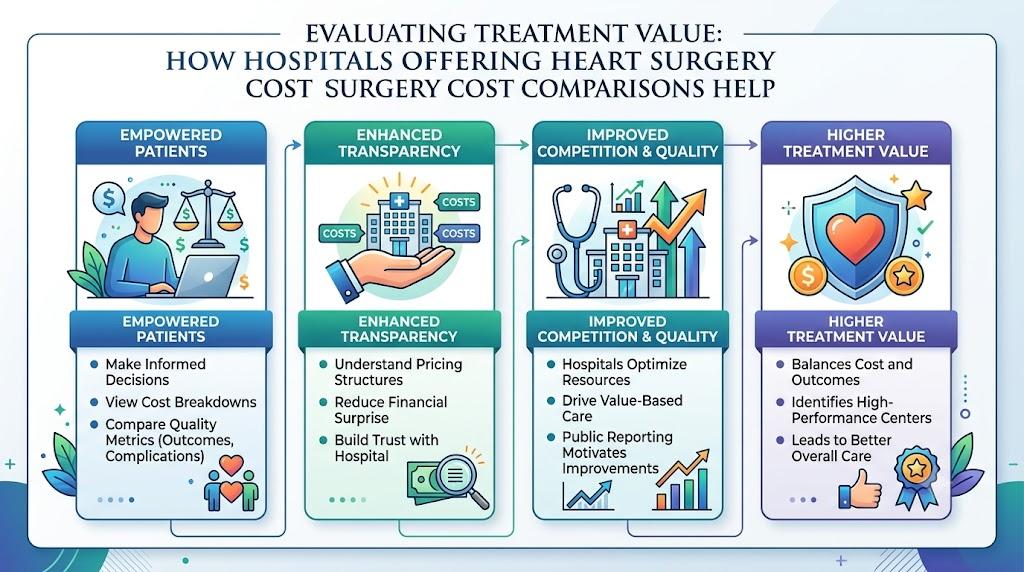
Introduction
Facing a major cardiac procedure is one of the most significant medical decisions a patient or family will ever make. Alongside concerns about surgical outcomes, recovery times, and choosing an experienced surgeon, financial considerations often play a major role in the decision-making process. Heart surgery is a highly specialized medical intervention, and total expenses can vary substantially from one healthcare facility to another.Navigating surgical options and financial estimates requires reliable, objective information. Platforms like BESTHEARTSURGERY support patients by providing educational resources to help them explore accredited cardiac centers, understand complex surgical procedures, evaluate hospital capabilities, and approach financial counseling with confidence.In this guide, you will learn why heart surgery expenses vary, what components make up a standard cost estimate, how to evaluate quality indicators alongside financial figures, and practical steps to navigate insurance coverage and recovery planning.
Why Heart Surgery Costs Vary
No two cardiac surgeries are completely identical, and medical bills reflect the individualized nature of advanced cardiovascular care. Several key clinical, geographical, and operational factors account for cost variations between facilities.
+-----------------------------------------------------------------------+
|                    FACTORS INFLUENCING SURGICAL COSTS                 |
+-----------------------------------------------------------------------+
|  1. Procedure Complexity  : Single-vessel vs. multi-vessel or transplant|
|  2. Hospital Infrastructure: Accreditation, hybrid operating suites    |
|  3. Surgeon Expertise    : Specialist credentials and surgical volume |
|  4. Intensive Care Needs  : Specialized Cardiac ICU duration and tech  |
|  5. Medical Implants      : Mechanical/tissue valves, pacemakers, grafts|
|  6. Geographic Location   : Regional overhead and administrative costs |
+-----------------------------------------------------------------------+
Procedure Complexity and Surgical Technique
The specific procedure required directly influences the overall financial plan. A straightforward minimally invasive valve repair generally involves different resource allocations, operating times, and recovery requirements than a multi-vessel open-heart Coronary Artery Bypass Grafting (CABG) or an aortic aneurysm repair.
Hospital Infrastructure and Technology
Hospitals that invest in cutting-edge surgical environments—such as hybrid operating rooms, advanced robotic surgical systems, and specialized Cardiac Intensive Care Units (CICUs)—incur higher operational overhead. These facilities provide advanced safety buffers, especially for high-risk patients, which is reflected in overall hospital charges.
Medical Implants and Consumables
Many cardiac procedures require specialized medical devices, such as mechanical or bioprosthetic tissue valves, artificial grafts, pacemakers, or specialized catheter supplies. The type, brand, and sophistication of the implant chosen can significantly alter total surgical costs.
ICU Stay and Total Hospitalization Duration
Recovery in a dedicated Cardiac ICU requires continuous one-on-one specialized nursing, advanced hemodynamic monitoring, and frequent laboratory evaluations. Patients requiring extended ICU monitoring or longer total hospital stays naturally incur higher daily room and nursing charges.
Common Heart Surgeries Included in Cost Comparisons
When reviewing hospital estimates, patients typically compare costs across several primary cardiovascular procedures:
- Coronary Artery Bypass Grafting (CABG): Open-heart surgery used to detour blood flow around clogged coronary arteries using healthy blood vessels harvested from another part of the body.
- Heart Valve Repair: Surgical procedures that preserve and restore a patient’s natural heart valve function to treat conditions like mitral valve prolapse.
- Heart Valve Replacement: Removing a severely diseased aortic or mitral valve and replacing it with either a mechanical or bioprosthetic tissue valve.
- Aortic Surgery: Complex procedures designed to repair life-threatening structural weaknesses in the body’s main artery, such as thoracic aortic aneurysms or dissections.
- Congenital Heart Surgery: Corrective surgeries performed to fix structural heart defects present from birth, applicable to both pediatric and adult patients.
- Minimally Invasive Cardiac Surgery: Surgical techniques performed through small chest incisions, often reducing blood loss, trauma, and overall hospital stays.
- Pacemaker and Implantable Cardioverter-Defibrillator (ICD) Implantation: Minor surgical procedures to insert electronic devices that monitor and regulate cardiac electrical rhythms.
- Heart Transplantation: Complete replacement of a failing heart with a healthy donor organ for patients with end-stage heart failure.
Heart Surgery Cost Components Comparison Table
Understanding how a final hospital bill is constructed helps prevent financial surprises during recovery.
| Cost Component | What It Usually Includes | Clinical & Financial Significance |
| Surgeon & Anesthesiologist Fees | Primary surgeon, surgical assistants, and cardiac anesthesiologist | Reflects specialist expertise, training, and procedure duration |
| Hospital & Room Charges | Standard hospital room, nursing care, and administrative services | Varies based on room category (private, semi-private, ward) |
| Cardiac ICU Charges | Specialized critical care bed, 1:1 nursing, continuous monitoring | Represents high-resource care during early post-op recovery |
| Operating Room (OR) Fees | OR time, specialized surgical tools, perfusionist, bypass machine | Tied directly to procedure complexity and time in surgery |
| Implants & Medical Devices | Prosthetic valves, vascular grafts, pacemakers, stents | Fixed device costs that vary based on mechanical vs. tissue choices |
| Diagnostics & Lab Services | Pre-op and post-op Angiography, Echo, CT scans, blood work | Essential for procedure planning and monitoring internal organ function |
| Medications & Blood Products | Anesthesia drugs, blood transfusions, blood thinners, antibiotics | Necessary for hemodynamic stability and infection prevention |
| Cardiac Rehabilitation | Monitored exercise sessions, nutrition, and physical therapy | Supports safe physical recovery and long-term heart health |
Services Offered by Leading Cardiac Hospitals
Comprehensive heart centers integrate diagnostic, surgical, and supportive departments under one organized care continuum.
                   +--------------------------------+
                   |  COMPREHENSIVE CARDIAC SERVICES|
                   +---------------+----------------+
                                   |
        +--------------------------+--------------------------+
        |                                                     |
+-------v-------+                                     +-------v-------+
| SURGICAL &    |                                     | SUPPORT &     |
| CRITICAL CARE |                                     | RECOVERY      |
+-------+-------+                                     +-------+-------+
| • Advanced ORs|                                     | • Cardiac Rehab|
| • Dedicated CICU|                                   | • Financial Desk|
| • Cath Lab    |                                     | • Follow-up Care|
+---------------+                                     +---------------+
Comprehensive Surgical and Critical Care Suites
Leading facilities operate dedicated cardiac catheterization laboratories and advanced operating rooms equipped with cardiopulmonary bypass equipment. Following surgery, patients transition directly to specialized Cardiac Intensive Care Units (CICUs) managed by critical care cardiologists and specialized cardiac nurses.
Integrated Support Services
Beyond surgery, comprehensive medical centers feature dedicated financial counseling desks to help families navigate insurance claims and payment options. Following discharge, patients transition into structured cardiac rehabilitation programs, receiving guided physical therapy and nutritional counseling.
Factors to Compare Beyond Cost
While cost comparisons are necessary for financial planning, choosing a hospital based solely on the lowest price can carry hidden clinical risks. Patient outcomes are heavily influenced by hospital quality metrics.
                       +------------------------+
                       | EVALUATING A HOSPITAL  |
                       +-----------+------------+
                                   |
         +-------------------------+-------------------------+
         |                                                   |
+--------v-------+                                  +--------v-------+
| CLINICAL QUALITY |                                | SUPPORT & SAFETY|
+--------+-------+                                  +--------+-------+
| • Surgeon Surgical Volume                         | • Infection Control
| • Hospital Accreditation                          | • Dedicated Cardiac ICU
| • Multidisciplinary Heart Team                    | • On-Site Rehab Program|
+----------------+                                  +----------------+
Surgical Volume and Experienced Heart Teams
Clinical studies consistently demonstrate a strong correlation between surgical volume and positive outcomes. Hospitals and surgeons that perform high volumes of specific cardiac procedures generally report lower complication rates and improved long-term results. Look for facilities utilizing a collaborative “Heart Team” approach, where cardiologists and surgeons jointly review complex cases.
Facility Accreditation and Infection Prevention
Accreditation from recognized national or international healthcare organizations verifies that a facility adheres to strict safety guidelines, sterile processing standards, and quality management protocols. Robust infection control programs are vital for preventing surgical site infections during open-heart recovery.
Hospital Selection Checklist
| Feature | Why It Matters |
| Board-Certified Cardiac Surgeons | Ensures advanced surgical training and verified clinical credentials |
| High Procedural Volume | Correlates directly with surgical efficiency and lower complication rates |
| Dedicated Cardiac ICU (CICU) | Provides specialized critical care during the most fragile recovery phase |
| Hospital Accreditation | Confirms adherence to stringent safety, quality, and hygiene standards |
| Transparent Cost Estimates | Helps families plan financially and reduces unbudgeted expenses |
| Structured Cardiac Rehabilitation | Supports long-term recovery, physical endurance, and lifestyle habits |
Understanding Heart Surgery Cost Estimates
A medical cost estimate is a pre-treatment projection based on an anticipated, uncomplicated care plan. Understanding how hospitals structure these estimates prevents misunderstandings later.
  [Preoperative Evaluation] ──► Blood tests, Angiography, Echo, CT scans
             │
             ▼
  [Inpatient Surgical Package] ──► OR time, Surgeon fees, Anesthesia, Devices
             │
             ▼
  [Critical Care & Room Days]  ──► CICU days + Standard room recovery days
             │
             ▼
  [Discharge & Outpatient Care] ──► Medications, Rehabilitation, Follow-up visits
Package vs. Itemized Billing
Some medical centers offer “bundled surgical packages” that cover standard preoperative tests, operating room usage, surgeon fees, routine ICU days, and standard room stays under a unified price. Other facilities utilize itemized billing, charging separately for every medication dose, diagnostic test, and consumable used during the stay.
Variable Cost Drivers
It is important to recognize that estimates represent baseline projections. Unanticipated clinical developments—such as extra time on a ventilator, temporary kidney dialysis support, extended ICU stays, or blood transfusions—will alter the final financial bill.
Insurance and Financial Planning
Navigating financial arrangements before entering the operating room helps families focus entirely on patient recovery.
+------------------------------------------------------------------------+
|                     FINANCIAL PLANNING STEPS                           |
+------------------------------------------------------------------------+
|  1. Request Written Estimate : Get an itemized breakdown from the hospital|
|  2. Verify Insurance Approval: Confirm pre-authorization & network status|
|  3. Clarify Out-of-Pocket    : Identify deductibles, copays, & caps     |
|  4. Consult Financial Desk   : Explore structured payment plans          |
+------------------------------------------------------------------------+
- Insurance Pre-Authorization: Most insurance providers require formal prior authorization for elective cardiac surgeries. Verify that both the primary surgeon and the hospital facility are within your plan’s preferred provider network.
- Understanding Out-of-Pocket Caps: Review your policy to determine exact deductibles, co-insurance percentages, and maximum out-of-pocket limits to anticipate personal financial responsibilities.
- Financial Counseling Consultations: Speak directly with the hospital’s patient financial services department. Financial counselors can explain package inclusions, assist with pre-authorization paperwork, and outline structured payment plans where available.
Questions Patients Should Ask Before Surgery
Asking clear, structured questions during financial and clinical consultations ensures complete transparency:
- Scope of Inclusions: Does this written estimate include surgeon fees, cardiac anesthesiologist fees, and assistant surgeon charges?
- Device and Implant Costs: Is the recommended valve, pacemaker, or graft covered within the base estimate, or billed separately?
- ICU and Room Breakdown: How many days of Cardiac ICU care and standard room stay are included in this package rate?
- Post-Discharge Services: Are early follow-up consultations, post-operative lab tests, and cardiac rehabilitation sessions included?
- Handling Clinical Complications: How are additional costs calculated if extended ICU stay or secondary procedures become necessary?
Recovery Costs to Consider
Financial planning for heart surgery extends beyond the day of hospital discharge. Outpatient recovery involves ongoing care requirements that should be factored into total financial planning.
+--------------------------------------------------------------------+
|                  POST-DISCHARGE RECOVERY COSTS                     |
+--------------------------------------------------------------------+
|  [Prescription Medications] --> Blood thinners, pressure & rhythm drugs|
|  [Cardiac Rehabilitation]   --> Supervised physical therapy sessions|
|  [Laboratory Monitoring]    --> Periodic blood tests (e.g., INR checks)|
|  [Travel & Support]         --> Transportation to follow-up visits   |
+--------------------------------------------------------------------+
- Long-Term Prescription Medications: Cardiac surgery patients typically require antiplatelet medications, beta-blockers, ACE inhibitors, or cholesterol therapies for months or years post-surgery.
- Outpatient Cardiac Rehabilitation: Attending regular, medically supervised rehabilitation sessions is vital for safe recovery, and insurance coverage for rehab vary by policy.
- Travel and Caregiver Support: Factor in practical expenses such as transportation to follow-up visits, temporary lodging for family members near the hospital, and potential time off work for family caregivers.
Possible Financial Challenges
Understanding potential financial pitfalls allows families to prepare contingency plans:
- Unexpected Extended ICU Stays: Secondary infections, respiratory complications, or temporary organ stress can lengthen ICU stay beyond baseline estimates.
- Implants and Brand Upgrades: Choosing premium or advanced tissue-engineered implants over standard options can increase out-of-pocket costs.
- Insurance Coverage Limitations: Certain specialized consumables or advanced robotic techniques may not be fully covered under standard insurance policies, leading to out-of-pocket expenses.
Requesting a detailed, itemized estimate and consulting with hospital financial counselors before surgery helps families navigate these variables effectively.
How BESTHEARTSURGERY Helps Patients
Evaluating hospital options and managing financial estimates can feel overwhelming. BESTHEARTSURGERY offers educational resources to assist patients and families throughout their healthcare journey.
+------------------------------------------------------------------------+
|                      BESTHEARTSURGERY RESOURCES                        |
+------------------------------------------------------------------------+
|  [Hospital Discovery]  --> Explore accredited cardiovascular centers   |
|  [Procedure Guides]    --> Access simple breakdowns of bypass & valves |
|  [Cost Education]      --> Learn how to evaluate surgical estimates    |
|  [Patient Empowerment] --> Prepare informed questions for financial desks|
+------------------------------------------------------------------------+
Through BESTHEARTSURGERY, readers can research accredited cardiovascular facilities, learn about complex heart procedures, understand hospital quality metrics, and access practical guidance on reviewing surgical estimates. By organizing complex healthcare information into an accessible format, the platform helps readers approach consultations with confidence.
Common Mistakes Patients Make
Avoiding common financial and clinical oversights leads to smoother surgical journeys and fewer unexpected expenses.
1. Selecting a Hospital Based Solely on the Lowest Price
- The Mistake: Choosing a surgical facility based strictly on a lower quote without evaluating surgeon volume, accreditation, or ICU capabilities.
- The Solution: Evaluate hospitals using a balanced scorecard that weighs surgical expertise, facility safety, and ICU infrastructure alongside financial estimates.
2. Assuming Every Fee Is Included in the Initial Quote
- The Mistake: Believing an initial estimate covers external specialist fees, implants, or post-discharge medications.
- The Solution: Request an itemized breakdown in writing and explicitly ask what services, doctors, and medical devices are excluded from the quote.
3. Skipping Financial Counseling and Insurance Pre-Authorization
- The Mistake: Scheduling elective surgery without obtaining formal written pre-authorization from your insurance provider.
- The Solution: Work directly with the hospital’s financial desk to confirm all pre-authorization requirements are met before admission.
4. Overlooking Outpatient Cardiac Rehabilitation
- The Mistake: Viewing cardiac rehabilitation as an unnecessary luxury or unneeded post-op expense.
- The Solution: Budget for cardiac rehab as an essential component of care. Guided rehabilitation significantly lowers readmission risks and accelerates recovery.
Common Myths vs. Facts
| Myth | Fact |
| The most expensive hospital always delivers the best surgical outcomes. | Clinical quality depends on surgical volume, team experience, and safety protocols, not price alone. |
| All cardiac hospitals charge identical prices for standard procedures. | Costs vary significantly based on facility infrastructure, location, device selection, and room categories. |
| Health insurance policies cover 100% of all heart surgery expenses. | Deductibles, co-pays, non-covered consumables, and room category limits often result in out-of-pocket costs. |
| Comparing hospital quotes is strictly about saving money. | Financial comparison ensures transparency, helping families understand value and plan effectively for total care needs. |
Real-Life Educational Scenarios
Scenario A: Balanced Evaluation of Quality and Price
A 62-year-old patient requiring Coronary Artery Bypass Grafting (CABG) received cost quotes from two regional hospitals. While one quote was lower, a closer review revealed that it excluded post-operative ICU monitoring and cardiac rehab. By comparing itemized details, the patient selected a facility that offered a bundled estimate including full ICU stay and rehabilitation, providing greater overall value and financial predictability.
Scenario B: Clarifying Implant Inclusions Before Valve Surgery
An individual preparing for aortic valve replacement requested an itemized financial breakdown prior to admission. The financial counselor pointed out that while a standard mechanical valve was included in the base package, the advanced tissue valve recommended by their surgeon carried an additional device cost. Understanding this ahead of time allowed the family to coordinate insurance pre-authorization smoothly.
Scenario C: Maximizing Insurance Coverage Through Pre-Authorization
A family preparing for a relative’s minimally invasive heart surgery worked directly with the hospital’s patient financial desk weeks before the scheduled date. The financial team identified specific documentation needed by the insurance company regarding the medical necessity of the technique. Securing formal approval in advance prevented out-of-pocket claim denials after discharge.
Frequently Asked Questions (FAQs)
1.Why do heart surgery costs vary between hospitals?
Costs vary due to differences in hospital infrastructure, surgical volume, specialized ICU capabilities, surgeon expertise, geographic location, and the specific brands of medical implants used.
2.What is typically included in a heart surgery estimate?
A standard package estimate usually includes operating room time, surgeon and anesthesiologist fees, routine nursing care, a specified number of ICU and ward days, and basic post-op medications.
3.How can I compare two hospital cost estimates fairly?
Compare line by line using an itemized breakdown. Verify whether surgeon fees, specialized implants, anesthesia charges, ICU days, and post-discharge rehabilitation are included in both quotes.
4.Does health insurance cover heart surgery?
Most comprehensive health insurance policies cover medically necessary heart surgery, though out-of-pocket costs like deductibles, copayments, and non-covered device upgrades may apply.
5.Are surgeon fees always included in hospital package quotes?
Not always. Some hospitals bill surgeon and anesthesiologist fees separately from facility charges. Always ask for explicit clarification in writing.
6.Why are Cardiac ICU charges billed separately or at higher rates?
Cardiac ICUs require 1:1 specialized nursing care, continuous advanced hemodynamic monitoring, and specialized life-support equipment, resulting in higher daily operational expenses.
7.Are medical implants like heart valves included in baseline estimates?
Some package estimates include standard medical implants, while others bill devices separately based on the specific type (e.g., mechanical vs. bioprosthetic valve) chosen by the surgeon.
8.Why is cardiac rehabilitation important after heart surgery?
Cardiac rehab provides medically supervised exercise training, nutritional counseling, and risk factor management, which helps rebuild physical endurance and lowers future cardiovascular risks.
9.Should I request an itemized quotation before surgery?
Yes. Requesting a detailed, written itemized estimate helps you understand exact inclusions, identify potential out-of-pocket costs, and compare facilities accurately.
10.What questions should I ask hospital financial counselors?
Ask what services are excluded from the estimate, how complications or extra ICU days are billed, whether implants are covered, and if financial payment plans are available.
11.Can minimally invasive heart surgery lower overall hospital costs?
While minimally invasive procedures may involve specialized surgical tools, they can sometimes reduce total hospitalization costs by shortening ICU stays and speeding up recovery.
12.How do I choose the right cardiac hospital for my procedure?
Evaluate facilities based on surgeon credentials, procedural volume, hospital accreditation, dedicated Cardiac ICU facilities, transparent pricing models, and structured rehabilitation programs.
13.What hidden or extra expenses should patients plan for?
Potential out-of-pocket expenses include non-covered medications, extended ICU stay beyond the estimate, specialized medical devices, travel, and outpatient cardiac rehabilitation.
14.What is the difference between bundled package pricing and itemized billing?
Bundled pricing combines surgery, room, and standard care into one single fee, whereas itemized billing charges separately for every test, medication, and hour in the operating room.
15.How does BESTHEARTSURGERY assist patients in comparing hospitals?
BESTHEARTSURGERY offers educational guides and resources that help patients explore accredited heart centers, understand procedure details, evaluate cost factors, and make informed care choices.
Final Thoughts
Navigating heart surgery involves balancing medical priorities with practical financial planning. Understanding why surgical expenses vary, requesting detailed itemized estimates, and verifying insurance coverage in advance helps prevent financial stress during recovery.However, financial comparisons should always be viewed alongside clinical quality. Surgical expertise, procedural volume, accredited ICU facilities, and comprehensive rehabilitation programs are essential components of high-quality cardiovascular care.