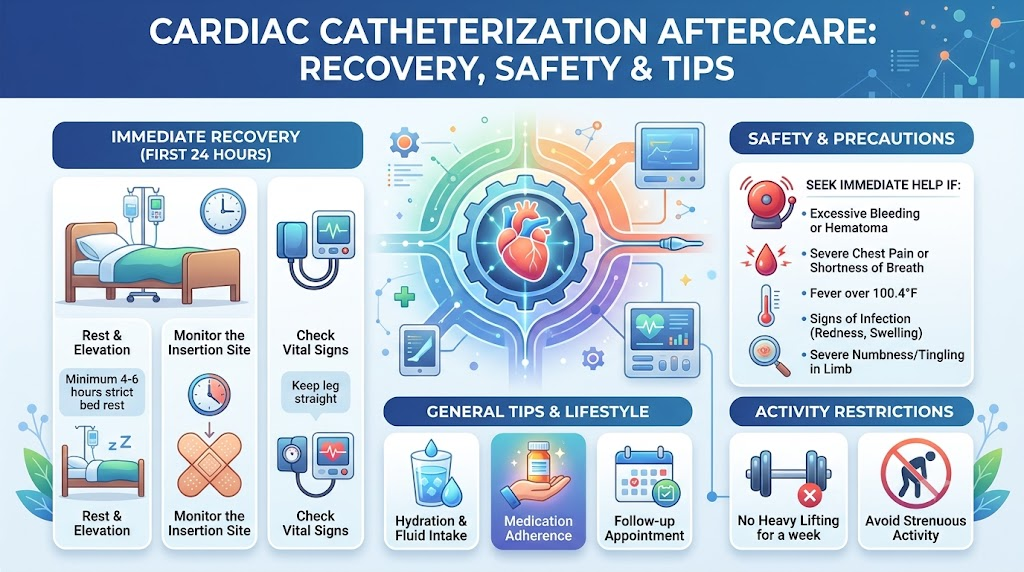
Cardiac catheterization is a procedure in which a doctor guides a thin tube, called a catheter, through a blood vessel to examine the heart or perform certain treatments. After the procedure, patients need clear instructions to care for the entry site, take medicines safely, and return to daily activities.
Recovery depends on whether the procedure was only for diagnosis or included treatment, such as balloon angioplasty or stent placement. The access site, general health, and any complications also affect recovery. Patients exploring Bestheartsurgery can learn more about cardiac care and the support to discuss when comparing hospitals.
Hospitals offering cardiac catheterization post-op guidelines should explain what to expect, which activities to avoid, and when to seek help. Written instructions and a reliable way to contact the care team can help patients and caregivers feel more prepared at home.
What Is Cardiac Catheterization?
Cardiac catheterization helps doctors learn more about how the heart works. A thin, flexible tube is guided through a blood vessel to the heart. Doctors may use this procedure to examine the heart’s arteries, measure pressure inside the heart, or check blood flow.
A diagnostic catheterization gathers information to help doctors identify or assess a heart problem. If a narrowed heart artery needs treatment, the doctor may perform angioplasty. This involves using a small balloon to widen the artery. A stent, which is a tiny mesh tube, may be placed to help keep it open.
The catheter usually enters through a blood vessel in the wrist or groin. Each access site needs specific care after the procedure.
Recovery instructions also depend on the treatment performed and the patient’s condition. Someone who has a diagnostic test may have different restrictions from someone who has received a stent. The hospital should explain these differences before discharge.
Why Are Post-Procedure Guidelines Important?
Good cardiac catheterization aftercare helps patients protect the entry site and lower the risk of bleeding or infection. It also helps them understand their medicines and return to activity at a safe pace.
Clear instructions should cover:
- How to keep the entry site clean and dry as directed.
- Which activities to avoid and when to resume them.
- How and when to take prescribed medicines.
- Whether extra fluid intake is suitable for their health.
- Which symptoms need medical attention.
- When to attend follow-up visits and tests.
Written cardiac catheterization discharge instructions are useful because patients may feel tired or overwhelmed after a procedure. Family members and caregivers can help review the instructions, arrange transport, and watch for warning signs.
Patients should also know whom to contact if a problem develops. Good post-procedure cardiac care includes a clear plan for questions and urgent concerns after leaving the hospital.
What Happens Immediately After Cardiac Catheterization?
After the procedure, patients usually move to a recovery area. Nurses check their heart rate, blood pressure, and other vital signs. They also inspect the wrist or groin where the catheter entered.
The team checks blood flow, feeling, and movement in the affected arm or leg. Once the catheter is removed, pressure or a closure device may be used to help stop bleeding.
Patients rest while the team watches for problems. The length of observation depends on the procedure, access site, medicines, and overall health. Some people go home the same day, while others need to stay longer.
Before discharge, staff should explain wound care, activity limits, medicines, follow-up arrangements, and warning signs. Patients should ask questions if any instruction is unclear.
How to Care for the Catheter Entry Site
The entry site needs careful attention during recovery. Follow the hospital’s specific directions about cleaning, dressings, showering, and bathing. Do not assume that the same care plan is right for everyone.
If the Catheter Was Inserted Through the Wrist
Keep the wrist area clean and follow the dressing instructions provided by the care team. Avoid heavy lifting, forceful gripping, and strenuous use of the affected arm for the period advised.
Check the site for bleeding, increasing swelling, or worsening pain. New numbness, tingling, or changes in the hand’s color or temperature also need attention.
Ask when to remove the dressing and when showering is safe. Do not soak the site in a bath or swimming pool until the care team says it is safe.
If the Catheter Was Inserted Through the Groin
Keep the groin entry site clean and follow the hospital’s instructions for dressing care and bathing. Avoid heavy lifting, strenuous bending, and activities that place pressure on the area for as long as advised.
Mild bruising or tenderness may occur. However, increasing pain, growing swelling, spreading redness, or fresh bleeding should not be ignored.
Follow the specific advice given before discharge. If you are unsure whether a change is normal, contact the treating team.
Activity, Rest, and Daily Routines After the Procedure
Rest during the early recovery period and begin short, gentle walks when permitted. Increase activity gradually as you feel better and follow the restrictions in your discharge instructions.
Avoid heavy lifting and strenuous exercise until the cardiac team clears you. Wrist access may require limits on using the affected arm, while groin access may require restrictions on bending or straining.
Before leaving the hospital, ask when you can:
- Drive a car or motorcycle.
- Return to work and household tasks.
- Swim or take a bath.
- Resume sexual activity.
- Restart exercise or other strenuous activities.
The answers depend on the procedure, access site, symptoms, and type of work you do. Arrange transport home and ask someone to help with shopping, cooking, or lifting if needed. Do not drive yourself home after sedation or unless your care team has confirmed it is safe.
Medicines and Hydration After Cardiac Catheterization
Take all prescribed medicines exactly as directed. Before leaving the hospital, ask the care team to review your usual medicines and explain any changes. Make sure you understand the dose, timing, and purpose of each medicine.
After angioplasty or stent placement, some patients need aspirin and another antiplatelet medicine to reduce the risk of blood clots. Do not stop aspirin, antiplatelet medicines, blood thinners, or other prescribed heart medicines unless your clinician tells you to. Stopping certain medicines without medical advice can be dangerous.
Some patients need special instructions because of kidney disease, diabetes, or the contrast dye used during the procedure. Ask whether any medicines need adjustment and whether you need blood tests or other checks.
Your team may advise drinking fluids to help your body clear the contrast dye. However, people with heart failure, kidney disease, or a fluid restriction may need to limit how much they drink. Follow your personal hydration instructions rather than using a general daily target.
Food and Lifestyle During Recovery
Choose balanced meals that include vegetables, fruit, whole grains, and suitable sources of protein. Follow any diet plan recommended for your heart or other health conditions. If you have diabetes, ask how to manage meals and blood sugar while returning to your usual routine.
Avoid smoking and seek help to quit if needed. Smoking can harm blood vessels and increase heart risks. Limit alcohol according to your clinician’s advice, especially if you take medicines that may interact with it.
After angioplasty or stent placement, long-term heart health may require managing cholesterol, blood pressure, diabetes, weight, and physical activity. Cardiac rehabilitation may also help some patients improve fitness and learn ways to lower heart risk.
Lifestyle changes support recovery, but they do not replace prescribed medicines, medical follow-up, or cardiac rehabilitation when recommended.
Follow-Up Appointments After Cardiac Catheterization
Cardiac follow-up appointments help your team review the procedure results and check how you are recovering. Your clinician may examine the entry site, review medicines, discuss symptoms, and decide whether more tests or treatment are needed.
The timing depends on whether you had a diagnostic procedure, angioplasty, or stent placement and on your overall health. Some patients may also need cardiac rehabilitation or support to manage risk factors.
Before discharge, confirm your appointment date and how it will take place. Ask whom to contact if you develop symptoms before the visit. Do not wait for a scheduled appointment if you experience warning signs that need urgent or emergency care.
Recovery Care After Cardiac Catheterization
The table below gives general guidance. Your hospital’s instructions take priority because care can differ by access site, treatment, and medical needs.
| Care Area | General Guidance | Important Reminder |
|---|---|---|
| Entry-site care | Keep the wrist or groin site clean and follow dressing instructions. | Ask when to shower, remove the dressing, and resume bathing. |
| Activity | Rest at first and return to gentle activity when permitted. | Avoid heavy lifting and strenuous exercise until cleared. |
| Medicines | Take medicines as prescribed and confirm any changes. | Never stop heart or blood-thinning medicines without medical guidance. |
| Hydration | Follow the care team’s advice about drinking fluids. | Fluid needs may differ with heart or kidney conditions. |
| Follow-up visits | Attend planned appointments and recommended tests. | Contact the team sooner if new symptoms develop. |
Warning Signs After Cardiac Catheterization
Some mild bruising or tenderness near the entry site may occur. The area should not become increasingly painful or swollen, and bleeding should not continue. Knowing which symptoms need attention helps patients act promptly.
Contact the treating hospital or clinician promptly if you notice:
- Increasing redness, warmth, or discharge at the entry site.
- Fever or chills.
- Worsening bruising or swelling.
- New numbness, tingling, or pain in the affected arm or leg.
- A hand or foot that becomes unusually pale, blue, or cold.
- Any new or worsening symptom that concerns you.
Seek emergency medical care immediately for chest pain or pressure, severe shortness of breath, fainting, sudden weakness, facial drooping, trouble speaking, heavy or spurting bleeding, rapidly expanding swelling at the entry site, or severe pain with sudden loss of circulation in the affected limb.
If bleeding occurs, follow your discharge instructions and apply firm, direct pressure to the site if instructed. Get emergency help for heavy or persistent bleeding. Do not drive yourself during a serious emergency.
Warning Signs and What to Do
| Symptom | Recommended Action | Why It Matters |
|---|---|---|
| Mild bruising or slight tenderness | Monitor the area and follow the hospital’s care instructions. | These may occur during healing, but should not keep worsening. |
| Increasing redness or swelling | Contact the treating hospital or clinician promptly. | This may indicate infection, bleeding, or another problem. |
| Persistent or heavy bleeding | Apply firm direct pressure as instructed and seek emergency help for heavy or uncontrolled bleeding. | Significant blood loss can become dangerous quickly. |
| Cold or numb limb | Seek urgent medical assessment, especially if the limb becomes pale or blue. | Blood flow or nerve function may be affected. |
| Chest pain or pressure | Seek emergency medical care immediately. | This may signal a serious heart problem. |
| Severe shortness of breath | Seek emergency medical care immediately. | Severe breathing difficulty can indicate a life-threatening problem. |
How to Choose a Hospital Offering Post-Op Guidelines
When comparing hospitals, look beyond the procedure itself. Ask how the cardiac team supports patients after discharge and whether instructions are tailored to the treatment and access site.
Useful features to check include:
- Qualified cardiologists and an experienced cardiac catheterization team.
- Clear written instructions for wrist or groin entry-site care.
- A medicine review before discharge.
- A documented follow-up plan.
- A phone number for questions after the procedure.
- Access to urgent assessment if complications develop.
- Education for family members and caregivers.
- Cardiac rehabilitation or referral services when appropriate.
- Clear information about procedure, follow-up, and other expected costs.
Ask the hospital to explain what support is available outside normal appointment hours. Confirm its services and costs directly rather than relying on general claims or rankings. A hospital’s ability to explain aftercare clearly is an important part of evaluating its cardiac hospital post-op care.
What May Affect Recovery Time?
There is no single recovery timeline that suits every patient. Recovery depends on whether the procedure was diagnostic or included angioplasty or stent placement, and whether the catheter entered through the wrist or groin.
General health also matters. Conditions such as diabetes, kidney disease, and other heart problems may affect the recovery plan. Bleeding or other complications can mean a longer period of observation or activity restrictions.
Work duties make a difference, too. Someone with a desk-based job may have different needs from someone whose work involves lifting or physical effort. Many people can return to light activities relatively soon, but the care team should advise when it is safe to resume work and exercise.
Frequently Asked Questions About Cardiac Catheterization Post-Op Care
1. What should I expect after cardiac catheterization?
You will usually spend time in a recovery area while staff monitor your vital signs and check the catheter entry site. You may need to rest for a period before going home. Before discharge, the team should explain wound care, activity limits, medicines, follow-up, and warning signs.
2. How long does it take to recover from cardiac catheterization?
Recovery time varies with the type of procedure, access site, general health, and whether treatment such as stent placement was performed. Some people return to light activities relatively soon, while others need more time. Follow your own discharge instructions and ask when you can resume work and exercise.
3. How should I care for the wrist or groin entry site?
Keep the site clean and follow the hospital’s directions for dressings, showering, and bathing. Avoid activities that strain the affected arm or groin for the advised period. Mild bruising may occur, but increasing pain, swelling, redness, or bleeding should be reported to the care team promptly.
4. When can I return to normal activities after the procedure?
Start with rest and gentle movement when your care team permits. Heavy lifting, strenuous exercise, and some other activities may need to wait. The timing depends on the access site and whether angioplasty or stent placement was performed. Ask your clinician about your usual daily routine before resuming it.
5. Can I drive after cardiac catheterization?
Do not assume you can drive immediately after the procedure. Sedation, the access site, the treatment performed, and your symptoms may affect when driving is safe. Arrange transport home and ask your care team for a clear return-to-driving time. Do not drive if you feel unwell or have warning symptoms.
6. Should I change my medicines after the procedure?
Only change medicines according to instructions from your treating clinician. Some patients need antiplatelet medicines after stent placement, and stopping them without advice can be dangerous. Ask the team to review all your medicines, explain any changes, and provide clear directions for doses and timing before you leave.
7. What symptoms are normal after cardiac catheterization?
Mild bruising or tenderness around the entry site may occur. The area should not become increasingly painful, swollen, red, or warm. Watch for bleeding and changes in the color, temperature, or feeling of the affected limb. Contact your care team if symptoms worsen or you are unsure about them.
8. Which warning signs require emergency care?
Seek emergency help for chest pain or pressure, severe shortness of breath, fainting, sudden weakness, facial drooping, trouble speaking, heavy bleeding, rapidly expanding swelling, or sudden loss of circulation in the affected limb. Do not drive yourself during a serious emergency. Follow the emergency instructions provided by your hospital.
9. When should I attend my follow-up appointment?
Attend the appointment arranged by your cardiac team. The timing depends on your procedure, recovery, and medical needs. The visit may cover results, medicines, entry-site healing, and further treatment. Ask whom to contact if symptoms occur before the appointment, and do not wait if emergency warning signs develop.
10. How can I choose a hospital with good post-procedure support?
Ask whether the hospital provides written discharge instructions, access-site care advice, a medicine review, planned follow-up, and a phone number for post-procedure concerns. Check whether the team explains emergency warning signs and offers rehabilitation or referrals when appropriate. Confirm services and costs directly rather than relying on unsupported rankings.
Conclusion
Follow your own discharge instructions, take medicines as prescribed, and attend your follow-up appointments. Contact your cardiac team if you are unsure about a symptom or part of your recovery plan, and seek emergency help for serious warning signs. Your treating cardiac team is the best source of advice tailored to your procedure and health needs.