Introduction
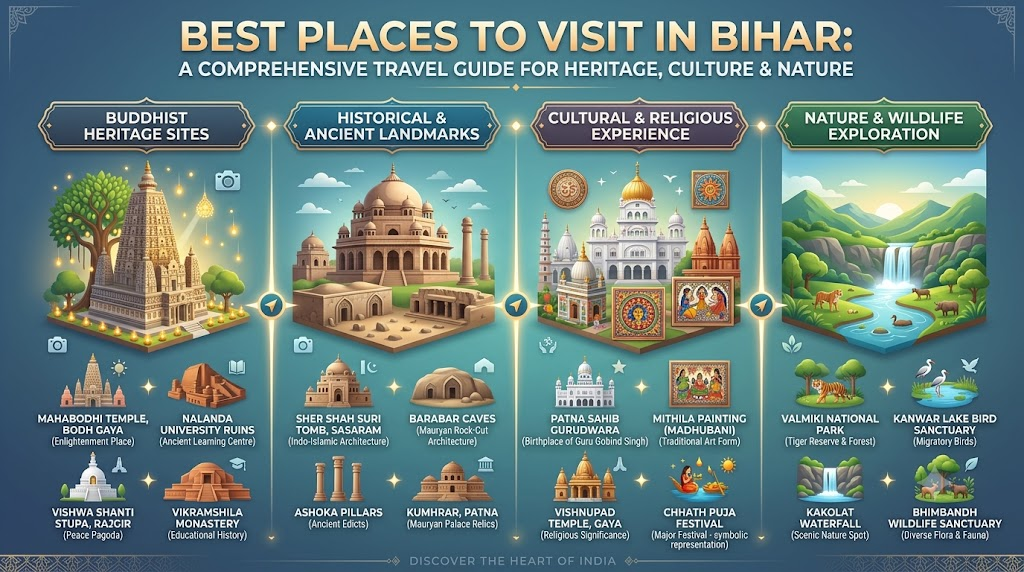
Bihar sits at the crossroads of ancient civilisations, spiritual philosophy, and rich cultural traditions. From the quiet groves of Bodh Gaya where Gautama Buddha attained enlightenment to the red-brick ruins of Nalanda University, the state contains layer upon layer of Asian history. Yet, for many travelers, planning a trip across this eastern state remains a journey into uncharted territory.This comprehensive travel resource breaks down the top tourist places in Bihar, historical sites, seasonal highlights, regional cuisines, and practical itineraries to help you build an authentic, well-paced travel plan. For more detailed destination breakdowns and local insights, Mera Apna Bihar offers regional stories and practical travel guides for every type of traveler.
Overview of Bihar as a Travel Destination
Bihar holds a unique position in the story of human civilisation. It served as the cradle of two major world religions—Buddhism and Jainism—and was the heartland of powerful empires including Magadha, the Mauryas, and the Guptas. Located along the fertile Gangetic plains in eastern India, Bihar shares boundaries with Uttar Pradesh to the west, West Nepal to the north, West Bengal to the east, and Jharkhand to the south.
The state features a mix of broad river valleys, historical ruins, sacred hills, dense northern forests, and rocky southern plateaus. Traveling through Bihar offers an experience defined less by manicured commercial resorts and more by living history, monumental heritage sites, vibrant folk traditions, and deep-rooted local hospitality.
Why Is Bihar Historically and Culturally Important?
Understanding Bihar requires looking at its contributions to philosophy, governance, education, and art:
- Center of Ancient Learning: Home to Nalanda and Vikramshila, ancient international universities that attracted scholars from across Asia.
- Birthplace of Great Religions: Bodh Gaya is the foundational site of Buddhism, while Vaishali and Pawapuri hold immense importance for Jainism. Patna Sahib is also one of the holiest sites in Sikhism as the birthplace of Guru Gobind Singh Ji.
- Political & Administrative Legacy: Magadha gave rise to Chanakya’s theories of governance and Emperor Ashoka’s philosophy of Dhamma.
- Artistic and Cultural Traditions: Famous for Mithila (Madhubani) painting, Manjusha art, vibrant folk theatre, and unique culinary heritage like Litti Chokha and Khaja.
Top Tourist Places in Bihar
1. Bodh Gaya: The Cradle of Enlightenment
Located in Gaya district, Bodh Gaya is one of the world’s most venerated Buddhist pilgrimage sites. It was under the ancient Bodhi Tree here that Prince Siddhartha attained supreme enlightenment and became the Buddha.
- Key Attractions: Mahabodhi Temple Complex (a UNESCO World Heritage Site), the sacred Bodhi Tree, the 80-Foot Great Buddha Statue, and international monasteries built by Buddhist communities from Japan, Thailand, Bhutan, Tibet, and Sri Lanka.
- Best For: Spiritual seekers, heritage enthusiasts, and international travelers.
- Suggested Duration: 1 to 2 days.
2. Nalanda: The Ancient Seat of Higher Education
Nalanda is renowned for hosting one of the world’s earliest residential universities, operating from the 5th century CE to the 12th century CE. At its peak, it housed thousands of students and international scholars.
- Key Attractions: Ruins of Nalanda Mahavihara (UNESCO site), Great Stupa, ancient monasteries (viharas), Nalanda Archaeological Museum, and the Hiuen Tsang Memorial Hall.
- Best For: History buffs, architecture students, and photography enthusiasts.
- Suggested Duration: Half-day to 1 day.
3. Rajgir: Sacred Hills and Hot Springs
Surrounded by five rocky hills, Rajgir was the first capital of the Magadha kingdom. It features sacred sites for Buddhists, Jains, and Hindus alike.
- Key Attractions: Vishwa Shanti Stupa (reachable by ropeway), Gridhakuta (Vulture’s Peak), Cyclopean Wall, Bimbisara Jail, Hot Water Springs (Brahmakund), Ghora Katora Lake, and the Rajgir Nature Safari (including the Glass Skywalk).
- Best For: Nature trips, family outings, and history lovers.
- Suggested Duration: 1 to 2 days.
4. Vaishali: Land of Ancient Republics
Vaishali is recognised as home to one of the world’s earliest known republics (the Licchavi republic). It is also the birthplace of Lord Mahavira and the site where Buddha delivered his last sermon.
- Key Attractions: Ashokan Pillar at Kolhua, Buddha Relic Stupa, Abhishek Pushkarini (coronation tank), World Peace Pagoda, and the Mahavira Birthplace at Kundalpur/Basokund.
- Best For: Archeological exploration and Jain/Buddhist pilgrimage.
- Suggested Duration: 1 day.
5. Patna: The Capital with Layers of History
Formerly known as Pataliputra, modern-day Patna stretches along the southern bank of the River Ganges. It seamlessly blends modern urban life with ancient, medieval, and colonial heritage.
- Key Attractions: Takht Sri Harmandir Ji Patna Sahib, Golghar, Bihar Museum (a world-class cultural museum), Patna Museum, Kumhrar (ancient Pataliputra ruins), Sabhyata Dwar, and the Ganga Path promenade.
- Best For: Museums, urban heritage, local food, and religious visits.
- Suggested Duration: 1 to 2 days.
6. Sasaram: Afghan Architecture and Heritage
Located in Rohtas district, Sasaram is famous for its grand medieval stone architecture built during the reign of Sher Shah Suri.
- Key Attractions: Tomb of Sher Shah Suri (a red sandstone mausoleum set in the middle of an artificial lake), Rohtasgarh Fort, and the Tomb of Hasan Khan Suri.
- Best For: Architecture enthusiasts and medieval history buffs.
- Suggested Duration: 1 day.
Wildlife and Nature Destinations in Bihar
Beyond historical monuments, Bihar features lush forests, river ecosystems, and bird sanctuaries along the Indo-Nepal border and the Kaimur hill range.
- Valmiki National Park (West Champaran): Situated at the foothills of the Himalayas along the Gandak River, this is Bihar’s primary Tiger Reserve. It hosts Bengal tigers, Indian rhinoceroses, leopards, wild boars, and rich birdlife.
- Vikramshila Gangetic Dolphin Sanctuary (Bhagalpur): A 50 km stretch of the Ganges River dedicated to preserving the endangered Gangetic River Dolphin (Platanista gangetica).
- Kaimur Wildlife Sanctuary & Waterfalls (Rohtas / Kaimur): Home to scenic forest tracts, prehistoric rock paintings, and impressive waterfalls such as Dhua Kund, Manjhar Kund, and Karkat Waterfall.
- Kanwar Lake Bird Sanctuary (Begusarai): Asia’s largest oxbow lake, providing a haven for migratory birds during the winter months.
Cultural Regions and Local Heritage
Bihar’s culture is not uniform; it is a rich tapestry of distinct cultural zones, each with its own dialect, art form, and customs:
| Cultural Region | Primary Language/Dialect | Key Cultural Highlights | Famous Destinations |
| Mithila | Maithili | Madhubani Painting, Sama-Chakeva, rich literary tradition | Darbhanga, Madhubani, Sitamarhi |
| Magadh | Magahi | Ancient political history, Buddhist & Jain roots, Chhath traditions | Gaya, Nalanda, Rajgir, Patna |
| Bhojpur | Bhojpuri | Folk music (Birha, Kajri), rural traditions, strong folk theatre | Arrah, Buxar, Rohtas |
| Anga | Angika | Manjusha Art, Silk weaving (Tussar Silk), ancient Vikramshila | Bhagalpur, Munger |
Bihar Festivals: Experiencing the Spirit of the Land
Participating in local festivals offers an authentic window into community life across Bihar:
- Chhath Puja: The most significant and revered festival in Bihar, dedicated to the Sun God (Surya) and Chhathi Maiya. Celebrated four days after Diwali, it involves strict fasting and offering Arghya at riverbanks during sunset and sunrise.
- Sama-Chakeva: A traditional Mithila festival held in winter celebrating the bond between brothers and sisters through clay idols and folk songs.
- Rajgir Mahotsav: An annual cultural extravaganza featuring classical music, dance, and local arts held against the scenic backdrop of Rajgir’s hills.
- Sonepur Cattle Fair: Held at the confluence of the Ganges and Gandak rivers, this historic fair is one of Asia’s largest livestock trading events.
Local Food and Culinary Experiences
Bihari cuisine relies on locally sourced grains, pulses, seasonal vegetables, and mustard oil, using subtle spices to build complex flavors.
- Litti Chokha: Whole wheat dough balls stuffed with spiced sattu (roasted gram flour), roasted over wood or coal, drenched in ghee, and served with roasted eggplant/potato mash (chokha).
- Khaja of Silao: A multi-layered, crispy sweet pastry prepared in Silao (near Rajgir), which holds a Geographical Indication (GI) tag.
- Sattu Drinks: A refreshing, nutrient-dense summer drink made with roasted chana flour, spices, lemon, and water.
- Dal Pitha: Dumplings made of rice flour stuffed with spiced lentils or potatoes, either steamed or fried.
- Makhana Dishes: As the producer of over 80% of India’s makhana (fox nuts), Bihar offers delicious sweet kheer and savory roasted makhana dishes.
Suggested Bihar Travel Itineraries
Option 1: The Essential Heritage & Spiritual Circuit (3 Days)
Day 1: Patna (Bihar Museum, Golghar, Patna Sahib)
  --> Travel to Rajgir (approx. 2.5 - 3 hours)
Day 2: Rajgir (Vishwa Shanti Stupa, Ghora Katora, Hot Springs)
  --> Visit Nalanda Ruins
  --> Drive to Bodh Gaya
Day 3: Bodh Gaya (Mahabodhi Temple, Monasteries, Archaeological Museum)
Option 2: Heritage, Nature & Culture Route (5 Days)
Day 1–2: Patna & Vaishali sightseeing
Day 3: Rajgir & Nalanda exploration
Day 4: Bodh Gaya temple tour and cultural walk
Day 5: Excursion to Sasaram (Sher Shah Suri Tomb) or travel to Valmiki National Park for wildlife
How to Reach Bihar
- By Air: Jay Prakash Narayan International Airport in Patna connects to major Indian metros. Gaya Airport handles seasonal international charter flights from Buddhist-majority nations. Darbhanga Airport serves northern regions like Mithila.
- By Rail: Bihar features an extensive rail network operated by East Central Railway. Key junctions include Patna Junction, Gaya Junction, Pt. Deen Dayal Upadhyaya Junction (near West Bihar), and Muzaffarpur.
- By Road: National Highways connect major hubs. State transport buses, private sleeper coaches, and taxis easily connect cities like Patna, Rajgir, Gaya, and Bhagalpur.
Best Time to Visit Bihar
- October to March (Winter): Ideal time. Comfortable daytime temperatures ($15^\circ\text{C} – 25^\circ\text{C}$) make it perfect for sightseeing, temple visits, wildlife safaris, and attending Chhath Puja or the Rajgir Mahotsav.
- April to June (Summer): Warm to hot ($32^\circ\text{C} – 42^\circ\text{C}$). Best suited for early morning visits to monuments or indoor museum tours.
- July to September (Monsoon): Heavy rainfall refreshes nature spots and waterfalls in the Kaimur region, though outdoor sightseeing can be delayed by rain.
Practical Examples for Travelers
Example 1: A Family Weekend Trip from Patna
A family based in Patna looking for a quick two-day break can take an early morning drive to Rajgir (around 100 km via NH31). On Saturday, explore the Glass Skywalk at the Nature Safari, take the ropeway to Vishwa Shanti Stupa, and enjoy a boat ride at Ghora Katora Lake. On Sunday morning, visit the ancient Nalanda University ruins before heading back to Patna by evening.
Example 2: A History Enthusiast’s Heritage Trail
A traveler interested in architecture can map out a route starting at Patna Sahib and the Bihar Museum, traveling south to Nalanda and Rajgir, continuing to Bodh Gaya, and finishing at Sasaram to study medieval Suri dynasty architecture before catching a train onward.
Decision-Making Framework for Planning Your Bihar Trip
To choose the right destinations for your journey, consider the following primary factors:
                  ┌───────────────────────────────┐
                  │    What is your main goal?    │
                  └───────────────┬───────────────┘
                                  │
      ┌───────────────────────────┼───────────────────────────┐
      ▼                           ▼                           ▼
┌───────────┐               ┌───────────┐               ┌───────────┐
│ Spiritual │               │ History & │               │ Wildlife  │
│ Pilgrimage│               │ Heritage  │               │ & Nature  │
└─────┬─────┘               └─────┬─────┘               └─────┬─────┘
      │                           │                           │
      ▼                           ▼                           ▼
• Bodh Gaya                 • Nalanda                   • Valmiki Tiger
• Rajgir                    • Vaishali                    Reserve
• Patna Sahib               • Sasaram                   • Kaimur Range
• Pawapuri                  • Bihar Museum              • Kanwar Lake
Common Travel Mistakes to Avoid
- Overpacking the Itinerary: Trying to cover Patna, Bodh Gaya, Rajgir, Valmiki Nagar, and Bhagalpur in three days leads to excessive road travel. Focus on regional clusters.
- Not Checking Museum Opening Days: Famous spots like the Bihar Museum in Patna or the Nalanda Archaeological Museum are closed on specific weekdays (typically Mondays). Always check operating schedules in advance.
- Overlooking Regional Festivals: Travelling during Chhath Puja offers unforgettable cultural insights, but accommodation and train tickets must be booked months ahead due to heavy holiday travel.
- Ignoring Local Transport Options: Relying only on intercity buses can slow down trips to remote sites; hiring a reliable local taxi or using suburban trains is often faster.
Actionable Bihar Travel Tips
- Verify Transport Schedules: Check train and flight status before departure, especially during winter months when morning fog can cause delays.
- Dress Appropriately: Keep clothing modest when visiting sacred sites, temples, and monasteries. Remove shoes where required.
- Stay Hydrated and Eat Local: Drink bottled water and try hot, freshly prepared local dishes like Litti Chokha from clean, well-reviewed eateries.
- Carry Cash: While digital payments (UPI) are widely used across towns, carrying cash is helpful when visiting rural sites, buying handicrafts, or using local auto-rickshaws.
- Book Accommodation Early: Secure hotel rooms early if traveling during peak winter months (December–January) or festival periods. For comprehensive travel guides, itineraries, and cultural stories, visit Mera Apna Bihar.
Comparison Table: Top Travel Destinations in Bihar
| Destination | Best Known For | Recommended Duration | Ideal Visitor Type | Key Highlight |
| Bodh Gaya | Buddhist Heritage & Meditation | 1–2 Days | Pilgrims, Solo Travelers, Historians | Mahabodhi Temple & Bodhi Tree |
| Nalanda | Ancient University Ruins | 1 Day | History Lovers, Families, Students | Nalanda Mahavihara Excavations |
| Rajgir | Sacred Hills, Hot Springs & Nature | 1–2 Days | Families, Adventure Seekers | Ropeway & Glass Skywalk |
| Patna | Museums, Urban Heritage & Sikh Heritage | 1–2 Days | Culture Lovers, City Travelers | Bihar Museum & Takht Sri Patna Sahib |
| Vaishali | Ancient Republic & Jain Heritage | 1 Day | History Buffs, Pilgrims | Ashokan Pillar & Relic Stupa |
| Sasaram | Medieval Indo-Islamic Architecture | 1 Day | Photography & History Enthusiasts | Tomb of Sher Shah Suri |
| Valmiki Nagar | Forest Trails & Wildlife Safaris | 2 Days | Nature Lovers, Wildlife Enthusiasts | Valmiki Tiger Reserve |
Frequently Asked Questions (FAQs)
1. What are the top tourist places to visit in Bihar?
The top places to visit in Bihar include Bodh Gaya (Mahabodhi Temple), Nalanda (ancient university ruins), Rajgir (Vishwa Shanti Stupa and hot springs), Patna (Bihar Museum and Patna Sahib), Vaishali (Ashokan Pillar), and Sasaram (Sher Shah Suri Tomb).
2. What is the best time to visit Bihar?
The best time to visit Bihar is during the winter season, from October to March. The weather during these months is pleasant, with daytime temperatures ranging between $15^\circ\text{C}$ and $25^\circ\text{C}$, making it ideal for outdoor sightseeing and heritage exploration.
3. How many days are needed for a Bihar travel trip?
A 4-to-5-day trip is generally sufficient to explore major destinations like Patna, Nalanda, Rajgir, and Bodh Gaya. If you plan to visit wildlife areas like Valmiki National Park or historical sites in Sasaram, extend your itinerary to 7 days.
4. Is Bodh Gaya suitable for family vacations?
Yes, Bodh Gaya is a peaceful and family-friendly destination. Families can visit the Mahabodhi Temple, explore serene international monasteries, walk through well-maintained gardens, and learn about world heritage in a tranquil environment.
5. How do I travel from Patna to Nalanda and Rajgir?
Nalanda and Rajgir are located around 85 to 100 km from Patna. You can easily travel between these cities by hiring a private taxi, taking state transport buses, or catching daily passenger trains operating along the Patna–Rajgir route.
6. What local food should I try when visiting Bihar?
Key dishes to try include Litti Chokha (roasted wheat dough with sattu served with mashed veggies), Khaja from Silao, Dal Pitha, Sattu beverages, and seasonal sweet delicacies like Thekua, Tilkut, and Malpua.
7. Are there good nature and wildlife destinations in Bihar?
Yes, Bihar features several green spaces and sanctuaries. Valmiki National Park in West Champaran offers tiger reserve safaris, the Vikramshila Gangetic Dolphin Sanctuary in Bhagalpur protects rare river dolphins, and Kanwar Lake attracts migratory birds.
8. What is the historical importance of Nalanda?
Nalanda was a world-famous ancient university that flourished between the 5th and 12th centuries CE. It hosted thousands of resident scholars and international students from China, Korea, Tibet, and Central Asia, serving as an ancient center for Buddhist philosophy, logic, and science.
9. What are the major festivals celebrated in Bihar?
The most important festival in Bihar is Chhath Puja, celebrated with grand riverfront rituals. Other prominent festivals include Sama-Chakeva, Rajgir Mahotsav, Pitrapaksha Mela in Gaya, and the historic Sonepur Cattle Fair.
10. Where can I find reliable Bihar travel guides and stories?
You can read practical travel guides, regional stories, historical breakdowns, and destination updates on dedicated platforms like Mera Apna Bihar.
Conclusion
Bihar presents a travel experience filled with living heritage, monumental archaeological sites, and warm local traditions. Whether you are walking through the tranquil ruins of ancient Nalanda, taking in panoramic views from the hills of Rajgir, enjoying local street food in Patna, or discovering regional art forms in Mithila, the state rewards travelers who take time to explore its depth.By planning your travel routes carefully, respecting local customs, and matching your destinations to the right season, your trip across Bihar will be both smooth and deeply memorable. For more detailed destination profiles, local itineraries, and cultural insights, explore the regional stories and updates available on Mera Apna Bihar.