Introduction
Addressing cardiovascular challenges early remains a vital factor in maintaining life long vitality and physical health. Coronary artery disease often progresses quietly over decades, slowly building up fatty plaques that narrow the essential blood vessels supplying the heart muscle. This patient-centered guide is designed to clarify the angioplasty process, outline the various types of stents available, and highlight leading heart centers globally. To browse structured directories of accredited surgical centers and access reliable cardiovascular resources, visit BESTHEARTSURGERY to connect with leading cardiac experts.
Understanding Coronary Stent Placement
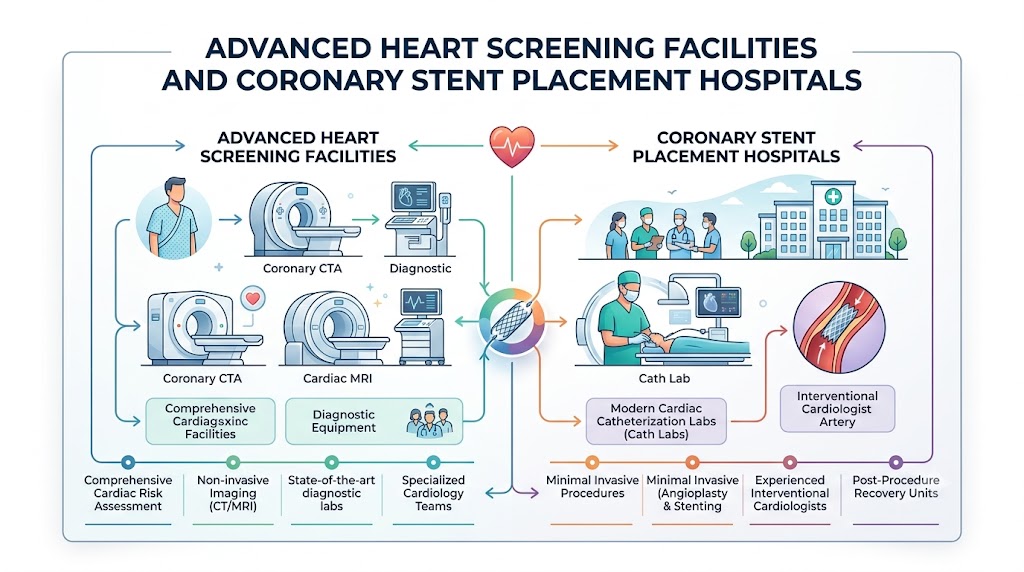
A coronary stent placement is a minimally invasive, catheter-based medical procedure designed to reopen arteries that have become dangerously narrow due to plaque accumulation. The treatment path combines two core interventions: an angioplasty followed immediately by the placement of the permanent stent structure itself.
+-----------------------------------------------------------------+
|                    THE ANGIOPLASTY & STENT STEPS                |
+-----------------------------------------------------------------+
|  [Catheter Access] --> [Balloon Inflation] --> [Stent Lock]     |
|   Radial or Femoral      Plaque Flattened        Mesh Deployed  |
+-----------------------------------------------------------------+
The process begins by inserting a long, flexible tube known as a catheter through a small puncture wound, usually in the wrist or upper thigh. Using live X-ray tracking, the interventional cardiologist gently guides this catheter through the network of blood vessels until it reaches the origin of the blocked coronary artery.
Once in position, a tiny balloon at the tip of the catheter is inflated right inside the blockage, flattening the hard plaque against the artery walls. Finally, the metal or bioabsorbable stent is expanded into place, locking the vessel open to restore normal blood circulation.
This procedure is highly effective for managing chronic stable angina, resolving treatment-resistant chest pains, and acting as a life-saving intervention during acute heart attack emergencies.
Why Specialized Heart Hospitals Matter
Undergoing an intravascular cardiac procedure requires a clinical environment that can manage micro-precision treatments while maintaining full emergency preparedness. Specialized heart centers provide unique structural advantages that maximize patient safety throughout the entire care process.
- Experienced Interventional Cardiologists: Patients are treated by physicians who focus exclusively on minimally invasive vascular interventions, performing hundreds of catheterizations annually.
- Advanced Catheterization Labs (Cath Labs): These dedicated suites are equipped with real-time, high-definition digital angiography systems that map out blockages with incredible clarity.
- 24/7 Emergency Cardiac Care: These facilities feature rapid-response chest pain teams ready to perform emergency angioplasties within minutes of a patient’s arrival during a heart attack.
- Specialized Post-Procedure Monitoring: Dedicated cardiac recovery units staffed by specialized nursing teams monitor heart rhythms and entry sites to support safe, smooth initial healing.
Quick Comparison Table
| Hospital Name | Location | Interventional Cardiology Services | Cath Lab Technology | Emergency Cardiac Care | Patient Support |
| Cleveland Clinic | Cleveland, OH | Complex Angioplasty, CTO, DES | High-Res Digital Angio | 24/7 Chest Pain ER | Complete Cardiac Rehab |
| Mayo Clinic | Rochester, MN | Multivessel Stenting, Imaging | Intra-vascular Ultrasound | Full Crisis Trauma Teams | Virtual Care Tracking |
| Cedars-Sinai | Los Angeles, CA | Radial Access Stenting, Covered Stents | Robotic-Assisted Systems | 24/7 Acute Triage Unit | Custom Lifestyle Coach |
| Mass General | Boston, MA | Preventive Interventions, Bioabsorbable | Spectral Imaging Labs | Rapid Door-to-Balloon ER | Post-Discharge Navigators |
| Johns Hopkins | Baltimore, MD | Advanced High-Risk PCI, BMS | Laser-Assisted Imaging | 24/7 Coronary ICU | Comprehensive Follow-up |
Best Hospitals for Coronary Stent Placement
Cleveland Clinic (Sydell and Arnold Miller Family Heart, Vascular & Thoracic Institute)
Hospital Overview
Widely regarded as a global pioneer in cardiovascular medicine, the Cleveland Clinic delivers world-class clinical care, extensive research initiatives, and unparalleled expertise in complex coronary interventions.
Cardiology Department
The interventional cardiology department handles some of the highest case volumes in the world, specializing in managing intricate blockages that other institutions may find too challenging to treat.
Stent and Angioplasty Services
- High-success chronic total occlusion (CTO) angioplasty for long-standing blockages
- Next-generation Drug-Eluting Stent (DES) placements
- Transradial (wrist access) catheterization to support patient comfort
- Complex multi-vessel intervention alternatives
Diagnostic Technologies Used
The clinic utilizes advanced Intravascular Ultrasound (IVUS) and Optical Coherence Tomography (OCT) to inspect the interior structure of arterial walls with microscopic detail.
Why Patients Choose This Hospital
Patients select the Cleveland Clinic for its long history of clinical excellence, its exceptional focus on patient safety, and its ability to deliver reliable results in high-risk cases.
Major Strengths
- World-class clinical expertise in complex and multi-vessel blockages
- State-of-the-art catheterization suites running around the clock
- Comprehensive, integrated post-procedure rehabilitation systems
Mayo Clinic (Department of Cardiovascular Medicine)
Hospital Overview
Based in Rochester, Minnesota, the Mayo Clinic is celebrated for its collaborative team-care approach, ensuring that every patient benefits from a unified group of cardiovascular experts.
Cardiology Department
Mayo Clinic’s interventional teams work closely alongside cardiac surgeons and imaging specialists, matching each patient with the most conservative and effective treatment path.
Stent and Angioplasty Services
- Precision coronary angioplasty and structural mapping
- Advanced Bare-Metal and Drug-Eluting Stent options
- Rotational atherectomy to safely clear hardened calcium deposits
- Tailored emergency heart attack interventions
Diagnostic Technologies Used
The department employs fractional flow reserve (FFR) measurements to check pressure changes across blockages, ensuring stents are placed only where they will provide clear benefits.
Why Patients Choose This Hospital
Families choose the Mayo Clinic because of its thorough, highly organized testing paths and its reputation for resolving complex diagnostic challenges quickly and accurately.
Major Strengths
- Highly coordinated care teams that limit diagnostic delays
- Pioneers in high-resolution, non-invasive coronary imaging techniques
- Exceptional long-term tracking and digital follow-up options for remote patients
Cedars-Sinai Medical Center (Smidt Heart Institute)
Hospital Overview
Located in Los Angeles, California, the Smidt Heart Institute at Cedars-Sinai is a leading medical center known for bringing advanced technology from clinical trials directly to standard patient care.
Cardiology Department
The institute features a highly innovative clinical team that prioritizes minimally invasive approaches and radial access to make treatment as comfortable as possible.
Stent and Angioplasty Services
- Robotic-assisted percutaneous coronary interventions (PCI)
- Specialized covered stent placements for unique vessel conditions
- Advanced radial artery access techniques that shorten recovery times
- Comprehensive lifestyle and prevention follow-ups
Diagnostic Technologies Used
Cedars-Sinai uses state-of-the-art dual-source CT angiography and live 3D intravascular mapping systems during catheter procedures.
Why Patients Choose This Hospital
Patients select Cedars-Sinai for its cutting-edge treatment options, its focus on patient comfort, and its excellent track record in preventive care.
Major Strengths
- Pioneers in using robotic systems for precise stent placement
- Advanced emergency units that consistently beat standard door-to-balloon times
- Strong focus on customized, long-term heart wellness programs
Massachusetts General Hospital (Corrigan Minehan Heart Center)
Hospital Overview
As a primary teaching facility of Harvard Medical School, Mass General combines a deep academic history with modern interventional methodologies to deliver exceptional heart care.
Cardiology Department
The interventional cardiology team at the Corrigan Minehan Heart Center focuses heavily on evidence-based practices, translating cutting-edge vascular research into daily clinical care.
Stent and Angioplasty Services
- Bioabsorbable and temporary structural stent procedures
- High-risk percutaneous coronary interventions with mechanical support
- Routine and emergency angioplasty options
- Targeted management for plaque instabilities
Diagnostic Technologies Used
The center utilizes ultra-fast spectral imaging labs, specialized blood biomarker tracking, and advanced digital angiography to monitor vascular health.
Why Patients Choose This Hospital
Patients trust Mass General for its methodical, academic approach to care and its seamless coordination between emergency interventions and long-term wellness.
Major Strengths
- Extensive experience with modern bioabsorbable and temporary stent options
- Excellent clinical teams specializing in high-risk vascular interventions
- Dedicated care navigators who support patients throughout their recovery
Johns Hopkins Medicine (Heart and Vascular Institute)
Hospital Overview
Johns Hopkins Medicine in Baltimore, Maryland, is a historic institution that has developed many of the foundational guidelines and surgical techniques used in modern cardiology.
Cardiology Department
The interventional team combines precise, time-tested clinical skills with advanced imaging to treat coronary artery disease effectively while protecting surrounding tissues.
Stent and Angioplasty Services
- Standard Bare-Metal Stent (BMS) and modern drug-eluting installations
- Laser-assisted angioplasty for complex plaque architectures
- Comprehensive structural evaluations and artery dilation
- Advanced multi-vessel interventional treatments
Diagnostic Technologies Used
Johns Hopkins employs high-definition intravascular ultrasound, custom Doppler flow wires, and advanced myocardial perfusion scanning to guide their care decisions.
Why Patients Choose This Hospital
Individuals select Johns Hopkins when seeking definitive care for advanced or multi-vessel blockages, knowing the hospital’s teams offer exceptional experience.
Major Strengths
- Global benchmark programs for high-risk coronary interventions
- Advanced diagnostic labs equipped to analyze complex plaque stability
- A comprehensive network of post-procedure support and intensive care resources
Common Conditions Requiring Stent Placement
Coronary stent procedures are versatile interventions used to address several different stages of cardiovascular disease, from managing long-term symptoms to treating acute crises.
Coronary Artery Disease (CAD)
CAD is the most common form of heart disease, occurring when cholesterol deposits and fatty plaques slowly accumulate along the inner walls of the coronary arteries. Over time, these deposits harden, restricting the flow of oxygen-rich blood to the heart muscle. Stent placement helps keep these pathways open, preserving essential blood flow.
Chronic Stable Angina
Angina manifests as a persistent feeling of pressure, tightness, or squeezing in the chest, often triggered by physical activity or emotional stress when the heart demands more oxygen. When lifestyle adjustments and medications can no longer control this discomfort, angioplasty and stenting can provide significant relief.
Acute Heart Attack Emergencies
A heart attack occurs when a piece of arterial plaque ruptures suddenly, causing a blood clot to form that completely blocks blood flow to a portion of the heart muscle. In these critical moments, an emergency stent procedure is performed immediately to clear the clot and minimize lasting muscle damage.
Severely Narrowed Coronary Arteries
In some cases, routine diagnostics locate severe narrowing in a major artery before it causes a heart attack or stable symptoms. Identifying and stenting these critical blockages early helps restore balanced blood flow and lowers the risk of future complications.
Stent Types Comparison Table
| Stent Type | Primary Clinical Purpose | Key Benefit to the Patient |
| Drug-Eluting Stent (DES) | Supports the artery while slowly releasing medication | Significantly reduces the risk of the artery narrowing again |
| Bare-Metal Stent (BMS) | Provides immediate mechanical support with an un-coated mesh | Allows the vessel wall to heal quickly over the metal structure |
| Bioabsorbable Stent | Offers temporary structural support to the vessel walls | Gradually dissolves over time, leaving no permanent footprint |
| Covered Stent | Treats rare, specific issues like vessel tears or aneurysms | Provides an extra protective layer inside compromised vessels |
Benefits of Coronary Stent Procedures
Choosing a minimally invasive stent procedure offers major advantages for a patient’s health and daily comfort compared to traditional open surgical approaches.
“Modern interventional cardiology allows clinical teams to reopen narrowed blood vessels precisely from within, providing immediate relief from symptoms while helping patients return to their daily routines quickly.”
The most immediate benefit of an angioplasty is a significant improvement in blood flow, which rapidly resolves chronic chest pain and reduces associated shortness of breath. Because the entry site requires only a tiny puncture in the wrist or thigh rather than a large chest incision, the physical recovery is much shorter. Most patients can walk around the same day and return to their normal routines within a week, helping them regain their independence and enjoy an improved quality of life.
Recovery and Lifestyle After Stent Placement
While a stent successfully reopens a blocked artery, maintaining your long-term heart health requires continuous care and healthy daily habits.
Consistent Medication Adherence
Following your prescribed medication schedule is vital after receiving a stent. Patients are typically placed on dual antiplatelet therapy (such as aspirin combined with a blood thinner) to prevent new clots from forming on the stent structure. Stopping these medications early without your doctor’s guidance can increase your risk of complications.
Adopting a Heart-Healthy Diet
Shifting your nutrition toward a balanced diet rich in whole grains, lean proteins, vegetables, and healthy fats supports your blood vessels. Reducing your intake of processed foods, refined sugars, and excessive sodium helps manage blood pressure and keeps cholesterol levels within a healthy range.
Participating in Cardiac Rehabilitation
Enrolling in a structured cardiac rehabilitation program provides a safe, medically supervised environment to rebuild your physical strength. These programs combine tailored exercise routines with helpful lifestyle education, helping you improve your cardiovascular fitness safely and confidently.
+-----------------------------------------------------------------+
|                    CARDIAC REHABILITATION CORES                 |
+-----------------------------------------------------------------+
|  [Supervised Cardio] --> [Nutritional Literacy] --> [MD Checks] |
|   Monitored Exercise       Plaque Prevention         Rhythm Logs|
+-----------------------------------------------------------------+
Attending Regular Follow-Up Visits
Keeping all your scheduled appointments with your cardiologist allows your care team to check your recovery, adjust medication doses, and monitor your long-term heart health, ensuring your treatment plan stays perfectly matched to your needs.
How to Choose the Right Heart Hospital
- Assess Cardiologist Expertise: Look for hospitals staffed by board-certified interventional cardiologists who hold advanced fellowships and maintain high success rates in vascular care.
- Verify Advanced Cath Lab Equipment: Choose an institution that utilizes modern imaging tools, such as intravascular ultrasound (IVUS) and fractional flow reserve (FFR) diagnostic tracking.
- Confirm 24/7 Emergency Care: Ensure the hospital features a dedicated, rapid-response chest pain unit capable of performing emergency angioplasties at any hour.
- Evaluate Institutional Reputation: Check that the facility holds recognized accreditations from trusted national healthcare registries and quality groups.
- Review Post-Treatment Support: Select a hospital that offers comprehensive care, including on-site cardiac rehabilitation and organized long-term follow-up programs.
Common Mistakes Patients Make
- Ignoring Mild Heart Symptoms: Dismissing occasional shortness of breath or slight chest pressure during physical activity as simple fatigue rather than mentioning it to a healthcare provider.
- Delaying Recommended Treatment: Putting off an angioplasty due to a busy schedule, which can allow an underlying blockage to progress unmonitored.
- Stopping Medications Early: Discontinuing blood thinners or blood pressure medications once you feel better without consulting your cardiologist first.
- Missing Follow-Up Appointments: Skipping scheduled checkups once your physical energy returns, missing important opportunities to review your long-term vascular health.
- Returning to Unhealthy Lifestyle Habits: Assuming that because a stent reopened an artery, you can return to habits like an unbalanced diet or low physical activity without consequences.
Real-Life Patient Scenarios
Scenario 1: Resolving Chronic Discomfort and Regaining Energy
An individual in their mid-50s began noticing a dull, heavy ache in their chest whenever they walked up a hill or worked in their garden. They initially blamed it on stress, but when the discomfort started happening during simple daily walks, they visited a specialized heart center.
The diagnostic evaluation identified a significant 85% blockage in a diagonal coronary artery. The clinical team performed a routine angioplasty and placed a modern drug-eluting stent. The chest pain disappeared immediately, and the patient returned home the next morning, reclaiming their active lifestyle and gardening routine free from discomfort.
Scenario 2: Emergency Response During an Acute Event
A person experienced a sudden, severe squeezing sensation in their chest accompanied by a cold sweat while relaxing at home. Recognizing the warning signs, their family called for emergency services, and they were taken directly to an accredited heart hospital with a 24/7 cath lab.
The rapid-response team identified a completely blocked coronary artery and performed an emergency angioplasty within 45 minutes of arrival, deploying a stent to restore blood flow. Thanks to the quick intervention, the heart muscle suffered minimal lasting damage, and the patient began a structured recovery plan with a positive long-term outlook.
Future of Interventional Cardiology
The field of interventional cardiology is changing rapidly, combining digital analysis with new engineering models to make vascular treatments more precise, safe, and personalized.
Artificial intelligence is playing a growing role in cardiac imaging, helping specialists analyze intravascular ultrasound and CT scans with incredible detail. These advanced systems can quickly measure plaque volume and highlight arterial narrowing, allowing doctors to select the ideal stent size and position with greater confidence.
+-----------------------------------------------------------------+
|                   FUTURE OF INTERVENTION DESIGNS                |
+-----------------------------------------------------------------+
|  [AI Plaque Metrics] ----> Computes exact arterial volume maps   |
|  [Robotic Catalysts] ----> Sub-millimeter mesh tracking safety  |
|  [Bio-Resorbers] --------> Temporary framework vanishes naturally|
|  [Precision Genetics] ----> Custom thinners based on liver traits|
+-----------------------------------------------------------------+
At the same time, robotic-assisted angioplasty systems are bringing sub-millimeter precision to catheter movements. These advanced systems allow cardiologists to navigate complex arterial paths smoothly, reducing the risk of blood vessel irritation and supporting a more comfortable treatment experience. These innovations work together to make modern heart care more reliable and seamless for patients.
FAQs (Frequently Asked Questions)
1.What is a coronary stent?
A coronary stent is a small, flexible metal or bioabsorbable mesh tube expanded inside a narrowed artery during an angioplasty to keep the vessel open and maintain healthy blood flow.
2.Is an angioplasty procedure painful?
No, the procedure is not painful. Patients receive local numbing medication at the catheter entry site and mild sedation to help them stay relaxed, though you may feel a brief sensation of pressure when the balloon expands.
3.How long does a typical stent procedure take?
A standard, uncomplicated coronary stent placement usually takes between 45 and 90 minutes, depending on the number of blockages being treated.
4.How many stents can a patient safely have?
There is no fixed limit to the number of stents a patient can receive; interventional cardiologists determine what is appropriate based on the patient’s specific arterial anatomy and health needs.
5.What foods should be avoided after receiving a heart stent?
It is best to limit foods high in saturated fats, trans fats, excessive sodium, and refined sugars to help protect your arterial walls from future plaque accumulation.
6.Can a blocked artery narrow again after a stent is placed?
While modern drug-eluting stents significantly reduce this risk, an artery can narrow again over time due to new plaque build-up or scar tissue formation, making healthy lifestyle habits important.
7.How long is the physical recovery after an angioplasty?
Most patients can walk comfortably within hours of the procedure and return to light daily activities within a few days, though strenuous exercise should be avoided for about a week.
8.What is the primary difference between a bare-metal stent and a drug-eluting stent?
A bare-metal stent provides simple structural support, while a drug-eluting stent is coated with a specialized medication that slowly releases over time to help prevent scar tissue build-up inside the vessel.
9.Is it safe to undergo an MRI after receiving a coronary stent?
Most modern coronary stents are made from non-magnetic or weakly magnetic materials and are safe for MRI scans, though you should always inform your imaging technician about your implant details.
10.How long must I take blood thinners after a stent procedure?
The duration varies based on the type of stent and your individual risk factors, but patients typically remain on dual antiplatelet therapy for six months to a year under their doctor’s guidance.
11.Can I drive myself home after receiving a stent?
No, because you will receive sedation during the procedure, you will need to arrange for a family member or friend to drive you home safely from the hospital.
12.What is a bioabsorbable stent?
A bioabsorbable stent is a temporary structural mesh scaffold designed to slowly dissolve and be absorbed by the body over a few years once the artery has healed and can remain open on its own.
13.How does smoking impact vascular health after receiving a stent?
Smoking introduces harmful chemicals that irritate blood vessel linings, accelerate plaque build-up, and increase the risk of blood clots forming on the stent structure.
14.What should I do if I notice bleeding at the catheter entry site?
If you notice minor bleeding or a sudden swelling at the puncture site, lie down flat, apply firm pressure directly to the area, and contact your healthcare provider or emergency services immediately.
15.Where can I find a verified hospital specializing in interventional cardiology?
You can search through trusted medical registries, request a referral from your primary care physician, or browse accredited listings on specialized cardiovascular care platforms.
Final Thoughts
Prioritizing early diagnosis and professional evaluation is one of the most effective steps you can take to protect your cardiovascular health and vitality. By understanding how angioplasty and coronary stents work, you can make informed decisions alongside your care team. Addressing arterial blockages proactively helps restore healthy blood circulation, relieves chest discomfort, and protects your heart muscle from potential complications.Partnering with a specialized cardiac hospital ensures your procedure is handled by experienced interventional clinicians using modern imaging tools and high safety standards. Embracing a heart-healthy routine after your procedure—including consistent medication adherence, balanced nutrition, and regular follow-up visits—helps ensure you can continue to enjoy an active, fulfilling life. To find verified directories of top-tier cardiac centers, explore helpful heart health guides, and connect with reputable specialists, utilize the clinical resources available at BESTHEARTSURGERY.