Introduction
A heart attack is one of the most frightening experiences a person can face. It is an event that occurs in the blink of an eye, often without the dramatic buildup we see in movies. For most, it begins as a subtle discomfort—a tightness in the chest, a feeling of indigestion, or perhaps a strange shortness of breath. Because the heart is the engine of the human body, any threat to its function is an absolute medical emergency.
The survival and recovery of a patient experiencing a heart attack depend on one single, non-negotiable factor: time. When a coronary artery is blocked, the heart muscle begins to suffer from a lack of oxygen. Every passing minute represents a race against the clock to restore blood flow before permanent damage occurs. This is why the existence of high-quality hospitals offering emergency heart attack care is not just a healthcare convenience—it is a societal necessity.
Trusted resources like Bestheartsurgery are vital for families and patients who want to be prepared. Knowing where to go and what to expect before a crisis happens can be the difference between a complete recovery and a lifelong complication.
What is a Heart Attack?
A heart attack, medically known as a myocardial infarction, occurs when the blood flow to a part of the heart muscle is severely reduced or completely cut off. This usually happens because one or more of the coronary arteries—the blood vessels that supply oxygenated blood to the heart—become blocked by a buildup of plaque (a process called atherosclerosis) or a sudden blood clot.
When the blood supply is blocked, the heart muscle starts to die because it is being deprived of the oxygen it needs to function. The longer the blockage remains, the greater the amount of muscle damage. This is why cardiologists emphasize that “time is muscle.”
There are different types of heart attacks, most notably STEMI (ST-Elevation Myocardial Infarction) and NSTEMI (Non-ST-Elevation Myocardial Infarction). A STEMI is a severe heart attack where one of the heart’s major arteries is completely blocked, requiring immediate, life-saving intervention. Understanding that this is a plumbing problem—a clog that must be cleared—helps explain why rapid access to an emergency catheterization lab is the gold standard of care.
Warning Signs and Symptoms
Heart attack symptoms are diverse. While chest pain is the hallmark symptom, it is not the only way the body signals a crisis.
Common Symptoms
- Chest Pressure: A feeling of tightness, fullness, or a squeezing sensation that lasts for more than a few minutes or goes away and comes back.
- Pain Spreading: Discomfort that radiates from the chest to the arms (especially the left arm), neck, jaw, shoulders, or back.
- Shortness of Breath: Often accompanied by chest discomfort, though it can occur on its own.
- Autonomic Signals: Sudden cold sweats, nausea, lightheadedness, or unexplained fatigue.
Symptoms in Women
Women are more likely to experience “atypical” symptoms. They may report extreme fatigue, back pain, jaw pain, or shortness of breath without intense chest pain. These symptoms can be subtle and are often mistaken for stress or flu-like symptoms, leading to delays in seeking care.
Symptoms in Elderly Patients
In the elderly, the most common symptom might be sudden weakness or a change in mental status. They may not feel pain because of age-related nerve changes, making it crucial for caregivers to pay attention to any sudden change in behavior or physical ability.
Silent Heart Attacks
A “silent” heart attack can occur with little to no symptoms. These are often discovered later during a routine ECG or imaging scan. While they don’t cause the classic emergency room “alarm,” they still cause damage to the heart muscle and require medical attention.
Table 1: Common Heart Attack Warning Signs
| Symptom | Description |
| Chest Pain | Pressure, squeezing, or fullness in the center of the chest. |
| Shortness of Breath | Difficulty breathing that often occurs with or without chest discomfort. |
| Cold Sweat | Sudden, unexplained sweating that feels different from exertion-related sweat. |
| Nausea | Stomach discomfort that may feel like indigestion or extreme fullness. |
| Radiating Pain | Pain that spreads from the chest to the jaw, neck, shoulders, or arms. |
What to Do During a Suspected Heart Attack
If you or someone around you shows signs of a heart attack, the response must be immediate and deliberate.
- Call Emergency Services: Do not try to drive yourself or have a family member drive you if an ambulance is available. Paramedics can begin life-saving treatment, such as administering aspirin or monitoring heart rhythm, the moment they arrive.
- Chew Aspirin: If recommended by the emergency dispatcher and you are not allergic, chewing an aspirin helps prevent the blood clot from growing.
- Stay Calm and Rest: Sit or lie down in a comfortable position to reduce the heart’s workload while waiting for help.
- Prepare for the Hospital: Have a list of current medications and any known allergies ready for the arriving EMS team.
The goal is to reach a facility that offers emergency heart attack care as fast as possible. Every minute of delay is a minute of lost heart muscle.
Emergency Heart Attack Care in Hospitals
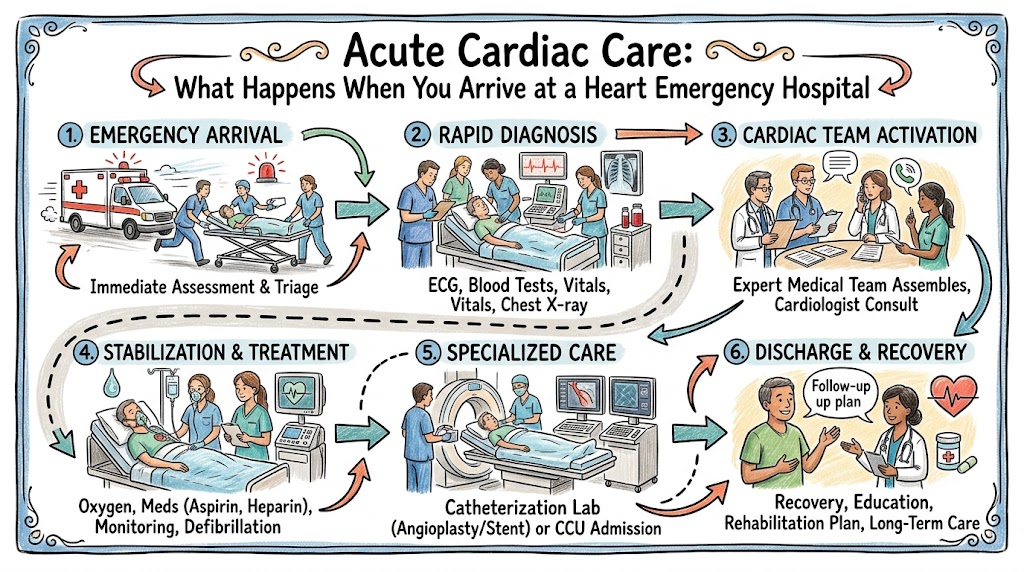
When a patient arrives at a hospital with heart attack symptoms, they are entered into a rapid triage system.
- Emergency Department Evaluation: The team immediately performs a focused assessment.
- ECG (Electrocardiogram): This is the most crucial first step. It records the heart’s electrical activity and can confirm a heart attack within minutes.
- Blood Testing: The team checks for biomarkers like Troponin, a protein released into the blood when heart muscle is damaged.
- Cardiac Consultation: An interventional cardiologist is alerted immediately to assess the patient for a procedure.
- Rapid Diagnosis: Dedicated heart hospitals have “door-to-balloon” time targets—a standard to ensure that from the moment a patient enters the door, their artery is opened in the lab within 90 minutes.
Emergency Angioplasty & Cardiac Catheterization
Emergency angioplasty is the gold standard for treating a major heart attack.
- The Procedure: A thin, flexible tube (catheter) is inserted through a blood vessel in the wrist or groin and threaded up to the heart.
- The Goal: A tiny balloon at the tip of the catheter is inflated at the site of the blockage to open the artery, and a stent (a wire-mesh tube) is placed to keep it open.
- Benefits: This procedure restores blood flow immediately, which can stop the heart attack and prevent long-term damage. It is a highly effective, minimally invasive procedure that most patients recover from very quickly.
Intensive Cardiac Care Units (ICCU)
After the emergency procedure, the patient is transferred to the ICCU. This is a specialized ward where patients are under 24/7 watch.
- Continuous Monitoring: Specialized equipment monitors heart rate, blood pressure, and oxygen levels to detect any irregularities.
- Cardiac Nursing: The nurses in the ICCU are highly trained in identifying subtle changes that could indicate a complication.
- Medication Management: Patients receive specialized medications to prevent future clots and manage blood pressure.
- Stabilization: This unit ensures that the heart recovers in a controlled, supportive environment before the patient is moved to a general floor.
Table 3: Services Provided in ICCU
| Service | Purpose |
| Cardiac Monitoring | Constant surveillance for rhythm changes or complications. |
| Medication Management | Titrating heart-stabilizing drugs to ensure recovery. |
| Specialist Care | Immediate access to cardiologists for any clinical changes. |
| Emergency Support | Life-support equipment available if a patient’s condition destabilizes. |
Recovery After a Heart Attack
Recovery is a journey that starts in the hospital and continues at home. In the hospital, the focus is on stabilization and education. Once home, the focus shifts to lifestyle change.
- Cardiac Rehabilitation: This is a supervised program of exercise and education. It is one of the most important components of recovery, as it helps patients regain physical strength while learning how to manage their heart condition.
- Medication Adherence: Many patients are prescribed long-term medications to thin the blood and manage cholesterol. Consistency is key.
- Emotional Recovery: It is normal to feel anxious or depressed after a cardiac event. Counseling and support groups are valuable for mental healing.
Preventing Future Heart Attacks
Prevention is about managing risk factors:
- Hypertension Control: Keeping blood pressure within the normal range significantly reduces strain on the heart.
- Cholesterol Management: Using statins and diet to lower LDL (the “bad” cholesterol) prevents new plaque buildup.
- Smoking Cessation: Stopping smoking is the single most effective way to improve cardiovascular health.
- Diet and Exercise: Adopting a heart-healthy diet and regular physical activity, as prescribed by your doctor, provides long-term protection.
How to Choose the Best Emergency Heart Attack Hospital
When choosing an emergency heart hospital, consider these critical factors:
- 24/7 Cath Lab: Ensure the hospital has a 24/7 cardiac catheterization laboratory.
- Ambulance Connectivity: Hospitals with their own dedicated ambulance services often have better coordination and faster response times.
- Interventional Experience: Look for a center with a high volume of successful angioplasty procedures.
- Comprehensive Team: An excellent hospital has a multidisciplinary team, including interventional cardiologists, cardiac surgeons, and specialized nurses.
Real-Life Patient Stories
- The Rapid Responder: A 62-year-old patient recognized his chest pain during a walk and immediately contacted his local emergency cardiac center. Because they were pre-alerted, the cath lab was ready upon his arrival, and his artery was opened in record time. He returned to work within three weeks.
- The Rehabilitation Champion: A 48-year-old patient who suffered a cardiac event successfully utilized a hospital-based cardiac rehabilitation program to lose 15 kg and lower his blood pressure, successfully preventing a recurrence over the next five years.
Future of Emergency Cardiac Care
The future is focused on speed and integration. We are moving toward “smart” ambulances that can transmit a patient’s ECG directly to the hospital while the patient is in transit. AI is being developed to assist doctors in analyzing images in real-time, helping them make faster decisions. Precision medicine will also allow us to customize medications based on a patient’s genetic profile, improving both the safety and effectiveness of heart attack treatment.
FAQs
- What is a heart attack?
An blockage of blood flow to the heart muscle. - What are the warning signs?
Chest pain, jaw pain, shortness of breath, and sweating. - How quickly should I seek help?
Immediately—every minute counts. - What is emergency angioplasty?
A procedure to open blocked arteries using a balloon and stent. - What happens in the ER?
Rapid ECG, blood work, and cardiologist assessment. - What is a cath lab?
A specialized room for heart procedures. - Do women have different symptoms?
Yes, often more fatigue and back/jaw pain. - What is a silent heart attack?
An event with little to no symptoms that still damages the heart. - How long is hospital recovery?
Typically a few days for stabilization. - What is cardiac rehabilitation?
A structured exercise and education program. - How do I choose a hospital?
Look for 24/7 cath lab services. - Can heart attacks be prevented?
Yes, through risk factor management. - What lifestyle changes matter?
Smoking cessation, diet, and exercise. - Is recovery possible?
Yes, millions live full lives after a heart attack. - What should families know?
Know the symptoms and the nearest emergency center.
Final Conclusion
A heart attack is a life-altering event, but it is not the end of the story. Modern medicine has equipped us with the tools to respond to these emergencies with precision, efficiency, and life-saving expertise. From the rapid assessment in the emergency department to the advanced technology of the cardiac catheterization lab and the supportive environment of the intensive cardiac care unit, the entire system is built to ensure you survive and thrive.Choosing the right facility is the first step toward security. By identifying hospitals offering emergency heart attack care near you before an emergency occurs, you ensure that you and your loved ones have the best possible chance at a successful outcome. Remember that early recognition of symptoms and immediate action are your greatest allies. If you have risk factors, start your preventive journey today—manage your blood pressure, eat heart-healthy, and stay informed. Your heart is a resilient organ, and with the right care, you can protect it for years to come.