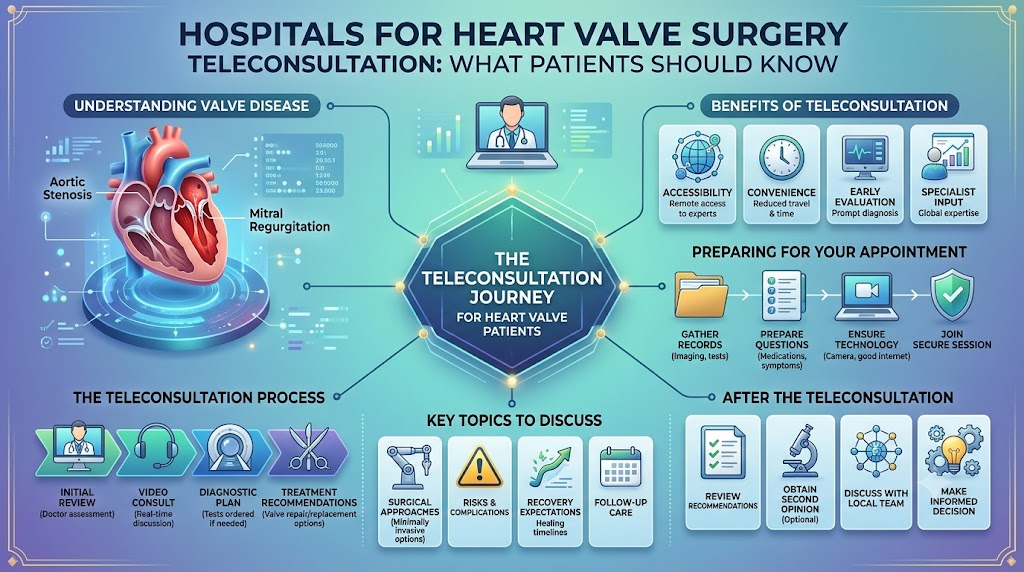
Heart valve problems can affect how well the heart moves blood. Patients may need expert advice to understand their condition and treatment choices. Hospitals for heart valve surgery teleconsultation offer a way to speak with specialists remotely. An online cardiac consultation may help patients review reports, ask questions, and plan care.
Patients can discuss heart valve repair, heart valve replacement, and post-surgery follow-up. They may also learn which tests or hospital visits are needed. However, online care cannot replace every exam or test.
Patients can explore hospital services and care options at Bestheartsurgery. They should confirm each hospital’s services before arranging an appointment. A qualified cardiac specialist can help guide the next steps.
What Is Heart Valve Disease?
The heart has four valves. These valves help blood flow in the right direction. They open to let blood pass and close to stop it from flowing backward.
A valve can become too narrow. This makes it harder for blood to pass through. A valve may also fail to close fully. Blood can then flow backward through it.
These problems can make the heart work harder. Some people may have no clear symptoms at first. Others may feel breathless, tired, dizzy, or weak. Chest discomfort or fainting may also occur.
Symptoms can have many causes. Only a qualified health professional can assess their cause and seriousness. The right tests help guide care.
What Is Heart Valve Surgery?
Heart valve surgery treats a valve that does not work well. Not everyone with heart valve disease needs surgery. Some people need regular checks or other care.
Doctors may suggest heart valve repair when they can fix the damaged valve. Repair may help the valve open or close better. The best method depends on the type and extent of damage.
Heart valve replacement means removing or bypassing the damaged valve and placing a new one. The new valve may be mechanical or made from animal or human tissue. Each type has different benefits and care needs.
Some operations use open surgery. This often involves an incision in the chest. Selected patients may qualify for a catheter-based procedure. This uses a thin tube passed through a blood vessel or another route.
The right choice depends on the affected valve, test results, and overall health. The specialist will also consider the severity of the problem. The patient’s needs and wishes matter too.
What Is Teleconsultation for Heart Valve Surgery?
Teleconsultation is a remote appointment with a health professional. It may take place by video, phone, or another suitable digital method. Patients can speak with a cardiologist or cardiac surgeon without visiting the hospital for that discussion.
During an appointment, patients may discuss their symptoms and medical history. They may share available test reports and ask about treatment options. The specialist can explain possible next steps.
Online appointments may also help patients plan recovery and follow-up visits. A specialist may advise whether an in-person visit is needed. The team may also discuss care with the patient’s local doctor.
Teleconsultation is one part of care. It does not replace every physical exam, test, or hospital visit. The specialist decides whether remote care is suitable for each concern.
When Can Online Cardiac Consultation Help?
An online cardiac consultation may help in several situations.
- Initial discussion: Patients can describe their symptoms and learn what may happen next.
- Second opinion: Patients can ask another qualified specialist to review a proposed treatment plan.
- Test review: A doctor may discuss available echocardiogram reports and other results.
- Surgery planning: Patients can prepare questions about the planned procedure and recovery.
- Recovery checks: Suitable follow-up visits may cover progress and general concerns.
- Local care support: Specialists may help coordinate care with a local doctor.
An echocardiogram uses sound waves to show the heart and its valves. It can help doctors assess how the valves work. The specialist may need the full report or updated images.
Remote advice has limits. The clinician may not have enough information to make a decision. A physical exam, new test, or hospital visit may be needed. This is a normal part of safe care.
When Is an In-Person Visit Necessary?
A video or phone call cannot provide every part of a heart assessment. A doctor may need to listen to the heart and check other signs. Some findings are easier to assess in person.
Tests may include an echocardiogram, an electrocardiogram, or blood tests. An electrocardiogram records the heart’s electrical activity. Some patients may need other scans or heart tests.
The exact tests depend on the patient’s condition. A remote appointment may lead to a hospital referral. It may also help the doctor decide which test is needed first.
Patients should follow the clinician’s advice about in-person care. They should not delay urgent assessment to wait for an online appointment.
How to Choose a Hospital Offering Teleconsultation
Choosing a hospital takes more than checking whether it offers video calls. Patients should compare specialist access, tests, privacy, fees, and follow-up care.
Look for access to qualified cardiologists and cardiac surgeons. Ask whether the team treats the type of valve problem involved. Confirm whether heart valve repair and replacement services are available when needed.
Check how the hospital reviews reports before an appointment. Ask which file types it accepts and how to send them safely. Find out whether the doctor can provide a written summary.
A good process should explain when remote care is not enough. Ask how the hospital arranges tests, physical visits, and referrals. Clear instructions can help patients plan each step.
Privacy also matters. Ask how the hospital protects medical records and who can access them. Use only the hospital’s approved methods to share private health details.
Discuss fees before booking. Check whether the charge covers report review or later questions. Ask about follow-up options and possible costs for tests or hospital visits.
Patients should also ask how the team works with local doctors. This may help when travel is difficult. Confirm all services directly with the hospital, since they can vary.
What to Compare When Choosing a Hospital for Teleconsultation
| Factor | What to Check | Why It Matters |
|---|---|---|
| Specialist access | Cardiology and cardiac surgery expertise | Helps match care to the patient’s needs |
| Report review | Process for sharing test results | Supports informed discussion |
| Appointment options | Video, phone, and follow-up choices | Helps patients plan access |
| In-person care | Clear referral and testing process | Supports safe decisions |
| Privacy | Secure handling of medical records | Protects personal information |
| Fees | Consultation charges and included services | Helps avoid unexpected costs |
Preparing for a Heart Valve Teleconsultation
A little preparation can make the appointment more useful. Gather recent medical reports before the call. Include heart scans, test results, and discharge papers, if available.
Prepare a list of current medicines and supplements. Include any blood-thinning medicine prescribed by a clinician. Do not stop or change any medicine because of the appointment.
Write down your symptoms and when they occur. Note changes in breathing, energy, or daily activity. Include questions about surgery, other options, and recovery.
Check your phone or computer before the appointment. Test the camera, microphone, and internet connection. Choose a quiet, private place where you can speak freely.
A trusted support person may join if you wish. They can help take notes or remember advice. Share accurate information and ask the doctor to explain anything unclear.
Teleconsultation Before Surgery
Before surgery, an online visit may help patients understand their diagnosis. The specialist may review available reports and explain possible treatment choices. Patients can use the visit to prepare for later hospital checks.
The doctor may discuss the planned procedure and the role of anesthesia. Anesthesia is medicine that prevents pain during an operation. The team may also explain the likely hospital stay and broad recovery needs.
These discussions can help patients plan transport and home support. They may also help families prepare questions about care after discharge.
Online discussions do not replace required pre-surgery checks. Patients may need a physical assessment, updated tests, and an anesthesia review. The team must explain the procedure and obtain consent through the proper process.
Teleconsultation After Surgery
After surgery, remote follow-up may help patients discuss their recovery. They can ask about activity limits, medicines, wound concerns, and future visits. The care team can explain which changes need attention.
Some concerns need a physical check. A patient may need blood tests, heart imaging, or a wound review. Follow-up needs depend on the operation and the patient’s condition.
People with mechanical heart valves may need long-term blood-thinning medicine. They may also need regular blood tests to check how well the medicine works. The care team will explain the required checks.
Never stop, start, or change blood-thinning medicine without medical advice. If a dose is missed or bleeding occurs, contact the care team for guidance. Severe bleeding needs emergency care.
Benefits and Limits of Teleconsultation
Remote appointments can make it easier to reach a specialist. They may reduce travel for visits that do not need an exam. Family members may also join from another location.
Patients can discuss reports from home and prepare questions. Remote visits may help with routine follow-up and care planning. They may also support communication between hospital teams and local doctors.
However, teleconsultation has clear limits. It cannot provide every physical exam or test. Poor internet, unclear reports, or missing records may limit the discussion.
Some tests need hospital equipment. Some treatment choices require an in-person assessment. An online appointment does not guarantee a diagnosis or a surgery plan.
Patients should ask what can be done remotely and what needs a visit. The safest plan depends on their condition and the advice of their care team.
When Teleconsultation May Help and When In-Person Care Is Needed
| Situation | Teleconsultation May Help With | When In-Person Care May Be Needed |
|---|---|---|
| Reviewing reports | Discussing existing test results | New tests or physical examination |
| Planning surgery | Explaining options and preparing questions | Required surgical assessment |
| Routine follow-up | Discussing recovery and concerns | Wound checks or tests |
| Medicine questions | Reviewing the current treatment plan | Examination or tests before changes |
| New or worsening symptoms | Receiving guidance when appropriate | Urgent or emergency assessment |
The treating clinician decides which care setting is suitable. Patients should seek urgent help when symptoms suggest an emergency.
Costs and Insurance Questions
Teleconsultation fees can vary by specialist and hospital. The cost may depend on appointment length and the services included. Extra tests and later hospital visits may cost more.
Ask whether the fee includes report review or a written summary. Check whether later questions or follow-up calls have separate charges. Ask about fees before sharing payment details.
Insurance cover varies by plan and provider. Contact the insurer to check whether online specialist visits are covered. Also ask about possible costs for travel, tests, and in-person care.
Do not assume that every service is included in one fee. Ask for a clear list of charges before you agree to an appointment.
Warning Signs That Need Urgent Care
Some symptoms should never wait for a scheduled online appointment. Seek emergency medical help for severe or sudden chest pain, serious trouble breathing, fainting, or sudden collapse.
Sudden weakness, trouble speaking, or facial drooping may signal a stroke. These signs need emergency assessment. Use local emergency services instead of waiting for a video call.
After surgery, contact the care team promptly about worsening wound redness, pus, fever, unusual bleeding, or new palpitations. These signs may need quick medical review. Severe symptoms, heavy bleeding, or serious breathing problems need emergency care.
If you are unsure how serious a new symptom is, seek medical advice promptly. Do not use an online appointment to delay emergency assessment.
Frequently Asked Questions
1. What is teleconsultation for heart valve surgery?
It is a remote appointment with a qualified health professional. Patients can discuss their condition, review available reports, and ask about care options.
2. Can I discuss heart valve surgery with a doctor online?
Yes. You may discuss symptoms, test results, and possible treatment choices. The doctor may still need an in-person exam or more tests.
3. Can a cardiac surgeon review my test reports remotely?
A cardiac surgeon may review reports shared before or during the appointment. The surgeon will decide whether the information is enough for advice.
4. Can teleconsultation replace an in-person cardiac examination?
No. Some assessments need a physical exam, hospital equipment, or new tests. Your clinician will advise when a visit is needed.
5. How do I choose a hospital for heart valve surgery teleconsultation?
Compare specialist access, report review, privacy, fees, and follow-up care. Confirm the services directly with the hospital before booking.
6. Can online consultations help before heart valve surgery?
Yes. They may help explain the diagnosis, review reports, and prepare questions. Required pre-surgery checks still need to take place.
7. Can I use teleconsultation after heart valve surgery?
Yes, for suitable follow-up discussions. Some patients also need wound checks, blood tests, or heart imaging in person.
8. What reports should I prepare for an online cardiac appointment?
Prepare recent heart scans, test results, discharge papers, and a list of medicines. Share only what the hospital requests through its approved process.
9. Can teleconsultation help me get a second opinion?
Yes. A specialist may review available reports and discuss treatment options. They may request more tests before giving an opinion.
10. When should I seek emergency care instead of an online consultation?
Seek emergency care for severe chest pain, serious breathing trouble, collapse, or signs of stroke. Do not wait for a scheduled remote visit.
Choosing the Right Care Path
When comparing hospitals for heart valve surgery teleconsultation, check specialist access, diagnostic services, privacy, fees, and follow-up plans. Confirm how the hospital arranges in-person checks when needed.
Teleconsultation can support clear communication and better care planning. It cannot replace emergency help or every physical assessment. Discuss your needs with a qualified cardiac specialist to understand the safest next steps.