Introduction
Coronary Artery Disease (CAD) is one of the most prevalent cardiovascular conditions globally, yet it is also one of the most manageable when addressed with professional, evidence-based care. The condition occurs when the arteries supplying blood to the heart become narrowed or blocked, which can limit the oxygen your heart receives. Recognizing the signs and seeking treatment early is a vital step toward maintaining heart health and preventing long-term complications.This guide provides an educational overview of how coronary artery disease is diagnosed, the various treatment pathways available, and the factors to consider when choosing a cardiac center. For patients and families seeking reliable information on cardiac surgery resources, specialist discovery, and understanding treatment options, BestHeartSurgery serves as a helpful guide to navigate your cardiovascular care journey.
What Is Coronary Artery Disease (CAD)?
Coronary Artery Disease (CAD) is caused by the buildup of plaque—a substance made of fat, cholesterol, calcium, and other materials—within the coronary arteries. This process, known as atherosclerosis, narrows the arteries over time, restricting the flow of oxygen-rich blood to the heart muscle.
Stable vs. Severe CAD
- Stable CAD: Plaque remains relatively stable, and symptoms may only occur during physical exertion or stress when the heart requires more blood than the narrowed arteries can provide.
- Severe/Unstable CAD: The buildup may lead to critical blockages or plaque ruptures, which can significantly reduce blood flow even at rest and increase the risk of a heart attack.
Early diagnosis is crucial because treatment options are more effective before severe damage to the heart muscle occurs.
Why Specialized Cardiac Hospitals Matter
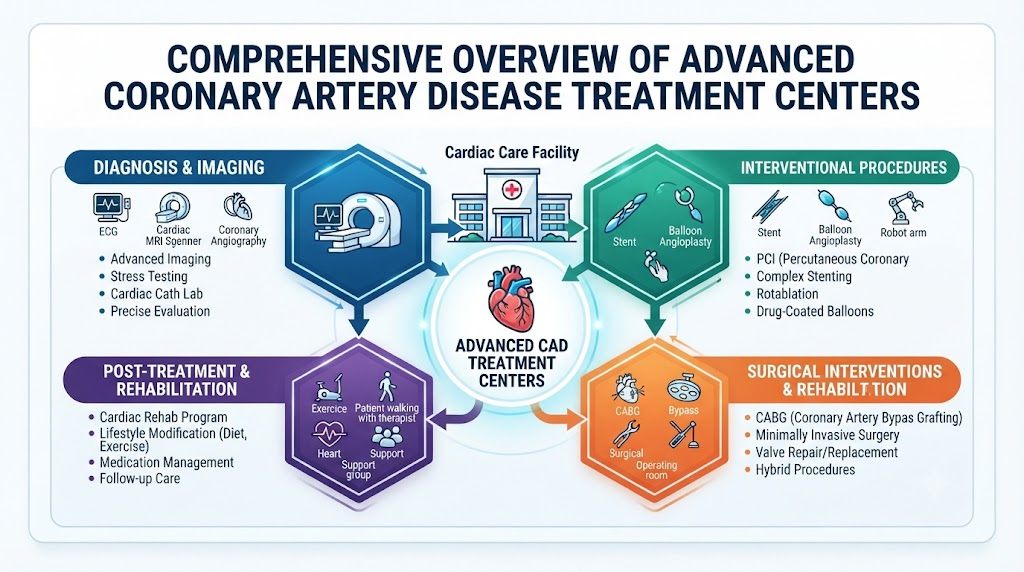
Cardiac care is complex and requires specialized infrastructure. Specialized hospitals provide:
- Multidisciplinary Heart Teams: Collaborative care involving interventional cardiologists, cardiac surgeons, and rehabilitation experts.
- Advanced Catheterization Labs: State-of-the-art environments for performing precise procedures like stents and angiograms.
- Cardiac Intensive Care Units (CICU): Specialized monitoring for patients immediately following surgical or invasive procedures.
- Comprehensive Rehabilitation: Structured programs that help patients safely return to physical activity after treatment.
Common Causes and Risk Factors
Understanding your risk profile is a critical component of heart disease prevention and management. Key factors include:
- Medical Factors: High cholesterol, high blood pressure, and diabetes.
- Lifestyle Choices: Smoking, physical inactivity, and diets high in saturated fats.
- Personal Profile: Family history, increasing age, and chronic stress levels.
Common Symptoms of Coronary Artery Disease
Symptoms of CAD are not always dramatic. They can manifest in subtle ways that many patients overlook.
| Symptom | Possible Meaning |
| Chest Pain (Angina) | Reduced blood flow to the heart muscle |
| Shortness of Breath | The heart struggling to pump efficiently |
| Fatigue | Reduced oxygen delivery to the body |
| Arm/Jaw/Neck Pain | Radiation of cardiac-related pain |
| Dizziness | Compromised cardiovascular circulation |
How Coronary Artery Disease Is Diagnosed
Modern diagnostic tools allow doctors to visualize the heart and arteries with remarkable accuracy.
| Test | Purpose | Benefit |
| ECG | Detect electrical abnormalities | Initial heart assessment |
| Echocardiogram | Evaluate heart structure | Analysis of pumping function |
| Stress Test | Assess heart under activity | Detects reduced blood flow during exertion |
| Coronary Angiography | View blocked arteries | Essential for treatment planning |
| CT Angiogram | Non-invasive artery imaging | Useful for early diagnosis |
Treatment Options for Coronary Artery Disease
Treatment is highly personalized based on the severity of the blockages and the patient’s overall health.
- Lifestyle Modifications: Diet, exercise, and smoking cessation form the foundation of all CAD treatment.
- Medications: Drugs to lower cholesterol, control blood pressure, or prevent blood clots.
- Angioplasty & Stents: A minimally invasive procedure where a small balloon is used to open the artery, and a mesh tube (stent) is placed to keep it open.
- Bypass Surgery (CABG): A surgical procedure that redirects blood around the blocked artery using a healthy vessel from another part of the body.
- Cardiac Rehabilitation: Supervised exercise and education to help patients recover and strengthen their hearts.
How to Choose the Right Cardiac Hospital
When evaluating a center for CAD treatment, consider the following checklist:
- Specialist Experience: Are the interventionalists and surgeons board-certified with significant case volumes?
- Technology & Equipment: Does the hospital have modern catheterization labs and hybrid operating rooms?
- Comprehensive Care: Does the facility offer integrated post-operative rehabilitation and follow-up?
- Emergency Services: Is there 24/7 access to urgent cardiac intervention if needed?
Hospital Selection Checklist
| Factor | Importance |
| Experienced Specialists | Better treatment planning |
| Advanced Technology | Accurate diagnosis and safe procedures |
| Cardiac ICU | Specialized critical care |
| Rehabilitation Program | Improved recovery outcomes |
Lifestyle Changes After Treatment
Surgery or a stent is not a cure-all; it is a turning point. Long-term success depends on:
- Heart-Healthy Diet: Emphasizing fruits, vegetables, whole grains, and lean proteins while reducing sodium and saturated fats.
- Physical Activity: Regular, doctor-approved exercise to keep the heart muscle strong.
- Medication Adherence: Never skipping prescribed blood thinners or cholesterol-lowering medications.
- Smoking Cessation: The single most impactful step for improving long-term artery health.
Common Myths vs. Facts
| Myth | Fact |
| CAD only affects older adults | It can affect younger adults based on risk factors like diet and smoking. |
| Chest pain is always severe | Some people have mild symptoms or none at all (silent ischemia). |
| Surgery is the only treatment | Many people manage CAD effectively with lifestyle changes and medication. |
| Recovery ends at discharge | Long-term follow-up and rehabilitation are essential for preventing recurrence. |
Real-Life Patient Scenarios
- Early Detection: A patient with mild exercise-induced fatigue has a stress test that reveals early blockages, allowing for lifestyle changes and medication to stop progression before a heart attack occurred.
- Angioplasty: An individual with a localized blockage undergoes angioplasty and returns to work within a week, feeling immediate relief from angina.
- Bypass Surgery: A patient with multiple complex blockages undergoes CABG, leading to a significant improvement in their ability to engage in daily physical activities without chest pain.
FAQs
- What is CAD?
A condition where coronary arteries are narrowed by plaque. - What causes blockages?
A combination of high cholesterol, smoking, genetics, and other risk factors. - What are the first symptoms?
Often mild chest discomfort or shortness of breath during exertion. - Is it curable?
It is a chronic condition that can be effectively managed with treatment. - Angioplasty vs. Bypass?
Angioplasty is usually for specific blockages; bypass is for multiple or complex ones. - When is CABG needed?
When blockages are too severe or complex for stenting. - How is CAD diagnosed?
Through tests like angiograms, stress tests, and CT scans. - Can lifestyle changes help?
Yes, they are critical to slowing the disease. - What foods are best?
Those low in trans-fats and high in fiber (Mediterranean-style). - Recovery time for CABG?
Usually several weeks to months, depending on the patient. - Can CAD return?
Yes, if underlying risk factors like smoking or high cholesterol are not managed. - What happens during an angiogram?
A dye is injected into arteries to visualize blockages. - How do I choose a hospital?
Look for expert teams, high safety standards, and rehabilitation support. - Who is high risk?
Those with diabetes, high blood pressure, or a strong family history. - When to seek emergency care?
If you have sudden, severe chest pain, nausea, or lightheadedness.
Final Thoughts
Coronary Artery Disease is a serious diagnosis, but with modern medicine, it is one that many patients successfully manage for years. The key is timely intervention, choosing an experienced cardiac team, and remaining committed to heart-healthy habits.If you or a loved one are exploring treatment options, remember to consult with your cardiologist to create a plan that fits your specific health profile. For reliable resources on heart surgery, hospital standards, and educational support, please explore the information available at BestHeartSurgery.