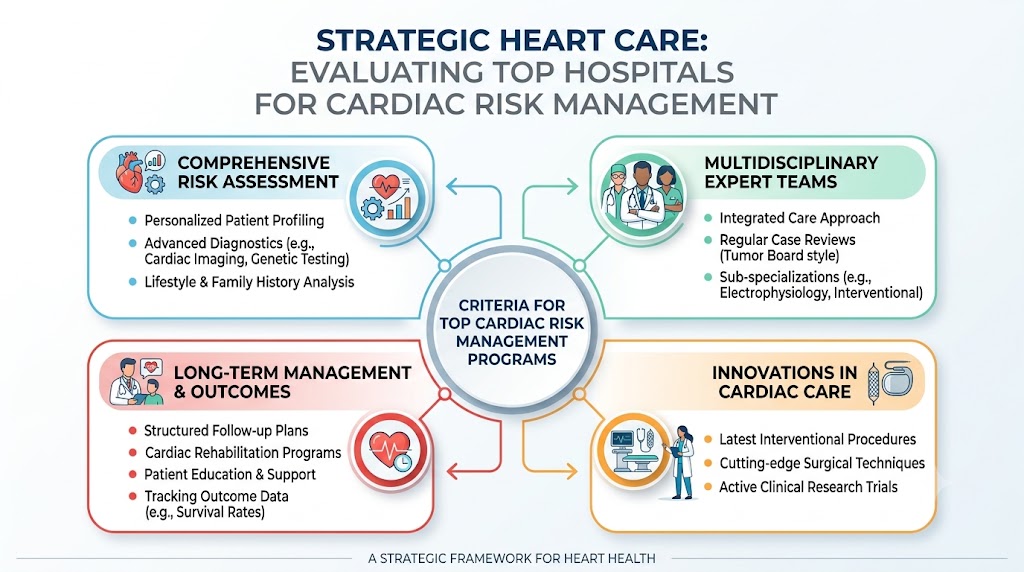
Introduction
In an era where cardiovascular disease remains a leading health challenge globally, the shift toward proactive, preventive care has never been more critical. Detecting heart health concerns before they manifest as acute emergencies can significantly improve long-term outcomes and quality of life. Cardiac risk assessment programs serve as the frontline defense, using advanced diagnostics and expert medical evaluation to build a roadmap for your heart’s future.Choosing the right facility for these evaluations is a significant step in your health journey. Specialized hospitals provide more than just tests; they offer comprehensive risk profiling, expert medical guidance, and personalized lifestyle strategies tailored to your unique physiological makeup. For those seeking reliable, high-standard preventive care, BESTHEARTSURGERY provides an essential resource for navigating the landscape of modern cardiovascular health and finding the right institutional support.
Understanding Cardiac Risk Assessment Programs
Cardiac risk assessment programs are structured, medical evaluations designed to measure your likelihood of developing cardiovascular conditions, such as coronary artery disease, heart failure, or stroke. Rather than waiting for symptoms to appear, these programs look at the underlying markers of heart health.
The goal of preventive cardiology is to identify “silent” risks—factors like subtle hypertension, elevated cholesterol, or early arterial changes—before they progress. By quantifying your risk, cardiologists can create a personalized action plan that includes medical therapy, dietary modifications, and exercise prescriptions to “arrest” or mitigate heart disease before it starts.
Why Specialized Cardiac Assessment Hospitals Matter
General health screenings are a start, but specialized cardiac assessment hospitals offer a depth of expertise that is essential for accurate risk management.
- Cardiologist-Led Evaluations: Assessments are interpreted by specialists who understand the complex interplay of cardiovascular systems.
- Comprehensive Diagnostics: Access to advanced imaging, such as coronary calcium scoring and specialized lipid panels, that aren’t typically available in standard clinics.
- Personalized Risk Profiling: Moving beyond generic calculators to account for family history, genetic predispositions, and lifestyle variables.
- Ongoing Monitoring: A continuum of care that tracks your progress over time, ensuring your prevention plan adapts as your health needs change.
QUICK COMPARISON TABLE
| Hospital Name | Risk Assessment Services | Diagnostic Testing | Preventive Cardiology Team | Follow-Up Care Programs |
| Medanta Preventive Division | Full-Spectrum Screening | 256-Slice CT / Echo | Multidisciplinary | Heart Reversal Programs |
| Apollo Heart Institute | Comprehensive Risk Profiling | Advanced Cath Labs | Interventional Specialists | Rehabilitation Services |
| Max Preventive Care | Cardiovascular Screening | Advanced Imaging | Senior Cardiologists | Long-term Follow-up |
| Prashanth Heart Center | Cardiac Risk Evaluation | High-Res Imaging | Preventive Specialists | Wellness Support |
| Fortis Escorts Prevention | Total Heart Screening | Diagnostic Lab | Research-Led Team | Rehabilitation Clinics |
Hospitals for Cardiac Risk Assessment Programs
1. Medanta – The Medicity (Preventive Cardiology Division)
Overview: A pioneer in “Heart Disease Reversal” and proactive, high-risk patient management.
- Preventive Department: Focused on pre-symptomatic detection and hypertension management.
- Diagnostic Technologies: Utilizes 256-slice CT and 3D echocardiography for high-precision mapping.
- Strengths: An interdisciplinary team including nutritionists, physiotherapists, and behavioral therapists.
2. Apollo Heart Institute
Overview: A globally recognized network offering evidence-based preventive protocols.
- Preventive Department: Provides a massive infrastructure for cardiac screening and early intervention.
- Diagnostic Technologies: State-of-the-art imaging systems and extensive laboratory capabilities.
- Strengths: A focus on continuous clinical audits and a patient-centric approach to long-term monitoring.
3. Max Super Speciality Hospital
Overview: Renowned for clinical excellence in cardiovascular disease prevention across various locations.
- Preventive Department: Dedicated preventive cardiology clinics with a focus on unconventional risk detection.
- Diagnostic Technologies: Cutting-edge diagnostic equipment to identify even minor arterial irregularities.
- Strengths: Unparalleled accuracy in handling complex, multi-factor risk cases.
Common Cardiovascular Risk Factors
Understanding your risks is the first step toward reducing them. Key factors include:
- High Blood Pressure: Puts chronic strain on arterial walls.
- High Cholesterol: Leads to the buildup of plaque in your arteries.
- Diabetes: Significantly increases the risk of damage to the blood vessels.
- Smoking: Causes direct damage to the lining of the heart and arteries.
- Obesity: Increases the workload on the heart and exacerbates other risk factors.
- Physical Inactivity: Reduces cardiovascular endurance and contributes to weight gain.
- Family History: A genetic blueprint that may necessitate earlier, more frequent screening.
CARDIAC RISK FACTORS TABLE
| Risk Factor | Impact on Heart Health | Possible Preventive Action |
| High Blood Pressure | Increased arterial strain | BP management / Medication |
| High Cholesterol | Plaque buildup risk | Diet / Lifestyle / Statins |
| Diabetes | Higher vascular risk | Blood sugar control |
| Smoking | Vessel damage | Smoking cessation |
| Obesity | Higher cardiac workload | Weight management / Nutrition |
| Physical Inactivity | Lower cardiac fitness | Regular aerobic exercise |
Diagnostic Tests Used in Cardiac Risk Assessment
Modern preventive cardiology employs a range of non-invasive tools to create a precise picture of your heart health.
CARDIAC TESTING TABLE
| Test | Purpose | Benefit |
| Electrocardiogram (ECG) | Assess heart rhythm | Detects electrical abnormalities |
| Echocardiogram | Structural evaluation | Functional heart assessment |
| Stress Test | Exercise response | Identifies hidden issues under load |
| Calcium Score | Plaque detection | Early risk prediction |
| Lipid Profile | Cholesterol measurement | Foundation for risk assessment |
| Blood Pressure Monitoring | Pressure tracking | Vital for early intervention |
Who Should Consider a Cardiac Risk Assessment?
A cardiac risk assessment is highly beneficial for:
- Adults aged 40+: As baseline screening for age-related risks.
- Those with family history: Especially if relatives experienced heart events at an early age.
- Individuals with comorbidities: Such as diabetes, chronic kidney disease, or high cholesterol.
- Smokers: Due to the severe impact on vascular health.
- Sedentary Individuals: To identify the impact of inactivity on cardiovascular fitness.
What Happens During a Cardiac Assessment?
- Consultation: A deep dive into your medical history and lifestyle.
- Medical Review: Examining current medications and genetic history.
- Diagnostic Testing: Performing the tests described above to collect objective data.
- Risk Scoring: Calculating your “heart age” or 10-year risk profile.
- Prevention Planning: Developing a tailored strategy for diet, exercise, and, if needed, medication.
- Follow-Up: Tracking your health indicators over months or years.
CARDIAC ASSESSMENT PROCESS TABLE
| Stage | Primary Goal |
| Consultation | Gather comprehensive health history |
| Evaluation | Assess individual risk factors |
| Diagnostic Testing | Collect clinical baseline data |
| Risk Analysis | Determine overall cardiovascular score |
| Prevention Planning | Create a actionable health strategy |
| Follow-Up | Monitor progress and update care |
Benefits of Cardiac Risk Assessment
The primary benefit is agency. Knowing your risk score allows you to make informed lifestyle shifts that can add years to your life. These programs provide structure, clinical accountability, and the peace of mind that comes with knowing your heart health is being expertly managed.
Common Mistakes People Make
- Ignoring early warning signs: Attributing fatigue or minor discomfort to “getting older.”
- Skipping screenings: Assuming that feeling “fine” means the heart is healthy.
- Relaying solely on one test: A single cholesterol check is not a full heart health assessment.
- Delaying evaluation: Waiting until a symptom becomes a medical emergency.
- Ignoring family history: Assuming that since you haven’t had a heart issue, your genes don’t play a role.
Real-Life Patient Scenarios
A 45-year-old patient with no symptoms visited a preventive cardiology clinic for a baseline check. The coronary calcium score revealed early-stage plaque buildup. Because this was caught early, the patient was able to start on a low-dose statin and overhaul their diet, successfully halting the progression of the disease. This patient avoided a potential cardiac event years later, all because of a proactive assessment.
Future of Preventive Cardiology
The future of heart health is increasingly data-driven. We are looking at AI-assisted risk prediction that processes thousands of data points to predict events before they occur. Wearable technology now provides continuous, real-time monitoring of blood pressure and heart rhythms, while predictive analytics will soon allow doctors to create “digital twins” of your heart to test how different medications will affect you before you even start them.
FAQs
- What is a cardiac risk assessment?
A comprehensive checkup used to determine your risk of developing heart disease. - Who should undergo screening?
Adults, particularly those over 40 or with family history. - How often should it be performed?
Generally every 1–3 years, or as advised by your doctor. - What tests are included?
Lipid panels, ECGs, blood pressure checks, and potentially calcium scores or stress tests. - Is a stress test always required?
No, it is usually reserved for those with higher risk factors or symptoms. - Can heart disease be detected early?
Yes, through screening, plaque and structural changes are visible long before a heart attack. - What role does family history play?
It is a primary risk modifier that dictates how early and how aggressively you should screen. - Are assessments painful?
No, most diagnostic tests are non-invasive and painless. - Why do I need this if I feel fine?
Heart disease is often “silent” until it is advanced. - Can I do this online?
You can calculate basic scores online, but medical-grade screening requires a clinical visit. - What is a lipid profile?
A test measuring various types of cholesterol and triglycerides. - Are there risks to testing?
Almost none; these tests are designed to be extremely safe. - How long does the assessment take?
It can take anywhere from a few hours to a day, depending on the test depth. - Is it covered by insurance?
Most preventive screenings are, but check with your specific provider. - Does a high risk score mean I have heart disease?
No, it means you have a higher likelihood of developing it, giving you time to act.
Final Thoughts
Preventive cardiology is your most powerful tool in the fight against heart disease. By engaging with a cardiac risk assessment program, you are shifting from a reactive approach to a proactive one, ensuring that you stay ahead of potential health challenges. Remember, the best time to care for your heart is long before you think you need to. For further resources, hospital comparisons, and information on maintaining optimal heart health, visit BESTHEARTSURGERY to find the right partner in your wellness journey.