Introduction
Receiving a diagnosis of end-stage heart failure can feel overwhelming, changing your perspective on what the future holds. However, for many patients whose hearts can no longer pump effectively, a heart transplant serves as a life-saving intervention—a literal second chance at life. When traditional medications and surgical interventions are no longer enough to support your heart’s function, transplantation stands as the gold standard of care.
Navigating the path to a heart transplant is a complex journey that requires the expertise of a highly specialized medical team. You are not just looking for a surgeon; you are looking for a center of excellence that integrates surgical skill, precise organ matching, and intensive post-operative support. Choosing the right hospital is perhaps the most significant decision you will make in your recovery journey.
In this comprehensive guide, we will explore the transplant process, what to expect during your recovery, and how to identify the features that distinguish world-class transplant centers. For those seeking reliable guidance and resources to help navigate this process, BestHeartSurgery is here to assist you in making informed decisions about your cardiac health. Let’s explore how specialized care can pave the way toward a stronger, healthier future.
Quick Answer
Hospitals for heart transplant procedures are specialized medical centers staffed by multidisciplinary teams, including cardiac surgeons, cardiologists, anesthesiologists, and transplant coordinators, dedicated to managing end-stage heart failure. These centers are critical because they possess the advanced infrastructure—such as intensive care units, mechanical circulatory support, and organ matching systems—required to manage the high-stakes nature of transplantation. Choosing a specialized transplant center ensures access to the latest surgical techniques, rigorous safety protocols, and personalized long-term care plans, which collectively result in higher survival rates and improved quality of life for transplant recipients.
Understanding Heart Transplantation
What Is a Heart Transplant?
A heart transplant is a surgical procedure where a diseased or failing heart is removed and replaced with a healthy heart from a deceased donor. It is a major operation performed when a patient’s heart can no longer sustain the body’s needs, despite optimal medical therapy.
Why Heart Transplants Are Performed
Transplants are primarily performed to treat severe heart failure. When the heart muscle becomes too weak to pump oxygenated blood to the body’s organs, it leads to a cascade of health issues. A transplant replaces the failing pump, effectively resolving the symptoms of heart failure and restoring energy and function.
How a Donor Heart Is Matched
Matching is a precise process based on several factors, including blood type, body size, and the medical urgency of the recipient. The goal is to ensure the donor heart is an anatomical and biological “fit,” which minimizes the risk of the recipient’s immune system attacking the new organ.
Who May Need a Heart Transplant?
Patients who have exhausted all other medical options, including medications, stents, bypass surgery, or cardiac resynchronization therapy, may be candidates. It is typically reserved for those whose heart condition severely limits their daily quality of life and who are otherwise healthy enough to undergo major surgery.
Importance of Early Evaluation
Early evaluation is vital because heart failure can progress quickly. By consulting with a transplant center early, your medical team can determine if you are a candidate, manage your condition with the goal of reaching transplantation, and provide bridge therapies if necessary while you wait for a donor.
Conditions That May Require a Heart Transplant
End-Stage Heart Failure
This is the most common reason for a transplant. It occurs when the heart’s pumping efficiency drops to a level that can no longer support the body, leading to constant fatigue, fluid retention, and respiratory distress.
Dilated Cardiomyopathy
In this condition, the heart’s chambers become enlarged and weak, making it impossible for the heart to pump blood efficiently. If the damage becomes irreversible, a transplant is often the only remaining option.
Congenital Heart Disease
Some individuals are born with complex heart defects that may be repaired in childhood but can eventually lead to heart failure as they reach adulthood, requiring a transplant to restore function.
Severe Coronary Artery Disease
Chronic blockages in the arteries supplying the heart muscle can lead to widespread scarring from previous heart attacks. This scarring creates a “stiff” or “dead” area of the heart that cannot be fixed by bypass surgery alone.
Advanced Heart Valve Disease
While valve repair is the first line of defense, long-term valve failure can lead to secondary heart failure. If the heart muscle itself has been permanently damaged by the valve issue, a transplant may be required.
Failed Previous Heart Surgery
Patients who have undergone multiple cardiac surgeries may eventually develop scar tissue and structural weaknesses that render future repairs impossible, making transplantation a final, necessary step.
Rare Cardiac Disorders
Conditions such as amyloidosis, where abnormal proteins build up in the heart, or sarcoidosis can cause such severe, diffuse damage that the heart’s architecture is fundamentally compromised beyond repair.
What Makes a Specialized Heart Transplant Hospital?
Dedicated Heart Transplant Programs
A top-tier hospital has a program entirely devoted to the management of transplant patients. This includes a dedicated team that handles everything from the initial assessment to the final stages of recovery.
Experienced Cardiac Surgeons
The skill of the surgeon is paramount. Specialized hospitals attract surgeons who perform a high volume of heart transplants annually, ensuring they have the technical mastery needed to manage complex anatomy and unexpected intraoperative scenarios.
Advanced Cardiac Intensive Care Units
Recovery after a transplant is delicate. These hospitals maintain dedicated cardiac ICUs equipped with the latest monitoring technology and staffed by nurses specifically trained in the nuances of transplant patient care.
Organ Matching and Coordination Teams
This team acts as the bridge between donor organizations and the patient. They operate 24/7 to coordinate the logistics of receiving, transporting, and preparing the heart within the narrow window of viability.
Multidisciplinary Transplant Specialists
Your care team will involve cardiologists, infectious disease experts, nutritionists, social workers, and physical therapists. This ensures that every facet of your transition to life with a new heart is supported.
Long-Term Follow-Up Programs
The transplant journey lasts a lifetime. The best hospitals provide structured, long-term programs that monitor your heart function, medication levels, and psychological well-being for years after your surgery.
Rehabilitation and Recovery Services
Recovery is not just physical; it is a retraining process. Specialized centers provide comprehensive cardiac rehab programs designed to slowly increase your activity levels while ensuring your new heart is performing optimally.
Advanced Technologies Used in Heart Transplant Centers
Advanced Cardiac Imaging
Before surgery, hospitals use 3D echocardiography, cardiac MRI, and PET scans to gain a complete picture of the heart’s anatomy and metabolic function, which is critical for planning the transplant.
Mechanical Circulatory Support Devices
For many patients, a transplant is not an immediate possibility. Hospitals use advanced devices to support heart function while you wait for a donor, preventing further deterioration of other organs.
Ventricular Assist Devices (VADs)
A VAD is a mechanical pump that takes over the work of the heart’s pumping chamber. In many transplant centers, a VAD acts as a “bridge to transplant,” keeping the patient strong and active until a donor heart is found.
ECMO Support Systems
Extracorporeal Membrane Oxygenation (ECMO) acts as a temporary artificial lung and heart. It is used in critical situations to maintain oxygenation and blood flow while the transplant team prepares for the surgery.
AI-Assisted Patient Monitoring
Artificial intelligence is increasingly used to analyze vital signs and blood test results in real-time, allowing the team to detect signs of early rejection or infection before they become symptomatic.
Digital Recovery Tracking
Patients often use digital health platforms to log their medications, symptoms, and activity levels. This information is shared directly with the transplant team, enabling proactive, data-driven adjustments to your care plan.
Precision Transplant Medicine
New diagnostic tools allow doctors to measure the health of the transplanted heart at a molecular level. This enables the team to customize your immunosuppressant medication with incredible precision, reducing toxic side effects.
Benefits of Choosing Specialized Heart Transplant Hospitals
Better Surgical Outcomes
High-volume transplant centers have significantly better survival and recovery rates. Expertise leads to efficiency, which minimizes the time the donor heart is “off” the body and improves the overall success of the surgery.
Comprehensive Pre-Transplant Evaluation
Before surgery, you will undergo an exhaustive evaluation to ensure you are healthy enough for the transplant. Specialized hospitals have the depth of expertise to identify and manage any hidden health issues beforehand.
Personalized Treatment Plans
Your treatment is never generic. Specialized centers develop a roadmap that accounts for your medical history, age, support system, and lifestyle, ensuring the best fit for your long-term success.
Access to Advanced Technology
If you require specific bridge-to-transplant technologies or innovative immunosuppressive regimens, you are most likely to find them at a specialized center that focuses exclusively on advancing the field of transplant medicine.
Coordinated Multidisciplinary Care
You will not have to act as the messenger between different departments. Specialized hospitals integrate all your care providers into a single team that communicates seamlessly about your progress.
Long-Term Recovery Support
Specialized centers treat you as a patient for life. They provide education on nutrition, exercise, and how to manage the emotional highs and lows of living with a donor organ.
Comparison Table: Heart Transplant vs Other Advanced Heart Failure Treatments
| Feature | Heart Transplant | Ventricular Assist Device (VAD) | Medication Therapy |
| Primary Goal | Replace failing organ | Mechanically assist heart | Support existing heart function |
| Durability | Long-term (Permanent) | Long-term or Bridge | Short-to-Medium term |
| Invasiveness | Highly Invasive | Invasive (Requires surgery) | Non-invasive |
| Patient Experience | New heart function | External/Internal pump | Daily medication |
| Availability | Dependent on donors | Always available | Always available |
Comparison Table: General Cardiac Hospital vs Specialized Heart Transplant Center
| Feature | General Cardiac Hospital | Specialized Transplant Center |
| Core Focus | General heart surgery | Transplant & Advanced Failure |
| Team Expertise | Broad (General) | Narrow (Sub-specialized) |
| Technology | Standard cardiac tools | Advanced ECMO/VAD support |
| Donor Coordination | Limited/None | Dedicated 24/7 team |
| Post-Care | General Cardiology | Dedicated Transplant Clinic |
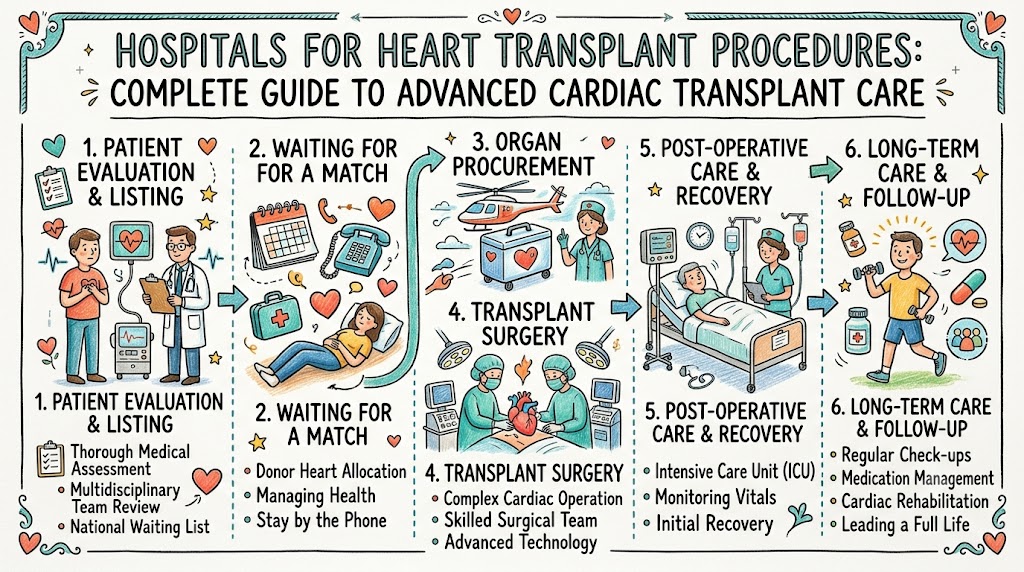
Understanding the Heart Transplant Process
Initial Patient Evaluation
This is the first step where your doctors evaluate your heart function, your overall health, and your fitness for major surgery. It is a comprehensive assessment that often takes several weeks or months.
Eligibility Assessment
Eligibility isn’t just medical; it’s also social. Your medical team assesses your support system, your ability to adhere to a lifelong medication regimen, and your emotional readiness for a transplant.
Donor Matching Process
Once you are on the list, the transplant coordinator works with donor agencies. When a potential donor is identified, the team reviews the data to decide if it is a match for you.
Waiting List Management
While you wait, you are monitored closely. Your hospital team will often provide “bridge” care to ensure your other organs, such as your kidneys and liver, remain healthy enough for the transplant.
Preparing for Surgery
Preparation involves stabilizing your medical condition. You may be asked to maintain a specific exercise program, follow a strict diet, and keep all your vaccination records up-to-date.
Transplant Team Coordination
The moment a heart is available, the team springs into action. Surgeons, anesthesiologists, perfusionists, and nursing staff are mobilized to prepare the operating room and the recipient simultaneously.
How Heart Transplant Surgery Is Performed
Pre-Surgical Preparation
You are taken to the operating room and put under general anesthesia. An anesthesiologist monitors your vital signs throughout, ensuring you remain comfortable and stable.
Anesthesia and Monitoring
Extensive monitoring equipment is placed to track every function of your heart, lungs, and brain during the surgery, providing the team with constant feedback.
Removal of the Diseased Heart
The surgeon makes an incision in the chest to access the heart. The patient is placed on a heart-lung bypass machine, which takes over the work of the heart and lungs while the transplant is performed.
Donor Heart Implantation
The surgeon carefully removes the failing heart and replaces it with the donor heart. The major blood vessels are reconnected, and the heart is restored to its proper position within the chest.
Immediate Post-Surgical Care
Once the blood flow is restored and the donor heart begins to beat, the patient is gradually weaned off the bypass machine and transferred to the cardiac ICU.
Intensive Care Recovery
In the ICU, the patient is monitored around the clock. The team checks for immediate signs of function in the new heart, manages fluid balance, and starts immunosuppressive medications.
Recovery After Heart Transplant Surgery
First Days in the ICU
The initial focus is ensuring the new heart is functioning well and that the body is beginning to accept the organ. You will be awake but likely groggy, with several monitors and lines in place.
Hospital Stay Expectations
You can expect to stay in the hospital for several weeks. This time is used for physical therapy, medication titration, and learning how to take care of your new heart and your incision.
Medication Management
Immunosuppressant drugs are the most critical part of your life after transplant. They prevent your immune system from attacking the new heart. You will learn to take these with absolute precision.
Preventing Organ Rejection
Rejection is the body’s natural response to a foreign organ. You will have regular biopsies and blood tests to monitor for signs of rejection, allowing the team to adjust medications before issues arise.
Cardiac Rehabilitation
Physical therapy starts almost immediately. Even in the hospital, you will work on sitting up, walking, and gradually rebuilding the strength that was lost during your period of heart failure.
Returning to Daily Activities
Returning home is a major milestone. You will slowly increase your physical activity over the coming months, eventually returning to many of the hobbies and activities you enjoyed before your illness.
Long-Term Lifestyle Adjustments
A transplant requires permanent changes. You will need to maintain a heart-healthy diet, avoid infections, keep up with your medications, and stay in regular contact with your transplant center.
Risks and Potential Complications
Organ Rejection
This is a risk every transplant patient faces. It can be acute, occurring soon after surgery, or chronic, occurring over years. It is why regular monitoring and medication adherence are non-negotiable.
Infection Risks
Because you take immunosuppressant medication to keep your heart safe, your immune system is weaker than average. You must take extra precautions to avoid exposure to common viruses and bacteria.
Blood Clots
Any major surgery carries a risk of blood clots. The medical team will provide blood-thinning medications and encourage movement to prevent clots from forming in your legs or elsewhere.
Medication Side Effects
Immunosuppressants can have side effects, such as increased risk for high blood pressure, diabetes, or bone density changes. The transplant team monitors these closely and manages them with auxiliary therapies.
Surgical Complications
As with any major chest surgery, there is a small risk of bleeding, incision issues, or complications related to anesthesia. Specialized hospitals use surgical techniques that minimize these risks.
How Specialized Hospitals Reduce Risks
They provide rigorous patient education and regular screening schedules that allow them to catch and treat minor complications before they become life-threatening.
Life After a Heart Transplant
Follow-Up Appointments
The schedule of appointments will be frequent in the first year and then spread out over time. These visits are essential for the long-term longevity of your transplant.
Monitoring Heart Function
You will have periodic echocardiograms and biopsies throughout your life. These are “the check-up” for your new heart to ensure it remains strong and vibrant.
Nutrition and Heart Health
A transplant is a major physiological event. Nutritionists will guide you on how to eat to support your new heart, manage your weight, and keep your blood pressure and cholesterol in check.
Physical Activity Guidelines
Exercise is encouraged but must be managed. You will have a plan that tells you exactly how much and what kind of exercise is safe for your heart at each stage of your recovery.
Mental and Emotional Well-Being
The transplant experience is emotionally complex. Many patients benefit from support groups or counseling to help them process the experience, deal with potential anxiety, and celebrate their new life.
Long-Term Survival and Quality of Life
With excellent care and commitment, transplant recipients can live for decades with a high quality of life, returning to work, family, and hobbies they once thought they had lost forever.
How to Choose the Right Heart Transplant Hospital
Experience of the Transplant Team
Look for a program that publishes their survival statistics. Ask how many transplants they perform annually, as higher volume is typically a marker of greater expertise.
Availability of Advanced Technology
Ensure the center has the ability to provide mechanical circulatory support (VAD/ECMO) and has the latest imaging capabilities for both pre- and post-transplant monitoring.
Intensive Care Infrastructure
The ICU should be dedicated to cardiac or transplant patients. A facility that mixes transplant patients with other general surgical patients may not provide the specialized focus you need.
Rehabilitation Services
Check if the hospital has an integrated cardiac rehab program. Transitioning from surgery to independent activity is much safer under the guidance of specialists who understand transplant recovery.
Emergency Support Systems
The best transplant centers have a dedicated 24/7 hotline for their patients. Knowing who to call if you experience a fever or unusual symptom on a Saturday night is crucial.
Patient Education Programs
A great hospital empowers you. Look for programs that provide thorough training for you and your family on how to manage medications, signs of infection, and daily care before you even leave the hospital.
Questions Patients Should Ask
- “What is your center’s survival rate for my specific condition?”
- “How long is the typical waiting time at your facility?”
- “What happens if a complication occurs in the middle of the night?”
- “How do you coordinate with my local cardiologist after I return home?”
Cost and Financial Considerations
Factors Affecting Heart Transplant Costs
The total cost is influenced by the complexity of the transplant, the number of days spent in the ICU, the cost of the medications, and the rehabilitation services provided.
Surgery and Hospital Charges
These are the primary costs and include the operating room, surgeon fees, and the cost of the organ procurement process. Most of these are covered by insurance for eligible patients.
Medication Expenses
Immunosuppressive drugs must be taken for life. These can be expensive, but they are a non-negotiable part of your care. Your transplant team will help you find affordable coverage options.
Rehabilitation Costs
Cardiac rehab is often covered by insurance, but check your individual plan’s coverage for the number of sessions allowed and any co-pays that may apply.
Long-Term Follow-Up Care
This includes the cost of biopsies, blood tests, and imaging scans. These are essential for the life of your new heart and are usually part of the standard post-transplant follow-up protocol.
Insurance and Financial Planning
Many hospitals have dedicated financial counselors. They are experts at navigating the complexities of insurance and will help you ensure that you are receiving all the coverage you are entitled to.
Future of Heart Transplant Care
Artificial Intelligence in Cardiac Transplants
AI is currently being used to predict how well a donor heart will perform after implantation. It is also helping to tailor immunosuppressant doses to the individual patient’s metabolism.
Advanced Organ Preservation Techniques
New methods of keeping a heart “alive” and beating while it is transported from the donor to the recipient are drastically increasing the number of hearts available for transplant.
Personalized Transplant Medicine
We are moving toward a future where your genetic profile is used to choose your medications, potentially eliminating many of the side effects associated with current drugs.
Mechanical Heart Support Innovations
Devices are becoming smaller, quieter, and more durable. In the future, some patients may live for years on mechanical support, essentially using a “bridge to recovery” rather than a transplant.
Future Developments in Organ Transplantation
Research is ongoing into xenotransplantation (using organs from other species) and regenerative medicine, which aims to help the heart heal itself, potentially reducing the need for donor organs.
Key Takeaways
- Heart transplantation is a life-saving intervention for end-stage heart failure.
- Specialized hospitals provide the safest and most effective transplant environment.
- The matching process is a complex coordination of science, logistics, and timing.
- Multidisciplinary teams, including surgeons and coordinators, are essential to your care.
- Recovery is a lifelong commitment involving medication, monitoring, and lifestyle changes.
- Rejection and infection are the primary risks, managed through strict adherence to care.
- Mechanical circulatory support (VAD) is a common bridge to transplant.
- High-volume centers consistently show the best patient outcomes.
- Emotional and family support are as critical as medical support.
- Transplantation allows many recipients to return to a high quality of life for decades.
FAQ Section
1.How long is the waiting list for a heart transplant?
Waiting times vary widely based on your blood type, size, and urgency. Some patients wait a few weeks, while others wait several months or longer. Your hospital team will provide estimates based on current data.
2.Will I be on medication for the rest of my life?
Yes. Immunosuppressant medications are required to prevent your body from rejecting the new heart. While the doses will decrease over time, they must be taken daily for as long as you have the transplant.
3.What is the success rate of a heart transplant?
Success rates are very high in specialized centers, with the majority of patients surviving for many years after the surgery. Statistics are constantly improving with new technology and better medications.
4.Can I live a normal life after a heart transplant?
Yes. Most patients return to work, exercise, and social activities. While you have certain medical restrictions and needs, your new heart will allow you to do things you couldn’t do with your failing heart.
5.What are the main signs of organ rejection?
Signs can include extreme fatigue, fever, swelling in the legs or abdomen, shortness of breath, or a general feeling of being unwell. You will be trained to monitor for these and contact your center immediately if they occur.
6.Does the hospital help with the financial cost of the transplant?
Yes, transplant centers have financial counselors who specialize in working with insurance companies to ensure your procedure and long-term care are covered.
7.Can I get a heart transplant if I have other medical conditions?
It depends on the condition. The pre-transplant evaluation is designed to see if your other health conditions will affect your ability to survive and recover from the transplant.
8.What is a “bridge to transplant”?
This is a term for a treatment, like a VAD or ECMO, that is used to support your failing heart while you wait for a donor organ to become available.
9.How often will I have biopsies after the transplant?
In the first year, biopsies are relatively frequent to monitor for rejection. As your body stabilizes and the new heart adapts, the frequency of these biopsies decreases significantly.
10.How do I maintain my heart health after the transplant?
Maintain a healthy diet, exercise according to your plan, avoid smoking, and strictly follow your medication schedule. Regular contact with your transplant clinic is your best defense for your new heart.
Conclusion
Choosing to undergo a heart transplant is a courageous decision that marks the beginning of a new chapter in your life. While the path involves rigorous medical oversight and long-term commitment, the result—a functioning, healthy heart—is a profound gift that can offer you years of activity, joy, and time with your loved ones. By entrusting your care to a specialized hospital, you ensure that you have a team of experts dedicated to your success from the first evaluation to your long-term follow-up.
Remember that you are not on this journey alone. Your medical team, your family, and your support network are all part of your transplant success. Stay focused on your health, adhere strictly to your care plan, and hold onto the hope that this intervention provides. For more guidance and resources on your transplant journey, BestHeartSurgery.com is here to support you with reliable, patient-centered information. Your strength and the support of your transplant team are the cornerstones of a successful recovery.