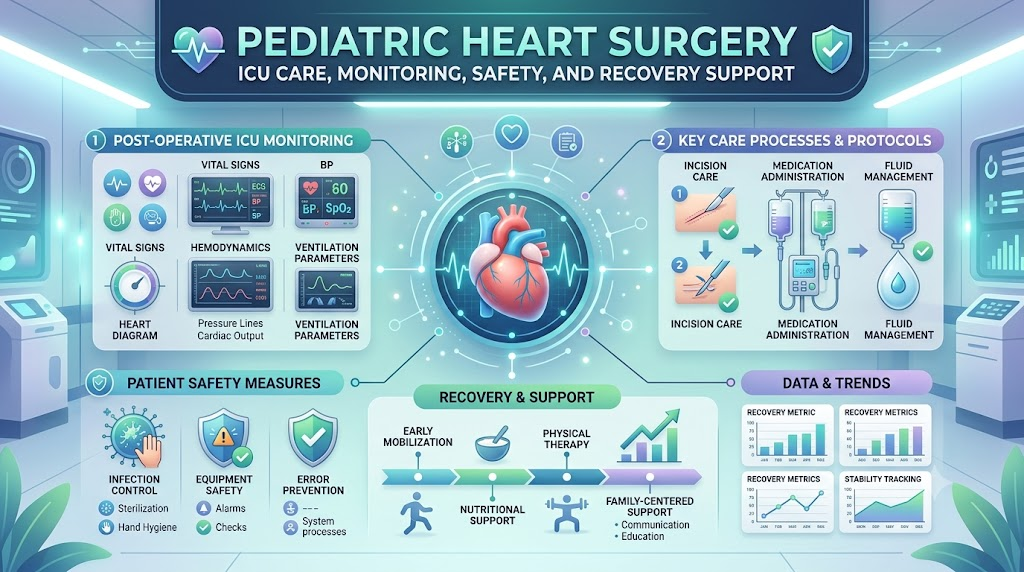
Pediatric heart surgery needs careful hospital care. The intensive care unit plays a key role after surgery. Children may need close heart and breathing checks. Their care needs can differ from adult patients. Parents may want to know what ICU care includes. This can help them ask clear questions before treatment. BestHeartSurgery helps families explore cardiac hospitals and care information.
What Is a Pediatric Cardiac ICU?
A pediatric cardiac ICU cares for children with heart problems. ICU means intensive care unit. This unit provides close care after major treatment. A pediatric cardiac ICU has heart care expertise. It may also support children before heart surgery. The team watches the child very closely. Care depends on the child’s age and condition.A general ICU also gives intensive care. However, cardiac ICUs focus on heart-related needs. The staff understands common heart surgery concerns. They also know how heart changes can affect other organs. This special focus can support safer care. Hospital services can still differ between centers.
Why Do Children Need Specialized ICU Care?
Children are not small adults. Their bodies are still growing and changing. Infants have even smaller body systems. Their heart and breathing needs may also differ. These differences need special knowledge from care teams. Pediatric cardiac teams train to care for children.A pediatric cardiac intensivist leads critical heart care. A pediatric cardiologist supports heart assessment and care. A cardiac surgeon manages surgical needs. Nurses provide close bedside care throughout the stay. Other staff may support breathing, medicine, and nutrition. Team communication is important during this process.
What Happens After Pediatric Heart Surgery?
After surgery, the child usually moves to intensive care. The ICU team receives information from the surgery team. Staff then continue close monitoring and support. The exact care plan depends on the procedure. It also depends on the child’s health and needs.Some children may need breathing support for a time. Others may need support with fluids or feeding. The team checks heart function and other body systems. Parents receive updates based on the child’s condition. The medical team decides when the child can move forward.
What Does a Pediatric Cardiac ICU Monitor?
Pediatric cardiac monitoring can include many basic checks. Staff may watch heart rate and heart rhythm. They may also check blood pressure often. Oxygen levels can also need close attention. Breathing patterns may be checked during recovery.
The team may also track fluid balance. Urine output can give useful information about body function. Blood tests may help doctors follow the child’s condition. Heart imaging may be used when needed. Monitoring needs can change during recovery.
What Is the Role of the ICU Team?
A pediatric cardiac ICU team has many roles. Each person supports a different part of care. The pediatric cardiac intensivist manages critical care needs. The pediatric cardiologist focuses on heart health. The cardiac surgeon follows the surgical side of care.ICU nurses provide regular bedside observation. Respiratory therapists may support breathing care. Pharmacists help the team manage medicines safely. Nutrition specialists may support feeding and nutrition needs. Other staff may provide emotional and social support. Teamwork helps keep care organized.
Pediatric Cardiac ICU Safety Guidelines
Safety is a major part of pediatric cardiac ICU care. Staff use continuous monitoring when needed. They also follow infection prevention practices. Safe medicine systems help reduce medicine errors. Clear communication helps teams share important updates.Equipment checks are also part of ICU safety. Emergency systems need to be ready for urgent needs. Team members must know their roles during emergencies. Family communication also supports safe care. Hospital safety systems can differ by facility.
Emergency Readiness in Pediatric Cardiac Hospitals
Emergency readiness matters after heart surgery. A child may need urgent support during recovery. Hospitals may have pediatric emergency teams available. Some centers also have advanced cardiac equipment. Blood support may be available when clinically needed.Some hospitals have advanced life support services. Surgical support may also be close by. Critical-care transport can help when transfers are needed. Not every hospital has the same services. Parents can ask about emergency readiness before treatment.
Advanced Support in Pediatric Cardiac ICUs
Some children may need advanced heart and lung support. ECMO is one example of this support. ECMO can help selected patients with serious problems. It does not suit every child or situation.Other advanced systems may also be available. Their use depends on the child’s medical condition. The care team decides when such support is needed. Parents do not need to manage these systems. They can ask the team about available hospital services.
Family Support During Pediatric ICU Care
An ICU stay can feel stressful for families. Clear updates can help parents understand the child’s progress. Hospitals may offer family education during the stay. Visiting rules can differ between hospitals.Some centers offer child-life services and social work. These services can help children and families cope. Accommodation may also be available for some families. Family support is part of good pediatric cardiac care. Parents can ask what support the hospital provides.
What Should Parents Check in a Hospital?
Parents can compare hospitals using simple questions. First, ask if the hospital has a pediatric cardiac ICU. Ask about pediatric cardiac specialists and ICU staffing. Ask how the hospital handles urgent cardiac problems. Also ask about pediatric anesthesia and heart imaging.Families can ask about advanced support services too. Infection control practices are also worth discussing. Family visiting rules may affect daily life. Ask how follow-up care is planned after discharge. BestHeartSurgery.com can help families research these hospital care areas.
Pediatric Cardiac ICU vs General Pediatric ICU
Both units care for children who need close support. Their main focus can be different. A cardiac ICU focuses on heart-related care. A general pediatric ICU handles many serious child health problems.Cardiac ICUs have specific heart care experience. They may provide closer support for heart surgery recovery. Their teams may include pediatric cardiac specialists. Advanced cardiac support may also be available. Hospital services can vary, so parents should ask directly.
| Factor | Pediatric Cardiac ICU | General Pediatric ICU |
|---|---|---|
| Main purpose | Heart and heart surgery care | Many serious child conditions |
| Cardiac expertise | Strong cardiac focus | Broader pediatric focus |
| Monitoring | Heart-focused monitoring | General critical monitoring |
| Surgery support | Supports cardiac recovery | Depends on hospital services |
| Advanced cardiac support | May be available | May vary by hospital |
Pediatric Heart Surgery Recovery and ICU Transition
ICU care is only one part of recovery. Children may later move to a cardiac ward. This move happens when the care team feels ready. The child’s condition guides each step of recovery.The next stage may include feeding support. It may also include movement and comfort care. Parents may learn about home care needs. Follow-up planning can also begin before discharge. Recovery times can vary between children.
Pediatric Heart Surgery ICU Care for Infants
Infants may need special attention during recovery. Feeding can be an important part of care. Breathing and heart monitoring may remain closely watched. Growth needs can also affect recovery planning.Parents may receive simple instructions about daily care. Communication should match the family’s needs and concerns. The care team explains changes in the infant’s condition. Parents should ask questions whenever something feels unclear.
Pediatric Heart Surgery ICU Care for Older Children
Older children may understand more about their care. They may have questions about pain and daily activities. School concerns may also become important during recovery. Staff can explain care in age-friendly language.Comfort and family support can help children feel secure. Parents can ask about activity and recovery plans. The care team decides what is safe for each child. Recovery needs can vary by surgery and health.
International Patient Considerations
Families traveling from another country need extra planning. Medical records should be shared with the hospital. Families may also need language support. Clear communication can make hospital planning easier.Accommodation near the hospital may also matter. Travel plans should allow for medical follow-up. Families can ask how follow-up care will continue. BestHeartSurgery.com can help families explore hospital information. Legal and visa matters should be checked separately.
How BestHeartSurgery.com Can Help
BestHeartSurgery.com is a healthcare information platform. It focuses on heart surgery and cardiac hospital information. Families can use it for hospital research. They can also explore treatment and recovery information.The platform does not provide medical treatment. It also does not replace a child’s medical team. Parents should use hospital information as a research tool. Medical decisions should be discussed with qualified specialists.
Practical Example
A parent is comparing two hospitals for a child’s heart surgery. The parent checks ICU services and pediatric specialists. They also ask about emergency support and family policies. Follow-up care is another point they compare.The parent then discusses these points with the child’s team. This approach keeps the hospital choice focused on care needs. It also helps parents ask clear and useful questions.
Clear Information Supports Better Hospital Research
Good medical content should answer parent questions directly. It should explain medical terms in simple words. This helps readers understand pediatric cardiac ICU care. It also makes information easier for search systems to understand.BestHeartSurgery.com can support this research process. Clear information can help families compare hospital services. It can also support answers for common care questions. Careful medical language helps build trust and understanding.
Frequently Asked Questions
1. What is a pediatric cardiac ICU?
A pediatric cardiac ICU cares for children with heart problems. It provides close monitoring and specialized critical care.
2. Why do children need specialized cardiac ICU care?
Children have different body and heart needs. Pediatric teams have special training for these needs.
3. What happens after pediatric heart surgery?
The child often moves to intensive care after surgery. The ICU team then monitors the child’s condition closely.
4. What does the ICU monitor?
The team may monitor heart rate, rhythm, and blood pressure. Oxygen, breathing, fluids, and tests may also be checked.
5. Who works in a pediatric cardiac ICU?
The team may include intensivists, cardiologists, surgeons, and nurses. Respiratory therapists and other specialists may also help.
6. How is a cardiac ICU different from a general pediatric ICU?
A cardiac ICU focuses on heart-related care. A general pediatric ICU covers many serious child health problems.
7. What should parents check before choosing a hospital?
Ask about cardiac ICU services and specialist teams. Also ask about emergency care and follow-up support.
8. Is advanced support such as ECMO available in every hospital?
No, hospital services can differ. Parents can ask whether selected advanced support is available.
9. How do families receive updates during ICU care?
The care team usually shares updates with parents. Families can ask how and when updates are provided.
10. What questions should parents ask the hospital?
Ask about ICU care, specialists, monitoring, emergencies, and follow-up. Also ask about family access and recovery planning.
Final Thoughts
Pediatric heart surgery needs specialized hospital care. A pediatric cardiac ICU supports close monitoring after surgery. Skilled teams can help manage changing care needs. Safety systems and emergency readiness also matter.
Family communication can make hospital stays easier. Follow-up planning is also an important part of recovery. Parents should discuss their child’s needs with the cardiac team. BestHeartSurgery.com can help families research cardiac hospitals and care information. The goal is informed discussion, not hospital ranking or treatment advice.