Introduction
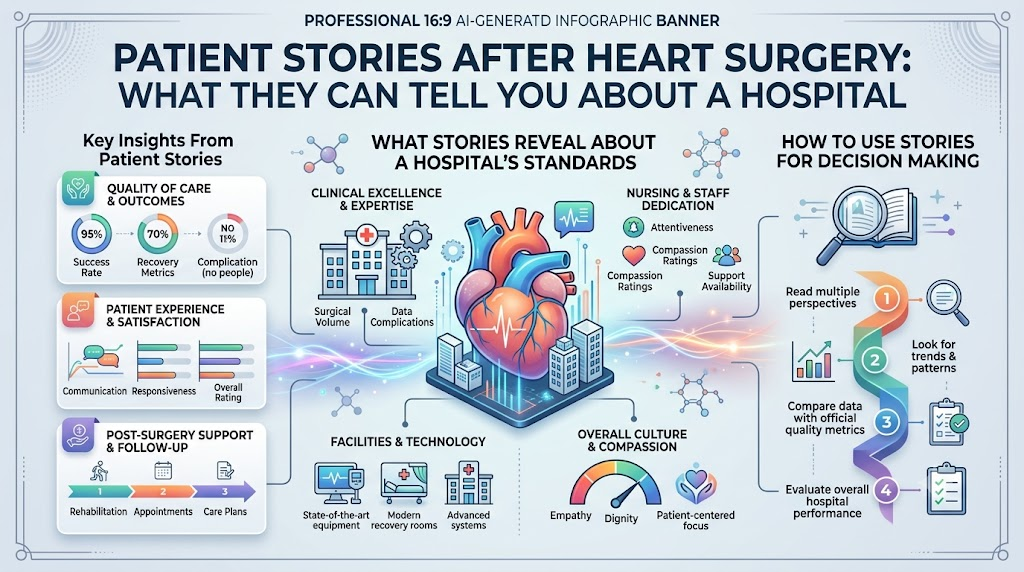
Choosing a hospital for heart surgery is a major decision for patients and their families. Along with medical information, many people want to know what the hospital experience was like for others. Heart surgery patient testimonials may offer useful details about communication with doctors, support from nurses, the hospital environment, care coordination and the experience of preparing for and recovering from surgery. Resources such as BestHeartSurgery can also help people research heart surgery services. Still, a testimonial represents one person’s experience. It cannot show exactly what another patient will experience or prove that a particular hospital will provide the same medical outcome for everyone.
What Are Heart Surgery Patient Testimonials?
Heart surgery patient testimonials are personal accounts shared by patients or their family members about their experience with cardiac care.
A testimonial may describe the patient’s hospital stay, communication with the medical team, surgery preparation, nursing support, ICU experience, discharge process or follow-up care.
Hospitals may publish these stories to help people understand what the patient journey can look like. Some hospitals may also collect feedback from patients to learn about their experience and improve communication or services.
The details can be useful, but testimonials should be viewed as personal experiences rather than medical evidence.
What Can You Learn From Patient Testimonials?
A detailed testimonial can give families a better idea of how a hospital communicates with patients. For example, a patient may describe whether doctors explained the treatment clearly or whether nurses were available to answer questions.
Patient stories may also provide information about practical parts of the hospital experience, such as admission, ICU care, family communication and discharge instructions.
These details can help families know what topics they may want to discuss with the hospital before treatment.
Look for Specific Experiences
A detailed story usually provides more useful information than a short statement such as “excellent hospital” or “great doctors.”
Readers may want to look for information about the type of surgery, preparation before treatment, communication with the cardiac team, hospital support and follow-up care.
The more specific the experience, the easier it may be to understand what aspect of care the person is describing.
What to Look for in Heart Surgery Patient Testimonials
Not every testimonial contains the same information. When reading cardiac surgery patient reviews, look for details that are relevant to the situation being considered.
Useful details may include:
- Type of heart surgery
- General patient circumstances
- Preparation before surgery
- Communication with doctors
- Nursing and ICU support
- Hospital stay
- Recovery guidance
- Discharge process
- Follow-up care
- Family experience
A testimonial about coronary artery bypass surgery may provide different information from a story about valve surgery or aortic surgery.
The patient’s age, medical condition and complexity of treatment may also be different. These differences should be considered before comparing stories.
Different Types of Heart Surgery Testimonials
Hospitals may publish testimonials from people who have undergone different cardiac procedures.
These may include coronary artery bypass surgery, heart valve surgery, minimally invasive cardiac surgery, congenital heart surgery and aortic surgery. Other stories may involve procedures performed for specific heart conditions.
A patient’s experience with one procedure does not necessarily represent the experience of someone having another type of surgery.
The medical team, treatment plan, recovery period and level of hospital support can all vary according to the patient’s condition and procedure.
How to Evaluate Hospital Testimonials Responsibly
Testimonials are only one source of information when choosing a heart surgery hospital.
Families should also look at the qualifications and experience of the cardiac surgery team, the hospital’s cardiac ICU facilities, emergency support and surgical facilities. Diagnostic services, infection-control practices, rehabilitation and follow-up care may also be relevant.
These factors should be considered according to the patient’s specific medical needs. A hospital that provides one type of cardiac procedure may not necessarily be the appropriate choice for every heart condition.
Use Testimonials Alongside Medical Information
A positive story can help families understand the patient experience, but it cannot determine whether a hospital is suitable for a particular medical condition.
Medical decisions should be based on professional assessment, the patient’s health history and the treatment options recommended by qualified cardiac specialists.
How Families Can Use Patient Stories
Family members often have practical concerns that may not appear in general hospital information. Testimonials can give them ideas about what to ask.
For example, if several patient stories mention communication during recovery, a family may ask the hospital how doctors provide updates and who families should contact with questions.
Similarly, stories about rehabilitation or discharge can encourage families to ask what follow-up services are available after surgery.
The goal is not to choose a hospital simply because it has positive stories. Patient experiences can instead help families prepare better questions.
What Testimonials May Tell You—and What They Cannot Prove
| What a Testimonial May Tell You | What It Cannot Prove | What to Check Separately |
|---|---|---|
| How a patient experienced communication | That every patient receives the same communication | Ask about communication with the medical team |
| How the patient described nursing support | That the hospital always provides the same level of support | Check ICU staffing and care arrangements |
| What the hospital stay felt like | That another patient will have the same experience | Discuss the expected hospital stay |
| How a family experienced discharge | That every patient follows the same recovery path | Ask about discharge and follow-up plans |
| A patient’s experience with a specific surgery | That the same results will occur for another patient | Check the surgical team’s experience with the required procedure |
| How a patient felt about overall care | That the testimonial proves medical quality | Review qualifications, facilities and medical information |
Limitations of Patient Testimonials
Patient testimonials can be helpful, but they have clear limitations. A person’s expectations, medical condition and recovery can strongly influence how they describe their experience.
Surgery complexity also differs. Someone having a relatively straightforward procedure may have a very different hospital journey from a patient with several medical conditions or a complex cardiac problem.
Testimonials may also represent only a small number of experiences. A selection of published stories should not automatically be treated as a complete picture of every patient’s experience.
This does not make testimonials useless. It simply means they should be read carefully and considered alongside other information.
Frequently Asked Questions About Heart Surgery Patient Testimonials
1. What are heart surgery patient testimonials?
They are personal accounts from patients or family members describing their experience with heart surgery and hospital care. They may discuss communication, nursing support, recovery and other parts of the patient journey.
2. Can testimonials help when choosing a heart surgery hospital?
Yes, they can provide useful insight into personal experiences. However, they should be considered together with medical information, hospital facilities and advice from qualified cardiac specialists.
3. How reliable are heart surgery testimonials?
Testimonials can accurately describe one person’s experience, but they do not represent every patient. Individual health conditions, procedures and expectations can be very different.
4. What details should I look for in a testimonial?
Look for the type of surgery, treatment journey, communication with doctors, nursing support, ICU experience, discharge process and follow-up care. Detailed experiences are generally more informative than very short statements.
5. Do positive testimonials guarantee good surgery results?
No. A positive patient story cannot guarantee the same medical outcome for another person. Heart surgery results depend on many individual medical factors.
6. How should I compare testimonials from different hospitals?
Compare the type of surgery and the patient’s circumstances before comparing experiences. Also review the qualifications of the medical team, hospital facilities and follow-up services separately.
7. Are family testimonials useful?
Yes. Family members may describe communication, hospital support, admission procedures and discharge experiences from a different perspective. Their experiences can help identify useful questions for the hospital.
8. What information should be checked separately?
Patients should independently check the cardiac team’s qualifications, experience with the required procedure, ICU facilities, emergency support, diagnostic services and follow-up arrangements.
9. Can testimonials replace a consultation?
No. A testimonial cannot assess an individual’s medical condition or determine the right treatment. A qualified cardiac specialist should evaluate the patient and explain suitable options.
10. What should patients consider before making a final hospital decision?
Patients should consider their specific heart condition, the required procedure, the cardiac team’s experience, hospital facilities, ICU support, emergency services and follow-up care. Testimonials can add information about patient experience but should not be the only factor.
Conclusion
Heart surgery patient testimonials can give patients and families useful insight into communication, nursing support, hospital routines and the personal side of cardiac care. However, every patient’s medical condition and recovery are different. Testimonials should therefore be treated as one part of a wider hospital evaluation. Before choosing a heart surgery hospital, families should also consider the cardiac team’s qualifications, required facilities, ICU support, emergency care and follow-up services. A consultation with a qualified cardiac specialist remains essential for understanding individual treatment needs and available options.