Introduction
Maintaining a steady and coordinated heartbeat is fundamental to cardiovascular health and overall well-being. When the heart’s internal electrical system experiences disruptions, it can lead to irregular heart rhythms, fatigue, dizziness, and more serious medical complications. Many patients and their families search for hospitals Offering Electrophysiology Treatments to understand which medical centers possess the specialized expertise, advanced technology, and comprehensive infrastructure needed to manage complex rhythm disorders.Selecting the right cardiac hospital involves evaluating the proficiency of specialized heart rhythm experts, the sophistication of diagnostic laboratories, and the quality of postoperative and follow-up support. For reliable resources, hospital comparisons, and educational guidance, patients can explore BESTHEARTSURGERY, a platform dedicated to supporting informed healthcare decisions.
3. What Is Cardiac Electrophysiology?
Cardiac electrophysiology is a specialized branch of cardiology focused on studying the heart’s electrical system, diagnosing the root causes of abnormal heart rhythms (arrhythmias), and delivering targeted medical or procedural interventions.The heart relies on complex electrical pathways to signal muscle cells to contract in a synchronized sequence, pumping blood efficiently throughout the body. When these electrical signals become erratic, blocked, or misdirected, the heart may beat too fast, too slow, or irregularly. According to guidance from the American Heart Association (www.heart.org), cardiac electrophysiology studies help doctors analyze the electrical pathways of the heart and identify the precise causes of irregular heart rhythms.
Common Heart Rhythm Conditions Treated Through Electrophysiology
Atrial Fibrillation (AFib)
- Irregular Heartbeat: The upper chambers of the heart (atria) beat chaotically and irregularly, failing to pump blood effectively into the lower chambers.
- Symptoms: Palpitations, fatigue, shortness of breath, and reduced exercise capacity.
- Treatment Approaches: Lifestyle modifications, rate- or rhythm-control medications, catheter ablation, and stroke-prevention strategies.
Atrial Flutter
- Abnormal Upper Chamber Rhythm: Involves organized but extremely rapid electrical circuits looping within the right atrium.
- Management Options: Medications, electrical cardioversion, or targeted catheter ablation.
Supraventricular Tachycardia (SVT)
- Fast Heart Rhythms: Encompasses a group of episodic rapid heart rates originating above the heart’s ventricles due to extra electrical pathways.
- Diagnosis and Treatment: Confirmed via electrophysiology studies and frequently cured permanently using catheter ablation.
Ventricular Tachycardia
- Serious Rhythm Condition: A fast, abnormal heart rhythm originating in the lower chambers (ventricles) that can compromise blood flow.
- Importance of Specialist Care: Requires prompt evaluation by an electrophysiologist and often management via anti-arrhythmic medications or implantable defibrillators.
Bradycardia
- Slow Heartbeat: Occurs when the heart beats too slowly, often due to dysfunction in the heart’s natural pacemaker (the sinus node) or electrical conduction blocks.
- Pacemaker-Related Treatments: Managing persistent slow heart rhythms through the implantation of cardiac pacemaker devices.
Types of Electrophysiology Treatments
Electrophysiology programs may include EP studies, catheter ablation, and device therapies such as pacemakers and ICDs depending on the rhythm disorder, as noted by the Cleveland Clinic.
Electrophysiology Study (EPS)
- Purpose: A specialized diagnostic procedure where flexible catheters are guided through blood vessels into the heart to map its electrical pathways.
- Diagnosis Process: Allows specialists to trigger arrhythmias in a controlled environment to locate the exact source of electrical faults.
Catheter Ablation
- Procedure: Using radiofrequency energy or extreme cold (cryoablation) to destroy tiny areas of heart tissue responsible for generating abnormal electrical signals.
- Benefits: Often provides a long-term solution or cure for conditions like SVT, atrial flutter, and drug-resistant AFib.
Pacemaker Implantation
- Purpose: Placing a small, battery-powered device under the skin connected to leads inside the heart to monitor rhythms and deliver electrical impulses when the heart beats too slowly.
Implantable Cardioverter Defibrillator (ICD)
- Role: Continuously monitors heart rhythms and delivers life-saving electrical shocks or rapid pacing therapies to terminate dangerous ventricular arrhythmias.
Cardiac Resynchronization Therapy (CRT)
- Advanced Care: Utilizing specialized pacemakers or defibrillators with three leads to synchronize the pumping contractions of the left and right ventricles in selected heart failure patients.
Electrophysiology Treatment Comparison Table
| Treatment | Purpose | Common Uses |
| EP Study | Diagnose electrical problems | Detailed arrhythmia evaluation and localization of pathways |
| Catheter Ablation | Correct abnormal rhythm pathways | Permanent treatment for AFib, SVT, and atrial flutter |
| Pacemaker | Regulate slow heartbeat | Management of symptomatic bradycardia and conduction blocks |
| ICD | Prevent dangerous rhythms | Protection against life-threatening ventricular arrhythmias |
| CRT | Improve heart coordination | Selected heart failure patients with ventricular dyssynchrony |
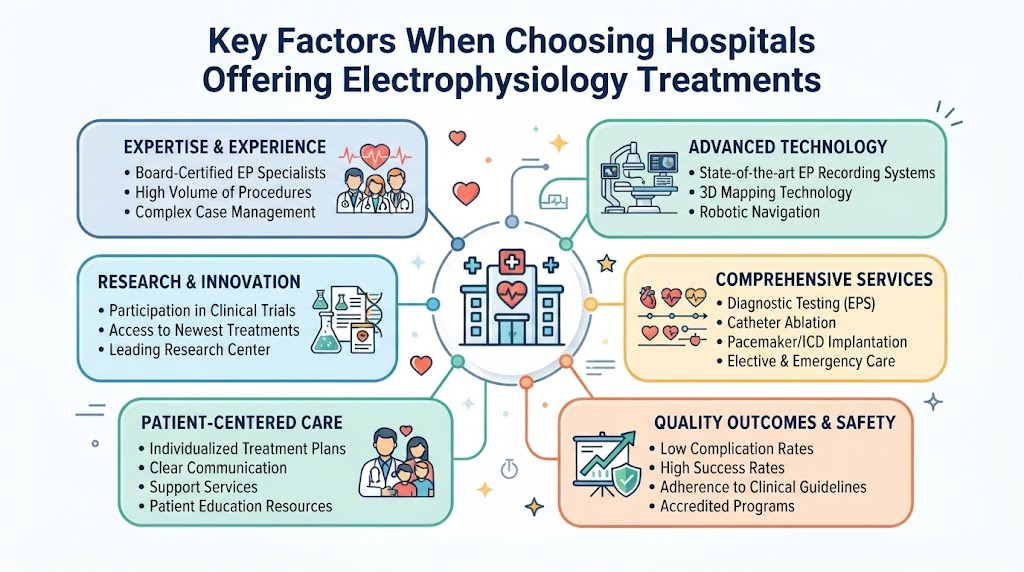
Features of Hospitals Offering Advanced Electrophysiology Treatments
Experienced Electrophysiologists
Electrophysiologists are cardiologists with specialized training in diagnosing and treating heart rhythm disorders, as highlighted by University Hospitals. Key qualifications include:
- Advanced Cardiology Training: Comprehensive fellowships in clinical cardiac electrophysiology.
- Procedure Experience: High annual volumes performing complex ablations and device implantations.
- Complex Case Management: Expertise in handling intricate, drug-refractory arrhythmias.
Advanced EP Laboratories
Top-tier centers maintain state-of-the-art procedural suites equipped with:
- Cardiac Mapping Systems: 3D imaging technology that visualizes electrical activation patterns inside the heart chambers in real time.
- Rhythm Monitoring Technology: Advanced telemetry and high-resolution recording gear.
- Catheter-Based Equipment: Specialized energy delivery systems and vascular access tools.
Multidisciplinary Cardiac Team
Comprehensive care requires close collaboration between:
- Electrophysiologists: Directing rhythm-specific diagnostics and interventions.
- Cardiologists: Managing underlying structural heart disease and medical therapies.
- Cardiac Surgeons: Collaborating on hybrid surgical-ablation procedures when necessary.
- Anesthesiologists: Ensuring patient comfort and hemodynamic stability during procedures.
- Critical Care Specialists: Managing immediate post-procedure recovery in specialized units.
How to Choose the Right Electrophysiology Hospital
When evaluating hospitals for heart rhythm care, patients and families should consider:
- Specialist Expertise: Review the credentials, sub-specialty board certifications, and procedural experience of the attending electrophysiologists.
- Hospital Infrastructure: Verify the presence of dedicated EP laboratories, cardiac intensive care units, and 24/7 emergency cardiovascular support.
- Patient Safety Standards: Ensure the facility maintains rigorous infection control protocols, advanced patient monitoring systems, and structured follow-up pathways.
Hospital Selection Checklist
| Factor | Why It Matters |
| EP Specialist Experience | Ensures expert interpretation of electrical studies and precise ablation execution. |
| Advanced Technology | Facilitates 3D cardiac mapping and safe, minimally invasive catheter interventions. |
| Cardiac ICU Support | Provides specialized 24/7 monitoring during the immediate post-procedure window. |
| Emergency Services | Guarantees immediate intervention capabilities for unexpected complications. |
| Follow-up Care | Ensures continuous device interrogation, rhythm monitoring, and medication adjustments. |
| Patient Communication | Fosters clear explanations of treatment risks, benefits, and long-term care plans. |
Preparing for Electrophysiology Treatment
Thorough preparation helps ensure procedural safety and accuracy:
- Medical History Review: Detailed assessment of past cardiac events, current symptoms, and prior diagnostic tests.
- Heart Rhythm Testing: Utilizing electrocardiograms (ECGs), Holter monitors, or event recorders to document baseline electrical activity.
- Medication Discussion: Reviewing all prescription drugs and supplements, with instructions on which medications (such as blood thinners or anti-arrhythmics) to pause prior to testing.
- Diagnostic Evaluation: Blood panels and imaging studies to assess general health and cardiac structure.
- Procedure Preparation: Fasting instructions and arrival guidelines provided by the clinical team.
Recovery After Electrophysiology Procedures
Recovery varies depending on the treatment type, underlying heart condition, and individual health factors:
- Observation Period: Initial monitoring in a recovery unit or cardiac ward to check access sites and vital signs.
- Medication Management: Adjusting anti-arrhythmic drugs or anticoagulants under physician supervision.
- Activity Guidance: Avoiding heavy lifting, strenuous exercise, or driving for a specified period following catheter insertion or device implantation.
- Follow-up Appointments: Scheduled visits to inspect wound healing, evaluate rhythm control, and interrogate implanted devices.
- Long-term Rhythm Monitoring: Periodic checkups to assess the ongoing stability of heart rhythms.
Benefits of Specialized Electrophysiology Hospitals
- Access to dedicated rhythm specialists with focused fellowship training.
- Advanced diagnostic capabilities utilizing high-resolution 3D mapping systems.
- Personalized treatment planning tailored to specific arrhythmia types.
- Comprehensive cardiac care encompassing medical therapy, ablation, and device management.
- Seamless coordination between electrophysiologists, heart failure specialists, and cardiac surgeons.
Common Mistakes Patients Should Avoid
- Ignoring Irregular Heartbeat Symptoms: Attributing persistent palpitations, dizziness, or fatigue to normal stress without medical evaluation.
- Choosing Only Based on Cost: Selecting a facility solely on the cheapest price rather than EP lab technology and specialist expertise.
- Delaying Specialist Consultation: Waiting until arrhythmias cause severe structural heart damage before seeing an electrophysiologist.
- Not Discussing Treatment Options: Failing to explore both medication-based and procedural alternatives during consultations.
- Skipping Follow-up Visits: Neglecting scheduled device checks and outpatient rhythm evaluations.
Myths vs Facts Table
| Myth | Fact |
| Every irregular heartbeat needs surgery. | Many arrhythmias are managed effectively with lifestyle changes, medications, or minimally invasive catheter procedures. |
| Electrophysiology only involves pacemakers. | EP covers diagnostic studies, catheter ablations, ICDs, and advanced rhythm management therapies. |
| All arrhythmias are the same. | Different rhythm disorders (such as AFib, SVT, and ventricular tachycardia) require completely different approaches. |
| Recovery is identical for every patient. | Healing times vary widely depending on whether the patient underwent a diagnostic EP study, an ablation, or device surgery. |
| Catheter ablation is always 100% curative on the first try. | While highly successful, some complex arrhythmias may require repeat procedures or ongoing medical therapy. |
| Pacemakers prevent all future heart problems. | Pacemakers regulate slow heart rates but do not stop coronary artery disease or other unrelated cardiac conditions. |
| You cannot feel when an arrhythmia occurs. | Many patients experience distinct symptoms like fluttering, pounding, or skipped beats during rhythm episodes. |
How BESTHEARTSURGERY Helps Patients
Navigating cardiac care options can be challenging for patients and their families. Platforms like BESTHEARTSURGERY assist individuals by providing:
- Comprehensive cardiac treatment awareness and educational guides
- Heart surgery and electrophysiology service information
- Hospital discovery support to locate specialized cardiac centers
- Guidance on understanding cardiac specialists and procedural options
- Resources helping patients make informed healthcare decisions in collaboration with their doctors.
FAQs
1.What is cardiac electrophysiology?
It is a subspecialty of cardiology focused on studying the heart’s electrical system to diagnose and treat abnormal heart rhythms (arrhythmias).
2.What conditions are treated by electrophysiologists?
They treat conditions such as atrial fibrillation, atrial flutter, supraventricular tachycardia, ventricular tachycardia, and bradycardia.
3.What is an EP study?
An electrophysiology study is a minimally invasive diagnostic procedure where catheters are placed inside the heart to map its electrical pathways.
4.How does catheter ablation work?
It uses radiofrequency energy or extreme cold to scar or destroy tiny areas of heart tissue that trigger or sustain abnormal electrical rhythms.
5.When is a pacemaker needed?
A pacemaker is typically recommended when the heart beats too slowly (bradycardia) or when electrical conduction blocks disrupt normal heart pacing.
6.What is the role of an electrophysiologist?
An electrophysiologist is a cardiologist with advanced fellowship training dedicated specifically to diagnosing and managing heart rhythm disorders.
7.How do I choose an electrophysiology hospital?
Evaluate the facility’s EP laboratory technology, cardiac ICU support, specialist credentials, and safety standards.
8.Is electrophysiology treatment safe?
Yes, when performed by trained specialists in accredited medical centers, though like all invasive procedures, they carry specific potential risks.
9.What technology is used in EP laboratories?
Advanced tools include 3D cardiac mapping systems, high-resolution intracardiac echocardiography, and specialized energy ablation catheters.
10.How long does recovery take after EP treatment?
Recovery ranges from a few days for diagnostic studies and simple ablations to several weeks for device implantations.
Final Conclusion
Electrophysiology treatments play an essential role in diagnosing and managing complex heart rhythm disorders. Choosing a hospital with experienced EP specialists, advanced laboratory technology, and complete cardiac support is important for achieving optimal clinical outcomes. Patients should consider medical expertise, safety standards, and follow-up care before making healthcare decisions.