Introduction
Follow-up care remains important after heart surgery. Patients may need checks, questions answered, and recovery guidance after leaving the hospital. Telehealth can help some patients stay connected with their cardiac care team from home. It may also reduce travel for people who live far from specialist hospitals. BestHeartSurgery.com can help readers learn about heart surgery hospitals and follow-up care options. The website Bestheartsurgery can be used as a starting point when exploring general information.
What Is Heart Surgery Telehealth Follow-Up?
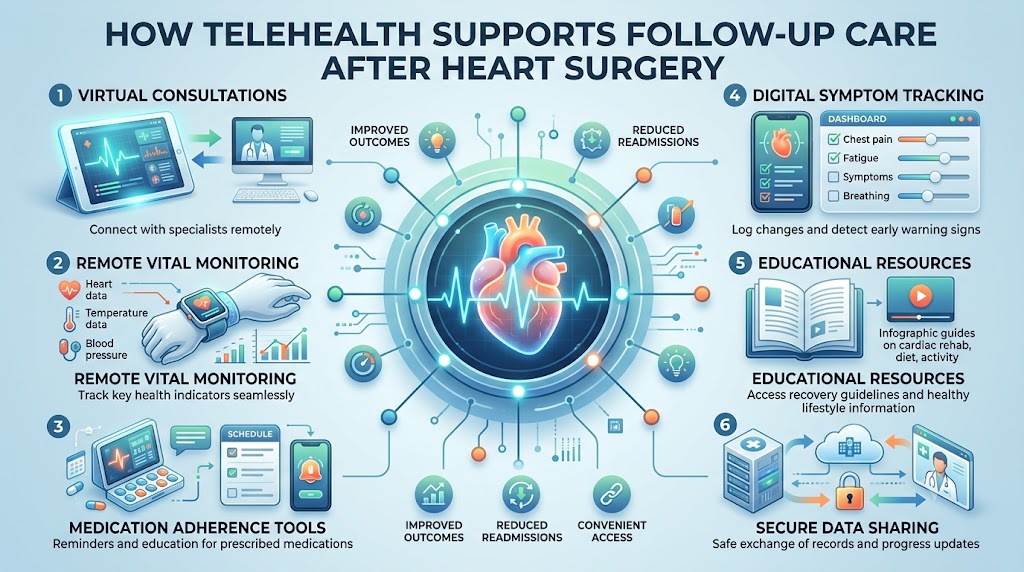
Heart surgery telehealth follow-up means meeting a healthcare professional online or by phone. A hospital may use a secure video system for virtual visits. During the visit, the care team may ask about recovery, symptoms, and concerns. They may also review upcoming appointments and discuss the next steps.A virtual cardiac follow-up can be useful after discharge. It gives patients a way to stay in contact with their care team. It may also help the team decide if an in-person visit is needed. However, virtual care cannot replace every physical check or medical test.Services can differ between hospitals and patients. Some hospitals may offer video visits with cardiac specialists. Others may use phone calls for selected follow-up needs. Patients should ask their hospital which telehealth services are available after surgery.
Why Follow-Up Care Matters After Heart Surgery
Heart surgery recovery continues after hospital discharge. Patients may have questions about symptoms, wound concerns, medicines, activity, and upcoming appointments. Follow-up helps the care team review recovery and identify concerns that may need more attention.A cardiac surgeon or another qualified clinician may review the patient’s progress. The team may also coordinate with a cardiologist, primary doctor, nurse, or rehabilitation team. Good communication can help different parts of care stay connected.Telehealth after heart surgery may support some of these discussions. However, it does not guarantee that complications will be prevented. The care team must decide when online care is suitable and when direct assessment is needed.
How Virtual Follow-Up Appointments Work
The hospital may arrange a virtual appointment after discharge. Staff may explain how to connect and what information to prepare. Patients may need a phone, tablet, or computer with a suitable connection. Each hospital may use a different system.During the visit, the clinician may ask how recovery is going. The patient can discuss new concerns and ask questions. The clinician may review available records and decide whether more care is needed.Sometimes an online visit is not enough. The clinician may ask the patient to visit a hospital or local doctor. Further tests may also be needed. Patients should follow the care team’s advice rather than trying to manage concerns alone.
What Doctors May Review During a Virtual Visit
A virtual visit may cover general recovery and current symptoms. The clinician may ask about pain, breathing, tiredness, swelling, or other concerns. They may also discuss wound concerns and upcoming appointments. The exact questions depend on the surgery and the patient’s recovery.Patients may also ask about prescribed medicines or discharge instructions. The care team may review home records when suitable. Some patients may be asked to share certain readings or information before the visit.Home information cannot answer every medical question. A photograph or home measurement may not show the full picture. The clinician may therefore request an in-person examination or further testing when needed.
Benefits of Telehealth After Heart Surgery
One possible benefit is less travel. This can help patients who live far from their surgical hospital. It may also help people who have difficulty travelling after a major operation. Family members may find it easier to join a virtual visit as well.Telehealth can also support communication between appointments. Patients may have a simple way to discuss questions with their care team. Virtual visits may also help coordinate care with local healthcare professionals when suitable.However, telehealth is not always the best option. Some problems need a physical examination or medical test. Online care is also affected by internet access, technology, and privacy. Patients should view telehealth as one part of a wider care plan.
Who May Benefit From Virtual Cardiac Follow-Up?
Telehealth may suit some patients who are recovering steadily. It may help people who need a routine discussion with their care team. It can also support patients who live far from a specialist hospital.A virtual visit may be useful when the main need involves questions or recovery review. The care team can decide if online communication is suitable. The decision depends on symptoms, medical needs, hospital services, and the patient’s recovery.Patients with new or worsening concerns may need direct care. A virtual appointment should not replace urgent medical assessment. The treating team can explain which type of follow-up is right for each situation.
When an In-Person Visit Is Necessary
Virtual care has clear limits. A clinician cannot perform every physical examination through a screen. Some concerns need direct assessment, special equipment, or medical tests. A wound problem may also need an in-person check.An in-person visit may be needed when recovery does not follow the expected course. The care team may want to examine swelling or other physical signs. They may also request tests that cannot be completed during a video visit.Patients should follow instructions from their own healthcare team. They should not wait for a scheduled video appointment if serious symptoms develop. Urgent concerns need timely medical attention through the appropriate local service.
Warning Signs That Need Urgent Medical Help
Some symptoms after heart surgery need urgent attention. Severe chest pain, major breathing difficulty, fainting, or sudden severe weakness can be serious. Stroke-like symptoms also require emergency medical help. Uncontrolled bleeding is another reason to seek urgent care.Wound changes may also need prompt clinical advice. Increasing redness, warmth, swelling, or drainage can be signs of a wound problem. Patients should contact their care team when these concerns appear.Do not wait for a video appointment during a possible emergency. Contact local emergency services when symptoms seem severe or life-threatening. Telehealth should never delay urgent medical care.
Preparing for a Telehealth Appointment
Patients can prepare by checking their device before the appointment. A stable internet connection may make the visit easier. A quiet and private space can also help patients speak openly with the care team.Keep discharge papers and appointment details nearby. Patients can also prepare a list of current medicines and questions. If the care team requested home records, keep those records ready for discussion.Technology problems can happen during virtual visits. Patients should contact the hospital if they cannot connect. They should never delay urgent medical care because of a technical problem.
Technology, Privacy, and Medical Records
Patients should use the hospital’s approved communication method. This can help protect private health information. Patients should avoid sharing medical details through unapproved channels unless their care team directs them to do so.Good lighting can help the clinician see information shared during the visit. A private room can also make conversations easier. Patients should ask the hospital how shared photographs and medical records are handled.Not every hospital uses the same telehealth system. Technology and privacy practices can differ. Patients can ask questions if they are unsure how the virtual appointment works or how their information is managed.
Medicines and Recovery Questions During Virtual Care
A virtual visit can give patients a chance to ask medicine questions. They may want to discuss side effects, missed doses, or discharge instructions. The treating clinician can provide advice based on the patient’s medical history and current condition.
Patients should not stop, start, or change prescribed medicines on their own. A medicine that is suitable for one person may not suit another. Questions about medicines should go to the appropriate healthcare professional.Patients can prepare medicine questions before the appointment. A current medicine list can also help the clinician review the patient’s care. Clear communication can reduce confusion after hospital discharge.
Cardiac Rehabilitation and Remote Recovery Support
Cardiac rehabilitation is a planned program that can support recovery and heart health. It may include education, health checks, lifestyle guidance, and supervised activity. Some programs may offer remote sessions or scheduled virtual check-ins.Remote cardiac care can help some patients stay connected with rehabilitation professionals. It may be useful for people who face travel challenges. However, not every patient is suitable for remote rehabilitation alone.Activity advice should come from the patient’s care team. Recovery needs can differ after different heart operations. Patients should follow professional guidance rather than copying an exercise plan found online.
How to Compare Hospitals Offering Telehealth Follow-Up
Patients can start by asking if the hospital offers virtual follow-up after discharge. They can also ask who provides the appointments. Some programs may include access to a cardiac surgeon, cardiologist, nurse, or another specialist.Technology support is another useful factor. Ask how appointments are arranged and how medical records are shared. Patients can also ask what happens if the connection fails or a concern needs an in-person review.Clear urgent-care instructions are important. Ask how the hospital handles serious symptoms outside normal appointments. Also check whether the hospital coordinates with local doctors and offers cardiac rehabilitation or other follow-up services.Patients should confirm details directly with the hospital. Service availability can differ between providers. Online claims, rankings, or advertisements should not be treated as proof of service quality.
Costs, Insurance, and Access to Care
Telehealth costs can vary by hospital and provider. Some virtual visits may be included within a wider care program. Others may have a separate charge. Insurance rules can also differ between plans and locations.Patients should ask about fees before an appointment when possible. They can also confirm coverage with their insurance provider. This can help reduce confusion about possible costs.Access is not only about money. Internet service, language support, digital skills, and suitable devices can affect virtual care. Hospitals may have different ways to support patients who face technology problems.
How BestHeartSurgery.com Can Help Patients Explore Options
Learning about heart surgery hospitals before treatment can help patients ask better questions. BestHeartSurgery.com can serve as an information resource for readers exploring cardiac hospitals and follow-up options. Patients can learn about services and specialist roles before speaking with a healthcare team.Readers should confirm important details directly with the chosen hospital. This includes telehealth availability, appointment methods, specialist access, and follow-up arrangements. Hospital services may change, and online information may not show every current detail.A website cannot replace advice from a cardiac care team. It also cannot monitor a patient’s recovery or decide when emergency care is needed. Patients should use online information to prepare, then rely on qualified professionals for personal medical decisions.
A Fictional Patient Example
Fictional example: An adult returns home after heart surgery and receives a virtual follow-up appointment. Before the visit, the patient prepares a medicine list and writes down several recovery questions. A family member joins the call with the patient’s permission.During the visit, the clinician asks about recovery and discusses the patient’s concerns. The patient also asks about the next follow-up appointment. The clinician explains which parts of recovery can be reviewed online.The patient mentions a concern that cannot be safely checked through video. The clinician recommends an in-person assessment for a closer review. This example is fictional and does not represent a real patient or guarantee any outcome.
Frequently Asked Questions
1. What is heart surgery telehealth follow-up?
It is a virtual visit with a healthcare professional after heart surgery. It may help review recovery, symptoms, questions, and future care.
2. Can patients have virtual appointments after heart surgery?
Yes, some hospitals offer virtual cardiac follow-up. Suitability depends on the patient’s condition and the hospital’s services.
3. What can doctors review during a video visit?
Doctors may discuss symptoms, recovery, medicines, wound concerns, appointments, and questions. They may also review suitable home records.
4. Can telehealth replace every in-person follow-up appointment?
No. Some concerns need physical examination, imaging, tests, or direct medical assessment. The care team decides when an in-person visit is needed.
5. How should patients prepare for a virtual cardiac visit?
Check the device and internet connection. Keep discharge papers, medicine information, questions, and requested home records nearby.
6. Can doctors review home measurements during telehealth?
They may review suitable home information during a virtual visit. However, home measurements cannot answer every medical question.
7. What symptoms need urgent medical attention after heart surgery?
Severe chest pain, major breathing difficulty, fainting, stroke-like symptoms, uncontrolled bleeding, or severe weakness need urgent attention.
8. Can telehealth support cardiac rehabilitation?
Some programs may offer remote education and virtual check-ins. Suitability depends on the patient’s health and recovery needs.
9. How can patients compare hospitals with virtual follow-up services?
Ask about specialist access, virtual appointments, technology support, urgent-care instructions, in-person services, rehabilitation, and communication methods.
10. Does insurance cover heart surgery telehealth appointments?
Coverage varies by insurance plan, hospital, provider, and location. Patients should confirm coverage before the appointment when possible.
Final Thoughts
Heart surgery telehealth follow-up can help some patients stay connected after discharge. It may reduce travel and make routine communication easier. However, virtual care works best as part of a wider postoperative cardiac care plan.Patients should attend required in-person visits and follow advice from their care team. Serious symptoms should receive urgent medical attention instead of waiting for an online appointment. BestHeartSurgery.com can help readers explore heart surgery hospitals and learn about follow-up options. Clear questions, careful planning, and regular professional care can support a safer recovery journey.