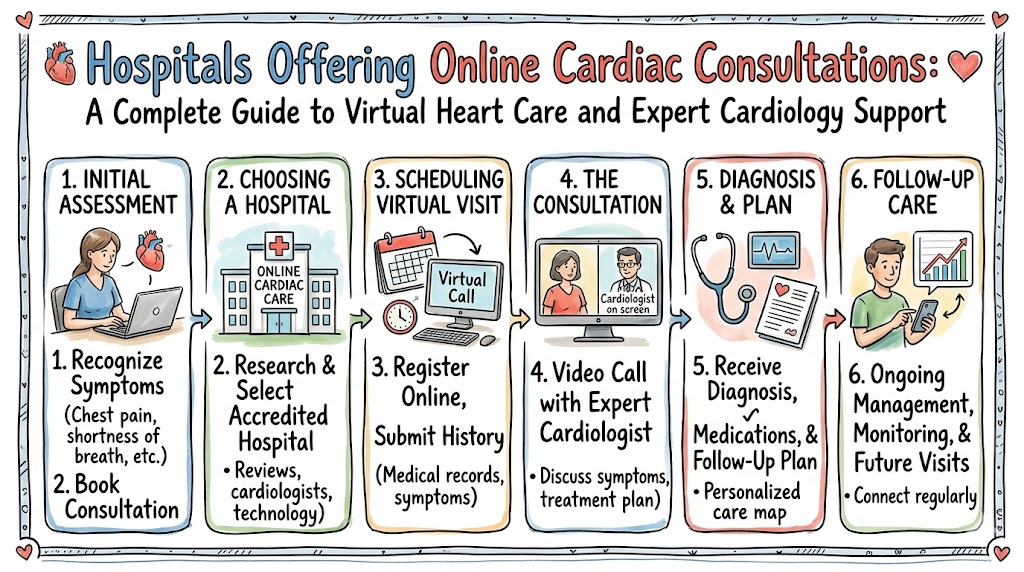
The digital transformation of healthcare has reached a pivotal milestone: your heart health is no longer confined to the walls of a doctor’s office. For patients managing chronic conditions or seeking specialized opinions, the rise of hospitals offering online cardiac consultations has redefined convenience and accessibility. No longer do you need to endure long commutes or crowded waiting rooms to discuss your cardiovascular concerns with a leading expert.Navigating the landscape of virtual medical care requires reliable guidance. BestHeartSurgery helps patients explore cardiac hospitals, connect with highly qualified specialists, compare treatment options, and access the latest resources in heart health. In this comprehensive guide, we will examine how virtual heart care is enhancing patient outcomes, the technologies powering remote monitoring, and how you can safely and effectively manage your heart health from the comfort of home.
Understanding Online Cardiac Consultations
An online cardiac consultation—often referred to as telecardiology—is a secure, digital appointment between a patient and a cardiologist. Through high-definition video conferencing, providers can review diagnostic test results, discuss symptoms, adjust medication dosages, and formulate long-term management plans.
It is important to understand that this is not a substitute for all cardiac care. While physical examinations and emergency interventions still require in-person attendance, virtual sessions are ideal for triaging concerns, managing stable chronic conditions, and performing critical follow-up care.
Why Virtual Heart Care Is Growing
The shift toward virtual heart care is driven by the need for efficiency and the rapid advancement of portable medical technology. Patients now have access to data that was once available only in clinics.
- Democratization of Expertise: Geography no longer limits who can provide your care. You can consult with a world-class sub-specialist regardless of where you live.
- Reduced Patient Burden: For elderly patients or those with restricted mobility, removing travel requirements significantly lowers stress.
- Systemic Efficiency: Reducing unnecessary physical visits allows hospitals to reserve their limited clinical capacity for the most acute, high-need cases.
Benefits of Hospitals Offering Online Cardiac Consultations
Table 1: Benefits of Online Cardiac Consultations
| Benefit | Description | Patient Impact |
| Accessibility | Overcomes geographic and mobility limits. | Faster access to top-tier cardiologists. |
| Convenience | Consultations occur at home. | Less stress, no travel costs/time. |
| Continuity | Easier to schedule frequent check-ins. | Better adherence to long-term care plans. |
Common Heart Conditions Managed Through Online Consultations
While acute emergencies like a heart attack require immediate ER intervention, many stable cardiac conditions are managed exceptionally well through virtual platforms.
Table 2: Heart Conditions Suitable for Virtual Consultations
| Condition | Online Consultation Suitability | Follow-Up Needs |
| Hypertension | High (with remote data) | Regular BP tracking, med adjustments. |
| Coronary Artery Disease | High (stable cases) | Symptom monitoring, lifestyle guidance. |
| Heart Failure | Moderate | Daily weight/symptom log review. |
| Arrhythmias | Moderate (with wearable data) | Review of ECG/Holter monitor logs. |
| Post-Surgery Care | High | Incision check, medication review. |
How Online Cardiac Consultations Work
The process is designed for simplicity and security. Typically, it involves:
- Appointment Scheduling: Booking a slot via the hospital’s patient portal.
- Data Upload: Sharing recent blood work, imaging results, or wearable device logs in advance.
- Secure Video Session: Meeting your cardiologist via an encrypted platform.
- Actionable Plan: Receiving prescriptions, lab orders, or lifestyle recommendations digitally.
Technologies Used in Telecardiology
Modern telecardiology relies on a suite of integrated technologies to mimic the diagnostic environment of a clinic.
- Remote Monitoring: Devices that track blood pressure, heart rate, and oxygen levels in real-time.
- Wearable Technology: ECG-capable smartwatches and patch monitors that record heart rhythms for weeks at a time.
- AI-Assisted Diagnostics: Software that alerts your doctor if your wearable data trends toward an abnormal result.
- Patient Portals: Secure clouds that house your health data, ensuring your specialist has your full history during the virtual visit.
How to Choose a Hospital Offering Online Cardiac Care
Table 3: How to Choose a Hospital for Online Cardiac Care
| Factor | Importance | Questions to Ask |
| Specialist Expertise | Ensures quality medical advice. | “Is the doctor board-certified in cardiology?” |
| Platform Security | Protects sensitive patient data. | “Is your platform fully HIPAA-compliant?” |
| Remote Integration | Allows for data-driven decisions. | “Can I upload data from my wearable device?” |
| Emergency Link | Provides a safety net. | “If my condition escalates, how are you linked to 24/7 care?” |
Patient Virtual Consultation Checklist
Before your appointment, ensure you are fully prepared to get the most out of your time with the specialist.
Table 4: Online Consultation Preparation Checklist
| Requirement | Purpose | Patient Tips |
| Stable Connection | Ensures no call drops. | Use a reliable Wi-Fi or hardwired network. |
| Health Summary | Provides context. | Keep a list of all current medications. |
| Symptom Log | Tracks trends. | Note specific times and triggers for discomfort. |
| Quiet Space | Allows for privacy. | Use a private room with no background noise. |
When In-Person Cardiac Care Is Still Necessary
Virtual visits are powerful, but they are not universal. In-person care is strictly required for:
- Severe Symptoms: Chest pain, sudden shortness of breath, or fainting.
- Physical Diagnostics: Echocardiograms, stress tests, or cardiac catheterizations.
- Urgent Triage: Any event suspected to be a heart attack or acute stroke.
Common Myths vs Facts About Telecardiology
- Myth: “Online doctors are not real doctors.”
- Fact: They are the same board-certified cardiologists who practice in physical hospitals, utilizing the same clinical standards.
- Myth: “You cannot manage heart conditions without a physical exam.”
- Fact: While the physical exam is vital, remote sensors provide data points (like daily weight or BP) that an in-person, episodic visit cannot capture.
Frequently Asked Questions
- Can online consultations replace my primary heart doctor? They are meant to complement, not replace, comprehensive in-person care.
- Is my data safe during these calls? Yes, hospitals use bank-level encryption.
- Will insurance cover this? Most insurance plans now treat virtual visits identically to office visits.
- Can I get a prescription from an online cardiologist? Yes, if the specialist determines it is medically necessary.
- What wearable devices are most useful? Apple Watch (ECG), KardiaMobile, and reliable Bluetooth blood pressure cuffs.
- Do I need an appointment? Usually, yes, though some facilities offer “urgent virtual cardiology” for non-emergency triage.
- How long do these calls last? Typically 15 to 30 minutes, depending on the complexity.
- Can I request a specific specialist? Yes, most hospital portals allow you to choose by specialty.
- Are these calls recorded? Generally no, but your doctor will document the interaction in your medical record.
- What if the doctor needs to see me in person? They will provide a referral for a physical office visit or test.
- Do I need advanced tech skills? No, modern portals are designed for user-friendly operation on smartphones.
- Can family members join the call? Yes, most platforms allow for multiple participants.
- Is telecardiology good for elderly patients? It is excellent for those with transportation challenges.
- What if my internet is slow? The doctor can switch to a simple phone call if video quality is poor.
- Can they view my old medical records? Yes, if they are part of the same health system.
- Is it cheaper than a clinic visit? Often yes, as it eliminates travel and facility usage fees.
- Can I use this for a second opinion? Absolutely; virtual visits are ideal for global second opinions.
- Do I have to live in the same state? Licensing laws vary by region; ensure the doctor is licensed in your area.
- What if I’m having a heart attack? Do not book an online visit—call emergency services immediately.
- Where can I find these hospitals? Compare top providers at BestHeartSurgery.com.
Conclusion
The expansion of hospitals offering online cardiac consultations represents one of the most positive shifts in modern medicine. By breaking down the barriers of distance, travel, and limited time, virtual cardiology is empowering patients to take a more active, daily role in their heart health management. As we have explored, these services are not merely a convenience—they are a sophisticated tool for continuity, chronic disease management, and timely follow-up that can lead to significantly better long-term outcomes.Looking ahead, the future of telecardiology is even more promising. The integration of Artificial Intelligence will allow specialists to scan hundreds of hours of wearable heart-rate data in seconds, highlighting irregularities before the patient even feels a symptom. Remote monitoring will become more seamless, and the “virtual office” will become as commonplace as the physical one. This digital evolution ensures that the focus of medicine is moving away from the hospital waiting room and toward where it belongs: the patient’s real life.