Introduction
Undergoing heart surgery is a major medical event, and for most patients and their families, the journey does not end when the operation finishes. The hours and days immediately following the procedure mark a critical phase of healing. During this time, specialized intensive care plays an essential role in stabilizing vital functions, monitoring recovery, and preventing potential complications.Understanding what happens during this crucial window can help reduce anxiety and empower families as they support their loved ones. To explore specialized hospitals, cardiac units, surgical procedures, and patient-safety resources, families can visit Best Heart Surgery Hospitals as a trusted educational platform.
What Is a Cardiac ICU?
A cardiac ICU—often referred to as a CICU, CVICU, or cardiac intensive care unit—is a specialized hospital ward dedicated exclusively to caring for patients who have undergone heart surgery or are dealing with severe cardiovascular conditions.
Unlike a general intensive care unit, a cardiac-focused unit is staffed by multidisciplinary teams with advanced, specialized training in managing the delicate balance of the cardiovascular system. This team typically includes:
- Cardiothoracic Surgeons: Specialists who perform the heart operation and oversee surgical recovery.
- Intensivists: Critical care physicians who manage the day-to-day physiological stability of patients in the unit.
- Cardiologists: Heart specialists who consult on electrical rhythms, heart muscle function, and underlying disease.
- Cardiac Nurses: Specially trained nurses who maintain continuous bedside observation and administer complex treatments.
- Respiratory Therapists: Professionals who manage mechanical ventilation, oxygen therapy, and airway clearance.
- Physical Therapists and Dietitians: Specialists who assist with early mobilization, nutritional support, and rehabilitation planning.
Why Post-Operative Cardiac ICU Care Matters
The immediate aftermath of heart surgery requires vigilant observation because the body undergoes profound physiological stress during a procedure involving the heart and circulation. Post-operative cardiac ICU care is designed to maintain hemodynamic stability, support respiration, protect vital organ function, and manage discomfort.
While most patients progress smoothly through their recovery, close monitoring ensures that any subtle shift in heart rhythm, blood pressure, or fluid balance can be identified and addressed immediately by the clinical team.
What Happens When a Patient Arrives in the Cardiac ICU?
Upon transfer from the operating room to the cardiac ICU, the atmosphere is focused, calm, and highly coordinated. The transition typically involves:
- Clinical Handover: The surgical team provides a detailed report to the ICU physicians and nurses covering the procedure, intraoperative events, and baseline stability.
- Equipment Connection: The patient is immediately connected to continuous bedside monitors tracking heart rhythm, blood pressure, and oxygen levels.
- Ventilator Transfer: If the patient remains on mechanical ventilation, breathing tubes are securely connected to the ICU ventilator.
- Line and Catheter Verification: Intravenous lines, arterial lines, central venous catheters, chest drainage tubes, and urinary catheters are checked for correct positioning and patency.
- Initial Diagnostics: Baseline laboratory blood tests and portable chest X-rays are often performed to verify internal lines and lung expansion.
The exact steps and immediate procedures vary depending on the specific heart operation performed and individual hospital protocols.
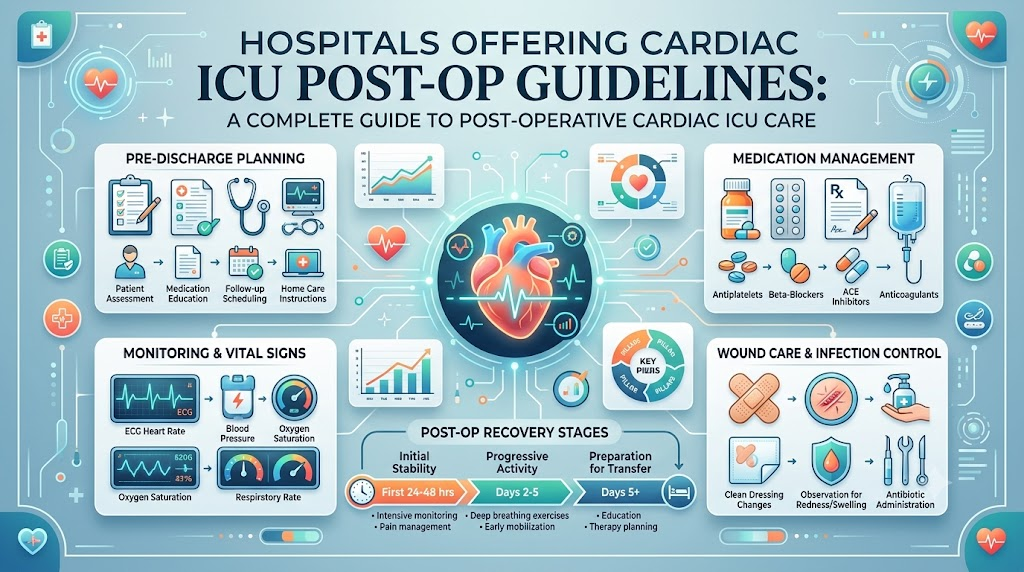
Cardiac ICU Monitoring After Surgery
Continuous surveillance is the hallmark of the cardiac ICU. Clinicians track multiple physiological parameters simultaneously:
Heart Rhythm Monitoring
Continuous electrocardiogram (ECG) monitoring tracks the heart’s electrical activity. Because heart surgery can temporarily irritate cardiac tissue, clinicians monitor closely for any abnormal rhythms or arrhythmias.
Blood Pressure and Hemodynamic Monitoring
Arterial lines provide real-time, beat-to-beat blood pressure measurements. Central venous catheters help assess fluid status and the pressure within the heart chambers, guiding decisions regarding fluid management and medications.
Oxygen and Respiratory Monitoring
Pulse oximetry continuously measures blood oxygen saturation levels. Arterial blood gas analyses are performed periodically when clinically indicated to evaluate oxygenation, ventilation, and acid-base balance.
Temperature Monitoring
Body temperature is tracked continuously to detect hypothermia immediately following surgery or to monitor for postoperative fever.
Fluid Balance
Accurate tracking of all fluids administered (intravenous infusions, blood products, and medications) and fluid losses (urine output, chest-tube drainage) ensures optimal fluid equilibrium.
Mechanical Ventilation and Extubation After Cardiac Surgery
Many patients arrive in the cardiac ICU still supported by a mechanical ventilator. Sedation is often maintained initially to keep the patient comfortable while mechanical breathing support continues.
Readiness to Breathe Independently
As the effects of anesthesia wear off and physiological stability is confirmed, the clinical team performs structured assessments to determine if the patient can safely breathe on their own.
Extubation
Extubation is the process of safely removing the breathing tube once the patient meets specific respiratory, neurological, and hemodynamic criteria. Structured early-extubation pathways are frequently utilized for appropriate patients to encourage faster recovery, though clinical readiness always dictates the exact timing. Not every patient is extubated within the same timeframe, as individual clinical needs vary.
7. Heart Rhythm and Cardiovascular Management
Maintaining stable blood flow and a steady heart rhythm is a primary focus in the cardiac ICU. Clinicians manage cardiovascular stability by:
- Administering medications to support blood pressure and cardiac output when necessary.
- Monitoring for postoperative atrial fibrillation, a relatively common temporary rhythm irregularity that can occur after heart surgery.
- Adjusting electrolyte levels (such as potassium and magnesium) to support normal electrical conduction in the heart.
Chest Tubes and Post-Operative Drainage
Chest tubes are routinely placed during heart surgery to drain residual blood, fluid, or air from the chest cavity around the heart and lungs, allowing these organs to expand fully.
- Drainage Monitoring: Nurses measure and record fluid output from chest tubes regularly to check for abnormal bleeding.
- Tube Patency: Systems are kept clear to prevent fluid accumulation.
- Safe Removal: Once drainage decreases to safe levels and air leaks resolve, the clinical team removes the tubes. Patients are instructed never to manipulate or pull on chest tubes themselves.
Pain Management and Sedation
Effective pain control is vital for patient comfort, promoting deep breathing, and facilitating early mobilization.
- Multimodal Pain Management: Clinicians utilize a balanced approach combining different classes of medications to minimize discomfort while reducing reliance on high-dose opioids.
- Balancing Comfort and Safety: Pain scores and sedation levels are evaluated frequently. The goal is to keep the patient comfortable and cooperative while maintaining safe breathing patterns and clear neurological awareness.
Infection Prevention in the Cardiac ICU
Because surgical incisions and indwelling medical devices create pathways for potential pathogens, strict infection-control protocols are maintained across the unit.
- Hand Hygiene and Sterile Technique: All staff adhere to rigorous hand-washing and sterile barrier practices.
- Device Bundles: Standardized care bundles are utilized for central lines, urinary catheters, and surgical wounds to minimize infection risks.
- Prompt Device Removal: Invasive tubes and lines are discontinued as soon as clinical stability permits.
- Antibiotic Stewardship: Prophylactic antibiotics are administered according to surgical guidelines and discontinued appropriately.
Key Cardiac ICU Post-Operative Monitoring Areas
| Monitoring Area | What It Involves | Why It Matters |
| Heart rhythm | Continuous ECG monitoring. | Identifies rhythm changes and arrhythmias promptly. |
| Blood pressure | Real-time arterial line and cuff monitoring. | Assesses systemic circulation and organ perfusion. |
| Breathing | Pulse oximetry and respiratory assessments. | Supports safe respiratory recovery and oxygenation. |
| Chest drainage | Monitoring output from chest tubes. | Helps identify postoperative bleeding or fluid accumulation. |
| Urine output | Precise hourly fluid balance tracking. | Helps assess renal function and fluid status. |
| Neurological status | Assessing alertness, orientation, and responses. | Identifies changes requiring immediate evaluation. |
| Temperature | Continuous core or surface temperature tracking. | Helps detect abnormal postoperative thermal shifts. |
Kidney Function and Urine Output After Cardiac Surgery
Kidney function is closely monitored in the cardiac ICU because complex heart procedures can temporarily influence renal blood flow.
Hourly urine measurements, paired with regular blood tests evaluating creatinine and blood urea nitrogen levels, provide insight into kidney health. Postoperative acute kidney injury is recognized as a potential complication that requires vigilant surveillance, especially in higher-risk patients with pre-existing health conditions.
Neurological Monitoring and Delirium
Monitoring brain function and mental status is an integral part of postoperative care.
- Neurological Checks: Nurses routinely assess pupil reactivity, limb strength, and responsiveness.
- Postoperative Delirium: Temporary confusion, disorientation, or agitation can sometimes occur in ICU settings due to the combined effects of surgery, anesthesia, medications, and unfamiliar environments. Systematic screening tools help clinicians identify delirium early. Family members often play a reassuring role by visiting, reminding the patient of their location, and reporting subtle behavioral shifts to the nursing staff.
Blood Glucose Management
Surgical stress and hormonal responses can cause blood glucose levels to fluctuate following heart surgery. Maintaining stable blood sugar ranges is important for supporting wound healing and reducing infection risks.
Nursing staff monitor blood glucose regularly and manage insulin therapy or dietary adjustments according to the specific protocol established by the clinical team.
Nutrition and Hydration in the Cardiac ICU
Once a patient is extubated and alert, nutrition and hydration support recovery by providing necessary energy and building blocks for tissue repair.
- Gradual Advancement: Nutrition typically begins with small sips of water, advancing gradually to light meals as tolerated by the digestive system.
- Specialized Support: If a patient requires prolonged mechanical ventilation or cannot eat independently, temporary nutritional support (such as tube feeding) may be provided. Registered dietitians help tailor nutritional plans to each patient’s metabolic needs.
Early Mobilization After Cardiac Surgery
Modern cardiac recovery emphasizes gentle, early mobilization when clinically appropriate to prevent muscle weakness, improve circulation, and reduce pulmonary complications.
- Progressive Steps: Movement often begins with sitting up at the edge of the bed, dangling legs, standing with assistance, and taking short walks with physical therapists.
- Sternal Precautions: When applicable, patients are instructed on specific movement guidelines (such as avoiding heavy lifting or straining) to protect the breastbone (sternum) as it heals. All mobilization decisions depend strictly on individual hemodynamic stability.
Cardiac Rehabilitation After ICU Recovery
Recovery in the cardiac ICU represents the initial phase of a much broader healing journey. As patients stabilize and transition out of intensive care, cardiac rehabilitation planning begins.
Structured rehabilitation programs—incorporating supervised exercise, cardiovascular conditioning, dietary education, risk-factor management, and psychological support—help patients regain strength and confidence for long-term heart health.
Moving From Cardiac ICU to a Step-Down Unit
Transferring out of the cardiac ICU is a positive milestone indicating that intensive monitoring is no longer required. Readiness for transfer is evaluated based on several clinical indicators:
- Stable vital signs without the need for intensive intravenous medications.
- Adequate, unassisted breathing and stable oxygen levels.
- Controlled pain managed effectively with oral medications.
- Minimal chest drainage with tubes successfully removed.
- Improving mobility and restored bowel function.
Transfer decisions are individualized according to each patient’s unique recovery trajectory.
What Families Can Expect During Cardiac ICU Recovery
Walking into a cardiac ICU for the first time can be intimidating for families. Understanding the environment can help ease apprehension:
- Monitors and Equipment: Bedside monitors, IV pumps, and ventilators produce soft hums and occasional alert sounds; these are normal tools used to track care continuously.
- Appearance: Patients may appear swollen temporarily due to fluid shifts during surgery, and they may be very sleepy.
- Communication: ICU staff welcome questions and provide regular updates regarding the patient’s status. Families are encouraged to respect visiting guidelines and infection-control policies to maintain a safe healing environment.
Warning Signs That Need Immediate Medical Attention
After leaving the hospital and returning home, patients and caregivers must remain vigilant for concerning symptoms that require urgent medical evaluation:
- Severe or worsening shortness of breath.
- New, crushing, or atypical chest pain.
- Fainting, dizziness, or sudden lightheadedness.
- Sudden confusion or neurological changes.
- Heavy bleeding or sudden, spreading redness, warmth, or drainage at the surgical incision site.
- Persistent high fever or chills.
- A rapid, irregular heartbeat accompanied by physical distress.
Note: Emergency symptoms require immediate professional medical intervention. Do not wait for a scheduled follow-up appointment if acute warning signs occur.
How Hospitals Build Cardiac ICU Post-Op Guidelines
Comprehensive hospital guidelines ensure standardized, high-quality care across the intensive care unit. These clinical protocols typically outline standards for:
- Admission handover and baseline assessment.
- Hemodynamic and respiratory monitoring thresholds.
- Ventilator weaning and extubation pathways.
- Pain control and sedation management.
- Infection prevention and device maintenance.
- Delirium screening and neurological checks.
- Early mobilization and nutritional support.
Hospitals adapt these guidelines to align with local clinical resources, specialized surgical expertise, and patient populations.
What to Look for in a Hospital’s Cardiac ICU Program
When evaluating healthcare facilities for cardiac surgery, patients and families can look for key institutional strengths:
- A dedicated, specialized cardiac ICU unit rather than a mixed surgical ICU.
- Experienced, multidisciplinary cardiac care teams available around the clock.
- Advanced monitoring and respiratory support technology.
- Robust infection-control and patient-safety records.
- Structured cardiac rehabilitation and discharge planning programs.
Cardiac ICU Care for Different Types of Surgery
Postoperative needs in the ICU vary depending on the specific surgical intervention performed:
- Coronary Artery Bypass Grafting (CABG): Focuses heavily on graft patency, blood pressure control, and early extubation.
- Valve Surgery: Emphasizes precise fluid management, heart rhythm stability, and monitoring for pressure changes across repaired or replaced valves.
- Aortic Surgery: Requires meticulous blood pressure regulation to protect vascular suture lines.
- Complex or Emergency Procedures: May involve prolonged mechanical support or extended ICU stays depending on preoperative health status.
Common Challenges During Cardiac ICU Recovery
While the majority of patients recover steadily, clinicians remain prepared to address potential postoperative challenges, which may include:
- Prolonged mechanical ventilation requirements.
- Transient arrhythmias or rhythm disturbances.
- Temporary fluid retention and swelling.
- Postoperative delirium or sleep disruption.
- Localized incision discomfort or muscular stiffness.
Recognizing these issues early allows the care team to intervene swiftly.
Common Mistakes Families Should Avoid
To support a safe and smooth recovery, families should avoid:
- Comparing one patient’s recovery timeline with another patient’s experience.
- Offering food or drink to the patient before receiving explicit clearance from the clinical team.
- Touching or adjusting intravenous lines, monitors, or chest tubes.
- Attempting to alter medication schedules independently after discharge.
- Pressuring the patient to walk or exercise before medical clearance is given.
How to Prepare for the Post-ICU Recovery Period
Preparation at home helps ensure a successful transition after leaving the hospital:
- Organize a comfortable resting area on the main floor if stairs present a challenge.
- Arrange for family members or caregivers to assist with daily tasks, cooking, and medication schedules.
- Schedule follow-up appointments with cardiologists and surgeons.
- Keep emergency contact numbers and discharge instructions readily accessible.
Cost and Insurance Considerations
Cardiac ICU care involves comprehensive medical resources that contribute to the overall treatment investment. Expenses generally cover intensive room charges, specialist physician fees, continuous monitoring technology, specialized medications, laboratory diagnostics, and subsequent rehabilitation services. Total costs vary widely based on the complexity of the operation, length of ICU stay, geographic location, and individual insurance coverage. Patients should consult hospital financial counselors and insurance providers to verify pre-authorizations and out-of-pocket responsibilities in advance.
International Patients and Cardiac Surgery Recovery
Patients traveling internationally for heart surgery require thorough coordination:
- Advance secure transmission of medical records for surgical review.
- Clear communication regarding expected ICU duration and step-down care.
- Planning for appropriate postoperative accommodation near the hospital prior to international flight clearance.
- Establishing a clear follow-up care continuum with cardiologists in the patient’s home country.
Step-by-Step Overview of Cardiac ICU Post-Operative Care
- Step 1: Safe transfer from the operating room to the cardiac ICU.
- Step 2: Establishment of continuous hemodynamic, ECG, and vital-sign monitoring.
- Step 3: Respiratory stabilization and evaluation for ventilator weaning.
- Step 4: Cardiovascular management and rhythm surveillance.
- Step 5: Administration of balanced multimodal pain control and sedation.
- Step 6: Monitoring of chest tube drainage and surgical incision sites.
- Step 7: Tracking fluid balance, urine output, and kidney function.
- Step 8: Neurological assessment and screening for postoperative delirium.
- Step 9: Initiation of early mobilization and graduated nutritional support.
- Step 10: Successful transition from the ICU to a step-down ward.
- Step 11: Engagement in structured cardiac rehabilitation and discharge planning.
- Step 12: Ongoing outpatient follow-up and long-term cardiovascular recovery.
FAQs
1. What is a cardiac ICU?
A cardiac ICU is a specialized intensive care unit dedicated to monitoring and treating patients immediately following heart surgery or acute cardiac events.
2. Why do heart surgery patients go to the cardiac ICU?
Patients require close observation to manage blood pressure, support breathing, monitor heart rhythms, and protect vital organ function after surgery.
3. How long does a patient usually stay in the cardiac ICU?
ICU stays vary based on the procedure and individual recovery, ranging from one to several days.
4. Will every cardiac surgery patient need a ventilator?
Most patients arrive in the ICU on a ventilator, but breathing tubes are removed as soon as they meet clinical stability criteria.
5. When can a patient be taken off the breathing machine?
Extubation occurs when the patient is awake, stable, breathing independently, and meeting specific respiratory benchmarks.
6. What does cardiac ICU monitoring include?
Monitoring includes continuous ECG, arterial blood pressure tracking, pulse oximetry, temperature checks, and fluid balance measurement.
7. Why are chest tubes used after heart surgery?
Chest tubes drain residual fluid and air from around the heart and lungs, ensuring proper organ expansion.
8. How is pain managed after cardiac surgery?
Clinicians use multimodal pain management strategies combining various medications to ensure patient comfort while supporting safe breathing.
9. Why is kidney function monitored after heart surgery?
Hourly urine output and blood tests help clinicians track renal blood flow and catch early signs of kidney stress.
10. What is postoperative delirium?
It is a temporary state of confusion or disorientation that can occur in ICU settings due to surgery, medications, and unfamiliar surroundings.
11. When does walking begin after cardiac surgery?
Early mobilization often begins in the ICU with sitting and short assisted walks as soon as hemodynamic stability permits.
12. When does cardiac rehabilitation start?
Rehabilitation planning begins during hospitalization and continues through structured outpatient programs following discharge.
13. What questions should families ask about a hospital’s cardiac ICU?
Families should ask about staffing ratios, monitoring technology, infection-control protocols, family update policies, and rehabilitation support.
14. What warning signs should be reported after discharge?
Report severe breathlessness, new chest pain, heavy incision bleeding, high fever, or sudden neurological changes immediately.
15. Why can postoperative recovery differ between patients?
Recovery timelines differ due to variations in underlying health, age, surgical complexity, and individual physiological responses.
Conclusion
Recovery following heart surgery is a progressive journey that relies heavily on the structured support provided in the cardiac ICU. Through continuous monitoring, expert respiratory management, vigilant complication surveillance, and early rehabilitation, specialized intensive care helps pave the way for successful healing. While every patient’s recovery path is unique, informed families and dedicated medical teams work together to ensure the best possible long-term outcomes.