Introduction
A coronary artery stent helps keep a narrowed heart artery open. It can help improve blood flow to the heart.
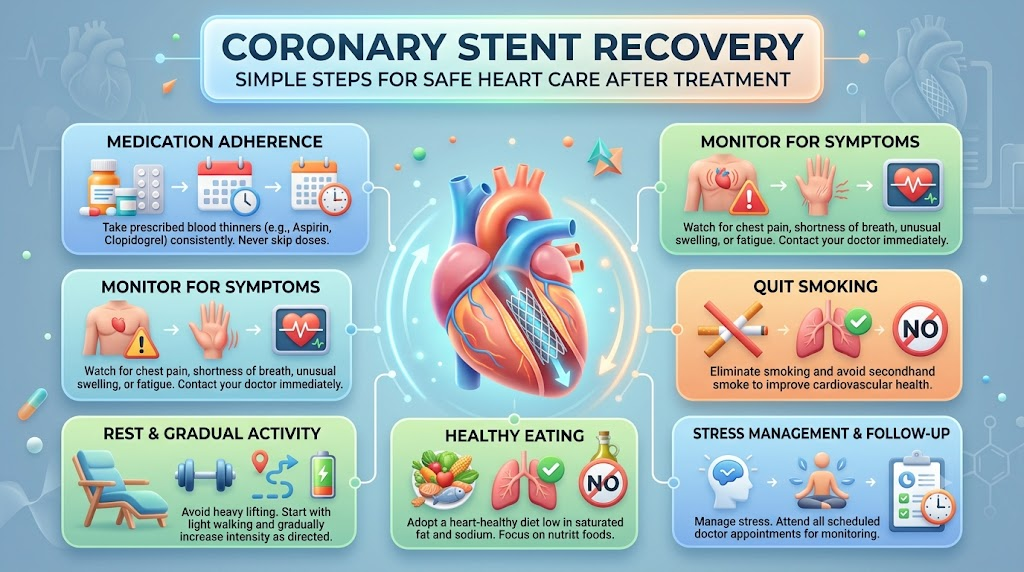
But care does not end after the stent procedure. Good coronary stent post-care helps support safe recovery and long-term heart health.Post-care may include medicines, follow-up visits, activity changes, and healthy habits. Some patients may also need cardiac rehabilitation and regular heart checks.Recovery can differ from one person to another. The reason for the stent and your overall health can affect your care.BestHeartSurgery can help people research heart hospitals and cardiac care services. Your cardiologist should always give your personal treatment instructions.
What Is Coronary Artery Stent Post-Care?
A coronary stent is a small tube placed inside a narrowed heart artery. It helps keep the artery open and supports blood flow.
The stent is usually placed during a procedure called angioplasty. Angioplasty uses a small balloon to open a narrowed artery.
After stent placement, the body still needs care. Doctors may monitor your heart, medicines, activity, and recovery.
Stent follow-up care can help doctors check your progress. It also gives you a chance to discuss new symptoms or concerns.
Your care plan may include prescribed antiplatelet medicines. These medicines help reduce the chance of a blood clot forming around the stent.The type and length of medicine treatment can vary. Your heart doctor considers your condition and bleeding risk.
What to Expect After Stent Placement
After the procedure, you may spend time in a recovery area. The care team may check your heart rate, blood pressure, and other signs.You may feel tired after the procedure. Mild discomfort can also occur near the catheter entry site.
A catheter is a thin tube used during the procedure. It may enter through an artery in your wrist or groin.
The entry site needs careful attention after treatment. Your hospital will give you specific instructions before you leave.
Some people may go home after medical clearance. Others may need more hospital monitoring.
A family member or caregiver may also help during early recovery. This can make transport, meals, and daily tasks easier.
Recovery differs between patients. Follow the discharge instructions given by your cardiology team.
Medicines After a Coronary Stent
Medicines are an important part of coronary stent recovery. Your cardiologist may prescribe antiplatelet medicine after stent placement.Antiplatelet medicines help reduce harmful blood clot formation. Some patients may receive more than one antiplatelet medicine.The type and length of treatment depend on several factors. These may include the reason for stenting and bleeding risk.
Take prescribed medicines exactly as directed. Do not change the medicine plan without medical advice.
Never stop an antiplatelet medicine on your own. Stopping treatment without advice may raise the risk of a clot.
Tell your doctor about other medicines, vitamins, and supplements. This helps your care team make safer treatment decisions.
If you have questions about a medicine, ask your cardiologist. Do not guess or change your treatment yourself.
Caring for the Catheter Entry Site
The catheter entry site needs simple but careful care. Your hospital will explain how to care for the area.
The site may be on your wrist or groin. Some mild soreness or bruising may occur.Keep the area clean as instructed. Avoid rubbing or pressing the area unless your care team says otherwise.Watch for unusual bleeding or swelling. Also look for increasing redness, drainage, or worsening pain.Contact your care team if the area changes in a concerning way. Follow the hospital instructions for any bleeding or wound problems.Do not use home treatments unless your healthcare team recommends them. Your care needs may differ from another patient’s needs.
Physical Activity After Stent Placement
- Your body needs time to recover after a stent procedure. Rest may be useful during the early recovery period.
- Your doctor may allow light movement when it is safe. Gentle activity can then increase as your recovery continues.
- Avoid heavy lifting until your cardiologist clears you. You may also need limits on other strenuous activities.
- Return to work based on your health and job needs. Your cardiologist can explain when normal activities are suitable.
- Some people return to normal activities within days. Others need more time because each recovery is different.
- Cardiac rehabilitation may also help some patients. It provides supervised exercise and education for safer heart recovery.
- Do not compare your stent recovery time with another person. Always follow your own care team’s instructions.
Heart-Healthy Food and Lifestyle Changes
Daily habits can support long-term heart health. Small changes can become useful parts of your routine.
Try to include more vegetables and fruits in your meals. Whole grains can also fit into many heart-healthy eating patterns.
Choose healthy protein sources when suitable for you. Examples include beans, fish, and other foods recommended by your care team.Limit excess salt and unhealthy fats. Your doctor or dietitian can give advice based on your health needs.
Avoid smoking because it can harm heart and blood vessel health. Ask your healthcare team about safe support for quitting.
Regular movement can also support heart health. Start activity only when your doctor says it is safe.
Managing blood pressure and cholesterol also matters. If you have diabetes, follow your diabetes care plan.
Good sleep and stress control can support healthy daily habits. Focus on steady changes rather than sudden lifestyle changes.
Follow-Up Care and Cardiac Rehabilitation
Follow-up visits are an important part of post-stent care. Your doctor may review symptoms, medicines, blood pressure, and overall recovery.Your care team may also check other heart-health risks. These can include cholesterol, diabetes, smoking, weight, and activity.Cardiac rehabilitation is a supervised heart recovery program. It can include exercise, education, and support for healthier habits.Not every patient needs the same rehabilitation plan. Your cardiologist can decide whether it suits your needs.
Rehabilitation can also help patients understand heart-health goals. It gives patients a structured way to return to safe activity.
Keep your follow-up appointments even when you feel well. Regular care helps your team monitor your long-term heart health.
How Hospitals Support Stent Post-Care
Hospitals can offer different types of follow-up support. Patients should ask what services are available after their stent procedure.
Useful services may include:
- Experienced cardiology teams
- Interventional cardiology support
- Follow-up appointments
- Cardiac rehabilitation access
- Emergency heart care
- Diagnostic testing
- Medicine counseling
- Patient education
- Care coordination
- Clear discharge instructions
Good communication also matters. Patients should understand their medicines, activity limits, warning signs, and follow-up plan.
Ask who to contact after leaving the hospital. Knowing where to seek help can reduce confusion during recovery.
BestHeartSurgery.com can help patients research cardiac hospitals and care options. Patients should compare services based on their own medical needs.
Warning Signs After a Coronary Stent
Some symptoms after stent placement need urgent medical attention. Do not ignore sudden or severe changes in your health.
Warning signs may include:
- New or severe chest pain
- Chest pressure or tightness
- Shortness of breath
- Fainting
- Severe weakness
- Heavy or ongoing bleeding
- Sudden sweating with chest discomfort
- Pain spreading to the arm, back, neck, jaw, or stomach
These symptoms can sometimes signal a serious heart problem. Seek emergency medical care when these symptoms occur.
Do not wait for severe symptoms to improve on their own. Prompt medical attention can be important during a serious heart event.
If you are unsure about a new symptom, contact your healthcare team. They can tell you what action is appropriate.
Cost and Insurance Considerations for Stent Post-Care
- Coronary stent post-care costs can vary. The total depends on the care and services you need.
- Follow-up visits may create additional costs. Diagnostic tests and medicines can also affect your expenses.
- Cardiac rehabilitation may have separate charges. Some patients may need additional procedures during their recovery.
- Insurance coverage varies between plans. Ask your hospital and insurer which services your plan may cover.
- Request a clear cost breakdown when possible. Ask about follow-up visits, tests, medicines, and rehabilitation costs.
- Understanding costs early can help families plan ahead. Never hesitate to ask the hospital about unclear charges.
Simple Post-Stent Care Checklist
| Care Area | What Patients Should Remember |
|---|---|
| Medicines | Take them exactly as prescribed |
| Follow-up | Keep all planned appointments |
| Activity | Increase activity only as advised |
| Entry site | Watch for bleeding or unusual changes |
| Food | Follow a heart-healthy eating pattern |
| Warning signs | Seek urgent care for serious symptoms |
| This checklist is a simple reminder. It does not replace instructions from your cardiologist. |
Frequently Asked Questions About Coronary Stent Post-Care
1. What is coronary artery stent post-care?
It is care after a stent procedure. It may include medicines, follow-up visits, activity changes, and heart-healthy habits.
2. How long does recovery after a heart stent take?
Recovery varies between patients. Some people return to normal activities within days, while others need more time.
3. What medicines are commonly prescribed after a stent?
Doctors may prescribe antiplatelet medicines after stent placement. Your cardiologist decides which medicines you need.
4. Can patients stop antiplatelet medicines after a stent?
No, patients should not stop prescribed medicines on their own. Always speak with your cardiologist before making changes.
5. When can normal activities resume after stent placement?
This depends on your procedure and health. Your cardiologist will tell you when activities are safe.
6. What foods are helpful after a coronary stent?
Choose more vegetables, fruits, whole grains, and suitable healthy protein foods. Follow any diet advice from your healthcare team.
7. Is cardiac rehabilitation needed after a heart stent?
Some patients may benefit from cardiac rehabilitation. Your cardiologist can decide if it fits your recovery needs.
8. What warning signs should patients watch for?
Watch for severe chest pain, breathing trouble, fainting, or heavy bleeding. These symptoms may need urgent medical care.
9. How much does coronary stent post-care cost?
Costs vary based on visits, tests, medicines, rehabilitation, and insurance. Ask for a clear cost breakdown.
10. What should patients look for in a hospital offering stent follow-up care?
Look for cardiology support, follow-up care, emergency services, patient education, and clear discharge instructions.
Final Thoughts
Coronary stent recovery continues after the procedure ends. Medicines, follow-up visits, healthy habits, and safe activity all matter.
Never change prescribed heart medicines without medical advice. Keep your follow-up appointments and ask questions when something feels unclear.Learn the warning signs that need urgent care. Sudden chest pain, breathing trouble, or fainting should receive prompt attention.BestHeartSurgery.com can help patients research cardiac care options. Your cardiologist should always guide your personal post-stent care plan.