Introduction
Undergoing heart bypass surgery—medically known as Coronary Artery Bypass Grafting (CABG)—is a life-changing event. While the surgery itself is a remarkable feat of modern medicine, the quality of your recovery journey is equally vital to your long-term success. Choosing the right environment for your post-operative care can significantly impact how quickly you regain your strength, minimize complications, and return to an active, fulfilling life.At BestHeartSurgery, we are dedicated to helping patients navigate this transition. Our platform provides the tools you need to compare top-tier cardiac hospitals, explore specialized recovery programs, and access expert-curated information about heart surgery recovery. Whether you are in the planning stage or already in the recovery phase, our goal is to ensure you have the resources to achieve the best possible outcomes.
Understanding Heart Bypass Surgery (CABG)
Heart bypass surgery is a procedure used to treat coronary artery disease. Surgeons create a “bypass” by using a healthy blood vessel from another part of your body—such as the leg, arm, or chest—to redirect blood flow around a blocked or narrowed coronary artery. This restores essential oxygen-rich blood flow to the heart muscle, relieving symptoms like angina and reducing the risk of a future heart attack.
Why Recovery Is Important After Heart Bypass Surgery
Recovery is not merely a “waiting period”; it is a structured phase of healing. Proper recovery allows your sternum (breastbone) to knit back together, your incisions to heal without infection, and your heart to adjust to its improved blood supply. Neglecting this phase can lead to setbacks, whereas engaging in professional rehabilitation programs can drastically improve your cardiovascular fitness and quality of life.
Best Hospitals for Heart Bypass Surgery Recovery: Key Features
When selecting a hospital for your recovery, prioritize facilities that offer more than just basic surgical care. Look for these essential features:
- Multidisciplinary Recovery Teams: Access to cardiologists, cardiac surgeons, physical therapists, dietitians, and mental health counselors.
- Advanced Cardiac ICUs: Dedicated units with 24/7 monitoring and specialized nursing staff.
- Integrated Cardiac Rehabilitation: On-site or affiliated programs that start the moment you are cleared for movement.
- High Surgical Volume: Hospitals that perform a higher number of CABG procedures typically have more refined, protocol-driven recovery plans.
- Patient Support Services: Guidance on medication management, insurance, and long-term follow-up scheduling.
Immediate Recovery After Surgery
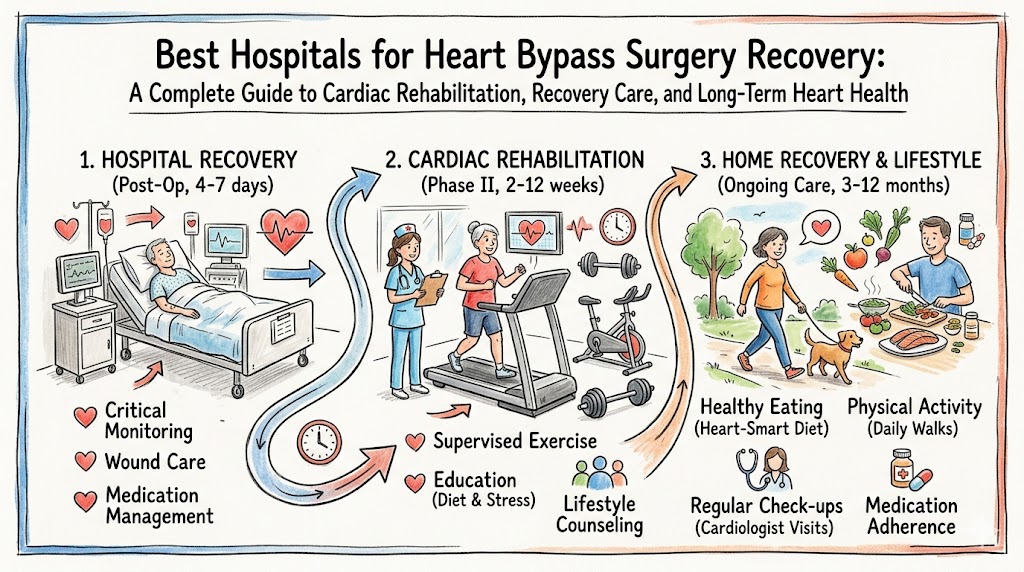
The first few days are spent in the Intensive Care Unit (ICU). You will be monitored closely for heart rhythm, blood pressure, and oxygen levels. Tubes used to drain fluids will be removed gradually, and you will be encouraged to perform light breathing exercises to prevent lung congestion.
Heart Bypass Surgery Recovery Timeline
| Recovery Phase | Timeframe | Goals |
| Hospital Stay | 5–7 Days | Stabilize, monitor, and begin early mobilization. |
| Early Recovery | Weeks 1–2 | Home rest, incision monitoring, and gentle walking. |
| Building Independence | Weeks 3–4 | Increased physical stamina, light daily tasks. |
| Gradual Return | Weeks 5–6 | Start formal cardiac rehab, potential clearance for driving. |
| Long-Term Healing | Months 2–6 | Full return to work and exercise, sustained lifestyle changes. |
Cardiac Rehabilitation Programs
Cardiac rehabilitation is a supervised, gold-standard program. It involves:
- Structured Exercise: Safe, monitored physical activity.
- Nutritional Counseling: Guidance on low-fat, low-sodium diets.
- Stress Management: Techniques to reduce anxiety and depression.
- Risk Factor Modification: Programs to quit smoking and manage blood pressure/cholesterol.
Cardiac Rehabilitation Program Components
| Component | Purpose | Benefits |
| Aerobic Training | Improve heart/lung efficiency | Increases endurance and energy. |
| Resistance Training | Build muscle and stamina | Enhances daily functional ability. |
| Educational Workshops | Inform on heart health | Empowers patient self-management. |
| Psychosocial Support | Reduce anxiety/depression | Improves overall quality of life. |
Nutrition and Heart-Healthy Diet
Post-bypass, your diet should focus on reducing systemic inflammation and plaque buildup.
- Focus: Lean proteins (fish, beans), whole grains, fruits, vegetables, and healthy fats (olive oil, nuts).
- Limit: Saturated fats, sodium, processed sugars, and excessive alcohol.
Exercise and Physical Activity Guidelines
- Walking: The primary exercise for early recovery. Start with 5–10 minutes, several times a day.
- Sternal Precautions: For the first 6–8 weeks, avoid pushing, pulling, or lifting anything over 5–10 lbs to protect your healing chest bone.
Warning Signs That Require Medical Attention
Always consult your doctor if you experience:
- Unexplained or worsening chest pain.
- Sudden weight gain (3 lbs in 2–3 days).
- Fever above 38°C (100.4°F).
- Signs of infection at the incision site (redness, warmth, drainage).
- Severe shortness of breath while resting.
Warning Signs During Recovery
| Symptom | Possible Concern | Recommended Action |
| Deep Chest Pain | Graft or heart issue | Immediate emergency care. |
| Incision Drainage | Wound infection | Contact surgeon’s office. |
| Sudden Swelling | Fluid overload | Inform your cardiologist. |
Heart-Healthy Lifestyle Checklist
| Activity | Frequency | Benefits |
| Walking | Daily | Improves circulation/stamina. |
| Medication Adherence | As prescribed | Prevents clots and lowers BP. |
| Incision Care | Daily | Prevents infection. |
| Symptom Tracking | Daily | Early detection of issues. |
Conclusion
Recovering from heart bypass surgery is a significant undertaking that requires patience, discipline, and a strong support system. By choosing one of the best hospitals for heart bypass surgery recovery, you ensure that your recovery path is guided by expertise, advanced technology, and comprehensive care protocols.The integration of formal cardiac rehabilitation, diligent adherence to your medical team’s advice, and a commitment to heart-healthy lifestyle changes are the pillars of long-term success. Remember, bypass surgery provides a fresh start; your daily choices following the procedure are what will sustain your heart health for years to come.
Prioritize your recovery by staying active within safe limits, managing your medications with precision, and maintaining regular communication with your healthcare providers. Whether you are looking for top cardiac centers through BestHeartSurgery.com or seeking clarity on your specific rehabilitation path, you are the most critical member of your care team. Stay focused on your long-term wellness, lean on your support systems, and take pride in your progress. With the right care and commitment, you can achieve a robust, healthy, and active life long after your recovery is complete.