Introduction
Coronary artery bypass grafting, or CABG, is a major heart operation. It creates a new path for blood to flow around blocked coronary arteries. But surgery is only one part of the recovery journey. Adult coronary artery bypass recovery also needs careful hospital care, monitoring, rehabilitation, and follow-up.Adults may need support with healing, movement, breathing, pain, and daily activities. Families may also need help with discharge planning and home care. Hospitals for adult coronary artery bypass recovery can offer many of these services. BestHeartSurgery helps patients and families research cardiac hospitals and understand important recovery services. You can explore more at .
What Is Adult Coronary Artery Bypass Recovery?
CABG recovery is the healing process after heart bypass surgery. During CABG, surgeons create a new route for blood to move around a blocked coronary artery. This can help improve blood flow to the heart muscle.Recovery starts in the hospital after surgery. The care team watches the patient closely during the early stage. They check heart rhythm, blood pressure, oxygen levels, breathing, and other health signs.Recovery also means slowly regaining strength and learning how to return to daily activities. It may include cardiac rehabilitation, follow-up visits, patient education, and long-term heart care.Every adult has a different recovery path. Health, age, heart condition, and other medical needs can affect recovery. The cardiac care team decides what support each patient needs.
Why Hospital Recovery Care Matters
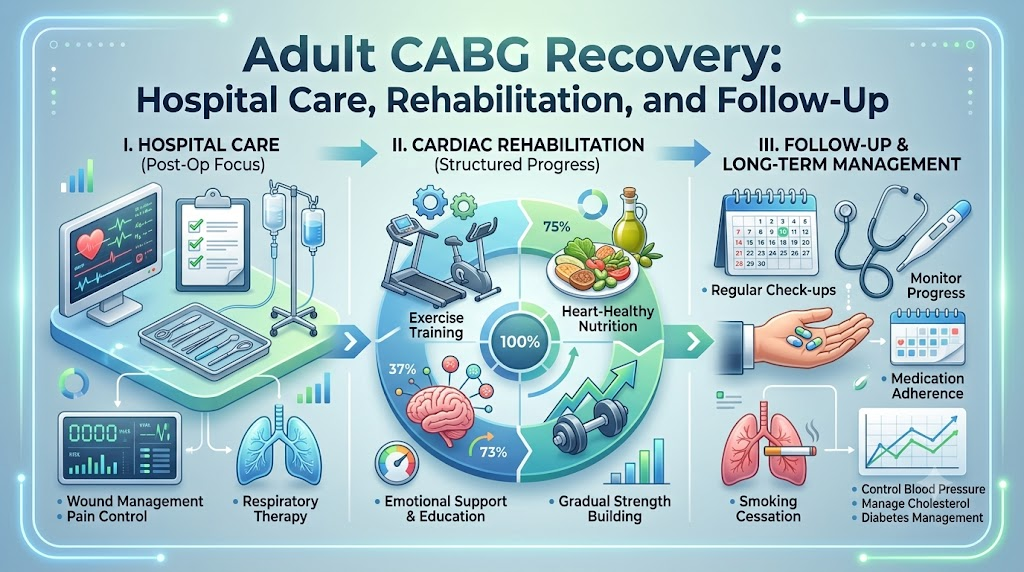
Hospital care continues after the operation ends. The early period can need close monitoring because the body is adjusting after major heart surgery.The hospital team may provide cardiac monitoring, breathing support, pain and comfort care, movement support, and nutrition education. Nurses and other specialists also watch for possible concerns during recovery.Good discharge planning is another important part of hospital care. Patients need to understand their follow-up needs before they leave.
The table below shows some common recovery services that patients may want to discuss with a hospital.
| Recovery Area | What the Hospital May Provide | Why It Matters |
|---|---|---|
| Heart Monitoring | Heart rhythm, blood pressure, and oxygen monitoring | Helps the team watch recovery closely |
| Early Movement | Support from nurses and physiotherapists | Helps patients regain strength safely |
| Breathing Support | Breathing care when needed | Supports recovery after major surgery |
| Incision Checks | Regular checks by the care team | Helps the team monitor healing |
| Cardiac Rehabilitation | Structured recovery and heart-health support | Supports safe and steady recovery |
| Patient Education | Information about discharge and follow-up | Helps patients understand the next steps |
| Family Support | Guidance for caregivers | Helps families prepare for home recovery |
| Follow-Up Care | Surgical and cardiology follow-up | Supports ongoing heart care |
These services can differ between hospitals. Patients should ask what recovery support is available before choosing a hospital.
Early Recovery in the Hospital
After CABG, adults may first receive care in an intensive care unit or cardiac care unit. These areas allow close monitoring during the early recovery stage.As the patient becomes more stable, care may move to a cardiac or step-down unit. The care team continues regular checks during this period.Nurses and other specialists may support breathing, movement, comfort, and daily needs. Heart rhythm monitoring helps the team watch for changes. Incision checks also form part of routine postoperative care.Patient education starts during this stage as well. Patients and caregivers may learn about the discharge plan, follow-up care, activity guidance, and warning signs.
Cardiac Rehabilitation After CABG
Cardiac rehabilitation is an important part of many coronary bypass recovery programs. It is a structured program that helps people recover and improve heart health.Cardiac rehab may include safe physical activity, education, progress checks, and support for healthy lifestyle habits. It may also focus on risk factors linked with coronary artery disease.A cardiac rehabilitation team can include several trained professionals. Nurses, physiotherapists, doctors, nutrition professionals, and other specialists may take part.The program is not the same for every adult. The care team chooses the type and level of support based on the patient’s health and recovery needs.Patients should follow the rehabilitation plan provided by their qualified cardiac care team. They should not create their own recovery exercise plan.
The Role of the Cardiac Care Team
CABG recovery often involves many healthcare professionals. Each person can support a different part of the recovery journey.A cardiac surgeon may provide surgical follow-up. A cardiologist may manage ongoing heart care. Nurses provide daily care, monitoring, and patient education.Physiotherapists may support safe movement during recovery. Cardiac rehabilitation specialists can guide the rehabilitation program.Diet and nutrition professionals may provide heart-health education. Pharmacists can explain medicines as directed by the medical team.Case managers may help with discharge planning and care coordination. Mental health professionals may also help when stress, worry, or mood changes affect recovery.Team roles can vary between hospitals. Patients can ask how the hospital organizes adult cardiac recovery care.
Pain, Fatigue, and Emotional Recovery
Heart surgery recovery affects more than physical health. Some adults may feel tired or have less energy during recovery. Chest discomfort, sleep changes, worry, or stress may also occur.Returning to normal life can create new concerns. Patients may worry about work, family duties, physical activity, or future heart problems.Emotional support can be useful during this stage. Family members and healthcare professionals can provide support when patients feel worried or overwhelmed.Patients should report new, severe, or concerning symptoms to their medical team. The care team can decide whether further assessment is needed.
Incision and Chest Healing
CABG can involve healing around the chest and other surgical areas. The chest incision needs medical follow-up as the body heals.The sternum, or breastbone, may also need time to heal. Chest soreness and skin changes can occur during recovery, but every patient is different.Follow-up visits allow the medical team to check healing and address concerns. Patients should follow the wound and activity guidance given by their own care team.Hospitals with strong CABG aftercare services can help patients understand the recovery process and know when to contact their healthcare team.
Discharge Planning
Leaving the hospital is an important step in adult coronary artery bypass recovery. Good discharge planning helps patients and families understand what happens next.The plan may include follow-up appointments, medication education, activity guidance, warning signs, and cardiac rehabilitation referrals. It may also include information about home support and who to contact with concerns.Family members can help during this transition. They may assist with transportation, appointments, communication, and daily planning.Before leaving the hospital, patients should understand their discharge plan. Any unclear point should be discussed with the care team.
Follow-Up Care After CABG
Recovery continues after hospital discharge. Follow-up care helps the medical team review healing, heart health, and recovery progress.Follow-up may involve a cardiac surgeon, cardiologist, cardiac rehabilitation team, or other specialists. The exact type and timing of follow-up depends on the patient’s needs.Long-term heart care may also focus on risk-factor management and healthy lifestyle habits. Cardiac rehabilitation can remain an important part of this process.BestHeartSurgery.com can help readers understand the types of follow-up services they may want to research when comparing CABG recovery hospitals.
Support for Family and Caregivers
Family members can support recovery without becoming medical providers. They can help patients remember appointments and understand information from the care team.Caregivers may also help with transportation, daily planning, communication, and emotional support. Their involvement can make the transition from hospital to home easier.Family members should contact the medical team when concerns arise. Medical decisions should always remain with qualified healthcare professionals.
How to Choose a Hospital for CABG Recovery
Choosing a hospital should involve more than looking at the surgery itself. Recovery services can also play an important role in the overall care experience.
Patients and families may consider:
- Experienced cardiac surgery teams
- Cardiac intensive care facilities
- Cardiac rehabilitation services
- Nursing support
- Diagnostic facilities
- Follow-up support
- Emergency cardiac services
- Patient education
- Family communication
- Discharge planning
- Long-term cardiac care
- Clear information about costs and services
Hospital accreditation may also be worth checking when reliable information is available. Patients should look for clear information instead of relying on unsupported rankings or online claims.
BestHeartSurgery.com can help families research these factors and prepare questions for hospital consultations.
Common Mistakes During Hospital Selection
Some families choose a hospital only because of surgery cost. Cost can matter, but it should not be the only factor.Another mistake is looking only at the surgeon. CABG recovery also involves nurses, rehabilitation teams, follow-up doctors, and discharge support.Patients may also forget to ask about cardiac rehabilitation. Others may ignore caregiver needs or trust unsupported online claims.It is also unhelpful to compare patients only by recovery time. Each adult can have a different recovery journey.Asking questions early can help families make a more informed hospital choice.
Warning Signs That Need Prompt Medical Attention
Some symptoms after CABG need prompt medical attention. These may include severe or worsening chest pain, major breathing difficulty, fainting, or new confusion.Sudden weakness, heavy bleeding, severe wound changes, sudden major swelling, or new serious heart rhythm symptoms also need prompt medical attention.Patients should not wait and see when serious or sudden symptoms appear. They should seek prompt medical attention and follow the emergency guidance provided by their healthcare team.
Long-Term Heart Health After CABG
CABG can improve blood flow around blocked coronary arteries. However, it does not remove every cause of coronary artery disease. Long-term heart care remains important after surgery.Regular medical follow-up helps the care team monitor heart health. Risk-factor management may also become an important part of ongoing care.Heart-healthy habits may include nutrition support, safe physical activity, smoking cessation support, and cardiac rehabilitation. Patients should follow medicine plans exactly as prescribed by their healthcare team.Good heart care is not a single event. It remains an ongoing part of protecting heart health after bypass surgery.
How BestHeartSurgery.com Can Help
BestHeartSurgery.com can help adults and families research cardiac hospitals and understand CABG recovery needs. Readers can explore information about cardiac hospitals, recovery services, rehabilitation, and follow-up care.The website can also help patients prepare questions before a hospital consultation. This can make it easier to compare services and understand what each hospital may offer.The goal is to support informed hospital research. It does not replace advice from a qualified cardiac care team. Medical decisions should always be based on the patient’s individual health needs and professional medical guidance.
Fictional Example
Fictional Example
Consider an adult who has undergone CABG and is comparing hospitals for recovery support. Instead of looking only at the surgery, the person reviews cardiac rehabilitation, follow-up care, specialist availability, and discharge planning.The family also checks whether the hospital provides clear patient education and caregiver support. They ask who will manage follow-up care and what long-term cardiac services may be available.This example is fictional. It does not describe a real patient, hospital, testimonial, or medical result.
Frequently Asked Questions
What is adult coronary artery bypass recovery?
Adult coronary artery bypass recovery is the healing process after CABG. It can include hospital care, monitoring, rehabilitation, follow-up, and long-term heart care.
How long does recovery after CABG usually take?
Recovery time varies from person to person. The cardiac care team can explain what recovery may look like for each patient.
What care is provided after CABG surgery?
Hospital care may include heart monitoring, breathing support, comfort care, movement support, incision checks, education, and discharge planning.
Why is cardiac rehabilitation important after bypass surgery?
Cardiac rehabilitation can support safe recovery and better heart health. It may include activity, education, progress checks, and risk-factor support.
What specialists help with CABG recovery?
The team may include a cardiac surgeon, cardiologist, nurses, physiotherapists, rehabilitation specialists, nutrition professionals, pharmacists, and case managers.
What should I look for in a CABG recovery hospital?
Look at cardiac monitoring, rehabilitation, nursing care, follow-up support, discharge planning, patient education, and long-term cardiac services.
Can family members help during CABG recovery?
Yes. Family members can help with appointments, transportation, communication, daily planning, and emotional support while leaving medical decisions to professionals.
What follow-up care is needed after bypass surgery?
Follow-up may include surgical reviews, cardiology care, cardiac rehabilitation, heart health monitoring, and long-term risk-factor management.
What warning signs should be reported after CABG?
Severe chest pain, major breathing difficulty, fainting, sudden weakness, heavy bleeding, serious wound changes, or new serious rhythm symptoms need prompt medical attention.
How can I compare hospitals for adult CABG recovery?
Compare the cardiac team, recovery services, rehabilitation, follow-up care, caregiver support, discharge planning, and long-term heart care.
Final Thoughts
Adult CABG recovery is a process that continues after surgery. Hospital care can support early healing, monitoring, education, and a safe transition to home.Cardiac rehabilitation can support physical recovery and heart health. Follow-up care also remains important for long-term management. Family support can help patients manage daily needs and stay connected with their care team.When comparing hospitals for adult coronary artery bypass recovery, look beyond the operation itself. Recovery services, specialist care, rehabilitation, patient education, and discharge planning all deserve attention.BestHeartSurgery.com can help families research these factors and prepare better questions. Recovery decisions should always be guided by the patient’s qualified cardiac care team.