Introduction
A child’s heart condition can worry any parent. Choosing the right hospital can help families understand treatment, prepare for surgery, and plan safe recovery. Coronary arteries are blood vessels that carry oxygen-rich blood to the heart muscle. When these vessels have a problem, a child may need regular checks, medicines, a catheter-based procedure, or surgery.
Families searching for hospitals for pediatric coronary artery disease recovery should look for care that matches their child’s exact condition. BESTHEARTSURGERY helps families explore heart care information and understand what to consider when researching hospital services.
Recovery depends on the child’s age, diagnosis, treatment, and overall health. Not every child needs surgery or intensive care. A skilled pediatric heart team can explain the available options, expected recovery, and follow-up needs.
What Is Pediatric Coronary Artery Disease?
Pediatric coronary artery disease refers to conditions that affect the blood vessels supplying the heart muscle. Unlike adults, children rarely develop coronary artery disease because of plaque buildup. Their coronary problems often have different causes.
Some children are born with congenital coronary artery abnormalities. This means their coronary arteries have an unusual origin, path, or structure. Certain abnormalities may affect blood flow, especially during exercise.
Other children develop coronary artery changes after Kawasaki disease, an illness that causes inflammation in blood vessels. This can lead to widening or aneurysms in the coronary arteries. Rarely, children develop early coronary disease due to inherited conditions or other medical problems.
Reduced blood flow can sometimes affect heart function or increase the risk of complications. However, not every abnormality requires an operation. A pediatric cardiology team must assess the child’s condition and decide whether monitoring, medicines, a procedure, or surgery is appropriate.
Why Specialized Pediatric Cardiac Care Matters
Children are not simply smaller adults. Their hearts, bodies, and medicine needs change as they grow. Hospitals caring for children with complex coronary conditions should understand these differences.
A pediatric cardiologist assesses heart health, reviews test results, and plans treatment. A pediatric cardiac surgeon may perform an operation when it is needed. Other team members may include cardiac anesthesiologists, nurses, intensive care specialists, and rehabilitation professionals.
Coordinated care helps families understand each stage of treatment. It also supports careful monitoring and clearer instructions after discharge. Some children need only specialist visits and routine tests, while others need care from a pediatric cardiac surgery hospital.
Checklist Item 1: Qualified Pediatric Heart Specialists
Look for a team with experience in the child’s specific coronary condition. A pediatric cardiologist can explain the diagnosis and monitor changes over time. A pediatric cardiac surgeon may assess whether surgery is necessary.
An interventional pediatric cardiologist may perform certain treatments through a thin tube called a catheter. These treatments are suitable only for selected conditions.
Ask about the team’s training, experience with the proposed treatment, and access to other specialists. Good coordination helps families receive clear answers and a treatment plan suited to their child.
Checklist Item 2: Diagnostic Tests and Coronary Imaging
Accurate tests help doctors understand the heart’s structure and blood flow. An echocardiogram uses sound waves to create pictures of the heart. An electrocardiogram (ECG) records its electrical activity.
Some children may need coronary CT angiography or cardiac MRI to show more detail. Cardiac catheterization may be needed in selected cases to examine blood flow or perform a treatment.
The right tests depend on the child’s age, diagnosis, symptoms, and medical needs. Ask how each proposed test will affect treatment decisions. Not every child needs every test.
Checklist Item 3: Treatment and Surgical Options
Treatment depends on the type of coronary problem and its risk. Some children need observation and regular tests. Others may need medicines, a catheter-based procedure, or surgery.
Certain congenital coronary artery abnormalities may require repair or a procedure called unroofing. This can help improve blood flow in selected cases. The right approach depends on the artery’s structure and the child’s risk.
After Kawasaki disease, treatment may include medicines and ongoing coronary artery monitoring. Some children with serious coronary changes need additional procedures.
Ask the team about the purpose, benefits, risks, alternatives, and timing of any proposed treatment. Families should understand why a treatment is recommended before making a decision.
Checklist Item 4: Pediatric Cardiac Intensive Care
A pediatric cardiac intensive care unit (CICU or CVICU) provides close care for children after complex heart procedures. Staff monitor heart function, breathing, blood flow, pain, and other vital signs.
Some children need this level of care during early recovery after major surgery. Others may recover in a standard pediatric cardiac ward or another suitable unit.
Ask whether the hospital can provide the monitoring your child’s procedure may require. The length of an intensive care stay depends on the operation, the child’s condition, and how well recovery progresses.
Not every child with a coronary artery condition needs intensive care.
Checklist Item 5: Pain Management, Medicines, and Recovery Support
Good pain relief can help a child rest, breathe comfortably, and begin moving again when allowed. The care team should explain which medicines the child needs and how to give them safely.
Some children need medicines that affect blood clotting or heart function. The exact medicines depend on the diagnosis and treatment. Parents should ask about doses, timing, side effects, and what to do if a dose is missed.
Never stop or change a prescribed medicine without speaking to the treating team. Ask how medicines will be reviewed after discharge.
Emotional support matters, too. Simple explanations, familiar routines, play, and reassurance can help children feel safer during recovery.
Checklist Item 6: Safety, Quality, and Family Communication
A hospital should follow clear infection prevention procedures and monitor children carefully after treatment. Families should be able to ask questions and understand the answers.
Ask how the hospital reviews outcomes for the specific diagnosis or procedure. Outcome figures need context because hospitals may treat children with different levels of risk and medical complexity. A high success claim alone does not prove that a hospital is right for your child.
Clear written instructions are important. The team should explain the care plan, share relevant information with your child’s regular pediatrician, and tell you whom to contact if concerns arise.
Checklist Item 7: Discharge Planning and Home Recovery
Discharge planning should start before your child leaves the hospital. Parents need clear instructions about medicines, food, fluids, rest, activity, and wound care when relevant.
After chest surgery, some children need temporary limits on lifting, rough play, and contact sports. Catheter-based procedures may have different restrictions, such as keeping the area where the tube entered the body clean and avoiding certain activities for a short time.
Ask when your child can return to school, daycare, and usual activities. The answer depends on the procedure and recovery.
The team should also provide warning signs to watch for and a contact number for help. Follow the child’s own discharge plan rather than advice meant for another patient.
Checklist Item 8: Follow-Up Care and Long-Term Monitoring
Follow-up helps doctors check healing and detect changes early. Visits may include a physical examination, ECG, echocardiogram, or other imaging when needed.
Some children need ongoing checks of coronary artery size, blood flow, heart function, or symptoms. Others may need fewer visits. Children with certain congenital conditions or Kawasaki disease-related coronary changes may need long-term, sometimes lifelong, specialist care.
Ask how appointments will be arranged and how medical records will be shared. As your child grows, the care team may adjust the monitoring plan, medicines, and activity advice.
Table 1: Pediatric Coronary Artery Care Hospital Checklist
| What to check | Questions to ask | Why it matters |
|---|---|---|
| Specialist qualifications | Who will assess and treat my child? | Confirms relevant pediatric expertise. |
| Experience with the diagnosis | How often does the team treat this condition? | Helps assess experience with similar cases. |
| Diagnostic imaging | Which tests may my child need? | Supports accurate diagnosis and planning. |
| Treatment options | Are monitoring, medicines, procedures, or surgery suitable? | Helps families understand their choices. |
| Intensive care when needed | Can the hospital provide the required cardiac monitoring? | Supports safe care after complex procedures. |
| Medication guidance | Who will explain doses and side effects? | Helps prevent medicine errors. |
| Follow-up care | How will future visits and tests be arranged? | Supports continued monitoring and recovery. |
Table 2: Pediatric Cardiac Recovery and Follow-Up Checklist
| Recovery stage | What families should review | Important consideration |
|---|---|---|
| Early hospital recovery | Breathing, pain, heart monitoring, and movement | Follow the team’s daily care plan. |
| Medication instructions | Names, doses, timing, and side effects | Never change medicines without medical advice. |
| Wound care | Cleaning, dressings, and signs of infection | Follow instructions for the specific procedure. |
| Nutrition and activity | Food, fluids, rest, and safe movement | Needs vary by age and treatment. |
| Discharge planning | Medicines, home care, and contact details | Make sure instructions are clear before leaving. |
| Warning signs | Symptoms that need urgent medical attention | Know when to call the team or emergency services. |
| Follow-up appointments | Visits, tests, and activity reviews | Keep appointments and share new concerns. |
Questions Parents Should Ask Before Choosing a Hospital
A consultation is a good time to discuss your child’s needs. Consider asking:
- Does your team regularly treat my child’s coronary artery condition?
- Which diagnostic tests may be needed?
- Is surgery necessary, or are monitoring and medicines possible options?
- What experience does the team have with the proposed procedure?
- Will my child need intensive care after treatment?
- Which medicines and activity limits may be needed during recovery?
- What warning signs should we watch for at home?
- When can my child return to school and normal activities?
- How will long-term follow-up be arranged?
- Whom should we contact if symptoms change?
Bring previous medical records, imaging reports, a list of medicines, referral letters, and written questions. These can help the team understand your child’s history and avoid unnecessary repeat tests.
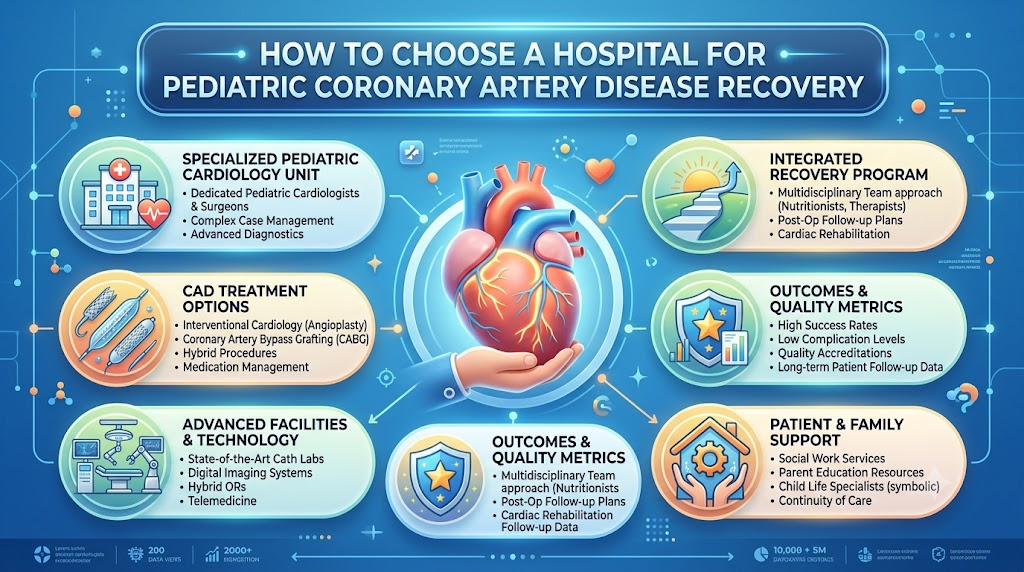
How to Compare Hospitals for Pediatric Coronary Artery Disease Recovery
When comparing hospitals for pediatric coronary artery disease recovery, focus on your child’s needs rather than a hospital’s general reputation. A hospital with the right experience for one condition may not be the right choice for another.
Consider these factors:
- Specialist experience: Look for a team familiar with your child’s diagnosis and proposed treatment.
- Diagnostic services: Check whether the hospital can arrange the tests needed for accurate assessment.
- Treatment choices: Ask whether the team can explain suitable options and their risks.
- Recovery support: Find out what nursing, pain relief, and intensive care services are available when needed.
- Follow-up access: Consider appointment availability and the ease of returning for checks.
- Communication: Choose a team that explains medical information clearly and listens to family concerns.
- Care coordination: Ask how the hospital will share records and plans with your child’s regular doctor.
A second opinion can help with major treatment decisions when time and your child’s condition allow. However, do not delay urgent treatment while comparing hospitals. The treating team can explain how quickly a decision needs to be made.
When to Seek Urgent Medical Help
Some symptoms need immediate medical attention. Seek emergency help if your child has severe chest pain, collapses, faints during exercise, has severe difficulty breathing, or suddenly loses consciousness.
New or worsening chest discomfort, unusual breathlessness, palpitations with dizziness, or a clear drop in exercise tolerance should be discussed promptly with a healthcare professional. These symptoms can have different causes, so proper assessment is important.
Follow any emergency plan provided by your child’s cardiologist. If your child appears seriously unwell, do not wait for a routine appointment or delay care while researching hospitals.
Frequently Asked Questions About Pediatric Coronary Artery Disease Recovery
1. What causes coronary artery problems in children?
Causes include congenital coronary artery abnormalities, coronary changes after Kawasaki disease, and rare cases of premature coronary artery disease. The cause determines the tests, treatment, and monitoring a child may need.
2. Does every child with a coronary artery condition need surgery?
No. Some children need only regular monitoring or medicines. Surgery or a catheter-based procedure may be recommended when the condition, symptoms, anatomy, and risk make intervention appropriate.
3. Which specialists treat coronary artery conditions in children?
A pediatric cardiologist usually assesses and monitors the condition. A pediatric cardiac surgeon may perform surgery, while an interventional pediatric cardiologist may provide selected catheter-based treatments.
4. What tests may be needed before pediatric heart surgery?
Tests may include an echocardiogram, ECG, coronary CT angiography, cardiac MRI, or cardiac catheterization. The team chooses tests according to the child’s condition and the information needed for treatment planning.
5. Why might a child need a cardiac intensive care unit after surgery?
A cardiac intensive care unit provides close monitoring of heart function, breathing, circulation, and pain after complex surgery. Not every child needs intensive care, and the length of stay varies.
6. How long does recovery from pediatric heart surgery take?
Recovery may take several weeks or longer, depending on the procedure, the child’s health, and any complications. The treating team can provide a more suitable estimate for the individual child.
7. What care may a child need at home after heart surgery?
Home care may include prescribed medicines, wound care, rest, suitable food and fluids, and limits on certain activities. Follow the hospital’s written instructions and contact the care team if concerns arise.
8. When can a child return to school and sports after cardiac surgery?
The timing depends on the procedure and the child’s recovery. Ask the cardiologist or surgeon when school, exercise, and sports are safe. Children with coronary artery conditions may need individual activity advice.
9. Why is follow-up important after treatment for a coronary artery condition?
Follow-up helps doctors assess healing, heart function, coronary artery changes, and the need for ongoing treatment. Some children need long-term monitoring, depending on their diagnosis and medical history.
10. How can parents choose a hospital for pediatric coronary artery care?
Compare relevant specialist experience, diagnostic services, suitable treatment options, recovery support, and follow-up arrangements. Ask clear questions and consider a second opinion for major decisions when it is safe to do so.
Conclusion
Choosing the right hospital for pediatric coronary artery disease recovery is an important step in protecting your child’s heart health. Parents should look for experienced pediatric heart specialists, suitable diagnostic tests, safe treatment options, and clear recovery plans.
Every child’s condition is different. Some children need only regular monitoring and medicines, while others may require a procedure or surgery. Good follow-up care, proper medication guidance, and family support can help children recover and manage their heart health as they grow.
Before choosing a hospital, ask questions, review the available services, and discuss your child’s needs with a qualified pediatric cardiology team. Working closely with the medical team can help your family make informed decisions and support your child’s recovery.