Introduction
Cardiac rehabilitation supports recovery after heart surgery. Recovery involves more than healing from an operation. Patients may need help with strength, activity, and confidence. They may also need support with heart-healthy habits. Cardiac rehabilitation can provide this support under professional care. Hospitals offering post-surgery cardiac rehabilitation may provide many services. These can include exercise, education, and health checks. helps readers learn about heart surgery hospitals, cardiac procedures, rehabilitation services, specialists, and recovery care. BestHeartSurgery can also help families understand different recovery support options.
What Is Cardiac Rehabilitation?
Cardiac rehabilitation is a supervised recovery program. It supports people after certain heart problems or procedures. The program is not simply an exercise plan. It can include physical activity, health education, and lifestyle support. It may also include risk-factor management and emotional support. Healthcare teams monitor patients during suitable parts of recovery. The exact program can differ between patients and hospitals. Cardiac rehabilitation after heart surgery aims to support safe recovery. Patients should follow advice from their own healthcare team.
Why Rehabilitation Matters After Heart Surgery
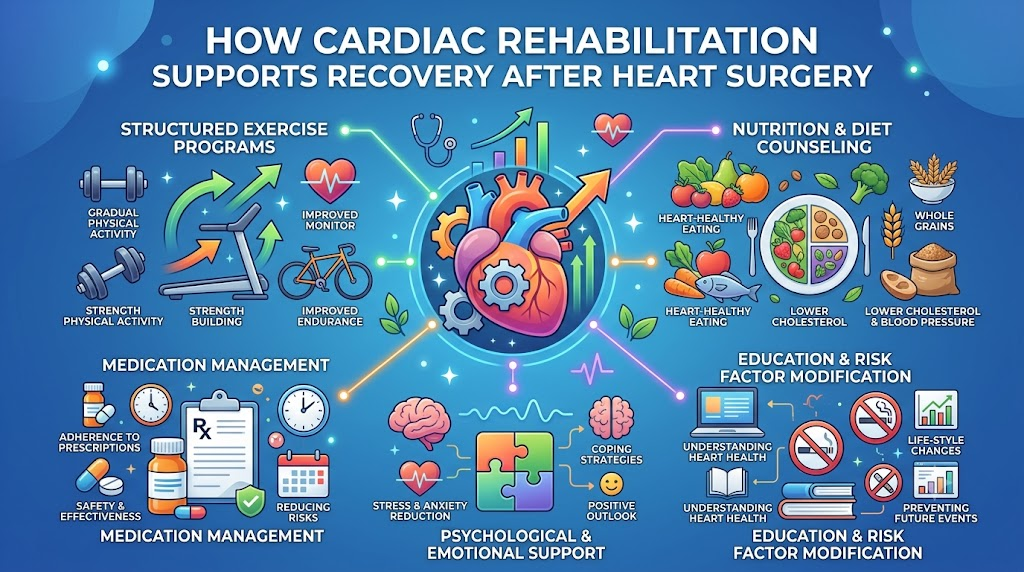
Heart surgery can place stress on the body. Recovery can take time and careful support. Rehabilitation may help patients regain physical strength. It may also help improve activity tolerance. Patients can learn how to build healthy daily habits. They can also learn more about heart health. Education may help patients understand important risk factors. These can include blood pressure, cholesterol, diabetes, and smoking. Emotional support may also help rebuild confidence. Rehabilitation needs can vary greatly between patients.
Which Heart Surgeries May Need Rehabilitation?
Cardiac rehabilitation may follow several types of heart surgery. Coronary artery bypass surgery is one example. This surgery is also called CABG. Heart valve surgery may also involve rehabilitation. Some patients may need support after aortic surgery. Heart transplant recovery may include structured rehabilitation too. Selected minimally invasive heart procedures may also need support. Other cardiac procedures may include rehabilitation when appropriate. Eligibility depends on the patient’s health and surgery. The medical team decides when rehabilitation is suitable.
What Happens Before Rehabilitation Starts?
A cardiac rehabilitation program often begins with an assessment. The team may review the patient’s medical history. They may also review the type of heart surgery. Current recovery status can also matter. The team may assess physical ability and heart health. They may ask about symptoms and daily activity. Risk factors can also be reviewed during assessment. Previous activity levels may provide useful information. Rehabilitation goals can also be discussed. This information helps the team plan suitable support. Patients should discuss personal concerns with their healthcare team.
The Cardiac Rehabilitation Team
Cardiac rehabilitation usually involves more than one professional. A cardiologist may help oversee heart care. Cardiac surgeons may support surgical recovery needs. Nurses may provide health checks and patient education. Physiotherapists may support safe physical movement. Exercise specialists may help with supervised activity. Dietitians may provide general nutrition education. Mental health professionals may provide emotional support. Other healthcare staff may also join the team. The exact team varies between cardiac rehabilitation hospitals.
Exercise During Cardiac Rehabilitation
Supervised exercise can be an important part of rehab. It helps patients become active in a controlled setting. Gentle movement may be included during recovery. Walking may also form part of suitable programs. Aerobic activity can support cardiovascular fitness. Some programs may also include strength work. Flexibility exercises may be included when suitable. Activity often progresses based on professional assessment. There is no single exercise plan for everyone. Patients should follow their rehabilitation team’s instructions. They should not create a personal plan alone.
Health Education During Rehabilitation
Education is another key part of cardiac rehab. Patients can learn more about their heart health. They may learn about blood pressure and cholesterol. Diabetes management may also be discussed. Smoking cessation support can be included. Stress and sleep may also be covered. Follow-up care is another useful topic. Education can help patients make informed choices. It can also help families understand recovery needs. Good education supports long-term heart health.
Nutrition and Lifestyle Support
Many programs include nutrition education. This may focus on heart-friendly eating habits. Balanced meals can be part of the discussion. Sodium awareness may also be explained. Healthy weight and regular activity may be discussed. Tobacco avoidance can support heart health. Alcohol awareness may also form part of education. Sleep and stress management can receive attention too. These topics support healthy daily choices. Patients should seek personal diet advice from qualified professionals.
Main Areas of a Cardiac Rehabilitation Program
| Rehabilitation Area | What It May Include | Main Purpose |
|---|---|---|
| Medical Assessment | Health and recovery review | Understand current needs |
| Exercise Support | Supervised physical activity | Build strength and stamina |
| Health Education | Heart-health information | Support informed choices |
| Nutrition Support | Healthy eating education | Support heart health |
| Emotional Support | Counseling and stress support | Support mental well-being |
| Follow-Up | Ongoing health reviews | Track recovery |
Emotional Support After Heart Surgery
Emotional recovery can also matter after heart surgery. Some patients may feel worried during recovery. Others may feel frustrated or less confident. Fear about returning to normal activities can occur. Stress can also affect daily life and sleep. Some rehabilitation programs offer emotional support. Counseling may be available when needed. Family support can also help patients feel understood. Serious or ongoing emotional concerns need professional attention. Patients should speak with their healthcare team about concerns.
Different Phases of Cardiac Rehabilitation
Cardiac rehabilitation can involve different recovery phases. The exact phases can vary between programs and patients.
Phase 1: Hospital Recovery
Early rehabilitation may begin during the hospital stay. It can focus on safe movement and basic education. The team may also monitor recovery during this stage. Patient education can help prepare for the next phase.
Phase 2: Early Outpatient Recovery
Patients may continue rehabilitation after leaving the hospital. Supervised activity and education may continue during this phase. Follow-up can help the team review recovery progress. The program can change based on professional assessment.
Phase 3: Long-Term Recovery
Long-term rehabilitation focuses on healthy daily habits. It may also support cardiovascular fitness. Risk-factor management can remain important. Patients may continue learning about heart health. There is no fixed recovery schedule for everyone.
Home-Based Cardiac Rehabilitation
Some hospitals offer home-based cardiac rehabilitation. This option may provide support outside the hospital. Remote communication may form part of the program. Home exercise guidance may also be included. Health education can continue through remote services. Follow-up communication may help track progress. Some programs may use remote monitoring tools. Availability differs between hospitals and patient needs. Patients should ask whether home-based support is suitable.
Follow-Up Care After Heart Surgery
Follow-up care remains important after surgery. Recovery checks can help healthcare teams review progress. Surgical follow-up may also be needed. Rehabilitation progress can be discussed during visits. Risk-factor management may continue over time. Patients can also ask questions about recovery. Long-term heart care may be discussed as well. Follow-up schedules depend on the surgery and patient. Patients should follow the schedule given by their care team.
Warning Signs During Recovery
Some symptoms after heart surgery need prompt attention. Severe chest pain can be a serious warning sign. Severe shortness of breath also needs urgent medical attention. Fainting or sudden weakness can require prompt assessment. New confusion can also be concerning. Severe or worsening swelling may need medical review. Serious wound changes should also be reported. High fever with concerning symptoms may need attention. Sudden major changes in condition should not be ignored. Contact the healthcare team or seek urgent medical care.
How to Choose a Hospital Offering Cardiac Rehabilitation
Start by checking if the hospital offers cardiac rehabilitation. Ask about qualified rehabilitation staff and cardiac specialists. Exercise monitoring may also be important. Diagnostic facilities can support some parts of recovery. Follow-up services can help with long-term care. Nutrition support may also be useful. Emotional support can help some patients. Patient education should be clear and easy to understand. Family education can also be valuable. Emergency care may be important for some patients. Accessibility and insurance information should also be checked. BestHeartSurgery.com can help readers compare these care factors.
Understanding Cardiac Rehabilitation Costs
Cardiac rehabilitation costs can differ between hospitals. Hospital location can affect the total cost. Program length may also affect pricing. Professional services can form part of the cost. Exercise monitoring may have separate charges. Diagnostic testing can also affect expenses. Follow-up visits may add to the total cost. Inpatient and outpatient care can have different costs. Insurance coverage can also vary between plans. Patients should request a clear cost breakdown. They should ask what each charge includes.
How BestHeartSurgery Can Help
BestHeartSurgery helps readers understand heart surgery and recovery. It provides information about cardiac rehabilitation in simple language. Readers can learn about heart surgery hospitals and procedures. They can also explore cardiac specialists and recovery services. The site can help families prepare questions for cardiac teams. It can also help readers compare hospital-care factors. Information about post-surgery support can help families plan questions. BestHeartSurgery.com does not provide cardiac rehabilitation itself. It also does not diagnose or treat patients. Medical decisions should always involve qualified healthcare professionals.
FAQs About Cardiac Rehabilitation After Heart Surgery
1. What is cardiac rehabilitation after heart surgery?
Cardiac rehabilitation is a supervised recovery program. It can include exercise, education, and lifestyle support. Emotional support may also form part of care.
2. Why is cardiac rehabilitation important after surgery?
Rehabilitation can support physical recovery and confidence. It can also teach healthy heart-care habits. Each patient’s needs can be different.
3. Which heart surgeries may need cardiac rehabilitation?
CABG and valve surgery may involve rehabilitation. Aortic surgery and heart transplant may also need support. Suitability depends on the patient’s medical condition.
4. What happens during cardiac rehabilitation?
Programs may include health checks and supervised activity. Education and nutrition support may also be included. Emotional support can form part of some programs.
5. Who is part of a cardiac rehabilitation team?
The team may include cardiologists and nurses. Physiotherapists and exercise specialists may also help. Dietitians and mental health professionals may be involved.
6. Does cardiac rehabilitation include exercise?
Yes, many programs include supervised physical activity. The activity depends on professional assessment. Patients should follow their rehabilitation team’s instructions.
7. Does cardiac rehabilitation include nutrition support?
Many programs provide nutrition education. It may cover balanced eating and heart health. Personal diet advice should come from a qualified professional.
8. Can cardiac rehabilitation include emotional support?
Yes, some programs include emotional support. Patients may discuss stress, fear, or low confidence. Ongoing concerns should be discussed with healthcare professionals.
9. How can I choose a hospital offering cardiac rehabilitation?
Check the hospital’s rehabilitation services and qualified staff. Ask about monitoring, follow-up, education, and support. Also ask about costs and insurance.
10. How long does cardiac rehabilitation last?
There is no single time for every patient. Program length depends on health and recovery needs. The rehabilitation team decides the suitable care plan.
Final Thoughts
Recovery after heart surgery involves more than surgical healing. Cardiac rehabilitation may support strength, confidence, and healthy habits. Exercise, education, follow-up, and emotional support can all matter. Good cardiac rehab hospitals provide structured recovery services. Families should compare services and ask clear questions. BestHeartSurgery.com can help readers understand these recovery options. Rehabilitation decisions should always involve qualified healthcare professionals.