Introduction
Heart care can feel confusing for many patients. Online visits can make specialist discussions easier. Coronary artery bypass teleconsultation allows remote heart care discussions. CABG means coronary artery bypass grafting. It is a major heart surgery. Doctors may use teleconsultation before or after hospital visits. It can help patients discuss reports and treatment plans. It can also help with hospital planning. However, online care has clear limits. It cannot replace every in-person heart check. BestHeartSurgery.com helps readers explore heart surgery hospitals and care options.
What Is Coronary Artery Bypass Surgery?
Coronary arteries carry blood to the heart muscle. Sometimes these arteries become narrow or blocked. This can reduce blood flow to the heart. Coronary artery disease can cause these changes.
CABG creates another path for blood flow. A surgeon uses a blood vessel for this path. This can help blood reach the heart muscle. The need for CABG depends on each person’s condition.
A cardiologist or cardiac surgeon makes this decision. They review medical history and test results. Patients should not decide on surgery from online information alone.
What Is CABG Teleconsultation?
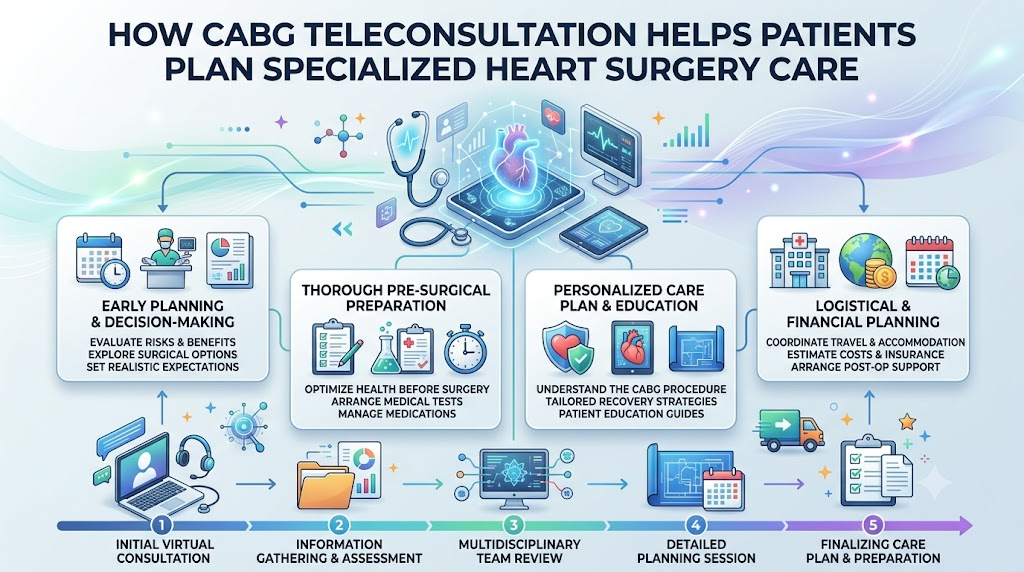
CABG teleconsultation is an online medical visit. A patient can speak with a heart specialist remotely. The visit may happen through a video call. Some services may also use other online tools.
A cardiologist or cardiac surgeon may join the visit. They can discuss the patient’s medical information. They may also answer questions about CABG. This can help patients prepare for hospital care.
CABG online consultation does not replace every examination. Some patients may still need an in-person visit. The cardiac team decides what care is needed next.
How Can Teleconsultation Help CABG Patients?
Online cardiac visits can support several parts of care. They can help patients understand their medical situation. They can also help patients prepare useful questions.
During a virtual cardiac consultation, patients may discuss:
- A previous diagnosis
- Available treatment options
- Previous medical records
- Questions about CABG
- A second specialist opinion
- Hospital choices
- In-person visit planning
- Follow-up care
These discussions can save time for some patients. They may also reduce unnecessary travel. However, each case needs individual medical review.
What Information May Be Needed?
Good preparation can make an online visit easier. Patients may collect their recent medical records. They can also keep previous cardiac reports nearby.
Useful information may include ECG reports and scan reports. Echocardiogram reports may also help. Coronary angiography reports can provide important medical details.
Patients can also prepare their current medicine list. They should not change medicines before the visit. The specialist decides what information is useful.
Can Doctors Review Cardiac Test Reports Online?
Some cardiac reports can be reviewed online. A doctor may look at uploaded medical records. This can help during a remote cardiac consultation.
Reports may include ECG results and echocardiogram reports. Coronary angiography records may also be reviewed. Blood test reports can provide added information.
However, online review has limits. A specialist may need more tests or examination. Patients should not interpret these reports themselves. The cardiac team explains what further care may be needed.
CABG Teleconsultation for a Second Opinion
Some patients seek a second opinion before major surgery. A second specialist may review existing medical information. This can help patients understand different medical views.
A second opinion does not always change the treatment plan. It can provide more information about available choices. It may also explain why a treatment was suggested.
Patients can ask what records are needed. They can also ask whether an in-person visit is needed. Medical decisions should remain with qualified heart specialists.
Teleconsultation Before Traveling for Heart Surgery
Teleconsultation can help patients plan hospital visits. This can matter for people traveling from another city. It can also help international patients plan care.
Patients may ask about cardiac specialists and hospital services. They may also ask about medical records and consultations. Travel planning can be discussed before reaching the hospital.
International patient consultation may also help with follow-up planning. However, treatment approval cannot be assumed online. The hospital may need an in-person assessment first.
Teleconsultation After CABG Surgery
Online visits may support some postoperative follow-up. Patients can discuss general recovery questions with their team. They may also review progress and future appointments.
A virtual visit can be useful after hospital discharge. It may reduce travel for some follow-up discussions. Still, some concerns need an in-person check.
The care team decides when hospital review is needed. Patients should follow their hospital’s follow-up instructions.
When Is an In-Person Visit Important?
Teleconsultation cannot replace every medical examination. Doctors may need to examine the patient directly. Some tests also require hospital equipment.
An in-person visit may be needed before surgery. It may also be needed when new concerns appear. The cardiac team decides when direct assessment is necessary.
Patients should not delay needed hospital care. Online consultation should support care, not replace essential assessment.
Emergency Heart Symptoms
Teleconsultation is not meant for emergencies. Severe symptoms need urgent local medical care. Do not wait for an online appointment.
Serious warning signs can include severe chest pain. Severe breathing difficulty can also be serious. Fainting or sudden severe worsening also needs urgent attention.
When serious symptoms happen, seek local emergency care. Do not rely on a virtual cardiac consultation.
How to Choose a Hospital Offering CABG Teleconsultation
Patients can compare several practical hospital factors. Specialist access is one important factor. CABG experience may also matter.
Other useful factors include:
- Cardiac specialist availability
- Cardiac surgery services
- Teleconsultation access
- Medical record review
- Follow-up support
- Communication options
- International patient support
- Hospital accreditation information
Not every hospital offers the same services. Patients should confirm current services directly. BestHeartSurgery.com can support early hospital research.
Questions to Ask During a CABG Teleconsultation
Simple questions can help patients use the visit well. They can prepare questions before the appointment.
Useful questions include:
- What is the purpose of this consultation?
- Which medical records are needed?
- What treatment options should be discussed?
- Is an in-person assessment needed?
- What cardiac services does the hospital provide?
- What specialist experience is available?
- How will follow-up care work?
- Can another specialist provide a second opinion?
- What should international patients prepare?
- What should happen before hospital travel?
These questions can make the consultation more focused. They can also help patients understand the next steps.
CABG Teleconsultation vs In-Person Consultation
Both visit types have different roles. Online visits can support discussion and planning. In-person visits allow direct examination and hospital testing.
| Consultation Type | What It Can Offer |
|---|---|
| CABG Teleconsultation | Remote discussion and record review |
| In-Person Consultation | Direct examination and required hospital tests |
| Online Second Opinion | Review of available medical information |
| Hospital Visit | Detailed assessment and treatment planning |
The right approach depends on the patient’s situation. A cardiac team may use both types of visits.
Benefits and Limits of CABG Teleconsultation
CABG teleconsultation can make specialist access easier. It may also reduce travel for some discussions. Patients can prepare records before visiting a hospital.
It can support hospital planning and second opinions. It may also help international patients plan visits. These benefits depend on the service and patient needs.
There are also clear limits. Physical examination may still be needed. Some tests require hospital equipment. Emergency symptoms also need urgent local care.
How BestHeartSurgery.com Can Help
BestHeartSurgery.com helps readers explore heart surgery hospitals. It can support research about cardiac specialists and treatment services. Readers can also use it when comparing consultation options.
The platform can help patients understand hospital care factors. It can also support early planning before contacting a hospital.
Services can differ between hospitals. Patients should confirm teleconsultation availability directly. They should also confirm current cardiac services before planning care.
Practical Example
Consider a patient with a previous CABG recommendation. The patient collects medical reports before an online visit. They also prepare simple questions about the proposed care.
During the consultation, the specialist reviews the available information. The specialist may explain what further assessment is needed. The patient then plans the next hospital visit.
This example shows how online consultation can support planning. It does not replace the specialist’s full medical assessment.
SEO, AEO, GEO, LLMO, AISEO, and E-E-A-T
Useful medical content should answer questions clearly. It should also explain medical terms in simple words. This helps readers understand complex heart care topics.
Clear answers can also support search and AI systems. Question-based sections make important information easier to find. Accurate language also helps build trust.
This article explains CABG teleconsultation in simple terms. It also explains its benefits and limits. Patients should still seek advice from qualified cardiac professionals.
Frequently Asked Questions About CABG Teleconsultation
1. What is coronary artery bypass teleconsultation?
It is an online visit about CABG care. A heart specialist discusses medical information remotely.
2. Can CABG be discussed through an online consultation?
Yes, CABG can be discussed online. Some patients may still need an in-person assessment.
3. Can a cardiac surgeon review medical reports online?
A cardiac surgeon may review available reports online. More information or testing may still be needed.
4. Can teleconsultation help with a CABG second opinion?
Yes, it may support a second opinion. The specialist needs enough medical information to review the case.
5. What reports should be prepared for a CABG teleconsultation?
Patients may prepare ECG and scan reports. Other hospital records may also be useful.
6. Can teleconsultation replace an in-person heart consultation?
No, not in every situation. Some examinations and tests need hospital care.
7. Can international patients use CABG teleconsultation?
Some hospitals offer this service to international patients. Availability and requirements can differ by hospital.
8. Can teleconsultation help before traveling for CABG?
Yes, it may help with early planning. Patients can discuss records, specialists, and hospital visits.
9. Can CABG patients have online follow-up visits?
Some follow-up discussions may happen online. Other concerns may need an in-person hospital visit.
10. When should a patient seek urgent in-person cardiac care?
Severe chest pain needs urgent medical attention. Severe breathing trouble, fainting, or sudden worsening also need urgent care.
Final Thoughts
CABG is major heart surgery. Good planning can help patients understand their care. Coronary artery bypass teleconsultation can support specialist discussions and planning.
Online visits can help with reports and questions. They can also support second opinions and hospital planning. However, teleconsultation has important limits.
Some patients need direct examination and hospital tests. Emergency symptoms always need urgent local medical care. BestHeartSurgery.com can help readers research heart surgery hospitals and consultation options. Always discuss personal medical decisions with qualified cardiac professionals.