Introduction
Angioplasty helps improve blood flow to the heart. Care does not always end after the procedure. Follow-up may include checkups, recovery support, and heart health education. Some patients may also join cardiac rehabilitation. The right care plan depends on each patient. BestHeartSurgery can help people research heart hospitals. You can explore the site at. Patients should always follow their cardiac team’s advice.
What Is Angioplasty Post-Care?
Angioplasty post-care means care after the procedure. It helps the care team review recovery. It may include follow-up visits and heart checks. It can also include lifestyle support and education. Some patients may need cardiac rehabilitation. Others may need fewer follow-up services. Each care plan can be different. Doctors base follow-up on the patient’s health needs.
Why Does Follow-Up Matter After Angioplasty?
Follow-up helps doctors review how recovery is going. Patients may discuss new or ongoing symptoms. The team may also review heart health. Medicines may be discussed during these visits. Patients should not change medicines on their own. The cardiac team can explain any needed changes. Follow-up can also support long-term heart care.
What May Be Included in an Angioplasty Post-Care Program?
Angioplasty post-care programs can offer several types of support. These services can help patients understand recovery. They may also support healthy heart habits. Common areas can include:
- Follow-up appointments
- Heart monitoring
- Access-site checks
- Cardiac rehabilitation
- Activity guidance
- Lifestyle education
- Nutrition support
- Patient education
- Risk-factor management
- Long-term heart care
Not every patient needs every service. The cardiac team decides what support fits the patient.
What Happens During a Follow-Up Visit?
A follow-up visit may begin with simple questions. The team may ask about recovery and symptoms. They may discuss daily activity and lifestyle habits. They may also review future care needs. Some patients may need further checks. The type of check depends on the patient’s situation. Patients should share new or changing symptoms. They should also ask questions about their care plan.
Cardiac Rehabilitation After Angioplasty
Cardiac rehabilitation is a supervised heart recovery program. It can include safe activity and health education. It may also support better daily heart habits. The program can involve several health professionals. They can guide patients based on their needs. Patients should follow the activity plan given by their team. There is no single exercise plan for everyone. Recovery goals can also differ between patients.
Monitoring Heart Health After Angioplasty
Monitoring may be part of angioplasty follow-up care. Doctors may review symptoms and general heart health. They decide if further checks are needed. The choice depends on the patient’s history and findings. Patients should not order tests by themselves. A cardiac team can explain which checks may help. Regular follow-up can also support long-term care.
Lifestyle Support After Angioplasty
Heart health involves more than medical visits. Patients may receive support for healthy food habits. Physical activity may also become part of recovery. Smoking cessation support can help people who smoke. Weight, blood pressure, and cholesterol may be discussed. Diabetes care may also be important. Sleep and stress can affect daily heart health. These habits do not guarantee a specific result. They are part of broader heart care.
What Makes a Hospital Suitable for Angioplasty Post-Care?
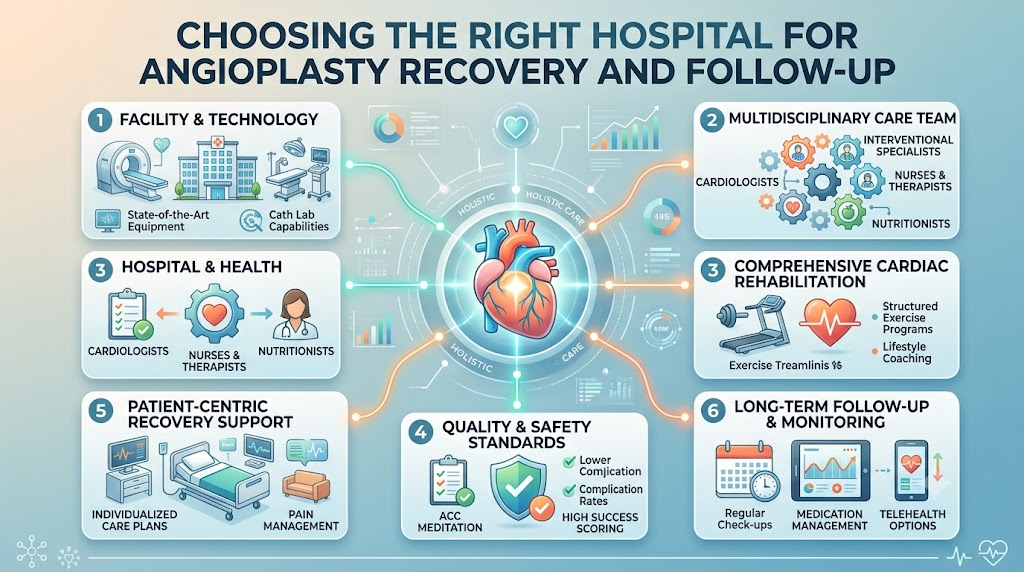
A suitable hospital should offer proper cardiac support. An experienced cardiac team can help with follow-up. Interventional cardiology support may also be useful. Cardiac rehabilitation can add more recovery support. Emergency cardiac care is another important factor. Patients can also check diagnostic facilities. Clear patient communication can make follow-up easier. Access to related specialists may also matter. Long-term heart care support can be useful.
How to Compare Angioplasty Post-Care Programs
Patients can compare hospitals using simple questions. First, check which follow-up services are available. Then ask about cardiac rehabilitation. Ask how follow-up visits are arranged. Find out what happens if symptoms return. Check if emergency cardiac care is available. Ask about patient education services. You can also ask about long-term care coordination. Cost and payment details should also be clear. BestHeartSurgery.com can be part of this research process.
Angioplasty Post-Care vs One-Time Follow-Up
A one-time follow-up focuses on a current recovery check. The visit may review symptoms and healing. A structured program can offer wider support. It may include several follow-up services over time. It may also include rehabilitation and health education. Not every patient needs a structured program. Some people may need only limited follow-up. The cardiac team can explain the right approach.
Basic Follow-Up vs Structured Post-Care Program
| Factor | Basic Follow-Up | Structured Post-Care Program |
|---|---|---|
| Main purpose | Review current recovery | Support ongoing recovery |
| Typical focus | Symptoms and healing | Recovery, lifestyle, and heart health |
| Follow-up | One or more visits | Planned care over time |
| Monitoring | Based on patient needs | May include regular review |
| Rehabilitation | May not be included | May include cardiac rehabilitation |
| Education | Basic care advice | Broader heart health education |
Warning Signs That Need Urgent Medical Attention
Some symptoms after angioplasty need prompt medical care. Sudden or severe symptoms should not be ignored. Serious chest pain can require urgent assessment. Severe breathing trouble can also need quick care. Fainting or sudden major weakness may be concerning. Sudden changes in health should receive professional attention. Patients should contact emergency services when symptoms are severe. Do not wait for a routine follow-up in an emergency.
Questions Patients Can Ask About Post-Care
Patients can ask how follow-up care works. They can ask if cardiac rehabilitation is available. It is useful to ask about monitoring services. Ask what happens if symptoms return. Ask how urgent concerns are handled. Patients can also ask about long-term heart care. They may ask about nutrition and lifestyle support. Cost and appointment details are also worth checking. Clear answers can make hospital comparison easier.
How BestHeartSurgery.com Can Help
BestHeartSurgery.com can help readers research heart hospitals. The platform can support research into cardiac care services. Users can explore information about procedures and specialists. They can also learn about related hospital services. This information can help with early hospital research. Patients should still confirm services with each hospital. Personal care decisions should come from the cardiac team.
Practical Example
General example: A patient may compare two hospitals after angioplasty. They may check follow-up visits at both hospitals. They may also compare cardiac rehabilitation services. Emergency cardiac care can be another factor. Patient education and specialist access may also matter. Location and cost can affect the final choice. This example shows a research process only. It does not suggest one hospital is better.
AEO, GEO, LLMO, AISEO, and E-E-A-T
Good health content should answer common questions clearly. This supports AEO, or Answer Engine Optimization. GEO helps content work well for generative search. LLMO helps language models understand useful information. AISEO supports content for AI search systems. E-E-A-T supports trustworthy health information. Clear terms and short answers help readers. They also make important facts easier to understand.
Planning Your Angioplasty Follow-Up Care
Before leaving the hospital, patients can ask questions. They can ask when the next visit should happen. They can ask what symptoms need quick attention. They can also ask about rehabilitation options. It helps to understand the planned follow-up process. Patients can keep their care information organized. They should follow instructions from their cardiac team. Recovery needs can change as health changes.
Frequently Asked Questions About Angioplasty Post-Care Programs
1. What is angioplasty post-care?
Angioplasty post-care means care after the procedure. It may include follow-up visits, monitoring, and education. The exact plan depends on the patient.
2. Why is follow-up important after angioplasty?
Follow-up helps the cardiac team review recovery. It can also support long-term heart care. Patients can discuss symptoms and concerns.
3. What may happen during an angioplasty follow-up visit?
The team may review symptoms and recovery. They may discuss activity and future care. Further checks may be needed in some cases.
4. Is cardiac rehabilitation useful after angioplasty?
Cardiac rehabilitation can support supervised recovery. It may include activity guidance and heart education. A cardiac team can explain if it fits the patient.
5. How do hospitals monitor recovery after angioplasty?
Doctors may review symptoms and general heart health. They decide which checks are needed. Monitoring can differ between patients.
6. What should patients ask about a post-care program?
Ask about follow-up visits and rehabilitation. Also ask about monitoring and emergency support. Cost and long-term care are useful topics.
7. Can angioplasty patients need long-term heart care?
Some patients may need ongoing heart care. Follow-up needs depend on health and medical history. The cardiac team can explain the plan.
8. When should patients seek urgent medical help after angioplasty?
Sudden or severe symptoms need prompt medical attention. Serious chest pain or breathing trouble can be urgent. Patients should seek emergency care when needed.
9. How can patients compare angioplasty post-care hospitals?
Compare follow-up services, rehabilitation, and cardiac support. Also check emergency care and specialist access. Location and cost may also matter.
10. How can BestHeartSurgery.com help patients research hospitals?
BestHeartSurgery.com can support early hospital research. It can help users explore cardiac hospitals and services. Patients should confirm current services directly.
Final Thoughts
Angioplasty recovery can include several types of care. Follow-up visits may help review recovery and heart health. Some patients may also use cardiac rehabilitation. Lifestyle support can be part of long-term care. Every patient can have different follow-up needs. A cardiac team should guide personal care decisions. BestHeartSurgery.com can help readers research cardiac hospitals and services.