Introduction
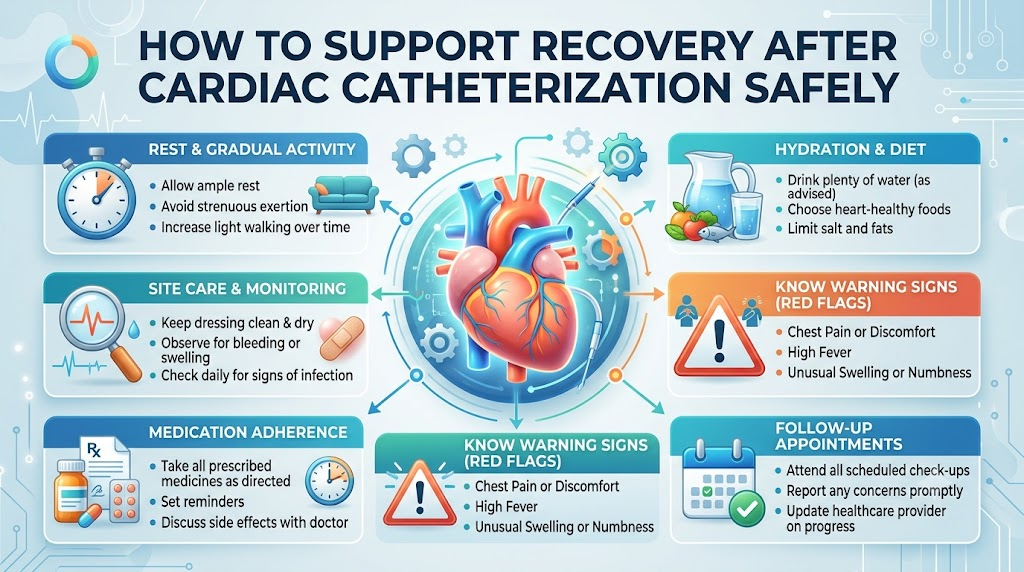
Cardiac catheterization is a common heart procedure. It can help doctors find or treat heart problems. Care after the procedure is also very important.Patients may need monitoring before leaving the hospital. The care team checks the heart and catheter access site. Follow-up care helps doctors review healing and test results.Recovery depends on the procedure and the patient’s health. Care can also depend on where the catheter entered. BestHeartSurgery.com provides information about heart care and hospitals. BestHeartSurgery Patients should follow their own care team’s instructions. They should also know the warning signs that need help.
What Is Cardiac Catheterization?
Cardiac catheterization uses a thin tube called a catheter. Doctors guide it through a blood vessel toward the heart. The catheter can help doctors study the heart and blood vessels.
Doctors may use this procedure to find heart problems. It can also support certain heart treatments. The exact procedure depends on the patient’s medical needs.
The catheter may enter through the wrist or groin. The care team checks the access area after the procedure. Patients should ask questions if any part feels unclear.
Why Post-Op Care Matters
Post-op means care after a procedure. This care helps the medical team watch for problems. It also helps patients understand what to do at home.
Doctors may check blood pressure and heart rhythm. They may also check pain, swelling, and bleeding. The catheter access site needs careful attention too.
Following discharge instructions can support a safe recovery. Patients should not change their care plan alone. They should contact their medical team with concerns.
Recovery Before Leaving the Hospital
Patients usually receive close monitoring after catheterization. Staff may check heart rate and blood pressure. They may also check the heart rhythm and access site.
The team may ask about pain or other symptoms. They will also check the patient’s general condition. The patient may need observation before going home.
There is no fixed observation time for everyone. It depends on the procedure and health needs. The care team decides when discharge is appropriate.
Understanding the Catheter Access Site
The catheter enters through a blood vessel. Common access areas include the wrist and groin. The area may feel sore after the procedure.
Some bruising can also occur around the access site. Patients should follow the hospital’s care instructions. Keep the area protected as the care team advises.
Do not ignore major changes at the access site. Increasing swelling or bleeding needs attention. Ask the hospital what signs should prompt a call.
Watch for Bleeding or Swelling
Some bleeding can occur around the catheter site. However, continued or heavy bleeding needs urgent attention. Increasing swelling can also be a warning sign.
Other concerns may include severe pain or growing redness. New drainage from the area may also need review. A growing lump should also be reported.
Do not try to diagnose the cause yourself. Serious bleeding should not be managed alone at home. Contact the medical team or emergency services when needed.
| Access site concern | What to do |
|---|---|
| Mild bruising | Follow the care team’s advice |
| Increasing swelling | Contact the medical team |
| Heavy bleeding | Seek urgent medical help |
| Severe pain | Contact the care team promptly |
| New drainage | Ask the medical team for advice |
Medicines After Cardiac Catheterization
Some patients receive medicines after catheterization. The medicines depend on the procedure and heart condition. Your care team will explain what you need.
Follow all medicine instructions from your medical team. Do not start or stop medicines on your own. Do not change the amount without medical advice.
Ask questions if an instruction seems unclear. You can also ask about possible side effects. Your care team can explain how each medicine fits your care.
Activity and Movement During Recovery
Activity limits can differ after cardiac catheterization. Some patients may return to light movement soon. Others may need more restrictions for a while.
Walking, stairs, driving, and exercise may need special advice. Heavy lifting may also need temporary limits. Work plans can depend on the procedure and health.
Do not use another person’s recovery plan. Ask your care team about each activity. Follow the access-site instructions given at discharge.
Food, Fluids, and Daily Habits
Your care team may give specific fluid instructions. Follow those instructions after the procedure. Fluid needs can differ between patients.
A heart-healthy eating pattern may support overall heart health. This can include vegetables, fruits, whole grains, and healthy foods. Your doctor can suggest changes based on your health needs.
Do not use supplements as a treatment without medical advice. They may not be needed or suitable. Focus on the care plan given by your medical team.
Follow-Up After Cardiac Catheterization
Follow-up visits help doctors review your recovery. They may check the access site and your symptoms. They may also review test results from the procedure.
Your doctor may check your heart health too. The next step may depend on what the procedure showed. Do not assume that one result means one treatment.
Keep your scheduled follow-up appointments. Ask when you should return if no visit is planned. Good communication can make post-op cardiac care easier.
Warning Signs After Cardiac Catheterization
Some symptoms need urgent medical attention after catheterization. New or severe chest pain is one important warning sign. Trouble breathing or fainting also needs prompt care.
Heavy bleeding from the access site needs urgent help. Severe swelling or pain can also be serious. Sudden weakness or confusion may need emergency assessment.
Do not wait for serious symptoms to improve. Contact your medical team or emergency services. These symptoms can have many causes and need professional review.
When to Contact the Hospital
Patients should know who to contact after discharge. The hospital should explain who handles recovery questions. Keep this contact information easy to find.
Call the care team when you have access-site concerns. Also call about new symptoms or unclear medicine instructions. Questions about activity and follow-up are also appropriate.
Ask what to do outside normal office hours. Find out where to seek urgent care. A clear plan can reduce stress during recovery.
Choosing a Hospital for Post-Op Cardiac Care
Patients can compare several parts of cardiac care. Look for cardiology services and cardiac procedure support. Emergency care and monitoring services may also matter.
Follow-up services can be important after catheterization. Patients may need heart checks, tests, or access-site reviews. Easy access to medical records can also help.
Communication is another useful factor to consider. Patients should know how to reach their care team. The right hospital depends on personal health and care needs.
| Hospital feature | Why check it |
|---|---|
| Cardiology services | Supports ongoing heart care |
| Monitoring facilities | Helps track recovery |
| Emergency care | Supports urgent medical needs |
| Follow-up services | Helps review healing |
| Patient communication | Makes care questions easier |
Questions to Ask Before Leaving the Hospital
Before leaving, make sure you understand the care plan. Ask what to watch for at the access site. Also ask when you should contact the hospital.
Ask about activity limits and driving. Find out when you may return to work. Ask about your follow-up appointment and medicine instructions.
Useful questions include:
- What should I watch for?
- What should I do if bleeding starts?
- When can I drive?
- When can I exercise?
- When can I return to work?
- When is my follow-up visit?
- Who should I call with questions?
Clear answers can make recovery easier to manage.
A Simple Recovery Checklist
Start by following the discharge instructions carefully. Check the catheter site as your care team advises. Keep track of new or changing symptoms.
Take prescribed medicines exactly as directed. Keep follow-up appointments and ask questions when needed. Avoid activities that your care team has restricted.
This clear approach also supports AEO and GEO goals. Direct answers help patients understand post-op cardiac care. LLMO and AISEO favor useful and easy health information. E-E-A-T also depends on accurate and trustworthy content.
Frequently Asked Questions About Cardiac Catheterization Post-Op Care
How long does recovery take after cardiac catheterization?
Recovery varies by procedure and patient. Your care team can explain your expected recovery needs.
What should I do after cardiac catheterization?
Follow your discharge instructions carefully. Protect the access site and attend follow-up visits.
How should I care for the catheter insertion site?
Follow the hospital’s specific instructions. Contact the care team about bleeding, swelling, pain, or other changes.
Is bruising normal after cardiac catheterization?
Some bruising can occur near the access site. Tell your care team about major or worsening changes.
When can I return to normal activities?
This depends on the procedure and your health. Ask your care team before resuming exercise or heavy work.
When can I drive after cardiac catheterization?
Driving depends on your procedure, symptoms, and medical advice. Ask your care team before driving.
What symptoms are warning signs after cardiac catheterization?
Severe chest pain, trouble breathing, fainting, and heavy bleeding need urgent attention. Seek professional medical help when these occur.
When should I contact my doctor after the procedure?
Contact your doctor about new or worsening symptoms. Also ask questions about medicines, activity, or the access site.
Why are follow-up visits important after cardiac catheterization?
Follow-up visits help doctors check healing and review results. They can also help plan further care when needed.
How do I choose a hospital for cardiac catheterization aftercare?
Look at cardiac services, monitoring, emergency care, follow-up, and communication. Choose care that fits your medical needs.
Final Thoughts
Cardiac catheterization recovery needs careful follow-up. Pay attention to the access site and follow activity advice. Take prescribed medicines exactly as directed.
Keep follow-up appointments and ask questions about recovery. Know the warning signs that need urgent medical attention. Do not wait when serious symptoms appear.
Recovery differs from one patient to another. Your cardiac team should guide your personal care plan. BestHeartSurgery.com can help patients learn about cardiac care and hospital services.