Introduction
The heart normally beats in a steady rhythm, but problems with the heart’s electrical system can cause an irregular, unusually fast, or unusually slow heartbeat. These conditions, known as arrhythmias, can have different causes and may require careful evaluation. Choosing a hospital with an appropriate heart rhythm management program can give patients access to specialized testing, experienced cardiac professionals, treatment options, and ongoing monitoring. BestHeartSurgery can help readers explore information about heart-care services while researching their options. The right hospital depends on the type of rhythm problem, available specialists and technology, treatment needs, location, communication, and follow-up arrangements.
What Does Heart Rhythm Management Mean?
Heart rhythm management involves evaluating, treating, and monitoring problems with the heart’s electrical activity. The medical team may include cardiologists and electrophysiologists, specialists who focus on heart rhythm disorders.
Common rhythm problems include atrial fibrillation, atrial flutter, fast heart rhythms such as certain forms of tachycardia, and slow heart rhythms called bradycardia. Some rhythm problems may cause noticeable symptoms, while others may be discovered during a routine examination.
The appropriate approach depends on the specific arrhythmia, symptoms, underlying heart condition, medical history, and specialist assessment.
Why Specialized Heart Rhythm Evaluation Matters
An ordinary ECG may identify an abnormal rhythm, but some arrhythmias occur intermittently and may not be present during a short examination. Additional monitoring can sometimes provide more information.
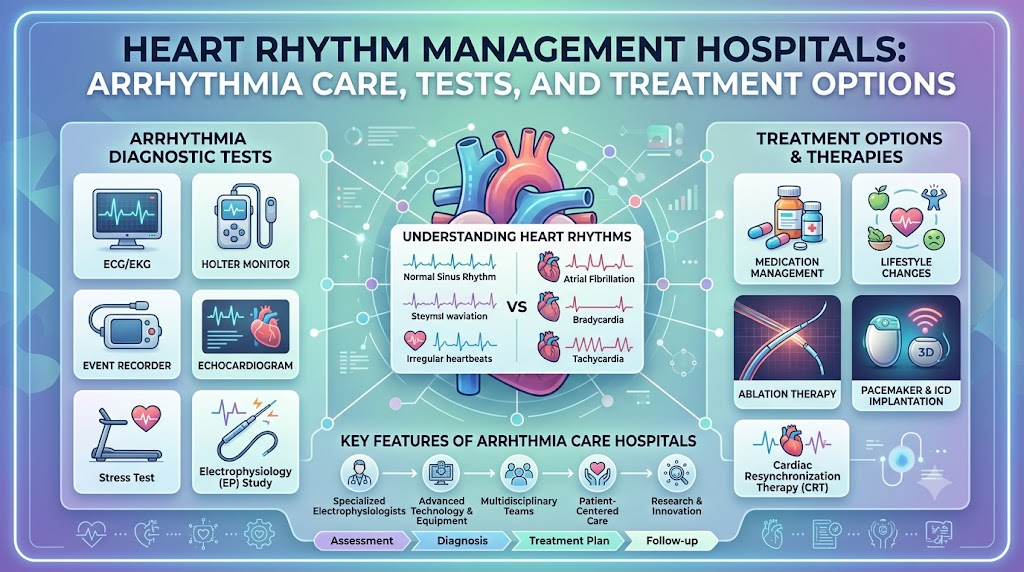
A hospital’s heart rhythm program may offer ECG testing, Holter monitoring, event monitoring, and other diagnostic assessments. In selected cases, an electrophysiology study may be performed to examine the heart’s electrical activity in greater detail.
Common Diagnostic Tests
An ECG or EKG records the heart’s electrical activity for a short period. A Holter monitor can record heart rhythm continuously for a longer period during normal daily activities.
Event monitors may be used when symptoms occur less frequently. An electrophysiology study involves specialized testing performed by an electrophysiology team and may help identify the source of certain abnormal rhythms.
What to Look for in Hospitals for Heart Rhythm Management
When comparing hospitals, look for appropriately qualified cardiologists and electrophysiology specialists with experience relevant to the patient’s condition.
The hospital should have suitable diagnostic equipment and treatment facilities for the services it offers. Patients may also want to ask about emergency support, monitoring facilities, follow-up arrangements, and communication with the medical team.
Location can matter too, particularly for patients who may require repeated appointments or long-term rhythm monitoring.
| Hospital Program Feature | What Patients Should Check | Why It Matters |
|---|---|---|
| Specialist team | Cardiologists and electrophysiologists | Supports specialized rhythm evaluation |
| Diagnostic services | ECG and appropriate rhythm monitoring | Helps identify abnormal heart rhythms |
| Treatment facilities | Ablation and device services when offered | Provides access to relevant treatment options |
| Emergency support | Monitoring and emergency cardiac care | Important when urgent problems occur |
| Follow-up program | Ongoing monitoring and scheduled reviews | Supports long-term rhythm management |
Heart Rhythm Treatment Options
Treatment varies significantly from one patient to another. Some people may need monitoring and lifestyle guidance, while others may require medicines or procedures.
Cardioversion may be used in selected situations to restore a more regular heart rhythm. Catheter ablation uses specialized techniques to treat certain abnormal electrical pathways or areas responsible for an arrhythmia.
Some patients with slow heart rhythms may be considered for a pacemaker, a device that helps maintain an appropriate heart rate. An implantable cardioverter-defibrillator (ICD) may be recommended for certain patients at risk of dangerous ventricular rhythm problems.
These treatments are not interchangeable. A specialist determines whether a particular option is appropriate after evaluating the patient’s condition.
Technology and Hospital Facilities
Modern heart rhythm programs may use advanced monitoring, mapping, imaging, and device technology. However, technology alone should not determine a hospital choice.
Patients should consider whether the available equipment matches the services they need and whether appropriately trained professionals are available to use it. Clear explanations about the proposed tests and procedures are also valuable.
Emergency and Postoperative Support
Some rhythm disorders can require urgent medical attention. When comparing hospitals, patients may want to understand what emergency cardiac services are available and how complications are handled.
For patients undergoing catheter ablation or device procedures, postoperative monitoring and discharge instructions are important parts of care. The hospital should explain what follow-up is required and whom the patient should contact if concerns develop.
Long-Term Follow-Up and Rhythm Monitoring
Heart rhythm management often continues after the initial diagnosis or procedure. Follow-up may include repeat ECGs, wearable monitoring, device checks, medication reviews, or other assessments depending on the patient’s condition.
A hospital that provides coordinated long-term care can make it easier for patients to maintain regular appointments and discuss changes in symptoms. Follow-up needs vary, so patients should ask the specialist what monitoring may be required.
Treatment Costs and Insurance
The cost of arrhythmia treatment can vary according to the diagnostic tests, specialist consultations, procedures, hospital stay, devices, and follow-up services involved.
Pacemaker and ICD treatment may involve device-related expenses, while catheter ablation may involve procedure and facility charges. Insurance coverage also differs according to the patient’s policy and healthcare provider.
Before treatment, ask the hospital for information about expected charges and contact the insurer to understand coverage, authorization requirements, and potential out-of-pocket expenses.
How Patients Can Compare Hospitals
Instead of focusing on a single factor, consider the overall service offered. Ask about specialist qualifications, relevant experience, diagnostic facilities, available procedures, emergency support, follow-up care, communication, location, and insurance arrangements.
Patients should also ask whether the hospital regularly manages the particular type of rhythm problem being evaluated. A clear consultation can help explain which tests and treatment options are relevant to the individual case.
Frequently Asked Questions
1. What happens during an arrhythmia evaluation?
An arrhythmia evaluation may begin with a medical history, physical examination, and ECG. Depending on symptoms and the suspected rhythm problem, the cardiologist may recommend Holter monitoring, an event monitor, imaging, or an electrophysiology study. The tests selected depend on the individual patient’s circumstances.
2. What does an electrophysiologist do?
An electrophysiologist is a cardiologist with specialized training in heart rhythm disorders. They evaluate abnormal heart rhythms and may perform procedures such as catheter ablation or certain device-related treatments. Not every patient with an arrhythmia needs an electrophysiologist, but specialized assessment may be appropriate for some conditions.
3. Why might I need ECG or heart rhythm monitoring?
Some abnormal rhythms are intermittent and may not appear during a brief ECG. Longer monitoring with a Holter or event monitor can record the heart’s activity over an extended period. The information can help the healthcare team understand when rhythm changes occur and guide further evaluation.
4. What is catheter ablation?
Catheter ablation is a procedure used to treat certain abnormal heart rhythms. A specialist guides thin tubes called catheters into the heart and uses specialized energy or other techniques to address the tissue responsible for the abnormal electrical signal. Whether ablation is appropriate depends on the specific arrhythmia.
5. When might a patient need a pacemaker?
A pacemaker may be considered for certain patients whose heart beats too slowly or whose electrical conduction system does not maintain an adequate heart rate. The decision depends on the rhythm problem, symptoms, medical history, and specialist evaluation. Not every person with a slow heartbeat needs a pacemaker.
6. What is an ICD?
An implantable cardioverter-defibrillator, or ICD, is a device that can monitor heart rhythm and provide treatment for certain dangerous ventricular rhythms. It may be considered for selected patients who have an increased risk of life-threatening rhythm problems. A specialist determines whether an ICD is appropriate based on individual risk.
7. How should I choose a hospital for arrhythmia care?
Consider the qualifications of cardiologists and electrophysiologists, relevant experience, diagnostic equipment, available procedures, emergency support, follow-up services, communication, location, and insurance arrangements. Ask whether the hospital provides the specific type of rhythm evaluation or treatment that your healthcare professional believes may be needed.
8. What factors affect heart rhythm treatment costs?
Costs depend on the type of evaluation or procedure, hospital services, specialist fees, monitoring, anesthesia when applicable, devices, hospital stay, and follow-up care. Insurance coverage can also vary. Ask the hospital and insurer about expected charges and coverage before scheduling a planned procedure.
9. Why is follow-up important after arrhythmia treatment?
Follow-up allows the healthcare team to assess the patient’s condition and determine whether additional monitoring or care is needed. Depending on the treatment, follow-up may involve ECGs, rhythm monitoring, medication reviews, or device checks. The schedule and type of monitoring vary between patients.
10. When should someone seek emergency cardiac care?
A person experiencing severe or concerning symptoms should follow their healthcare professional’s emergency instructions and seek immediate medical care when necessary. Symptoms such as severe chest discomfort, fainting, severe breathing difficulty, or a serious change in condition should not be managed by waiting for a routine appointment.
Conclusion
Choosing among hospitals for heart rhythm management requires more than comparing facilities or advertised services. Patients should consider qualified cardiologists and electrophysiologists, appropriate diagnostic technology, available treatment options, emergency support, long-term monitoring, communication, and follow-up care. Treatment depends on the specific arrhythmia and the patient’s overall health, so an individualized medical assessment is essential. Before choosing a hospital or procedure, discuss your options with a qualified heart rhythm specialist and make sure you understand the proposed tests, treatment, costs, and follow-up plan.