Introduction
Coronary artery bypass graft (CABG) surgery is a major surgical procedure designed to restore adequate blood flow to heart muscle starved of oxygen by severe coronary artery disease. While the surgical operation itself takes several hours in an operating theater, the journey to full health continues long after you leave the hospital.Discharge from the surgical unit marks the beginning of a crucial healing phase that requires structured medical oversight, progressive physical rehabilitation, and long-term risk-factor management. Returning to daily life involves much more than just the physical closure of a chest incision. It requires a gradual, medically supervised return to physical activity, strict adherence to protective cardiovascular medications, tailored nutrition, and psychological support.Finding an eye-level, transparent resource to compare heart care facilities can simplify this transition. Platforms like Bestheartsurgery help patients and families research heart care facilities, understand standard aftercare options, and prepare practical questions for their cardiologists and surgical teams.
What Is CABG Recovery?
CABG recovery refers to the extended period of physical healing, functional adaptation, medical monitoring, and lifestyle modification following coronary artery bypass graft surgery.
┌─────────────────────────────────────────────────────────────────┐
│                    CORE PILLARS OF CABG RECOVERY                │
├─────────────────────────────────────────────────────────────────┤
│ • INCISION HEALING        (Sternal & graft site wound care)     │
│ • CARDIAC REHABILITATION  (Supervised exercise & endurance)     │
│ • MEDICATION MANAGEMENT   (Antiplatelets, statins, BP control)  │
│ • NUTRITIONAL SUPPORT     (Cardiovascular risk reduction diet)  │
│ • PSYCHOSOCIAL CARE       (Managing post-op stress & anxiety)   │
│ • MEDICAL MONITORING      (Serial exams & telemetry reviews)    │
└─────────────────────────────────────────────────────────────────┘
Key Aftercare Factors
- Tissue & Bone Healing: Allowing the sternum (breastbone) to fuse properly while peripheral graft sites (such as leg or arm incisions) heal without infection.
- Cardiovascular Readaptation: Helping the heart muscle adjust to improved blood flow while gradually rebuilding exercise tolerance.
- Risk-Factor Control: Addressing the root causes of coronary artery disease—such as hypertension, elevated LDL cholesterol, diabetes, and smoking—to protect newly grafted blood vessels.
Individualized Recovery Pathways
Every patient’s path through recovery is unique. Clinical progress and timelines depend on several distinct factors:
- Age and Baseline Fitness: Pre-surgery mobility and general physical resilience.
- Ventricular Function: Overall heart pumping capacity (ejection fraction) following surgery.
- Surgical Approach: Traditional full sternotomy versus off-pump or minimally invasive techniques.
- Co-existing Conditions: Presence of type 2 diabetes, chronic kidney disease, or lung conditions.
- Absence of Postoperative Complications: Freedom from post-surgical arrhythmias (such as atrial fibrillation) or wound healing delays.
What Is Cardiac Rehabilitation After CABG?
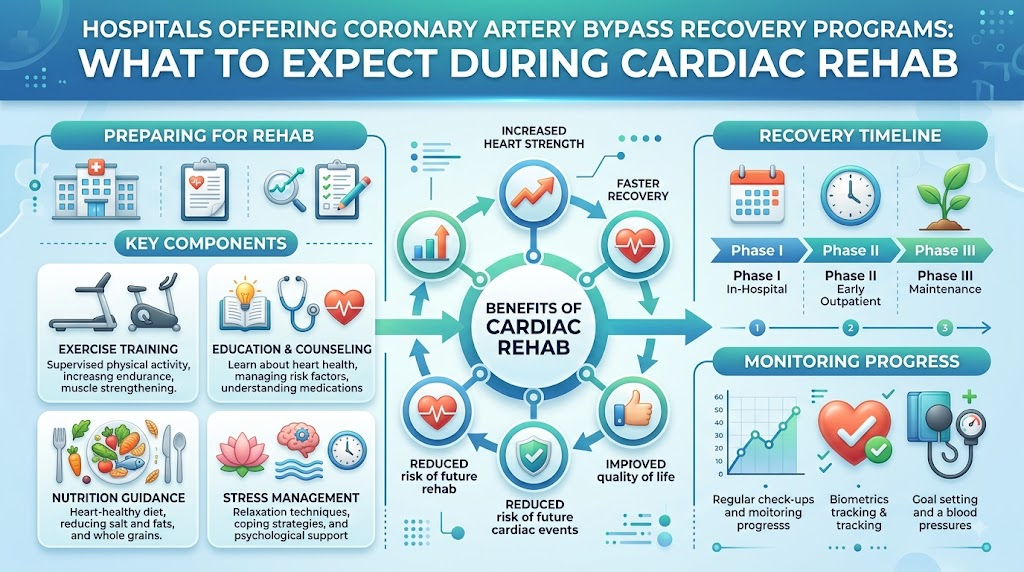
Cardiac rehabilitation is a medically supervised, multidisciplinary program designed to improve cardiovascular health following a major cardiac event or heart surgery.
┌─────────────────────────────────────────────────────────────────────────┐
│             CORE COMPONENTS OF A CARDIAC REHABILITATION PROGRAM         │
├───────────────────┬─────────────────────────────────────────────────────┤
│ Component         │ Primary Clinical Focus                              │
├───────────────────┼─────────────────────────────────────────────────────┤
│ Medical Assessment│ Comprehensive baseline evaluation of physical status │
├───────────────────┼─────────────────────────────────────────────────────┤
│ Supervised Exercise│ Tailored physical activity with continuous ECG/IOP   │
├───────────────────┼─────────────────────────────────────────────────────┤
│ Dietary Counseling│ Heart-healthy nutrition and weight management       │
├───────────────────┼─────────────────────────────────────────────────────┤
│ Risk Modification │ Lipid management, blood pressure & smoking cessation │
├───────────────────┼─────────────────────────────────────────────────────┤
│ Psychosocial Care │ Counseling for depression, anxiety, and post-op stress│
└───────────────────┴─────────────────────────────────────────────────────┘
As defined in scientific statements by the American College of Cardiology (ACC) and the American Heart Association (AHA), cardiac rehab combines physical exercise training, education on heart-healthy living, and personalized counseling to reduce stress and help patients regain their independence.
Why Is Cardiac Rehabilitation Important After CABG?
Rehabilitation is a cornerstone of secondary cardiovascular prevention. It provides a structured environment where patients can regain physical stamina safely under direct medical observation.
                  ┌──────────────────────────────────────────┐
                  │    Primary Benefits of Cardiac Rehab     │
                  └─────────────────────┬────────────────────┘
                                        │
      ┌──────────────────┬──────────────┴───────────────┬──────────────────┐
      ▼                  ▼                              ▼                  ▼
┌───────────┐    ┌──────────────┐              ┌───────────────┐    ┌──────────────┐
│ Safe      │    │ Rebuilding   │              │ Secondary     │    │ Enhanced     │
│ Exercise  │    │ Physical     │              │ Prevention &  │    │ Psychological│
│ Progress  │    │ Confidence   │              │ Risk Control  │    │ Well-being   │
└───────────┘    └──────────────┘              └───────────────┘    └──────────────┘
- Safe Physical Progression: Allows patients to test their physical limits under real-time electrocardiogram (ECG), heart rate, and blood pressure monitoring.
- Improved Rehospitalization Rates: Combined guidelines from the ACC/AHA show that participating in comprehensive cardiac rehabilitation significantly lowers 30-day hospital readmission rates and overall cardiovascular mortality.
- Educational Foundation: Empowers patients to manage their medications, identify warning signs, and adopt sustainable lifestyle habits.
- Psychological Reassurance: Reduces the fear of physical exertion that commonly affects patients after open-heart surgery.
Clinical Reality Check: While cardiac rehabilitation significantly improves functional capacity, cardiovascular endurance, and long-term outcomes, it does not completely eliminate the possibility of future cardiac events. It serves as a powerful management tool within a comprehensive treatment plan.
Difference Between General CABG Recovery and Cardiac Rehabilitation
Although people often use the terms interchangeably, general CABG recovery and cardiac rehabilitation represent distinct aspects of post-surgical care.
| Feature | General CABG Recovery | Cardiac Rehabilitation Program |
| Primary Scope | Overall surgical healing & tissue repair | Structured, medically supervised rehabilitation |
| Initiation | Begins immediately in the ICU/surgical ward | Begins in hospital (Phase I) & continues outpatient (Phase II) |
| Focus Area | Wound integrity, pain management, basic mobility | Monitored exercise progression, risk factor control |
| Clinical Team | Surgeons, inpatient nurses, PA-Cs | Cardiologists, rehab nurses, exercise physiologists, dietitians |
| Structure | Daily home routine & periodic checkups | Scheduled 2–3x weekly exercise and education sessions |
The 4 Stages of CABG Recovery
Recovery follows a structured transition from acute inpatient care to long-term independent heart health management.
Stage 1: Inpatient ──> Stage 2: Early Home ──> Stage 3: Outpatient Rehab ──> Stage 4: Long-Term Maintenance
 (Days 1–7)              (Weeks 1–6)                 (Weeks 3–12+)                 (Lifetime)
Stage 1: Hospital Recovery (Inpatient Phase)
- ICU Monitoring: Direct tracking of hemodynamics, arterial line pressure, and heart rhythm via continuous telemetry.
- Respiratory Therapy: Early use of incentive spirometry and coughing techniques with chest splinting (using a pillow) to clear lungs and prevent atelectasis.
- Early Ambulation: Sitting up at the bedside within 24 hours and taking short, assisted walks down the hospital corridor before discharge.
Stage 2: Early Home Recovery (Healing Phase)
- Rest and Sternum Protection: Strict adherence to “sternal precautions” (avoiding lifting heavy objects, pushing, or pulling) for 6 to 8 weeks to allow the breastbone to mend.
- Wound Care: Daily inspection of the chest and leg/arm donor incision sites for swelling, redness, or fluid drainage.
- Gradual Activity: Short, frequent walks around the home, slowly increasing distance based on fatigue levels and surgeon guidance.
Stage 3: Outpatient Cardiac Rehabilitation (Active Rehab Phase)
- Structured Exercise: Joining an outpatient program (typically 12 to 36 sessions) featuring supervised treadmill walking, stationary cycling, and low-resistance training.
- Risk Factor Modification: Working with clinical dietitians and specialists to optimize cholesterol levels, blood pressure, and blood sugar.
Stage 4: Long-Term Heart Maintenance (Lifetime Health)
- Independent Physical Activity: Transitioning to a regular, unmonitored home or community exercise routine.
- Ongoing Medical Review: Annual or bi-annual checkups with a cardiologist for non-invasive stress testing, echocardiograms, and medication adjustments.
Essential Services a Quality CABG Recovery Hospital Should Offer
When evaluating facilities, choose hospitals that offer a comprehensive, multidisciplinary aftercare infrastructure.
┌────────────────────────────────────────────────────────────────────────┐
│              CHECKLIST: MULTIDISCIPLINARY RECOVERY SERVICES            │
├────────────────────────────────────────────────────────────────────────┤
│ • Board-Certified Cardiologist & Cardiac Rehabilitation Supervision    │
│ • Clinical Exercise Physiologists & Physical Therapists                │
│ • Continuous Telemetry Monitoring Equipment (ECG, SpO2, NIBP)         │
│ • Registered Dietitians for Personalized Cardiovascular Nutrition     │
│ • Licensed Behavioral Health Professionals / Psychological Support      │
│ • Dedicated Tobacco Cessation and Diabetes Management Programs         │
│ • On-Site Immediate Emergency Resuscitation Capabilities               │
└────────────────────────────────────────────────────────────────────────┘
Multidisciplinary care teams help address physical, nutritional, and emotional needs together, rather than treating exercise in isolation.
Safe Exercise Guidelines After Bypass Surgery
Restoring physical activity after heart surgery must be done gradually, safely, and under medical supervision.
[ Medical Assessment & Baseline ECG ]
                │
                ▼
[ Low-Intensity Monitored Activity (Walking/Treadmill) ]
                │
                ▼
[ Continuous Vital & Rhythm Tracking ]
                │
                ▼
[ Gradual Duration & Resistance Progression ]
Key Safety Rules for Post-CABG Activity:
- Follow Sternal Precautions: Do not lift, push, or pull anything weighing more than 5 to 10 pounds (approx. 2.3–4.5 kg) for 6 to 8 weeks after surgery to avoid destabilizing the sternum.
- Avoid High-Intensity Strain: Refrain from heavy isometric exercises (such as heavy pushing, pulling, or bench pressing) until cleared by your surgical team.
- Use the Borg Rating of Perceived Exertion (RPE): Exercise intensity should feel “light” to “somewhat hard” (typically 11–13 on the 6–20 Borg scale). You should always be able to carry on a conversation while walking.
- Listen to Your Body: Warm up and cool down for at least 5 to 10 minutes. Stop exercising immediately if you experience dizziness, lightheadedness, abnormal shortness of breath, or chest discomfort.
Caution: Do not attempt to design your own high-intensity exercise regimen immediately after bypass surgery. Exercise parameters should always be tailored by your cardiologist or cardiac rehab team based on your medical history.
Heart-Healthy Nutrition After Bypass Surgery
Dietary adjustments after surgery support wound healing, reduce arterial inflammation, and help prevent progressive disease in both natural coronary arteries and new bypass grafts.
┌─────────────────────────────────────────────────────────────────────────┐
│                    NUTRITIONAL FOCUS FOR CABG RECOVERY                  │
├───────────────────┬─────────────────────────────────────────────────────┤
│ Dietary Component │ Target Focus                                        │
├───────────────────┼─────────────────────────────────────────────────────┤
│ Soluble Fiber     │ Whole grains, oats, legumes to lower LDL cholesterol│
├───────────────────┼─────────────────────────────────────────────────────┤
│ Antioxidants      │ Fresh vegetables, leafy greens, berries             │
├───────────────────┼─────────────────────────────────────────────────────┤
│ Healthy Fats      │ Olive oil, nuts, seeds, avocado; limit saturated fat│
├───────────────────┼─────────────────────────────────────────────────────┤
│ Lean Proteins     │ Poultry, fish (rich in Omega-3s), plant proteins    │
├───────────────────┼─────────────────────────────────────────────────────┤
│ Sodium Control    │ Reduced salt intake to manage blood pressure & fluid│
└───────────────────┴─────────────────────────────────────────────────────┘
A registered dietitian can help adjust these guidelines if you have co-existing conditions like type 2 diabetes, chronic kidney disease, or heart failure.
Medication Management After CABG
Prescription medications are essential for maintaining open bypass grafts, reducing the heart’s workload, and stabilizing blood pressure and cholesterol levels.
┌─────────────────────────────────────────────────────────────────────────┐
│                    COMMON POST-CABG MEDICATION CLASSES                  │
├───────────────────┬─────────────────────────────────────────────────────┤
│ Class             │ Primary Clinical Purpose                            │
├───────────────────┼─────────────────────────────────────────────────────┤
│ Antiplatelets     │ Prevent blood clots from forming inside new grafts  │
│ (e.g., Aspirin)   │                                                     │
├───────────────────┼─────────────────────────────────────────────────────┤
│ Statins           │ Lower LDL cholesterol and stabilize arterial plaques│
├───────────────────┼─────────────────────────────────────────────────────┤
│ Beta-Blockers     │ Slow heart rate, reduce BP, and prevent arrhythmias │
├───────────────────┼─────────────────────────────────────────────────────┤
│ ACEi / ARBs       │ Protect kidney function and control blood pressure  │
└───────────────────┴─────────────────────────────────────────────────────┘
Mandatory Medical Rule: Never adjust, skip, stop, or add any medication without explicit direction from your cardiologist or surgeon. Sudden discontinuation of cardiac medications can cause rebound hypertension, arrhythmias, or graft clotting.
Wound and Incision Care
Proper care of surgical incisions prevents superficial and deep-tissue infections, helping the chest bone and skin heal cleanly.
                  ┌──────────────────────────────────────────┐
                  │      Essential Incision Care Rules       │
                  └─────────────────────┬────────────────────┘
                                        │
      ┌──────────────────┬──────────────┴───────────────┬──────────────────┐
      ▼                  ▼                              ▼                  ▼
┌───────────┐    ┌──────────────┐              ┌───────────────┐    ┌──────────────┐
│ Daily     │    │ Keep Clean   │              │ Gently Pat    │    │ Never Apply  │
│ Inspection│    │ & Dry; Shower│              │ Dry; Avoid    │    │ Unapproved   │
│ for Redness│   │ Lightly      │              │ Submerging    │    │ Ointments    │
└───────────┘    └──────────────┘              └───────────────┘    └──────────────┘
- Shower Safely: Showers are typically allowed once permitted by your surgeon. Warm water should run gently over wounds; avoid direct high-pressure spray, aggressive scrubbing, or soaking in tubs.
- Avoid Submersion: Do not submerge surgical wounds in bath water, swimming pools, or hot tubs until all scabs have fallen off and incisions are fully closed.
- Monitor Leg/Arm Incisions: Saphenous vein or radial artery harvest sites often swell. Keep legs elevated when sitting and wear compression stockings if prescribed.
Common Physical Changes During CABG Recovery
It is normal to experience temporary physical and functional changes as your body recovers from major heart surgery.
┌─────────────────────────────────────────────────────────────────────────┐
│                     TYPICAL RECOVERY SYMPTOMS                           │
├─────────────────────────────────────────────────────────────────────────┤
│ • General fatigue and reduced physical endurance                        │
│ • Sleep disturbances or difficulty finding a comfortable position        │
│ • Mild appetite loss or temporary changes in taste                      │
│ • Constipation (often secondary to pain medications & reduced mobility) │
│ • Mild soreness, numbness, or tightness across the chest wall           │
│ • Minor ankle or lower leg swelling near graft harvest sites            │
└─────────────────────────────────────────────────────────────────────────┘
These symptoms generally improve over the first 4 to 8 weeks. Mention any persistent or worsening issues to your recovery team.
Emotional Health and Psychosocial Support
Recovering from open-heart surgery presents emotional challenges alongside physical ones. Mild depression, anxiety, and mood shifts are common during the early weeks at home.
[ Major Surgical Event ] ──> [ Physical Limitations & Fatigue ] ──> [ Emotional Distress / Anxiety ]
                                                                             │
                                                                             ▼
                                                              [ Specialized Psychosocial Support ]
- Post-CABG Blues: Mild sadness or anxiety affects many heart surgery patients during early recovery due to physical exhaustion, disrupted sleep, and life changes.
- Fear of Exertion: Many patients feel anxious about resuming physical activity or returning to work, fearing it might strain their heart.
- Rehab Support: Cardiac rehabilitation programs offer a safe environment where mental health professionals and support groups help patients rebuild confidence, manage stress, and regain independence.
Warning Signs: When to Seek Immediate Medical Attention
Certain symptoms require immediate emergency care. Do not wait for a routine follow-up appointment if you experience any of the following emergency signs.
┌─────────────────────────────────────────────────────────────────────────┐
│                      EMERGENCY RED-FLAG SYMPTOMS                        │
├─────────────────────────────────────────────────────────────────────────┤
│ 🚨 Severe, pressure-like chest pain similar to a heart attack           │
│ 🚨 Sudden, severe shortness of breath not relieved by rest              │
│ 🚨 Fainting, dizziness, or sudden confusion                             │
│ 🚨 Rapid, irregular, or pounding heartbeat (palpitations)               │
│ 🚨 Signs of incision infection: pus, worsening redness, foul odor       │
│ 🚨 Sternal instability: a clicking, popping, or shifting feeling in chest│
│ 🚨 Sudden weakness, numbness in face/limbs, or difficulty speaking      │
│ 🚨 Swelling with pain or tenderness in one calf (possible DVT)          │
└─────────────────────────────────────────────────────────────────────────┘
Urgent Notice: If red-flag symptoms develop, contact emergency medical services (such as calling 911 or your local emergency number) immediately. Online guides are for education only and should never replace emergency care.
How Long Does CABG Recovery Take?
Every recovery follows its own timeline, but understanding general benchmarks helps set realistic expectations.
Weeks 1 - 2              Weeks 3 - 6              Weeks 6 - 12             Month 3 & Beyond
┌──────────────────┐    ┌──────────────────┐    ┌──────────────────┐    ┌──────────────────┐
│ Initial home rest│───>│ Sternal bone     │───>│ Outpatient rehab;│───>│ Full functional  │
│ & short walks    │    │ healing; light   │    │ return to work   │    │ recovery & ongoing│
│                  │    │ daily activities │    │ & driving        │    │ risk management  │
└──────────────────┘    └──────────────────┘    └──────────────────┘    └──────────────────┘
- Traditional Open CABG: Sternal bone healing requires approximately 6 to 8 weeks, while full energy levels and physical strength return over 3 to 6 months.
- Minimally Invasive CABG: Incisions between the ribs (thoracotomy) often allow a faster return to daily activities because the sternum remains intact, though internal healing still requires several weeks.
- Individual Variations: Recovery timelines vary based on overall health, pre-surgery fitness, and any postoperative complications.
How to Choose a Hospital for CABG Recovery
Selecting the right facility for your post-surgery care ensures a smooth, well-coordinated recovery.
┌────────────────────────────────────────────────────────────────────────┐
│                   HOSPITAL EVALUATION & SELECTION MATRIX               │
├────────────────────────────────────────────────────────────────────────┤
│ 1. Certified Program: AACVPR or national accreditation status          │
│ 2. Multidisciplinary Staff: On-site cardiologists, nurses, dietitians   │
│ 3. Advanced Monitoring: Continuous telemetry & blood pressure tracking │
│ 4. Emergency Backup: Immediate access to acute cardiac care & ICUs     │
│ 5. Comprehensive Care: Integrated exercise, nutrition, & mental health  │
│ 6. Flexible Options: Availability of home-based or hybrid rehab models  │
└────────────────────────────────────────────────────────────────────────┘
Potential Costs and Financial Considerations
Understanding the costs associated with post-bypass care helps prevent unexpected financial stress.
| Recovery Component | Description of Potential Charges |
| Outpatient Rehab Sessions | Billed per session (typically 12 to 36 sessions prescribed) |
| Cardiologist Consultations | Initial evaluation and periodic medical assessments |
| Diagnostic Testing | Follow-up ECGs, echocardiograms, or stress tests |
| Nutritional Counseling | Consultations with registered dietitians |
| Prescription Medications | Out-of-pocket copays for long-term daily medications |
Insurance Coverage for Cardiac Rehabilitation
Most commercial insurance plans, as well as Medicare and national health systems, cover cardiac rehabilitation after CABG surgery.
- Standard Approval Criteria: Insurance coverage typically requires a direct referral and prescription from your cardiothoracic surgeon or cardiologist following documented CABG surgery.
- Pre-Authorization Checklist: Verify whether your policy limits the total number of covered sessions (e.g., up to 36 sessions) or requires specific co-payments per visit.
- Home-Based Programs: If considering a remote or hybrid program, check with your provider to confirm that virtual or home-based cardiac rehab is covered under your plan.
Home-Based vs. Hospital-Based Cardiac Rehabilitation
While hospital-based programs offer maximum supervision, home-based options are becoming a reliable alternative for lower-risk patients.
┌─────────────────────────────────────────────────────────────────────────┐
│              HOSPITAL-BASED VS. HOME-BASED REHABILITATION               │
├─────────────────────────┬───────────────────────┬───────────────────────┤
│ Feature                 │ Hospital-Based        │ Home-Based / Hybrid   │
├─────────────────────────┼───────────────────────┼───────────────────────┤
│ Direct Medical Oversight│ On-site specialists   │ Remote telemetry tracking│
├─────────────────────────┼───────────────────────┼───────────────────────┤
│ Clinical Safety Net     │ Immediate emergency care│ Patient/caregiver response│
├─────────────────────────┼───────────────────────┼───────────────────────┤
│ Convenience             │ Travel required       │ Completed at home     │
├─────────────────────────┼───────────────────────┼───────────────────────┤
│ Ideal Candidate         │ Higher clinical risk  │ Stable, low-risk      │
└─────────────────────────┴───────────────────────┴───────────────────────┘
Clinical Recommendation: Your surgical and cardiology team will determine whether hospital-based or home-based rehab is safest for you based on your heart function, recovery progress, and overall health.
Red Flags When Evaluating a CABG Recovery Program
Protect your safety by avoiding programs that exhibit any of these warning signs:
┌─────────────────────────────────────────────────────────────────────────┐
│                              PROGRAM RED FLAGS                          │
├─────────────────────────────────────────────────────────────────────────┤
│ ✖ Promising "100% guaranteed recovery" or immediate heart disease cure  │
│ ✖ Lacking direct supervision by qualified healthcare professionals     │
│ ✖ Offering unmonitored exercise without baseline medical evaluations   │
│ ✖ Operating without on-site emergency resuscitation equipment           │
│ ✖ Pushing unproven supplements or non-evidence-based treatments         │
│ ✖ Refusing to provide clear information on program costs and coverage   │
└─────────────────────────────────────────────────────────────────────────┘
Myths vs. Medical Facts in CABG Recovery
┌─────────────────────────────────────────────────────────────────────────┐
│                            MYTHS VS. MEDICAL FACTS                      │
├───────────────────────────────────────────┬─────────────────────────────┤
│ MYTH                                      │ MEDICAL FACT                │
├───────────────────────────────────────────┼─────────────────────────────┤
│ "Recovery is complete as soon as you are  │ "Recovery continues for     │
│  discharged from the hospital."           │  months through rehabilitation."│
├───────────────────────────────────────────┼─────────────────────────────┤
│ "Cardiac rehab is just an exercise class."│ "It includes exercise,      │
│                                           │  nutrition, and stress care."│
├───────────────────────────────────────────┼─────────────────────────────┤
│ "Resting completely is better than walking│ "Early, gentle walking      │
│  after surgery."                          │  promotes recovery."        │
├───────────────────────────────────────────┼─────────────────────────────┤
│ "Bypass surgery permanently cures         │ "Surgery restores blood flow│
│  coronary artery disease."                │  but lifestyle care is vital."│
├───────────────────────────────────────────┼─────────────────────────────┤
│ "Feeling tired means recovery is failing."│ "Fatigue is common early on │
│                                           │  and improves gradually."   │
└───────────────────────────────────────────┴─────────────────────────────┘
Common Mistakes to Avoid After CABG Surgery
- Skipping Cardiac Rehabilitation: Missing out on structured exercise monitoring, risk-factor education, and professional support.
- Ignoring Sternal Precautions: Pushing, pulling, or lifting heavy objects too soon, which can disrupt breastbone healing.
- Discontinuing Prescribed Medications: Stopping antiplatelet, statin, or blood pressure medications without consulting your cardiologist.
- Resuming High-Risk Activities Early: Driving or returning to physically demanding work before receiving formal clearance from your surgeon.
- Overlooking Mental Health Symptoms: Dismissing persistent anxiety or depression instead of seeking support from your care team.
24. How Bestheartsurgery.com Can Help
Navigating heart surgery recovery and evaluating hospital programs can feel overwhelming. Bestheartsurgery.com helps patients and families make informed decisions by providing clear, patient-focused resources:
- Hospital Comparisons: Research accredited cardiovascular centers and cardiac rehabilitation facilities.
- Educational Resources: Read evidence-based guides on surgical recovery, cardiac rehab stages, and cardiovascular wellness.
- Doctor Consultation Preparation: Access checklist questions to ask your cardiothoracic surgeon, cardiologist, or rehab team.
- Recovery Guidance: Learn about standard aftercare protocols, nutrition recommendations, and long-term risk management.
Frequently Asked Questions (FAQs)
1.What is a CABG recovery program?
A CABG recovery program is a structured pathway that combines postoperative medical monitoring, incision care, cardiac rehabilitation, medication management, and lifestyle education to help patients safely rebuild physical health after bypass surgery.
2.What is cardiac rehabilitation after bypass surgery?
Cardiac rehabilitation is a medically supervised program featuring monitored exercise training, cardiovascular risk reduction, nutrition education, and emotional support to help patients recover after heart surgery.
3.Why is cardiac rehabilitation recommended after CABG?
Cardiac rehab helps patients safely regain physical strength under continuous medical monitoring, reduces 30-day hospital readmission rates, improves heart health awareness, and supports long-term recovery.
4.How long does recovery after bypass surgery take?
Physical healing of the breastbone typically takes 6 to 8 weeks, while full functional recovery, improved energy levels, and visual progress occur over 3 to 6 months.
5.When can cardiac rehabilitation begin after CABG?
In-hospital movement (Phase I) begins within days of surgery. Outpatient rehabilitation (Phase II) usually starts 2 to 6 weeks after discharge, once approved by your surgeon.
6.What happens during cardiac rehabilitation?
Patients participate in supervised aerobic exercise, have their blood pressure and heart rhythm tracked, receive dietary counseling, learn about medication adherence, and get help managing post-op stress.
7.Can I exercise after bypass surgery?
Yes, but exercise should restart gradually under medical guidance. High-intensity lifting, pushing, or pulling must be avoided until the sternum is fully healed.
8.What foods are recommended after CABG?
A heart-healthy diet emphasizes fresh vegetables, fruits, whole grains, lean proteins, and unsaturated fats, while limiting saturated fats, refined sugars, and excessive sodium.
9.Do I need regular follow-up appointments after bypass surgery?
Yes. Follow-up visits with your surgeon and cardiologist are essential to monitor wound healing, review heart rhythm and function, and adjust medications.
10.Can cardiac rehabilitation be done at home?
Yes. Lower-risk patients may qualify for home-based or hybrid cardiac rehabilitation programs that use remote monitoring alongside regular clinical check-ins.
11.How long does a cardiac rehabilitation program last?
Standard outpatient programs typically run 2 to 3 times a week for 6 to 12 weeks, completing 12 to 36 supervised sessions based on individual clinical needs.
12.How much does CABG rehabilitation cost?
Costs vary by hospital, program length, diagnostic testing, and location. Outpatient sessions are typically billed individually or covered as part of a post-surgical treatment plan.
13.Does insurance cover cardiac rehabilitation?
Most major health insurance plans and Medicare cover medically prescribed cardiac rehabilitation following documented CABG surgery. Always verify co-pays and session limits with your insurer.
14.What warning signs should I watch for after CABG?
Seek immediate emergency care for severe chest pain, extreme shortness of breath, sudden faintness, irregular heart rhythms, severe leg swelling, or signs of wound infection (such as redness or pus).
15.How do I choose a hospital for CABG recovery?
Look for facilities with accredited cardiac rehab programs, multidisciplinary care teams (cardiologists, exercise specialists, dietitians), real-time monitoring technology, and prompt emergency response capabilities.
Final Conclusion
Recovering from coronary artery bypass graft surgery is a long-term process that extends far beyond your stay in the hospital. Participating in a structured coronary artery bypass recovery program allows you to rebuild physical endurance safely, manage cardiovascular risk factors, and gain the confidence needed to return to daily life.By combining supervised exercise, heart-healthy nutrition, strict medication adherence, emotional support, and routine medical checkups, cardiac rehabilitation provides a strong foundation for long-term health. Choosing a hospital with experienced cardiologists, dedicated rehabilitation specialists, advanced monitoring technology, and clear emergency protocols ensures your recovery is coordinated and safe every step of the way.