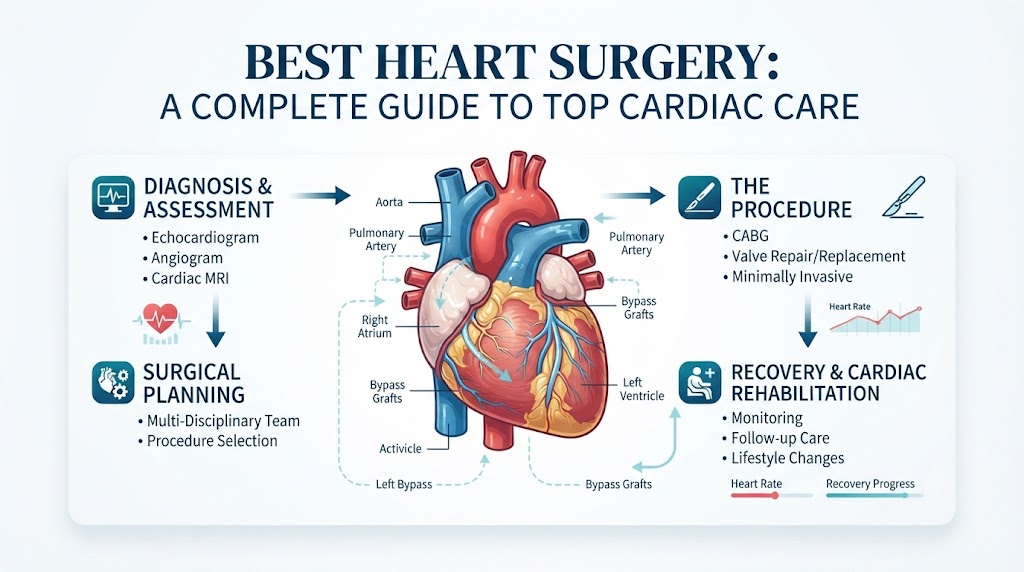
Choosing to undergo a cardiac procedure is one of the most significant medical decisions a person can face. When dealing with cardiovascular disease, finding the best heart surgery option, the right hospital, and an elite surgical team is vital to achieving optimal clinical outcomes. The quality of a cardiac center directly correlates with long-term patient survival, reduced complication rates, and a smoother, more efficient recovery process.For patients and their families, navigating the global medical landscape can feel overwhelming. Understanding the nuances of advanced procedures, comparing clinical data, and balancing financial considerations require transparent, fact-based information.
UNDERSTANDING HEART SURGERY
What Is Heart Surgery?
Heart surgery encompasses a broad range of surgical procedures performed by specialized cardiovascular surgeons to correct structural, electrical, or muscular defects within the heart and its connected blood vessels. These interventions can range from traditional open-chest operations to advanced, minimally invasive procedures performed through tiny incisions utilizing specialized instruments and robotic assistance.
When Is Heart Surgery Needed?
Surgical intervention becomes necessary when conservative medical management—such as lifestyle modifications, dietary changes, and pharmacological therapies—is no longer sufficient to manage a cardiac condition. Surgery is indicated to prevent life-threatening events like myocardial infarctions (heart attacks), repair damaged structural components, improve overall cardiac output, and significantly enhance the patient’s daily quality of life.
Common Cardiac Conditions Requiring Surgery
- Coronary Artery Disease (CAD): The narrowing or blockage of the coronary arteries, usually caused by plaque buildup, which restricts blood flow to the myocardium.
- Heart Valve Disease: Conditions such as stenosis (narrowing) or regurgitation (leakage) affecting the aortic, mitral, tricuspid, or pulmonary valves.
- Congenital Heart Defects: Structural abnormalities present at birth, ranging from simple septal defects (“holes in the heart”) to complex transpositions of major arteries.
- Heart Failure: End-stage heart failure where the cardiac muscle is severely weakened and requires mechanical circulatory support or transplantation.
- Arrhythmias: Irregular heart rhythms, such as atrial fibrillation, that do not respond to medication and require surgical ablation or device implantation.
BEST HEART SURGERY HOSPITALS: WHAT MAKES THEM STAND OUT?
When identifying the best heart surgery hospitals, several clinical and infrastructural benchmarks must be evaluated. Premium cardiac centers are distinguished by their holistic approach to patient care, combining cutting-edge technology with multidisciplinary medical expertise.
Advanced Cardiac Infrastructure
Top-tier institutions feature dedicated, state-of-the-art hybrid operating rooms. These specialized suites allow surgical teams to transition seamlessly from catheter-based interventional procedures to open surgery if required. They are equipped with high-definition intraoperative imaging, advanced cardiopulmonary bypass (heart-lung) machines, and real-time transesophageal echocardiography tools to ensure maximum precision during surgery.
Experienced Surgical Teams
A hospital’s reputation is built upon its human capital. The best hospitals for bypass surgery maintain dedicated teams comprised of board-certified cardiothoracic surgeons, interventional cardiologists, cardiac anesthesiologists, perfusionists, and specialized intensive care nurses. These teams work in tandem, conducting pre-operative tumor-board-style reviews for complex cases to customize treatment plans for every patient.
Success Rates and Outcomes
Authoritative hospitals maintain absolute transparency regarding their clinical outcomes. They actively participate in national and international clinical registries, tracking metrics such as 30-day survival rates, post-operative infection percentages, and long-term graft patency rates. High-performing centers consistently report survival rates exceeding 95% to 98% for routine procedures.
International Accreditations
Reputable cardiac centers hold prestigious international certifications, such as accreditation from the Joint Commission International (JCI) or national equivalents like the National Accreditation Board for Hospitals & Healthcare Providers (NABH). These accreditations guarantee that the facility strictly adheres to stringent global standards for patient safety, infection control, and continuous quality improvement protocols.
Intensive Care and Recovery Support
The immediate post-operative phase is critical. The best hospitals for minimally invasive heart surgery and complex open procedures feature dedicated Cardiothoracic Intensive Care Units (CTICUs). These units offer one-on-one nursing care, advanced mechanical ventilation, temporary cardiac pacing infrastructure, and continuous hemodynamic monitoring. Furthermore, premier centers integrate early-stage inpatient cardiac rehabilitation to jumpstart the patient’s physical recovery.
For parents seeking care for young children, the best hospitals for pediatric cardiac surgery offer highly specialized pediatric ICUs (PICUs). These wings are staffed by neonatologists and pediatric intensivists who understand the delicate physiological demands of infants and children undergoing complex structural heart repairs.
BEST HEART SURGEONS IN THE WORLD AND INDIA
Characteristics of Leading Cardiac Surgeons
The best heart surgeons in the world possess a combination of extensive clinical training, high technical dexterity, and a dedication to clinical research. These specialists are typically fellowships-trained at premier international institutions, hold active memberships in prestigious organizations like the Society of Thoracic Surgeons (STS) or the European Association for Cardio-Thoracic Surgery (EACTS), and regularly contribute to peer-reviewed medical journals.
Importance of Experience and Specialization
In cardiac surgery, procedural volume correlates strongly with positive outcomes. Surgeons who perform a high volume of specific procedures annually develop refined micro-surgical skills and superior intraoperative crisis-management capabilities. For example, a surgeon specializing exclusively in mitral valve repairs will generally achieve better repair rates and lower long-term recurrence than a generalist surgeon. Similarly, the best heart surgeons in India often manage exceptionally high annual patient volumes, giving them unparalleled clinical experience in treating advanced, complex pathology.
Choosing the Right Heart Surgeon
When selecting a surgeon, patients should look beyond subjective online rankings and focus on verifiable metrics:
- Board certifications and specialized fellowship training.
- The surgeon’s personal success and complication rates for your specific procedure.
- Total career volume and annual frequency of the recommended surgery.
- Their approachability and willingness to explain risks, benefits, and alternative treatment routes clearly.
TYPES OF HEART SURGERIES
                  ┌─────────────────────────────┐
                  │   Types of Heart Surgery    │
                  └──────────────┬──────────────┘
                                 │
         ┌───────────────────────┼───────────────────────┐
         │                       │                       │
┌────────┴────────┐     ┌────────┴────────┐     ┌────────┴────────┐
│    Coronary     │     │   Structural    │     │   Advanced /    │
│  Artery (CABG)  │     │  & Valve Care   │     │  Pediatric Care │
└─────────────────┘     └─────────────────┘     └─────────────────┘
Coronary Artery Bypass Surgery (CABG)
Commonly known as heart bypass surgery, CABG is indicated for patients with severe blockages in their major coronary arteries. The surgeon harvests a healthy blood vessel—typically from the chest (internal mammary artery), arm (radial artery), or leg (saphenous vein)—and grafts it bypass the blocked segment. This restores adequate blood flow and oxygen delivery to the heart muscle. CABG can be performed “on-pump” (using a heart-lung machine) or “off-pump” (beating-heart surgery), depending on the patient’s individual risk profile.
Heart Valve Repair and Replacement
When heart valves are severely stenotic or regurgitant, surgical intervention is required. Wherever possible, surgeons prefer valve repair, as it preserves the patient’s natural anatomy and avoids the long-term requirement for heavy anticoagulation medications. If the valve is damaged beyond repair, a valve replacement is performed. The damaged valve is removed and replaced with either a mechanical valve (constructed from durable carbon and titanium, requiring lifelong blood thinners) or a biological/bioprosthetic valve (crafted from porcine or bovine tissue, which typically lasts 10–15 years but does not require long-term anticoagulation).
Minimally Invasive Heart Surgery
Minimally invasive approaches avoid the need for a traditional median sternotomy (splitting the breastbone). Instead, the surgeon accesses the heart through small incisions between the ribs (mini-thoracotomy), often utilizing high-definition endoscopes or robotic surgical systems. This methodology is frequently used for mitral valve repairs, atrial septal defect closures, and single or double vessel bypass operations. The primary benefits include significantly reduced post-operative pain, minimal blood loss, shorter hospital stays, and a much faster return to normal daily activities.
Pediatric and Congenital Heart Defect Surgery
Pediatric cardiac surgery addresses structural abnormalities present from birth, such as Atrial Septal Defects (ASD), Ventricular Septal Defects (VSD), Tetralogy of Fallot, and Transposition of the Great Arteries. These operations require highly specialized micro-surgical techniques, specialized pediatric cardiopulmonary bypass equipment, and a deep understanding of developmental pediatric physiology to ensure that the repaired heart can grow naturally alongside the child.
Heart Transplant Procedures
For patients suffering from end-stage heart failure or cardiomyopathy who have exhausted all other medical and surgical options, a heart transplant offers a final, life-saving option. This complex procedure involves removing the patient’s diseased heart and replacing it with a healthy donor heart. It requires meticulous lifetime post-operative management, including strict immunosuppressive therapy to prevent organ rejection.
HEART SURGERY IN INDIA: WHY PATIENTS CHOOSE INDIA
Over the past two decades, India has emerged as a premier global hub for advanced cardiovascular treatments, drawing thousands of international patients annually. Choosing heart surgery in India provides a unique combination of clinical excellence and logistical accessibility.
- World-Class Cardiac Hospitals: Major Indian metropolitan cities house sprawling medical centers that hold JCI and NABH accreditations. These hospitals feature diagnostic and surgical infrastructure on par with premier institutions in North America and Western Europe.
- Highly Skilled Surgeons: Many leading Indian cardiac specialists have spent years training or practicing in top Western healthcare systems before returning to India. Because of the vast population, Indian surgeons manage an exceptionally high volume of cases, translating into highly refined clinical expertise.
- Affordable Treatment Costs: The most compelling factor for many international patients is the cost differential. Patients can access world-class cardiac care at a small fraction of the cost charged in Western nations, without compromising clinical quality or safety.
- Modern Medical Technology: Indian cardiac institutions routinely invest in the latest medical advancements, offering robotic-assisted CABG, transcatheter aortic valve implantations (TAVI/TAVR), advanced ventricular assist devices (LVAD), and state-of-the-art diagnostic imaging.
- International Patient Support Services: Dedicated international patient departments in Indian hospitals provide comprehensive assistance. They manage medical visas, airport transfers, local accommodation booking for family members, language interpreters, and customized dietary arrangements.
HEART SURGERY COST IN INDIA
Understanding the financial aspects of cardiac treatment is essential for effective planning. The total heart surgery cost in India depends on a wide array of clinical and non-clinical variables.
Factors Affecting Cost
- Hospital Category: Costs vary based on whether the patient chooses a premium private luxury hospital, a standard multi-specialty corporate facility, or a non-profit trust hospital.
- Surgeon Experience: Senior, internationally renowned chief surgeons command higher professional fees than junior consultants.
- City and Location: Healthcare costs in tier-1 metropolitan hubs (such as Mumbai, Delhi NCR, Chennai, and Bangalore) are typically higher than in tier-2 cities.
- Procedure Complexity: Revision surgeries, multi-valve operations, or surgeries complicated by co-existing conditions (like chronic kidney disease or advanced diabetes) incur higher costs due to additional resource utilization.
- ICU and Recovery Costs: Extended stays in the CTICU due to slow recovery or complications significantly impact the final hospital bill.
BYPASS SURGERY COST IN INDIA
The bypass surgery cost in India is remarkably economical when compared globally. While a standard CABG procedure in the United States or the United Kingdom can easily exceed $\$70,000$ to $\$120,000$, the same high-quality procedure in India typically ranges between $\approx \$4,000$ and $\$7,500$ USD (approximately ₹3,30,000 to ₹6,20,000 INR), depending on the hospital and patient profile.
Typical Cost Components
- Pre-operative Diagnostics: Detailed blood work, echocardiograms, coronary angiographies, pulmonary function tests, and chest X-rays.
- Hospital Stay: Typically includes 2–3 days in the CTICU followed by 4–5 days in a standard step-down room or private ward.
- Surgical Fees: Includes charges for the primary cardiac surgeon, assistant surgeons, cardiac anesthesiologist, and the perfusion team.
- OR and Consumables: Charges for the operating theater, cardiopulmonary bypass machine utilization, disposable surgical kits, and post-operative medications.
- Follow-up Care: Immediate post-discharge consultations, wound dressings, and basic cardiac rehabilitation orientation.
| Cost Component | Estimated Price Range (USD) | Estimated Price Range (INR) |
| Pre-operative Evaluations & Diagnostics | $\$300 – \$600$ | ₹25,000 – ₹50,000 |
| Standard CABG Surgery Package (On-Pump) | $\$4,000 – \$5,500$ | ₹3,30,000 – ₹4,50,000 |
| Complex/Robotic CABG Package | $\$6,000 – \$7,500$ | ₹5,000,000 – ₹6,20,000 |
| Post-operative Medications & Rehabilitation | $\$200 – \$400$ | ₹16,000 – ₹33,000 |
HEART VALVE REPLACEMENT SURGERY COST IN INDIA
The final heart valve replacement surgery cost in India is heavily influenced by the choice of the prosthetic valve itself. Generally, the package price ranges from $\approx \$5,000$ to $\$9,500$ USD (approximately ₹4,15,000 to ₹7,85,000 INR).
Mechanical vs. Biological Valves
Mechanical valves are constructed from synthetic materials like pyrolytic carbon. While the valve component itself is moderately priced and lasts a lifetime, the patient must factor in the ongoing lifelong cost of anticoagulant drugs (blood thinners) and regular PT-INR blood monitoring tests.
Biological (tissue) valves, sourced from bovine or porcine tissues, are generally more expensive upfront. Though they eliminate the long-term cost and dietary restrictions of blood thinners, younger patients must consider the financial and physical impact of a potential re-operation 10 to 15 years down the line when the tissue valve naturally degrades.
Surgical Complexity and Recovery
Double-valve replacements (replacing both the aortic and mitral valves simultaneously) increase the operation time, the duration of cardiopulmonary bypass, and the consumption of intensive care resources, thereby increasing the final cost by 40% to 60% compared to a single-valve procedure.
HOW TO CHOOSE THE RIGHT HEART HOSPITAL
To ensure the highest standard of safety and care, patients and families should systematically evaluate potential hospitals using the following clinical parameters:
- Hospital Accreditation: Prioritize facilities with JCI and NABH accreditations to guarantee strict adherence to international safety, hygiene, and clinical protocols.
- Cardiac Surgery Volume: Inquire about the hospital’s annual procedural volume. High-volume centers possess well-oiled operational systems, reducing the margin for administrative or clinical errors.
- ICU Infrastructure: Ensure the hospital features a dedicated, modern CTICU staffed by full-time, round-the-clock cardiac intensivists, rather than general medical ICUs.
- Emergency Care Capability: The hospital must feature a 24/7 dedicated cardiac emergency wing with an operational catheterization lab capable of handling acute cardiac crises immediately.
- Patient Reviews and Long-term Outcomes: Look for verified, independent patient testimonials and ask the international patient desk for the hospital’s published statistical data on success and infection rates.
- Comprehensive International Services: Choose a hospital that offers end-to-end logistical support, minimizing external stressors so the patient can focus entirely on physical recovery.
STEP-BY-STEP PATIENT JOURNEY
Navigating a cardiac surgical intervention involves several structured stages designed to maximize patient safety and ensure long-term treatment success.
[1. Diagnosis] ──> [2. Consultation] ──> [3. Planning & Costing]
                                                 │
                                                 ▼
[6. Surgery Day] <── [5. Hospitalization] <── [4. Prep & Travel]
       │
       ▼
[7. CTICU Recovery] ──> [8. Step-down Ward] ──> [9. Rehab & Follow-Up]
- Initial Diagnosis: The patient presents symptoms such as angina, dyspnea, or chronic fatigue. Local cardiologists run baseline diagnostics including Electrocardiograms (ECG), Echocardiograms, and Coronary Angiographies.
- Specialist Consultation: Medical records, imaging films, and lab reports are shared with the chosen cardiothoracic surgeon. This can be conducted via secure telemedicine portals for international patients.
- Treatment Planning: The surgical team reviews the data and proposes the most effective surgical approach (e.g., traditional open CABG vs. minimally invasive surgery).
- Cost Estimation: The hospital’s financial counseling desk provides a comprehensive, transparent cost breakdown, outlining inclusions, exclusions, and potential contingency expenses.
- Hospital Selection & Travel: The patient finalizes the hospital, coordinates medical visa paperwork, schedules the admission date, and arrives at the destination.
- Surgery Preparation: The patient undergoes comprehensive pre-operative evaluations (blood cross-matching, pulmonary optimization, dental clearances to eliminate hidden infection sources) and meets the anesthesia team.
- Procedure Day: The surgery is performed in a sterile, high-tech operating suite. Family members are kept regularly updated by dedicated patient coordinators.
- Recovery Phase: The patient spends the first 24 to 72 hours in the specialized CTICU before being stepped down to a private room once hemodynamic stability is firmly established.
- Long-Term Follow-Up: Prior to discharge, the patient receives a detailed medication schedule, dietary guidelines, and a custom cardiac rehabilitation plan, followed by scheduled local or remote check-ups.
RISKS, RECOVERY, AND EXPECTATIONS
Surgical Risks
As with any major surgical intervention, heart surgery carries inherent risks. These include post-operative bleeding, localized or systemic infections, adverse reactions to general anesthesia, temporary or permanent renal dysfunction, arrhythmias (such as temporary atrial fibrillation), and a small risk of stroke or myocardial infarction. A patient’s individual risk profile depends significantly on age, overall physiological strength, and pre-existing comorbidities.
Recovery Timeline
For a traditional open-heart surgery involving a median sternotomy, the initial hospital stay spans 7 to 10 days. The complete healing of the breastbone requires approximately 6 to 8 weeks. During this phase, patients must refrain from lifting heavy objects or driving. Conversely, patients undergoing minimally invasive heart procedures often experience a compressed timeline, frequently discharging within 4 to 5 days and returning to light daily routines within 2 to 3 weeks.
Lifestyle Modifications and Rehabilitation
Surgery restores blood flow or corrects structural flaws, but it does not cure the underlying cardiovascular disease. To maintain long-term surgical success, patients must commit to permanent lifestyle adjustments:
- Dietary Adjustments: Transitioning to a heart-healthy diet rich in whole grains, lean proteins, vegetables, and healthy fats while strictly minimizing sodium and refined sugars.
- Physical Activity: Engaging in structured, low-impact aerobic exercises like walking, as prescribed by the medical team.
- Smoking Cessation: Absolute termination of tobacco consumption in any form, as smoking drastically accelerates arterial graft degeneration.
- Cardiac Rehabilitation: Enrolling in a supervised, multi-disciplinary cardiac rehab program that combines monitored exercise sessions, stress-management techniques, and lifestyle counseling.
- Long-term Monitoring: Routine follow-ups with a cardiologist to monitor blood pressure, lipid profiles, and maintain appropriate medication management.
EXPERT TIPS FOR BETTER CARDIAC TREATMENT DECISIONS
- Always Seek a Second Medical Opinion: Do not hesitate to have another independent, qualified cardiothoracic specialist review your diagnostic reports. A second perspective can confirm the necessity of surgery or highlight less invasive alternatives.
- Focus on the Surgeon’s Procedure-Specific Volume: Always ask the surgeon directly: “How many procedures of this exact type did you perform over the past twelve months?”
- Understand the Full Scope of the Financial Quote: Ensure your hospital cost estimate is all-inclusive. Verify whether it covers high-value components like prosthetic valves, unexpected extra ICU days, take-home medications, and emergency re-explorations.
- Evaluate the Quality of Life Post-Surgery: Discuss long-term lifestyle goals with your doctor. For example, choose between mechanical and tissue valves based on your willingness or ability to manage lifelong blood-thinning therapies.
- Assess the Hospital’s Multi-Disciplinary Backing: Ensure the chosen hospital has robust nephrology, neurology, and pulmonology departments. If complications arise during or after surgery, having immediate access to specialized cross-consultants is critical for patient safety.
HOW BESTHEARTSURGERY.COM HELPS PATIENTS
Navigating complex healthcare networks during a stressful medical event can be daunting. BestHeartSurgery.com serves as a trusted, independent patient education resource, offering comprehensive tools to streamline your decision-making process:
- Objective Hospital Research: Access transparent, detailed profiles of accredited cardiac care centers worldwide, analyzing their clinical focus, infrastructure, and accreditations.
- Surgeon Information Directories: Review verified professional backgrounds, clinical specializations, and professional achievements of leading cardiothoracic surgeons.
- Comprehensive Procedure Education: Demystify complex medical terminology through patient-friendly guides on CABG, valve repairs, minimally invasive options, and pediatric surgeries.
- Cost Awareness and Comparison Tools: Access detailed cost analyses across various global destinations, helping you budget accurately and avoid hidden medical fees.
- Structured Treatment Planning Support: Utilize our step-by-step organizational checklists to prepare for consultations, manage medical travel logistics, and organize post-operative care smoothly.
FREQUENTLY ASKED QUESTIONS (FAQ)
Which are the best heart surgery hospitals?
The premier heart surgery hospitals are those that hold prestigious international accreditations (such as JCI or NABH), maintain high annual procedural volumes, exhibit low post-operative infection rates, and feature dedicated, state-of-the-art Cardiothoracic ICUs (CTICUs). Prominent examples include specialized cardiac networks and major multi-specialty corporate hospitals in primary metropolitan hubs.
How do I choose the best heart surgeon?
Look for a surgeon who is board-certified in cardiothoracic surgery, has completed advanced fellowship training in your specific condition, and routinely performs a high volume (ideally 100+ cases annually) of the specific procedure you require. Review their audited clinical success rates and choose someone who communicates clearly and transparently.
What is the average heart surgery cost in India?
The overall cost varies depending on the specific procedure, hospital tier, and patient health status. Generally, major cardiac surgeries in India range from $\$4,000$ to $\$10,000$ USD (approximately ₹3,30,000 to ₹8,30,000 INR), presenting significant cost savings compared to Western countries.
What is the bypass surgery cost in India?
A standard, uncomplicated Coronary Artery Bypass Grafting (CABG) package in India typically ranges between $\approx \$4,000$ and $\$7,500$ USD (approx. ₹3,30,000 to ₹6,20,000 INR). This all-inclusive package generally covers the pre-operative workup, operating theater charges, surgeon fees, routine ICU stays, and essential medications during admission.
What is the heart valve replacement surgery cost in India?
The cost generally ranges between $\$5,000$ and $\$9,500$ USD (approx. ₹4,15,000 to ₹7,85,000 INR). The price fluctuates based on whether a single or double valve is being replaced and whether the patient requires a mechanical valve or a higher-cost biological tissue valve.
Is heart surgery in India safe for international patients?
Yes, undergoing heart surgery in India is highly safe, provided you choose an accredited hospital (JCI or NABH). Leading Indian hospitals use the exact same medical technologies, sterilization protocols, and advanced surgical techniques found in Western nations, resulting in globally comparable success rates.
How long does the recovery process take after heart surgery?
For traditional open-heart surgeries, patients typically spend 7 to 10 days in the hospital, with full sternal bone healing requiring 6 to 8 weeks. For minimally invasive cardiac procedures, the hospital stay is often reduced to 4 to 5 days, and patients can frequently return to light normal activities within 2 to 3 weeks.
What are the main benefits of minimally invasive heart surgery?
Minimally invasive heart surgery offers several distinct advantages over traditional open surgery, including significantly smaller cosmetic scars, reduced post-operative pain, minimal blood loss during the operation, a decreased risk of surgical site infections, shorter hospital admissions, and a much faster overall physical recovery timeline.
Which hospitals are best for pediatric cardiac surgery?
The ideal hospitals for children are specialized pediatric cardiac centers that feature dedicated Pediatric Cardiothoracic Intensive Care Units (PICUs). These facilities must be staffed by specialized pediatric cardiac surgeons, pediatric perfusionists, and neonatologists who are thoroughly trained to manage the delicate physiological needs of infants and children.
How can patients compare international hospitals effectively?
Patients should compare facilities based on objective, verifiable data points: check for valid JCI or national accreditations, evaluate the reported success and complication rates for your exact medical procedure, analyze the all-inclusive financial quotes provided, and review the responsiveness and comprehensiveness of the hospital’s international patient support desk.
CONCLUSION
Undergoing best heart surgery interventions requires a well-researched, careful, and systematic approach to selecting your healthcare providers. By focusing your attention on objectively verifiable metrics—such as international hospital accreditations, specialized surgical volumes, documented clinical success rates, and transparent cost breakdowns—you can safeguard your health and secure peace of mind.Modern advancements in cardiovascular medicine have made these complex procedures highly safe and remarkably effective. Choosing an elite medical institution and an experienced surgical team ensures that you receive optimal, custom-tailored care designed to maximize your long-term health and vitality. As you move forward, prioritize comprehensive medical education, always seek a second clinical opinion when necessary, and make certain that your chosen treatment pathway aligns perfectly with your long-term lifestyle and wellness goals.